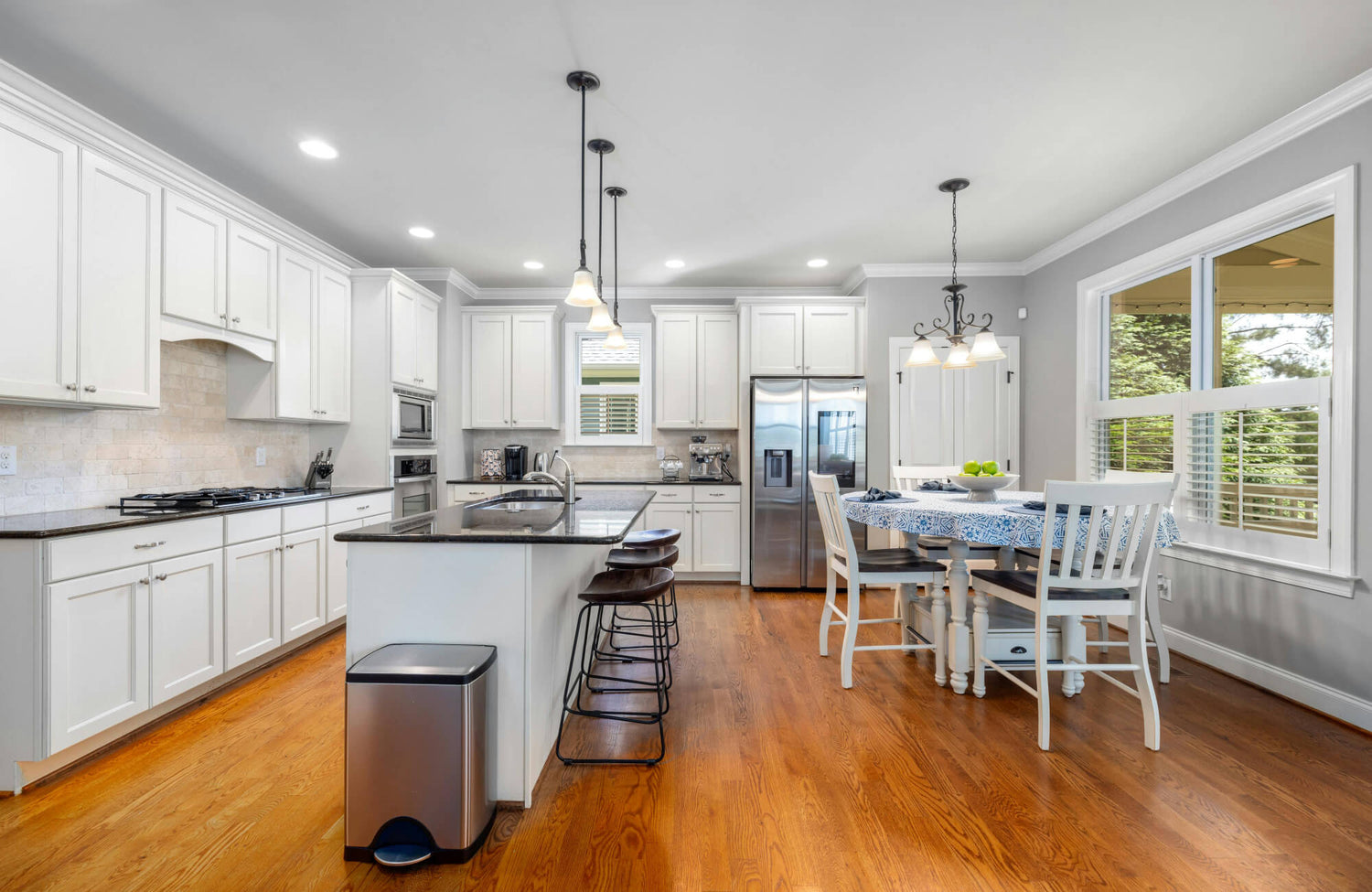
At first glance, a counter height dining table and a kitchen counter can seem almost interchangeable. They often sit at nearly the same height, appear in similar spaces, and sometimes even serve overlapping roles in everyday life. However, once you move beyond surface measurements, the similarities begin to fade. These two elements are shaped by different priorities, from how your body interacts with them to how they influence movement, conversation, and routine within a space.

Dimensional Standards and Ergonomic Geometry
Although kitchen counters and counter height tables may appear similar in height, they are engineered for very different physical interactions. Those subtle dimensional differences, combined with what happens below the surface, directly shape how your body moves, rests, and works around them.
The Fixed Standard of Built-in Surfaces
A built-in kitchen counter follows a well-established standard of 36 inches from the finished floor to the work surface. This height is designed specifically for standing tasks, allowing you to work with your forearms close to parallel with the counter while keeping your shoulders relaxed. When the counter sits at this elevation, you can chop, prep, and clean without excessive bending, which helps reduce strain on your lower back and neck over time.
Equally important, this height is locked into the larger kitchen system. Appliances such as dishwashers, slide-in ranges, and under-counter refrigerators are manufactured to fit seamlessly beneath a 36-inch counter. Once installed, adjusting that height is rarely practical without replacing cabinetry and appliances, which makes the kitchen counter a permanent ergonomic decision rather than a flexible one.
The Flexibility of Freestanding Furniture
Counter height dining tables typically fall between 34 and 36 inches, but their ergonomics revolve around seated use rather than standing work. When you sit at this height, leg clearance becomes the defining factor. The table apron, support rails, and overall construction must allow enough space for your thighs while still keeping the structure stable and balanced.
Because your feet are no longer flat on the floor, counter height seating depends heavily on footrests. Whether integrated into the table base or built into the stools themselves, these supports prevent your legs from dangling and reduce pressure behind the knees. This seated posture is also fundamentally different from how you interact with a kitchen counter, reinforcing that similar heights do not mean interchangeable comfort or function.
In addition, freestanding tables offer a level of visual and functional versatility that built-in surfaces cannot match. Designs like our Corentin Ash Round Dining Table in Wenge, 60", shown in the image above, with its dark brown finish and sculptural pedestal base, demonstrate how a table can anchor a room aesthetically while remaining adaptable. Paired with seating such as our Bower Dining Chair in Brown, the setup emphasizes comfort and cohesion while remaining easy to rearrange as needs change. Though not a counter height, this combination highlights how dining furniture is meant to evolve over time, easily repositioned or repurposed. This flexibility also reinforces the idea that freestanding tables prioritize comfort, movement, and design expression rather than the fixed utility demands of a kitchen counter.

Material Durability and Construction Integrity
Even when a kitchen counter and a counter height dining table share a similar elevation, the materials and structural systems behind them reveal very different intentions. One is engineered for intensive daily wear, while the other balances durability with comfort and visual appeal.
Porosity and Food Safety Requirements
Kitchen counters are built to withstand constant exposure to moisture, food acids, and frequent cleaning. Materials such as quartz, granite, and laminate are either non-porous by nature or sealed to prevent absorption, which helps you maintain a hygienic surface during food preparation. This resistance to staining and bacteria is essential when you are handling raw ingredients or placing hot cookware directly on the counter.
Counter height dining tables, on the other hand, prioritize tactile warmth and aesthetic presence instead of industrial durability. Wood, veneer, and composite surfaces feel inviting but are more vulnerable to heat and liquid damage. Even with protective finishes, prolonged exposure to moisture or high temperatures can leave marks. This sensitivity reinforces their role as dining and gathering surfaces rather than all-purpose prep stations.
Cantilevers and Weight Distribution
The structural support beneath a kitchen counter is what allows it to carry significant weight. Full cabinetry distributes loads evenly across the floor, making it possible to support thick stone slabs and wide overhangs without additional bracing. This internal support also enables cantilevered seating areas that extend outward while remaining stable.
By contrast, a counter-height table relies on an entirely different system. With weight transferred through legs or a central pedestal, loads are concentrated at specific points. This makes heavy materials and long overhangs impractical. To remain stable when you lean or rest your arms on the edge, dining tables also use lighter tops and carefully balanced proportions. These constraints highlight how construction integrity directly shapes what each surface can safely support.

Spatial Psychology and Social Dynamics
The placement of a surface within a room influences how you behave around it just as much as its physical dimensions. Even when heights are similar, a kitchen counter and a counter height dining table create very different social cues and expectations.
The Transitional Nature of the Kitchen Counter
A kitchen counter exists at the heart of movement and activity. Because it sits within the sink, stove, and refrigerator zone, it naturally supports fast, task-driven interactions. You are more likely to stand, lean briefly, or juggle multiple actions at once, which reinforces the idea that this surface is part of an ongoing workflow rather than a place to settle in.
The surrounding environment also strengthens that message. Small appliances, cooking tools, and everyday clutter often live on or near the counter, keeping your attention on productivity. Any conversation that happens here tends to be secondary, unfolding alongside food prep or cleanup rather than becoming the main focus.
Defining the Dedicated Dining Zone
A counter height dining table shifts the energy of the space by creating separation from the kitchen’s work areas. Because it is not tied to appliances or prep zones, it signals that the task-oriented portion of the meal has ended. When you sit around the table, your body language naturally slows, making room for conversation and connection.
Seating that wraps around the table also places everyone on equal visual footing, encouraging eye contact and shared engagement. Although the height keeps the atmosphere casual, the lack of kitchen distractions allows you to linger longer, eat more mindfully, and use the table as a true gathering point rather than a temporary stop.
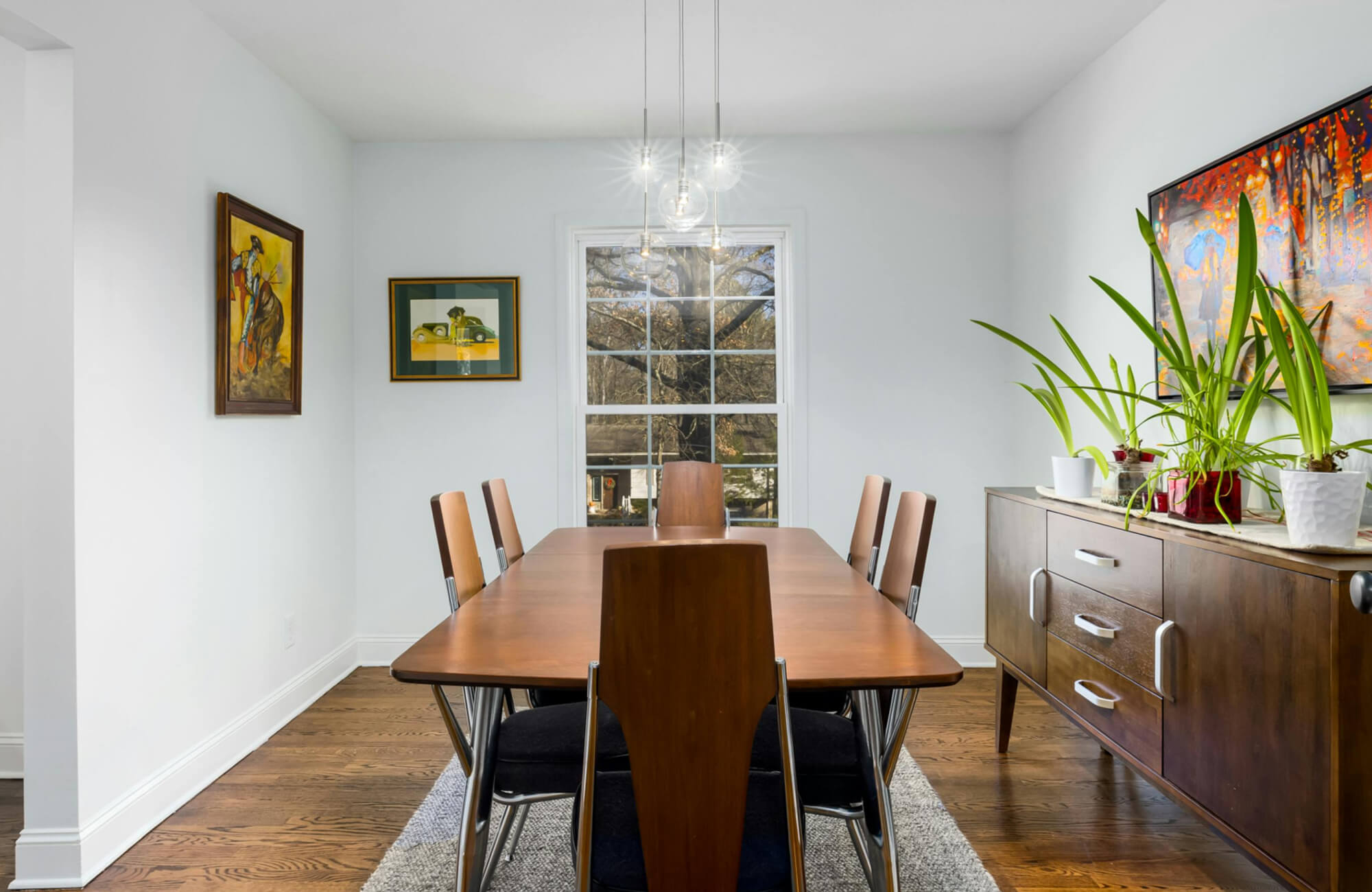
In spaces designed for intentional gathering, a well-proportioned dining table helps define a true sense of occasion. Our Bastien Walnut Dining Table, 120" x 42", shown in the image above and finished in a warm medium brown tone, establishes a clear visual and social anchor within the room. Surrounding it with seating like our Leticia Dining Chair in Cream introduces a lighter contrast that softens the table’s solid presence while keeping the setting comfortable and inviting. Rather than functioning as a counter height surface, the table’s generous scale and grounded form separate dining from nearby work zones, reinforcing the idea that meals are meant for connection rather than convenience. This intentional distinction encourages longer conversations and more meaningful moments around the table.

Versatility in Small-Scale Living
In smaller areas, every furnishing decision influences how flexible and open the space feels. Choosing between a built-in counter and a counter height table can determine whether your layout feels fixed or adaptable.
Mobile Utility vs Permanent Footprint
Built-in counters and islands establish permanent circulation paths the moment they are installed. Because they are anchored to the floor and tied into cabinetry, their footprint dictates how you move through the room day after day. In compact layouts, this lack of flexibility can become limiting as your needs evolve, whether you want more open space for entertaining or a temporary work area.
By comparison, freestanding tables bring adaptability into the layout. Pieces like our Alice 54" Round Dining Table in Light Oak, shown above in a soft natural wood tone, can be repositioned with ease to support different activities throughout the day. Although it is not a counter height table, its modest scale and pedestal base make it easy to shift closer to a wall, center it for gatherings, or repurpose the surrounding space as needed. This kind of mobility allows one room to serve multiple functions, which is especially valuable in spaces where flexibility and flow matter just as much as surface area.
Visual Weight and Sightlines
Built-in counters tend to carry significant visual weight because their solid bases interrupt the view at floor level. In a tight kitchen or open-plan apartment, this can shorten sightlines and make the space feel more enclosed than it actually is. Adding additional cabinetry to gain surface area often intensifies that boxed-in feeling.
Counter height dining tables feel lighter by comparison because the area beneath them remains open. When you can see the floor extend beyond the table legs, the room feels larger and more breathable. Designs with slender frames, glass tops, or minimal supports amplify this effect, giving you the functional height of a counter without sacrificing the visual openness that small spaces depend on.

Maintenance Cycles and Longevity Expectations
Although kitchen counters and counter height dining tables may appear similar in height and function, their long-term maintenance cycles differ significantly due to how they are used and installed. Counter height dining tables are typically designed with adaptability and longevity in mind, especially when crafted from solid wood. As wear such as scratches, heat marks, or surface dulling develops, these tables can be sanded and refinished, allowing the piece to be restored rather than replaced. Over time, this ability to renew the surface enables the table to age gracefully, gaining character while maintaining full functionality.
In contrast, kitchen counters are permanent fixtures that face more rigid limitations. Materials like laminate, quartz, and engineered stone generally cannot be meaningfully resurfaced once damaged, making chips, stains, or swelling far more consequential. Additionally, built-in counters are deeply integrated with plumbing, electrical systems, and appliances, which introduces hidden points of failure and complicates repairs. When issues occur, solutions often involve costly replacements and significant disruption. Because a counter height table avoids these integrated systems altogether, its maintenance remains simpler and more predictable, making it a lower-risk, longer-lasting option for those who prioritize ease of upkeep and flexibility.
Choosing the Surface That Fits Your Life
Ultimately, a counter height dining table is not the same as a kitchen counter, even if their measurements closely align. A kitchen counter is designed as a permanent, utility-driven surface that anchors cooking and prep work, while a counter height table supports flexibility, social interaction, and adaptability over time. When you consider ergonomics, construction, spatial flow, and maintenance together, the right choice becomes less about height and more about how you live day to day. Choosing the surface that matches your habits also allows your space to feel intentional, comfortable, and genuinely supportive of your lifestyle.
If you are weighing these options and want guidance tailored to your space, having a conversation with experts can make the decision clearer and more confident. Personalized insight helps translate design theory into real-world comfort and function. Reaching out to a knowledgeable team also allows you to explore solutions that align with how you cook, gather, and live, ensuring the surface you choose truly enhances both your space and your everyday experience.