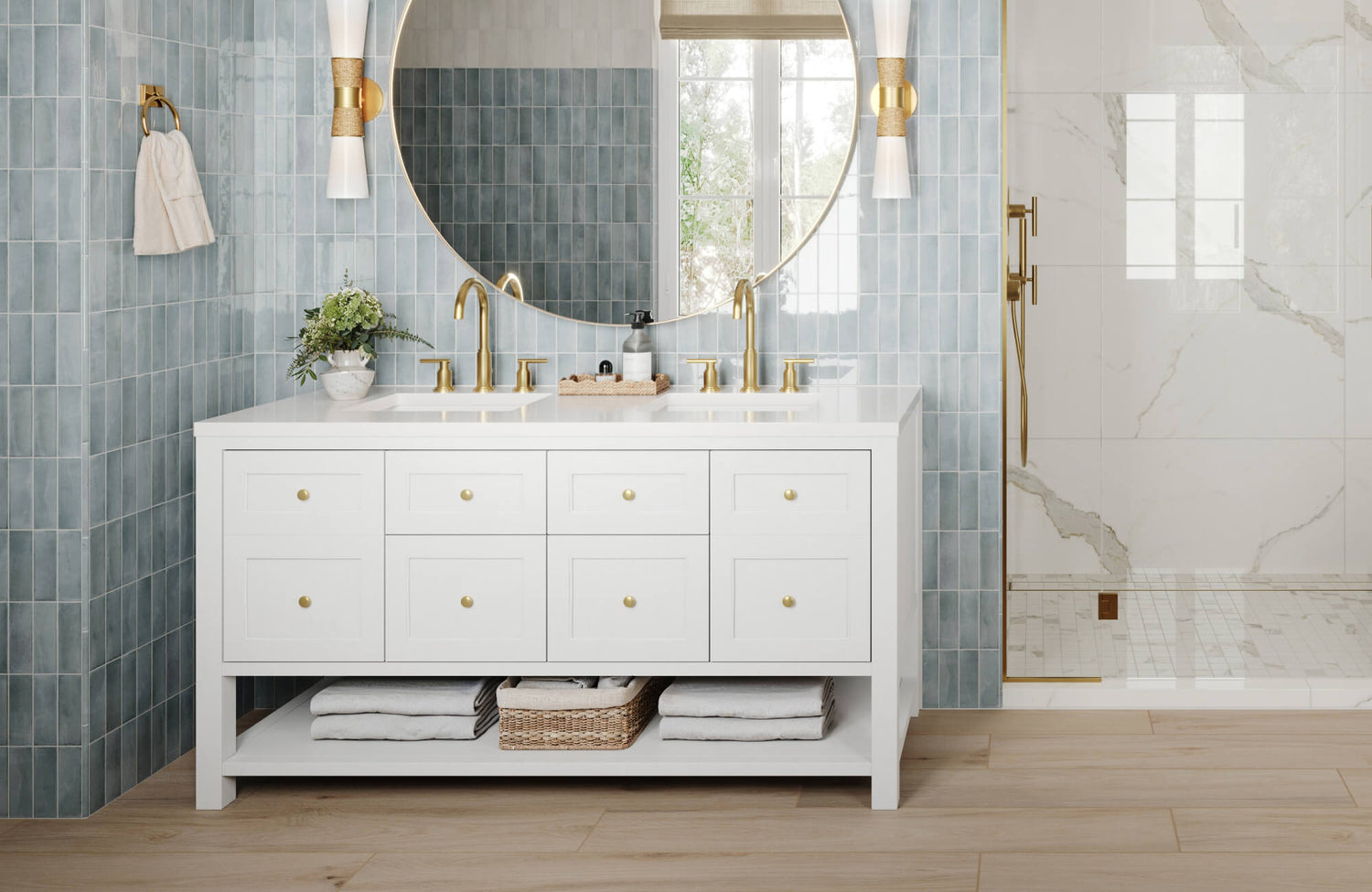
A 60-inch vanity often feels like the sweet spot between practicality and luxury, offering just enough space for two users without overwhelming the room. It’s a size that many gravitate toward when designing a shared bathroom, blending functionality with visual harmony. Yet, the real question isn’t just whether it fits. It’s whether it works for your space and lifestyle.
In this article, we’ll explore what makes a 60-inch vanity a potential double-sink contender, from dimensions and layout considerations to comfort, design, and installation factors. By understanding how each of these elements interacts, you’ll be able to determine whether this popular size can truly enhance your bathroom’s usability and aesthetic appeal.

Standard Dimensions and Requirements for Double Vanities
Before committing to a 60-inch vanity with two sinks, it’s essential to understand the standards that make a dual-sink layout both functional and comfortable. A well-planned design goes beyond simply fitting two basins on a counter. It’s about achieving harmony between sink size, countertop space, and daily usability. Most sinks range from 16 to 20 inches wide, meaning a 60-inch vanity can comfortably accommodate two, only if the spacing is carefully managed. A 4- to 6-inch center bridge is also ideal, providing elbow room while serving as a shared zone for essentials like soap dispensers or storage trays. Equally important are the small landing zones on either side, which offer space for personal items and prevent clutter from overlapping between users. A beautifully balanced example is our Elodie 60" Double Vanity in Light Natural Oak with 3 cm White Zeus Quartz Top, shown in the image above, which combines brown tones with a crisp quartz surface, creating a timeless look that enhances both function and style in any bathroom.
Beneath the surface, proper plumbing alignment is just as critical to achieving a smooth installation. A double-sink vanity requires two drain assemblies, dual water supply lines, and enough clearance within the wall and floor cavities to accommodate P-traps and valves. Even minor misalignments can cause costly delays or structural adjustments later. In older or remodeled bathrooms, uneven walls or tight alcoves may also demand “scribe fitting,” where the vanity edges are trimmed to sit flush. Allowing for these small details helps the installation look seamless while ensuring all components function properly.

Evaluating Functionality and User Comfort
A 60-inch double vanity may seem spacious at first glance, but its true effectiveness depends on how well it supports everyday use. For a shared setup to function smoothly, it must provide not only adequate surface space but also thoughtful storage and enough room for comfortable movement.
Counter Space and Storage Balance
With two sinks occupying a majority of the countertop, every remaining inch must be used strategically. You need enough surface area between and around the basins to set down daily essentials like grooming tools, skincare products, or cups without feeling crowded. If counter space is too limited, it can quickly become cluttered, defeating the purpose of a dual setup. Because of that, the layout of a 60-inch vanity must prioritize functional zones for both users, even in tight quarters. A refined example of this thoughtful balance is our Josephine 60" Double Vanity in Satin Drifted Black Veneer with Carrara Marble Top. Its rich, black finish paired with a bright marble surface showcases how elegant design and practical spacing can coexist beautifully, providing ample room for everyday routines while enhancing the bathroom’s overall sophistication.
Underneath the countertop, storage plays an equally critical role. A smart configuration typically includes a central stack of drawers flanked by cabinets beneath each sink. This setup provides a balanced division of space and keeps plumbing access intact. Deep, full-extension drawers can also house taller bottles, hair tools, or folded towels, while soft-close mechanisms and sturdy joinery add to their longevity and ease of use. With high-quality construction and internal organizers, you’ll be able to maintain order and quickly access your essentials, key to making a shared bathroom feel personalized and efficient rather than cramped or chaotic.
Shared Use
Comfort becomes just as important as layout when two people share the same vanity. Although 60 inches technically divides into two 30-inch sections, that doesn’t automatically guarantee ease of use. For truly comfortable interaction, each person needs space to move freely without bumping elbows or feeling restricted by nearby walls or cabinetry. Ideally, there should be at least 18 inches from the center of each sink to any side obstruction, which allows for relaxed arm movement and avoids awkward body positioning. One standout designed example of this balance is our Sasha 60" Double Vanity in Mid Century Walnut with 3 cm White Zeus Quartz Top, which pairs dark brown tones with a sleek quartz surface. As seen in the photo above, its clean lines, brass accents, and generous sink spacing demonstrate how thoughtful proportions and material choices can elevate both comfort and functionality in a shared bathroom.
In addition to width, the height of the vanity also affects your experience. A countertop height between 32 and 36 inches typically supports a natural posture, reducing back strain during daily routines like brushing teeth or washing your face. Visual ergonomics also comes into play. Mounting individual mirrors over each basin helps prevent users from leaning across one another and creates a cleaner, more symmetrical appearance. These small details collectively improve the shared experience, making your vanity not just a fixture, but a functional and comfortable part of your daily routine.

Considering Bathroom Size and Layout Compatibility
Just because a 60-inch vanity fits within your bathroom’s dimensions doesn’t mean it’s the right choice for the space. Beyond physical fit, it must support smooth movement, proper clearance, and everyday functionality. Design experts generally recommend at least 30 inches of open floor space in front of the vanity to allow for comfortable use and access to drawers or doors. If it faces a toilet, tub, or shower, maintaining this distance becomes essential to avoid congestion. Likewise, leaving about 15 inches of space on each side helps prevent a cramped feel and allows for convenient features like towel hooks or shelving. In smaller bathrooms, especially those under seven feet wide, squeezing in a 60-inch vanity may compromise circulation, making it harder to navigate the room and diminishing overall comfort.
Proportion and visual balance are just as critical as physical spacing. Because of its width, a 60-inch vanity naturally becomes a focal point and should be placed with symmetry and intent, ideally centered on the main wall to ground the design. In bathrooms of 80 square feet or more, this size often feels well-scaled, leaving room for mirrors, sconces, and storage accents to complement it harmoniously. However, in smaller or asymmetrical layouts, the same vanity can overpower the space or make one side appear heavier than the other. To maintain equilibrium, consider how it interacts with other elements like lighting and wall height. When thoughtfully positioned and proportioned, a 60-inch vanity not only fits physically but also enhances the room’s flow, creating a bathroom that feels cohesive, open, and visually balanced.
A great way to see these principles in action is through our Bridgette 60" Double Vanity in Light Natural Oak with 3 cm White Zeus Quartz Top, displayed in the picture above. This piece exemplifies how thoughtful design and proportion can elevate both function and flow. The warm, light brown finish softens the look of the space, while the sleek white quartz top adds a clean, modern contrast. Its open shelving and balanced drawer layout also create an airy yet grounded feel, making it an ideal choice for bathrooms that aim to combine practicality with timeless elegance.

Style and Design Adaptability
A 60-inch vanity is a strong visual presence that influences the entire aesthetic of your bathroom. Its configuration, finish, and detailing should work in harmony with your overall design vision to create a cohesive and inviting space.
Popular Configurations and Design Options
When selecting a 60-inch vanity, the configuration you choose will shape both how the room looks and how it feels to use. A freestanding vanity, which rests directly on the floor, often gives the impression of a furniture-style piece. This option provides a sense of grounded stability and typically offers generous storage, making it a popular choice in traditional or transitional bathrooms. Its solid base also creates visual weight, which can help anchor the design, especially in larger spaces.
On the other hand, a floating vanity, mounted to the wall with an open gap beneath, introduces a more contemporary aesthetic. This style is particularly effective in smaller or narrow bathrooms, as it frees up visible floor space and creates the illusion of a larger, lighter environment. Then there’s the modular approach, where two single vanities are paired with a center storage unit. This setup adds a semi-custom look and allows you to fine-tune both symmetry and functionality. Whether you're drawn to the bold presence of a freestanding unit or the clean lines of a wall-mounted model, the configuration should complement the size and layout of your room while reinforcing your design goals.
Choosing Finishes and Fixtures
Just as important as the vanity’s form is its finish. The color, material, and hardware you select will directly impact the atmosphere of the room. Lighter finishes like matte white, soft beige, or natural oak tend to reflect light well, making the space feel brighter and more open. These tones work beautifully in coastal, Scandinavian, or minimalist designs where airiness and simplicity are key. In contrast, darker finishes such as espresso, walnut, or charcoal offer a striking counterpoint. They add drama and depth, often becoming a visual anchor in the room. These rich tones pair well with industrial, rustic, or moody modern styles.
Your choice of fixtures and hardware also provides the final layer of polish. Sleek, linear pulls in matte black or brushed nickel create a streamlined look that suits modern spaces, while rounded knobs or antique finishes like brass or oil-rubbed bronze lend warmth and character to more traditional settings. These small touches may seem subtle, but together they help unify the vanity with other elements in the room, from lighting to faucets to tile choices. For instance, our Gabriella 60" Double Vanity in Light Natural Oak with 3 cm White Zeus Quartz Top, featured above, demonstrates how refined details and quality materials can tie a bathroom together. Its natural brown finish and crisp quartz surface blend seamlessly with brass accents and soft lighting, resulting in a cohesive design that feels both elevated and effortlessly inviting.

Comparing 60-Inch Vanities with Other Sizes
Understanding how a 60-inch vanity stacks up against smaller and larger alternatives helps you make a more informed decision. Although it sits comfortably in the middle range, its value truly depends on how your space, budget, and functionality needs align.
Smaller Vanities
When comparing a 60-inch vanity to a 48-inch model, the difference in usability becomes clear fairly quickly. A 48-inch vanity can technically support two sinks, but the reduced width often results in narrower basins and limited counter space. With less than 24 inches per user, you'll likely find yourself elbow-to-elbow during busy mornings. Also, there’s often only a couple of inches between sinks, which leaves little room for shared essentials or personal items. This setup might work for occasional use in a guest bath, but for everyday routines, it can start to feel cramped and inefficient.
Even so, a 48-inch vanity does have its advantages, especially in smaller bathrooms. If you’re working within a tight space, the reduced width makes it easier to maintain clearances and navigate around the space. It also usually involves fewer plumbing adjustments, which can help keep installation costs lower. If your priority is simply squeezing dual function into a compact layout, the 48-inch unit might be sufficient. But if you're looking for daily comfort and better separation between users, the 60-inch vanity provides a noticeable improvement.
Larger Vanities
If you shift your focus to the 72-inch vanity, the equation changes again, tipping toward luxury and spaciousness. With 36 inches per person, each user gets a generous amount of personal space, making the daily routine feel relaxed and unhurried. This size often accommodates wider drawers, additional shelving, and more complex storage solutions, giving you greater flexibility in organizing everything from towels to hair tools. The extra width also opens up design possibilities, such as larger mirrors or integrated linen towers.
However, these benefits come with trade-offs. A 72-inch vanity requires a more spacious bathroom, ideally 100 square feet or larger, to maintain comfortable circulation. It also increases material and labor costs, especially if wall modifications or plumbing rerouting are necessary. If your layout can handle it and you're aiming for a high-end, spa-like experience, the investment can be worth it. But if you're looking for a balanced solution that delivers dual functionality without overwhelming your space or your budget, the 60-inch vanity strikes the best middle ground. It offers meaningful upgrades over smaller options while avoiding the spatial and financial demands of a larger installation.
Making the Most of a 60-Inch Double Vanity
A 60-inch vanity can be an excellent choice for a double-sink setup when thoughtfully matched with your bathroom’s proportions, layout, and daily needs. It strikes a satisfying balance between shared function and spatial efficiency, offering enough room for two people to get ready comfortably. When properly installed and styled, it transforms into both a design centerpiece and a practical hub for daily routines. With the right planning and attention to proportion, a 60-inch vanity isn’t just a middle-ground option. It’s also a perfectly measured solution that delivers comfort, beauty, and long-term value to your bathroom space.
If you’re ready to find the perfect 60-inch vanity or need expert guidance on selecting the right size and style for your bathroom, our team is here to help. Our specialists can walk you through material options, finishes, and configurations to ensure your vanity complements your space beautifully. Whether you’re planning a full remodel or a simple upgrade, we’ll help you make confident, well-informed design choices. Visit our Contact Us page to connect with our team and start transforming your bathroom into a space that’s as functional as it is timeless!