Wood-look flooring has transformed modern interiors, offering the warmth and organic beauty of hardwood with the practicality of alternative materials. Today, two contenders dominate the category: luxury vinyl plank (LVP) and wood-look porcelain tile.
Both claim to capture the intricate grain patterns, tonal variations, and textures of real wood, but can porcelain truly deliver a more realistic aesthetic than luxury vinyl?
To answer that, we’ll explore how each surface is crafted, how pattern variation affects authenticity, and how durability and texture contribute to the illusion. Let’s uncover why porcelain tile is increasingly seen as the gold standard for true-to-life wood visuals.

How Each "Wood Look" Is Technologically Crafted
To understand why one surface looks more like real wood than another, it helps to look beneath the surface, literally. The artistry of wood-look flooring begins with technology, where advanced printing and texturing techniques bring every grain and knot to life. Let’s explore how porcelain and luxury vinyl each achieve their distinct interpretations of wood.
The High-Resolution Print Layer of Luxury Vinyl
Luxury vinyl plank flooring starts with a high-resolution photographic film layer, a printed image of real wood placed beneath a clear wear layer. This film captures knots, grain swirls, and tonal shifts with impressive sharpness, thanks to modern digital printing technology.
The result is a surface that looks remarkably convincing at first glance. Manufacturers have pushed the boundaries with high-definition printing, allowing LVP to mimic even subtle hand-scraped textures or wire-brushed details.
However, because the wood image is applied to a flexible vinyl substrate, its realism depends heavily on the lighting and viewing angle. The flatness of vinyl sometimes limits the dimensional quality that real wood, and porcelain, naturally exude.
The High-Definition Inkjet Infusion of Porcelain Tile
Porcelain tile takes a more sophisticated approach. Instead of a printed film, the wood look is infused directly onto the tile using high-definition inkjet technology. This process sprays mineral-based inks and glazes into the tile’s surface, bonding permanently during the kiln-firing stage.
As shown in the image featuring Edward Martin’s Jameson 8x48 Matte Porcelain Tile in Umber, this technology captures the warmth and realism of natural wood with remarkable depth. The tile’s soft, earthy undertones and authentic grain patterns highlight the precision of inkjet infusion, giving each plank an organic, handcrafted character. Even better, porcelain can achieve matte, semi-gloss, or hand-scraped finishes with incredible precision, giving each tile its own organic personality.
How the Wear Layer Affects the Final Look
The topmost layer of any “wood look” flooring is crucial in shaping its visual realism.
For luxury vinyl, this is the wear layer, a transparent polyurethane coating that protects the print below. While thicker wear layers (20 mil or more) provide better protection against scuffs, they can also slightly blur the print, creating a faint plastic sheen that diminishes realism under natural light.
Porcelain tile, on the other hand, has no wear layer to distort the image. Its glazed surface is fired into the tile itself, maintaining crisp detail and color integrity indefinitely. Over time, porcelain maintains the same clarity and depth it had on day one, no dulling, clouding, or discoloration.

The Critical Impact of Pattern Repetition and Variation
Once you understand how these visuals are created, the next question is how unique they appear once installed. Real wood never repeats itself, and the same rule applies when crafting a convincing wood-look floor. Here’s why variation, and the way it’s handled, plays such a defining role in authenticity.
Understanding Pattern Repeats in Luxury Vinyl
Luxury vinyl manufacturers typically use a limited number of wood images, often between six and twelve unique plank visuals per style. These patterns are then repeated throughout the floor.
While advanced printing and layout planning can disguise repetition to some degree, a trained eye (or even casual observer) can spot recurring knots or grain lines in large rooms. The more expansive your space, the more noticeable these repeats become.
For smaller rooms, LVP’s repetition may not stand out, but for open-concept homes, the uniformity can subtly betray its synthetic origins.
How Porcelain Tile Achieves Superior Uniqueness
Porcelain tile manufacturers have leveraged digital inkjet printers capable of creating hundreds of distinct faces for a single wood-look collection. Some premium lines even feature over 40 unique tile designs before any repetition occurs.
As seen in the image featuring Edward Martin’s Jameson 8x48 Matte Porcelain Tile in Ash, this technology captures the subtle tonal shifts and soft grain movement that bring authenticity to every piece. The tile’s pale, weathered hues and delicate wood detailing reflect nature’s organic variation, offering a truly bespoke feel across expansive layouts.
Each tile’s color tone, knot placement, and grain direction vary naturally, mirroring the randomness of nature. The result is a surface with exceptional visual diversity, one that can span large areas without betraying its manufactured origin. Because porcelain tiles are cut individually and can be laid in random patterns, the finished floor achieves a level of variation that even high-end vinyl struggles to match.
The Modern Solution to Grout Lines
One traditional disadvantage of tile has been grout, something real wood floors don’t have. However, modern installation methods have nearly eliminated this drawback.
With rectified porcelain tile, edges are precisely machine-cut to allow for minimal grout joints, sometimes as narrow as 1/16 inch. Matching grout colors blend seamlessly, creating a continuous, plank-like appearance.
From a standing position, these ultra-tight joints virtually disappear, letting the eye read the floor as uninterrupted wood planks. Combined with realistic textures and long-format tiles (up to 48 inches or more), porcelain convincingly mimics genuine hardwood installations.

Comparing the Tactile Experience of Texture and Feel
Visual realism is only half the story; how a surface feels underfoot completes the illusion. After all, the tactile experience is what convinces your senses that you’re standing on real wood. In this section, we’ll explore how vinyl and porcelain differ when it comes to texture, depth, and the physical connection to your space.
"Embossed in Register" Technology in Vinyl
Luxury vinyl has made impressive strides with Embossed in Register (EIR) technology, which synchronizes the printed wood image with the raised texture of the wear layer. This alignment allows your fingertips to trace the same grooves and ridges you see in the design.
The tactile realism is impressive, especially in premium LVP collections. However, vinyl’s softness limits how deeply those textures can be pressed without compromising durability. Over time, foot flow can flatten these micro-embossed ridges, slightly dulling the effect.
The Depth and Durability of Porcelain’s Texture
Porcelain tile achieves texture through molded surface reliefs and glaze layering, fired at high temperatures to lock in depth permanently. Unlike vinyl’s pressed impressions, porcelain’s topography is part of the tile itself, it doesn’t wear down with use.
As illustrated above by Edward Martin’s Preston 8x48 Matte Porcelain Tile in White Oak, this craftsmanship produces a natural wood grain texture that feels genuine to the touch. The tile’s delicate knots and softly brushed details mirror the tactile warmth of real oak while maintaining the long-lasting durability porcelain is known for.
This permanence means textures such as wire-brushed oak, hand-scraped walnut, or reclaimed barnwood remain visually and physically consistent for decades. When touched, porcelain’s surface delivers a true sense of grain depth that vinyl simply cannot replicate due to its flexible composition.
The Underfoot Feel of Solidity and Substance
Beyond surface detail, the density of the material profoundly affects perception. Porcelain, being fired at over 2,000°F, offers a hardness and solidity that mimics the tactile experience of walking on actual hardwood planks.
Luxury vinyl, though warmer and softer underfoot, can feel slightly hollow or cushioned, more akin to laminate. For homeowners who prioritize the authentic, grounded feel of real wood, porcelain provides that unmistakable sense of permanence and quality.

How Durability and Longevity Impact the Illusion
Even the most realistic surface loses its magic if it can’t stand up to daily life. The way a material wears over time directly affects how “real” it continues to look. To finish the comparison, let’s see how porcelain and luxury vinyl perform when exposed to scratches, moisture, and the passage of years.
Scratch and Dent Resistance in Everyday Life
Luxury vinyl’s flexible wear layer gives it an advantage in resisting dents from dropped items or heavy furniture, making it ideal for families with children or pets. However, vinyl is more prone to surface scratches, especially in busy zones or under pet claws.
Porcelain tile, by contrast, ranks near the top of the Mohs hardness scale, meaning it’s nearly impervious to scratches from everyday use. Even dragged furniture, rolling office chairs, or sandy shoes rarely leave a mark. For households seeking a truly “worry-free” surface, porcelain stands out as the clear winner in long-term resilience.
The Ultimate Waterproof Solution
Both luxury vinyl and porcelain are advertised as waterproof, but the difference lies in true impermeability.
Vinyl is water-resistant, its planks can repel moisture from above, but prolonged exposure or standing water can sometimes seep into seams, causing warping or adhesive issues.
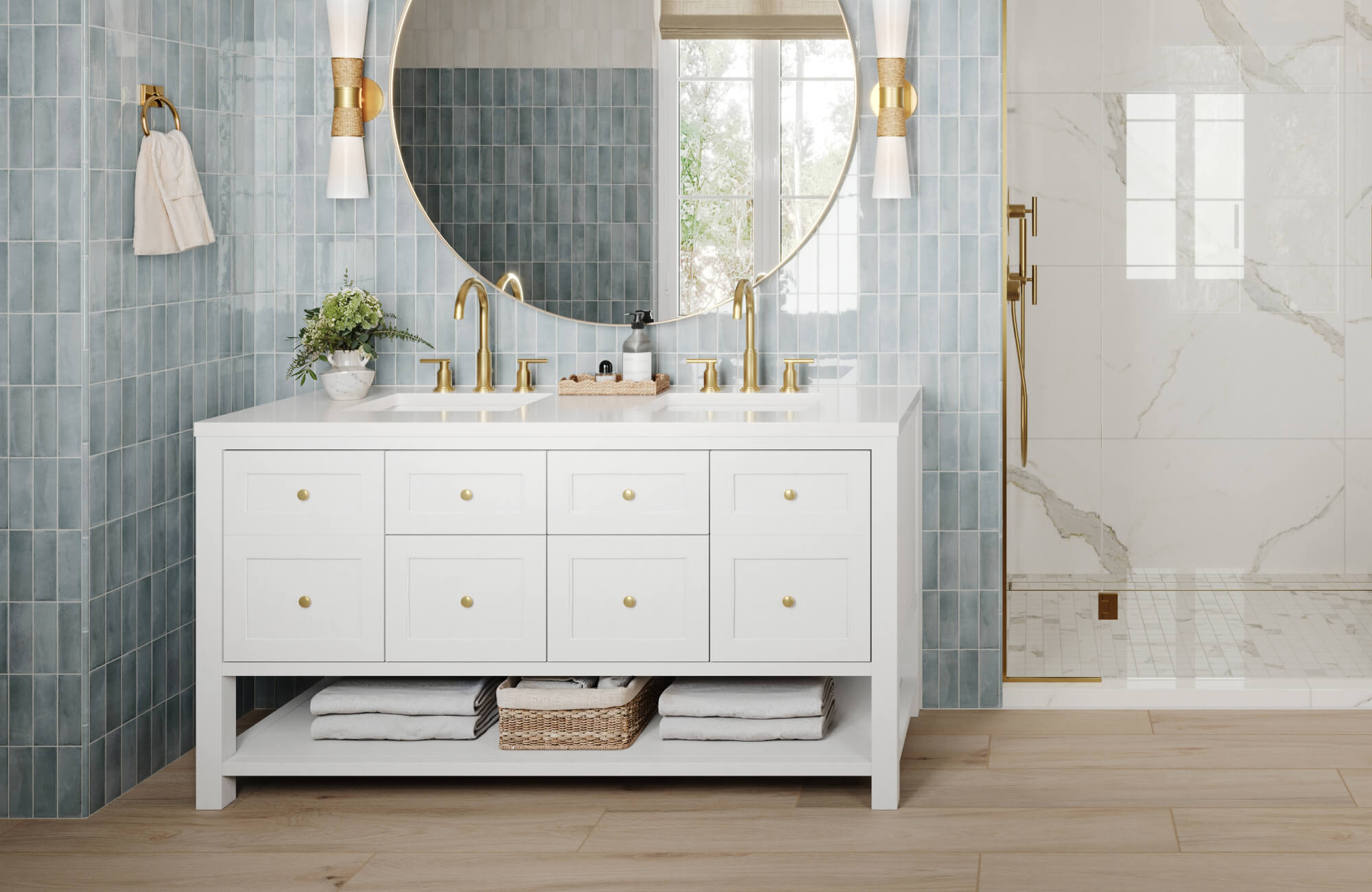
As illustrated in the bathroom setting above featuring Edward Martin’s Preston 8x48 Matte Porcelain Tile in Birch, porcelain’s dense, nonporous composition makes it the ideal choice for moisture-prone spaces. Its light, natural wood tone enhances the airy feel of the room while withstanding constant humidity and water exposure without any swelling or distortion.
Porcelain tile, being fired to near glass-like density, is completely impervious to water. It can be installed in showers, outdoor patios, or pool decks without risk of damage. For bathrooms, mudrooms, and kitchens, spaces where moisture is constant, porcelain offers unmatched reliability.
Maintaining the "New Wood" Look for Decades
Over time, vinyl’s wear layer may dull or discolor slightly from UV exposure, foot fall, or cleaning agents. Once this layer wears through, the printed design beneath becomes vulnerable and cannot be refinished.
Porcelain, on the other hand, maintains its appearance for decades with minimal maintenance. It resists fading, staining, and surface wear, simple cleaning with warm water and a neutral cleaner keeps it looking freshly installed year after year. To preserve that lasting beauty, homeowners should follow the manufacturer’s recommended care and maintenance guidelines, ensuring the tile continues to perform at its best for decades to come.
Homeowners who choose porcelain for its wood look often find that, even after twenty years, it still looks as vibrant as the day it was laid, a key reason it’s favored in high-end residential and commercial design.
For Ultimate Realism, Porcelain Sets the Standard
When it comes to replicating the natural beauty of wood, porcelain tile remains the gold standard for authenticity and longevity. Its depth of detail, variation, and durable texture create a surface that not only resembles wood but truly captures its character, lasting beautifully through years of use.
With Edward Martin’s Augmented Reality (AR) Visualization Tool, you can instantly preview how different porcelain tiles will look in your own space. Once you’ve found the perfect match, use Edward Martin’s tile sample ordering feature to experience the texture and tone firsthand, bringing digital inspiration to life with complete confidence.