Choosing the right rug can completely change the look and feel of a room, and few options are as versatile as blue rugs. From soft, airy pastels to rich navy tones, blue brings both calm and character into any home. It’s a color that works across design styles, whether you’re aiming for a relaxed coastal vibe, a modern statement, or a timeless traditional look. In this guide, we’ll explore how to pick the perfect blue rug for your space, covering shades, materials, styling tips, and common mistakes to avoid.

Why Blue Rugs Work Well in Any Space
Blue rugs bring both versatility and timeless appeal to interiors, making them a favorite across design styles. This color naturally evokes calm, grounding, and refreshing energy, which makes it easy to layer into spaces ranging from cozy living rooms to modern bedrooms. Because of its emotional impact and adaptability, blue serves as a reliable foundation for nearly any design vision.
The Psychology of Blue in Home Design
Blue tones are often linked to feelings of tranquility, cleanliness, and openness, which is why they’re a natural fit for interiors that aim to feel welcoming and restful. For example, light blues can create an airy, spacious effect that works well in smaller rooms or minimalist spaces, while darker shades bring depth and a sense of grounding to larger areas. This flexibility allows homeowners to select the right shade of blue to set the desired mood in each room.
Versatility Across Styles
One of the strengths of blue rugs is their ability to blend seamlessly with different design aesthetics. In coastal interiors, soft blues mimic the sea and sky, while modern spaces often benefit from navy or slate rugs that highlight clean lines. Traditional settings embrace intricate patterns with rich blue tones, while bohemian styles use layered blues for a free-spirited, eclectic look. No matter the theme, a blue rug provides a unifying element that feels both stylish and approachable.
Balancing Blue with Other Colors
Pairing blue rugs with other colors can transform the way they influence a room’s design. Neutrals like beige, gray, and white allow the blue to stand out without overwhelming the space, while warm accents such as gold, terracotta, or rust bring contrast and warmth. For those who prefer a bold statement, mixing blue with vibrant colors like mustard or emerald can create a striking visual impact. The key lies in balance; using blue as either a grounding base or a lively accent to achieve harmony in the overall palette.

Choosing the Right Shade of Blue
Not all blues create the same effect, which is why choosing the right shade is key to making a room feel balanced and intentional. The mood, lighting, and size of the space all play a role in how a blue rug will look once it’s in place. Picking the right tone ensures the rug not only complements the room but also supports the overall design style.
Light Blues for Airy, Relaxed Spaces
Light blue rugs reflect light well, helping compact spaces feel larger and more breathable. These shades also work beautifully in Scandinavian or coastal designs, where simplicity and natural inspiration are central. A pale blue rug paired with light wood or white walls can instantly make a room feel serene and uncluttered.
At the same time, light blues bring a relaxed, calming presence that suits spaces meant for unwinding, such as bedrooms or casual living areas. They blend well with neutrals and other soft tones, making them easy to coordinate without feeling overwhelming. For instance, a powder blue rug in a sunlit room can enhance that refreshing, breezy atmosphere. This makes light blues a dependable choice for anyone looking to create a gentle, inviting environment.
Navy and Dark Blues for Depth
Navy and other deep blue rugs work especially well in larger rooms, where they anchor the space and prevent it from feeling too expansive or empty. Paired with rich textures like leather or wood, navy rugs bring a polished, upscale feel. They also complement modern or transitional interiors that lean toward dramatic or moody aesthetics.
Beyond style, dark blues have a practical side too; they tend to conceal dirt and wear better than lighter shades. This makes them a smart option for high-activity spaces such as family rooms or dining areas. When paired with lighter accents like cream or beige, navy rugs create a striking contrast, giving the room dimension and balance. Their adaptability makes them a timeless, versatile choice.
Patterned vs. Solid Blues
Patterned blue rugs are a great way to add energy and character to a room. Bold patterns work well in spaces that need a focal point, like a neutral living room or under a dining table, where you want more visual interest. Geometric or traditional motifs in shades of blue can also highlight a particular design style, from bohemian to classic. Patterns help layer in texture and movement without overpowering the rest of the décor.
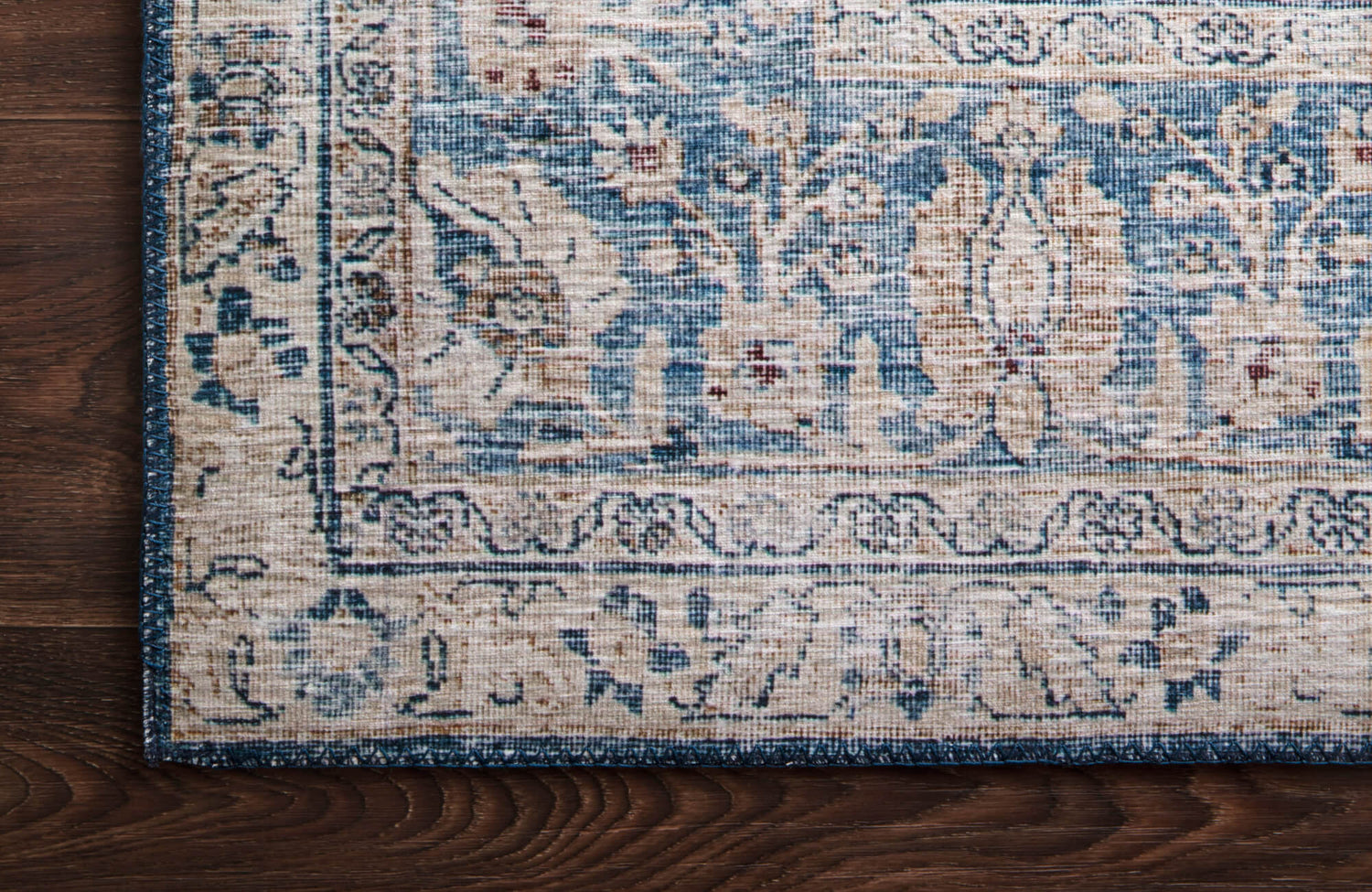
Our Mallory Wool Pile Rug in Ocean, as seen above, is a beautiful example of this balance. Its soft blue and off-white medallion pattern with gentle distressing offers a vintage-inspired look, while the 100% wool construction ensures comfort and durability. This makes it a versatile option for both modern and traditional spaces, whether in a living room, dining area, or bedroom.
On the other hand, solid blue rugs are perfect when you want to ground a space or keep the look understated. A single shade can make the room feel calmer and more cohesive, especially when paired with busy décor or statement furniture. Solid rugs also give you more flexibility with accent pieces since they won’t compete with other design elements. Choosing between patterned and solid comes down to whether you want your rug to play a supporting or starring role.

Material and Texture Considerations
When choosing a blue rug, the material plays just as big a role as the color itself. The right fiber affects durability, comfort, and how well the rug fits into your lifestyle. Below, we’ll look at how different materials and textures perform in specific settings so you can find the best match for your home.
Wool, Cotton, and Natural Fibers
Wool, cotton, and other natural fibers are classics for a reason; they’re durable, soft underfoot, and able to handle daily use with ease. A wool rug in navy or cobalt, for instance, not only adds a sense of luxury but also naturally resists stains and wear, making it ideal for living rooms or dining spaces. Cotton rugs, though lighter and less dense, bring casual charm and work well in relaxed areas like a sunroom or a child’s playroom. These natural options also breathe well, which helps them feel comfortable in a variety of climates.
Natural fiber rugs, such as jute or sisal, add texture and warmth to a blue rug’s color palette. A jute rug with blue accents, for example, grounds coastal or bohemian interiors with a tactile, earthy vibe. These rugs are highly durable, but they can be rougher underfoot, so they’re best for entryways or other busy areas rather than bedrooms. Pairing natural fibers with blue tones creates a balance between organic texture and versatile color. This combination allows a rug to feel both grounded and stylish in any setting.
Synthetic Fibers
Synthetic materials like nylon, polyester, and polypropylene offer a different kind of practicality. These rugs are budget-friendly, easy to clean, and highly resistant to stains, making them perfect for households with kids or pets. A light aqua synthetic rug, like our Pascal Polyester Face Rug in Lake above, in the dining area, for example, can handle spills without showing signs of wear. They also tend to hold their colors well, so a bold blue stays vibrant over time.
Another advantage of synthetics is their adaptability in areas that see frequent use, such as entryways or family rooms. Unlike some natural fibers, they don’t absorb water easily, which helps them resist mildew. This makes them a reliable option in homes where durability comes first. While they may not have the same luxurious feel as wool, the wide variety of patterns and shades of blue available in synthetics ensures there’s a stylish option for nearly every space. For many homeowners, this mix of durability and design flexibility is hard to beat.
Plush and Shag Styles
Plush and shag rugs offer a completely different appeal, bringing comfort and coziness to spaces where relaxation is the priority. A light blue shag rug in the bedroom, for instance, feels soft and inviting, setting the tone for a restful environment. These rugs create warmth underfoot, which makes them especially appealing during colder months. While they don’t suit heavily used spaces, their tactile quality adds a sense of luxury to any room meant for unwinding.
Because they’re thicker, plush and shag rugs need a little more attention when it comes to maintenance. Dirt can settle deep into the fibers, so regular vacuuming is essential to keep them fresh. They also work best in rooms where spills are unlikely since cleaning can be more challenging compared to flat-weave or synthetic options. That said, pairing a plush texture with rich navy or patterned blue can transform a room into a stylish yet comfortable retreat. For anyone looking to combine color with softness, these rugs deliver beautifully.

Styling Tips for Blue Rugs
Blue rugs can be more than just a floor covering; they can shape the entire atmosphere of a room. With thoughtful styling choices, they highlight furniture, add layers of texture, and create a polished, balanced design. Below are a few ways to make blue rugs truly shine in your space.
Layering with Neutral Rugs
Layering is one of the most effective ways to add dimension to a room, and pairing a blue rug with a neutral base rug like jute or sisal works beautifully. The organic textures of these natural fibers provide a grounding effect while allowing the blue tones to stand out. For instance, placing a navy rug over a light jute base creates visual depth without overwhelming the room. This approach also adds flexibility, letting you refresh the style simply by swapping out the top rug.
Coordinating with Furniture and Decor
The key to making a blue rug feel at home in a room is to thoughtfully coordinate it with furniture and decor. A soft blue rug can complement lighter wood finishes and linen upholstery, while deeper navy shades pair well with rich leather or darker wood tones. Accessories like throw pillows, curtains, or artwork can echo the rug’s tones, tying the room together effortlessly. By balancing colors this way, the rug becomes an anchor point in the design rather than just an accent.

Mistakes to Avoid When Choosing a Blue Rug
Even though blue rugs are versatile and stylish, it’s still easy to run into missteps when selecting one for your home. From sizing issues to balancing color and considering upkeep, a few common pitfalls can make the difference between a rug that enhances your space and one that feels out of place. By being mindful of these factors, you can avoid frustration and choose a rug that looks good and lasts.
Picking the Wrong Size
One of the most frequent mistakes homeowners make is choosing a rug that’s either too small or too large for the room. In living rooms, rugs should generally anchor the seating area with at least the front legs of furniture resting on the rug, while bedrooms often work best with rugs extending beyond the bed frame. Dining areas require enough coverage so chairs remain on the rug even when pulled out. Keeping these size guidelines in mind ensures that the rug feels integrated rather than floating awkwardly in the space.
Overpowering the Space with Blue
While blue is calming and versatile, too much of it can overwhelm a room if not balanced properly. A large navy rug, for example, pairs best with neutral walls, warm woods, or textured fabrics that keep the look grounded. Using accents in complementary colors, like soft creams, warm terracottas, or metallic finishes, can break up the heaviness and create harmony. This way, the rug stands out as a focal point without dominating the design.
Ignoring Maintenance Needs
Another common oversight is not considering how much care a rug material will require over time. Delicate fibers like silk or high-pile styles might look stunning, but they’re not the most practical choice for hallways, dining rooms, or busy family areas. Wool, cotton, and synthetic blends, on the other hand, are easier to clean and stand up well to everyday life. Thinking about your lifestyle before you buy helps you pick a rug that stays beautiful without demanding constant upkeep.
Choosing the Perfect Blue Rug
Blue rugs have a way of blending practicality with timeless design, making them a reliable choice for nearly every room. From calming light tones that open up compact spaces to bold navy shades that anchor large living areas, the right rug can completely transform how a room feels and functions. By paying attention to material, shade, and placement, you can choose a rug that not only enhances your space but also supports your lifestyle for years to come.
If you’re looking for guidance in finding the right blue rug, or any other design element, to match your vision, Edward Martin offers expert design consultations to help you make confident choices. Whether you’re aiming for a coastal retreat, a cozy modern space, or a refined traditional look, our team can provide tailored advice and solutions to bring your home together beautifully.