Bathroom mirrors with lights have become a popular choice, but they’re not always the best solution for every space. From built-in lighted mirrors to traditional mirrors paired with vanity lighting, each option brings its own strengths and limitations. In this blog, we’ll walk through how these setups perform in real bathrooms, what to consider based on layout and habits, and how to choose a solution that feels intentional.

Why Bathroom Mirrors With Lights Are So Popular Right Now
Bathroom mirrors with built-in lighting have become increasingly common, largely because they offer a clean, simplified look that suits many modern spaces. Their all-in-one design appeals to homeowners who want fewer visual elements competing for attention around the vanity. Below, we’ll take a closer look at why these mirrors are trending and where they tend to work best.
The Appeal Of Built-In Lighting For Streamlined Bathrooms
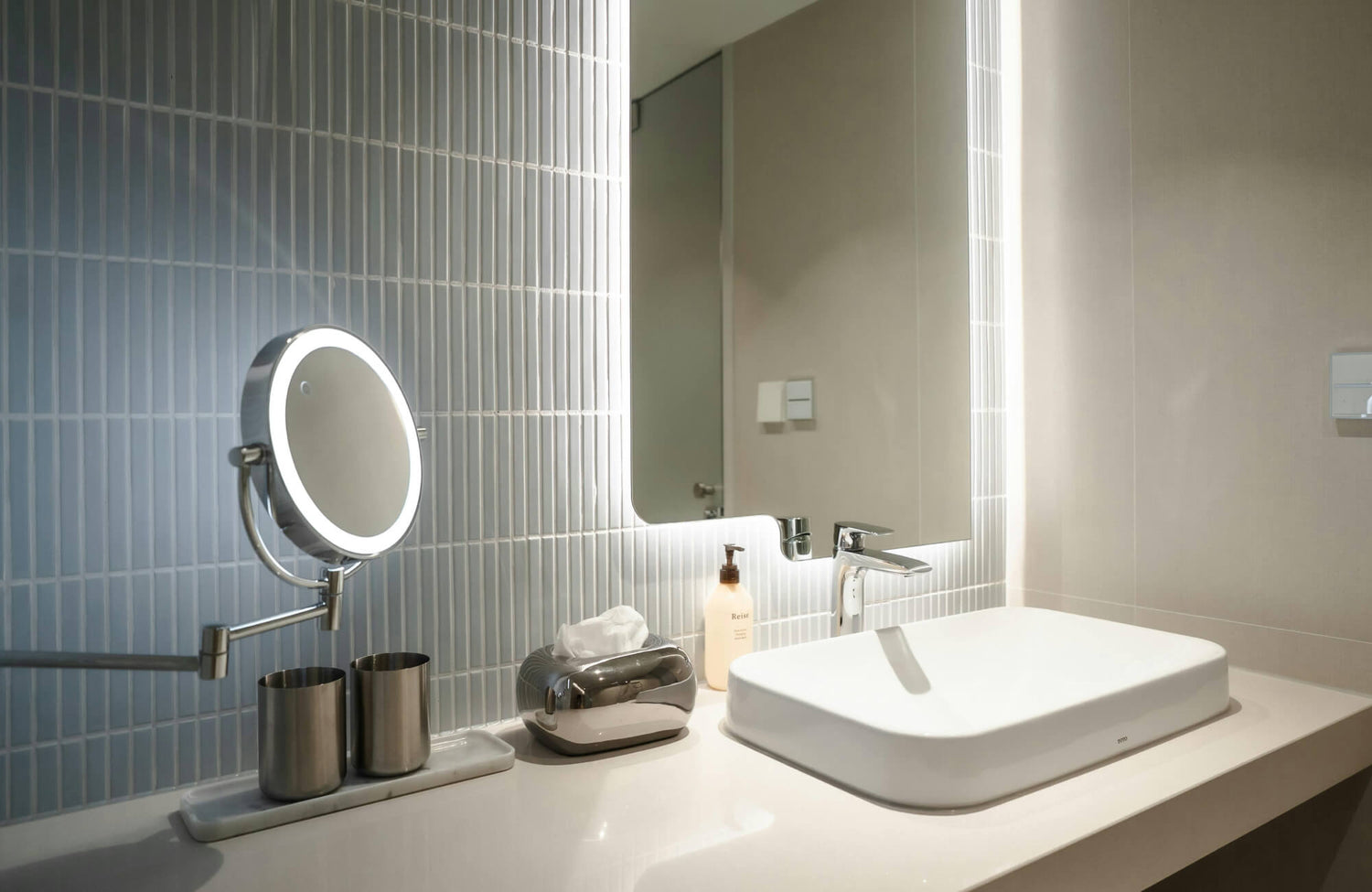
Built-in lighting appeals to many people because it simplifies the vanity area visually. Instead of coordinating a mirror and separate light fixtures, everything is housed within one clean, unified element. This approach can make a bathroom feel more organized, especially when simplicity is a priority. It also creates a single, consistent light source that feels intentional rather than layered or pieced together. For example, in bathrooms with limited wall space, this streamlined setup often feels easier to live with day to day. Because of that, lighted mirrors are frequently chosen for their simplicity and visual ease.
How Lighted Mirrors Fit Modern And Minimalist Layouts
Lighted mirrors tend to feel right at home in modern and minimalist bathroom layouts. Their slim profiles and integrated lighting support a pared-back look that avoids unnecessary visual noise. Because the lighting is built in, the mirror remains functional without drawing attention to itself. This works especially well in spaces that rely on clean lines, neutral tones, and subtle material shifts. It also helps maintain balance when other design elements are intentionally understated. As a result, lighted mirrors often feel like a natural continuation of contemporary design rather than a separate feature.
Convenience Versus Long-Term Flexibility
Convenience is one of the biggest reasons lighted mirrors have become so popular. Combining the mirror and lighting into a single piece can simplify decisions and reduce the number of elements to manage around the vanity. However, that same convenience can limit flexibility over time, especially if lighting needs or personal preferences change. Updating a lighted mirror usually means replacing the entire unit rather than adjusting one part. For instance, changing the lighting look later is rarely as simple as swapping a fixture. Because of this, it’s worth weighing short-term ease against long-term adaptability.
When A Lighted Mirror Makes Sense For Smaller Spaces
Lighted mirrors often work especially well in smaller bathrooms where wall space is limited. By combining lighting and reflection into a single element, they reduce visual crowding around the vanity. This helps compact bathrooms feel more open and visually calm, even when the layout is tight. Integrated lighting also means fewer fixtures competing for space, which keeps the overall look clean and uncluttered. For example, powder rooms or guest baths often benefit from this kind of simplified setup. In these spaces, a lighted mirror delivers both function and efficiency without making the room feel overwhelmed.

How Lighted Bathroom Mirrors Perform During Everyday Routines
Lighted bathroom mirrors play a direct role in how comfortable and effective daily routines feel at the vanity. Because the light source is built into the mirror itself, it influences how evenly your face is illuminated during close-up tasks. In this section, we’ll look at how these mirrors perform in real-world use and what that means for everyday comfort.
How Built-In Lighting Affects Facial Visibility
Built-in mirror lighting can improve facial visibility by bringing the light closer to where it’s needed most. This makes details easier to see during grooming or skincare, which helps tasks feel more precise. However, because the light source is fixed, it does not always distribute evenly across the face. Some areas may appear brighter, while others fall into softer shadow. Over time, this unevenness can make the reflection feel less consistent during daily use. Since facial visibility is so closely tied to task accuracy, dependable light behavior becomes especially important.
Common Shadow And Glare Challenges
Shadow and glare are two issues that often come up with built-in mirror lighting. When light is concentrated around the mirror’s edge, shadows can form under the chin or around the eyes, which can alter how features appear. Glare may also occur if light reflects too sharply off the mirror surface, leading to visual discomfort. These issues are not always noticeable right away, but tend to show up during everyday routines. For example, strong reflections can feel distracting during longer grooming sessions. Over time, both shadow and glare can affect comfort and how clearly you see your reflection.
Light Spread And Consistency Around The Mirror
Light spread describes how evenly illumination reaches different areas of the face and the mirror. With built-in lighting, this depends largely on how the light is integrated into the mirror itself. Some designs provide even coverage, while others concentrate light in certain areas. When that happens, one side of the face may appear brighter than the other, which can affect accuracy. This difference tends to stand out more during detail-focused tasks. Since consistency helps build trust in what you see, uneven light distribution can reduce everyday usability.
Comfort During Longer Daily Routines
Comfort becomes more noticeable during routines that take extra time, such as skincare or styling. Built-in lighting that feels too strong or uneven can lead to eye strain when used for longer periods. Balanced lighting, on the other hand, helps routines feel calmer and less demanding. Because the lighting is fixed, there’s often limited ability to adjust or soften it over time. For example, light that works well for a quick check may feel tiring during longer sessions. That’s why comfort plays such an important role when evaluating everyday performance.

Traditional Mirrors Paired With Vanity Lighting As A Flexible Alternative
Pairing a traditional mirror with separate vanity lighting offers a more intentional way to approach bathroom lighting. Each element has a clear role, which gives you greater control over how light interacts with the mirror and your reflection. Below, we’ll take a closer look at why this combination often delivers better balance and comfort in everyday use.
Why Separating The Mirror And Lighting Offers More Control
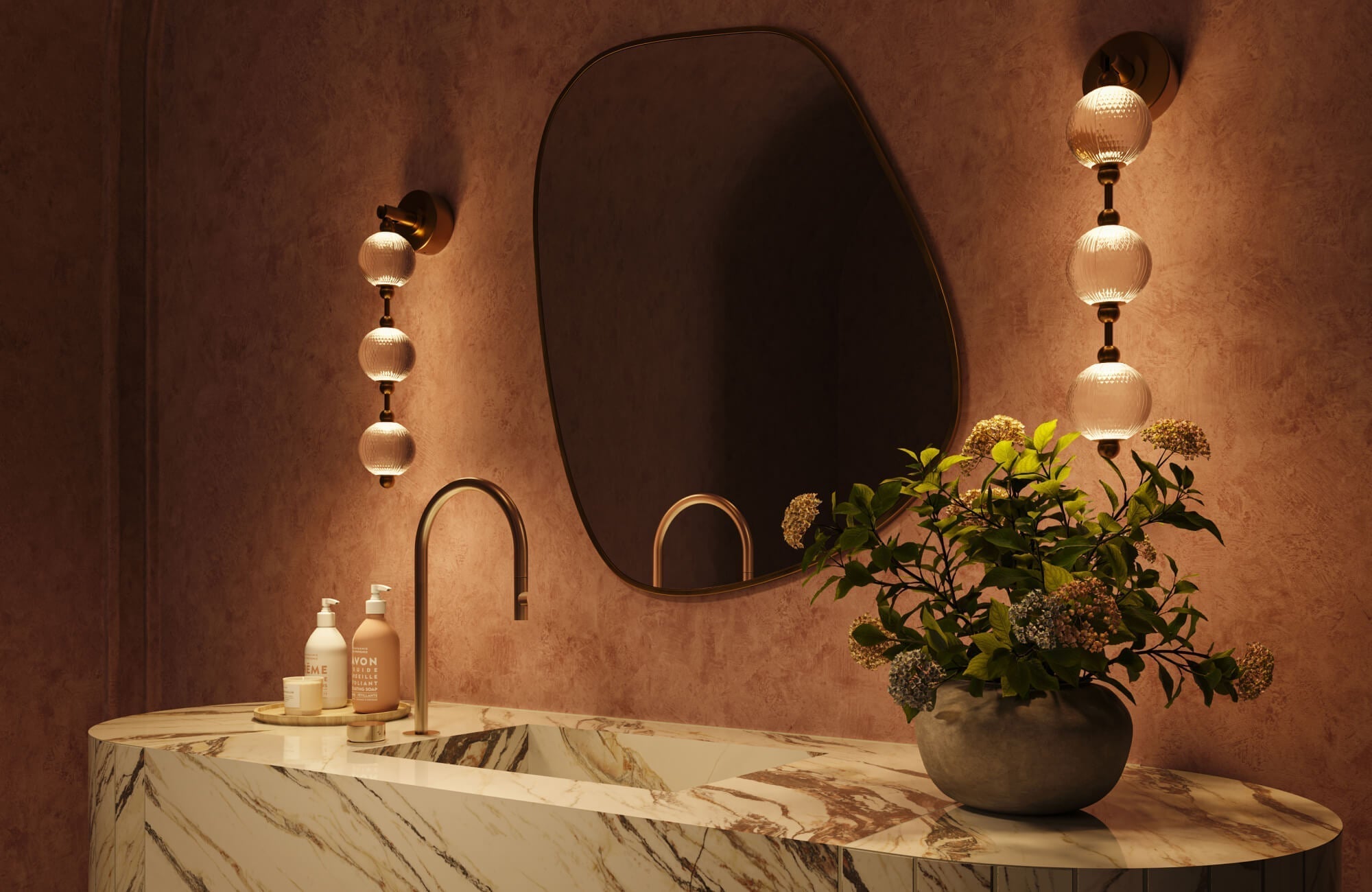
Separating the mirror and lighting allows you to fine-tune placement instead of relying on a single, fixed light source. Vanity lights can be positioned to suit the mirror’s size, the vanity width, and even the user’s height. This flexibility helps reduce uneven illumination and allows light to reach the face more naturally. It also makes future adjustments easier if routines or needs change. For example, lighting can be repositioned or updated without having to replace the mirror. That level of control is one of the biggest advantages of this approach.
A great example of this flexibility is our Raelynn Mantel Mirror in Iron Matte Black, shown above. Its softly tapered, free-flowing shape brings movement to the wall, which helps soften the structure of a traditional vanity setup. Paired with separate fixtures like our Rycroft Wall Sconce in Polished Nickel, the mirror isn’t locked into a single lighting position, allowing illumination to be adjusted for comfort and clarity. That separation keeps the focus on reflection quality while giving the lighting room to do its job without overpowering the mirror itself.
How Vanity Lights Improve Balance Around The Face
Vanity lights placed beside or above the mirror help create more even, balanced illumination. This setup reduces harsh shadows that often come from lighting placed in only one direction. With better balance, facial features are easier to see, which supports grooming and skincare routines. Reflections also feel more accurate and natural, rather than overly contrasted. Over time, this balance contributes to a more comfortable daily experience at the vanity. When light is distributed evenly, the mirror becomes easier to trust during everyday use.
Flexibility For Different Bathroom Layouts And Sizes
Traditional mirrors paired with vanity lighting adapt easily to a wide range of bathroom layouts. This approach works just as well in compact spaces as it does in larger rooms, because the lighting can be scaled to fit the vanity and surrounding area. For example, wider vanities can support broader light fixtures, while smaller bathrooms can rely on more minimal lighting without losing clarity. Since the mirror doesn’t dictate the lighting setup, you’re free to adjust placement as needed. This keeps options open across different layouts and design needs. In the end, the lighting works with the space rather than forcing the space to work around it.
Long-Term Adaptability As Styles Or Needs Change
Bathrooms naturally evolve over time, whether through style updates or changes in daily routines. A setup that separates the mirror and lighting makes those shifts easier to manage. Instead of replacing everything at once, individual elements can be updated gradually. For instance, lighting can be refreshed to suit new preferences while the mirror stays in place. This flexibility helps changes feel intentional rather than disruptive. Over time, that adaptability allows the setup to age more gracefully than fixed alternatives.

Choosing Between A Lighted Mirror And Vanity Lighting Setup
Choosing between a lighted mirror and a traditional vanity lighting setup often comes down to how the bathroom fits into your daily routine. Both options can work well, depending on the space, your habits, and how much flexibility you want over time. In this section, we’ll walk through the two approaches to help you decide which one better supports your layout and everyday use.
Comparing Flexibility Versus Convenience
Lighted mirrors are commonly chosen for their convenience, since they combine lighting and reflection into a single piece. This can simplify decisions and reduce the number of elements around the vanity. A traditional round mirror paired with separate vanity lighting, however, offers more flexibility as needs change. For instance, lighting placement can be adjusted or updated without having to replace the mirror. That flexibility becomes more valuable as routines evolve or preferences shift. In many cases, the choice comes down to whether immediate ease or long-term adaptability feels more important.
A good example of this balance is our Esmeralda Wide Mirror in Polished Brass, shown above. Its softly arched shape and slim metal frame offer a timeless presence that doesn’t rely on built-in lighting to feel complete. When paired with separate fixtures like our Sally 6" 1 Light Wall/Vanity Light in Aged Gold/Opal Glass, the setup remains easy to adjust as lighting needs change. This approach keeps the mirror visually consistent while allowing lighting to evolve alongside daily routines.
How Bathroom Size Influences The Right Choice
Bathroom size also plays a major role in determining which setup feels more comfortable. In smaller spaces, a lighted mirror can help keep the layout feeling open and uncluttered. In larger bathrooms, separate vanity lighting often provides better coverage and more balanced illumination around the mirror. With more room to work with, lighting can be positioned more intentionally to support clarity. This added space can make daily routines feel less restricted. Because layout shapes how light behaves, size is always worth considering when making a decision.
Maintenance And Long-Term Usability Considerations
Maintenance is another key factor when comparing these two lighting setups. Lighted mirrors can feel low-effort at first, although updating them later often means replacing the entire unit. With separate vanity lighting, individual pieces can be adjusted or updated as needs change. This makes long-term updates feel simpler and less limiting. For example, lighting can be refreshed without disturbing the mirror itself. Over time, this modular approach often proves easier to live with.
Visual Comfort And Adaptability Over Time
Visual comfort tends to show itself over extended use rather than right away. Lighting that feels fine at first may start to feel tiring if it lacks balance or flexibility. A vanity lighting setup allows adjustments if comfort needs shift, such as changing light placement or refining intensity. As mentioned earlier, lighted mirrors, while consistent, offer fewer ways to adapt once installed. Over time, that difference can shape how comfortable the space feels day to day. As routines naturally evolve, flexibility often supports lasting comfort.

What To Prioritize When Picking The Right Mirror And Lighting Combination
Choosing the right mirror and lighting combination really comes down to how well the space supports your everyday routine. Beyond trends or visual appeal, comfort, clarity, and ease of use should guide the decision. In here, we’ll bring everything together and focus on what truly matters when choosing a setup that works day to day.
Focusing On Daily Routines And Habits
Daily routines should always be the starting point when deciding on a mirror and lighting setup. How often you use the mirror, how much time you spend there, and which tasks you do most all influence what will feel comfortable. For instance, lighting that works well for quick check-ins may fall short during longer grooming or skincare routines. Paying attention to these habits helps avoid setups that look good but feel impractical over time. It also ensures the lighting supports real needs rather than ideal scenarios. Because routines tend to stay consistent, designing around them leads to better long-term satisfaction.
Matching Lighting Choices To Bathroom Layout
Bathroom layout plays a major role in how lighting behaves around the mirror. Wall space, ceiling height, and vanity width all influence where light can be placed comfortably. A setup that works well in one layout may feel awkward in another, even if the fixtures are similar. For example, tighter layouts often benefit from simpler, more compact lighting choices. Larger layouts, on the other hand, allow more flexibility and better balance in placement. Because layout shapes how light is distributed, it should always guide the final decision.
Balancing Visual Comfort With Design Preferences
Visual comfort and design style should feel aligned, not at odds with each other. While certain mirror styles or lighting styles may look striking, they still need to feel comfortable during everyday use. Lighting that appears too harsh or visually heavy can become tiring, even when it fits the overall design direction. The goal is to choose options that support clear visibility while still reflecting personal style. For instance, a clean, modern setup can feel warm and inviting when the lighting is thoughtfully balanced. When comfort and design work together, the space becomes easier to use and enjoy.
Choosing A Setup That Works Now And Later
A well-chosen mirror and lighting setup should support current needs while remaining flexible for the future. Bathrooms naturally change over time, whether through style updates or shifting daily routines. Selecting a setup with separate, adaptable elements makes those transitions feel less disruptive. For example, lighting can be updated without having to replace the mirror itself. This flexibility helps the space stay functional and comfortable as preferences evolve. Planning with longevity in mind adds lasting value to the overall design.
A good example of this kind of adaptability is our Clancy Small Mirror in Antique Brass, shown above. Its crisp square form and slim metal frame feel intentional without locking the space into a fixed lighting solution. Paired with a separate fixture like our Rycroft Wall Sconce in Aged Brass, the mirror remains visually consistent even as lighting needs change over time. This kind of setup supports everyday use now while leaving room for updates later, which makes the space easier to live with long term.
Bathroom Mirror And Lighting Setup That Works Day To Day
Choosing the right bathroom mirror and lighting setup is less about following trends and more about supporting how you actually use the space. Comfort, balance, and clarity play a bigger role in daily routines than most people expect, especially when lighting is used up close. Whether you lean toward a lighted mirror or a traditional mirror paired with vanity lighting, intention makes the difference. When these elements work together, the bathroom feels easier to use and more visually settled.
If you’re unsure which approach fits your space, a personalized design consultation can help bring everything into focus. Our design consultation looks at layout, routines, and lighting goals to guide you toward a setup that feels comfortable and well-balanced. It’s a practical way to avoid guesswork and make confident decisions. With the right guidance, your vanity lighting can support everyday use now and adapt smoothly over time.