

)
)
)
)
)
)
)
)
How Many Stools Should A Kitchen Island Have?
Kitchen islands often serve several purposes at once. We use them for quick breakfasts, shared meals, work sessions, and casual conversations throughout the day. In a kitchen island with stools, the number of seats you choose directly shapes how well the space supports everyday routines. The right number feels natural, allows people to sit comfortably and move easily, and helps the kitchen work smoothly without feeling crowded.
In this article, we’ll walk through how island size, daily use, comfort, household needs, and overall balance come together to determine the ideal stool count, so you can make a choice that feels considered and practical rather than guesswork.
Space Planning Comes First
Before considering lifestyle or visual preferences, start with the physical realities of the kitchen island. Its size and shape set clear boundaries on how many stools can fit comfortably. When measurements are handled carefully, and clearances are properly considered, the seating feels natural and stays practical for everyday use over time.
Island Length vs. Seating Width
The length of the kitchen island plays the most direct role in determining how many stools make sense. As a general guideline, allow about 24 inches of counter width per person, which gives enough room to sit, turn, and eat comfortably without encroaching on the next seat.
For example, a six-foot island typically accommodates three stools with ease. An eight-foot island often feels better with four stools rather than five, even if a fifth could technically fit. Focusing on comfort instead of maximum capacity usually results in a layout that feels more relaxed and easier to use, with slightly wider spacing creating a noticeable difference in day-to-day comfort.
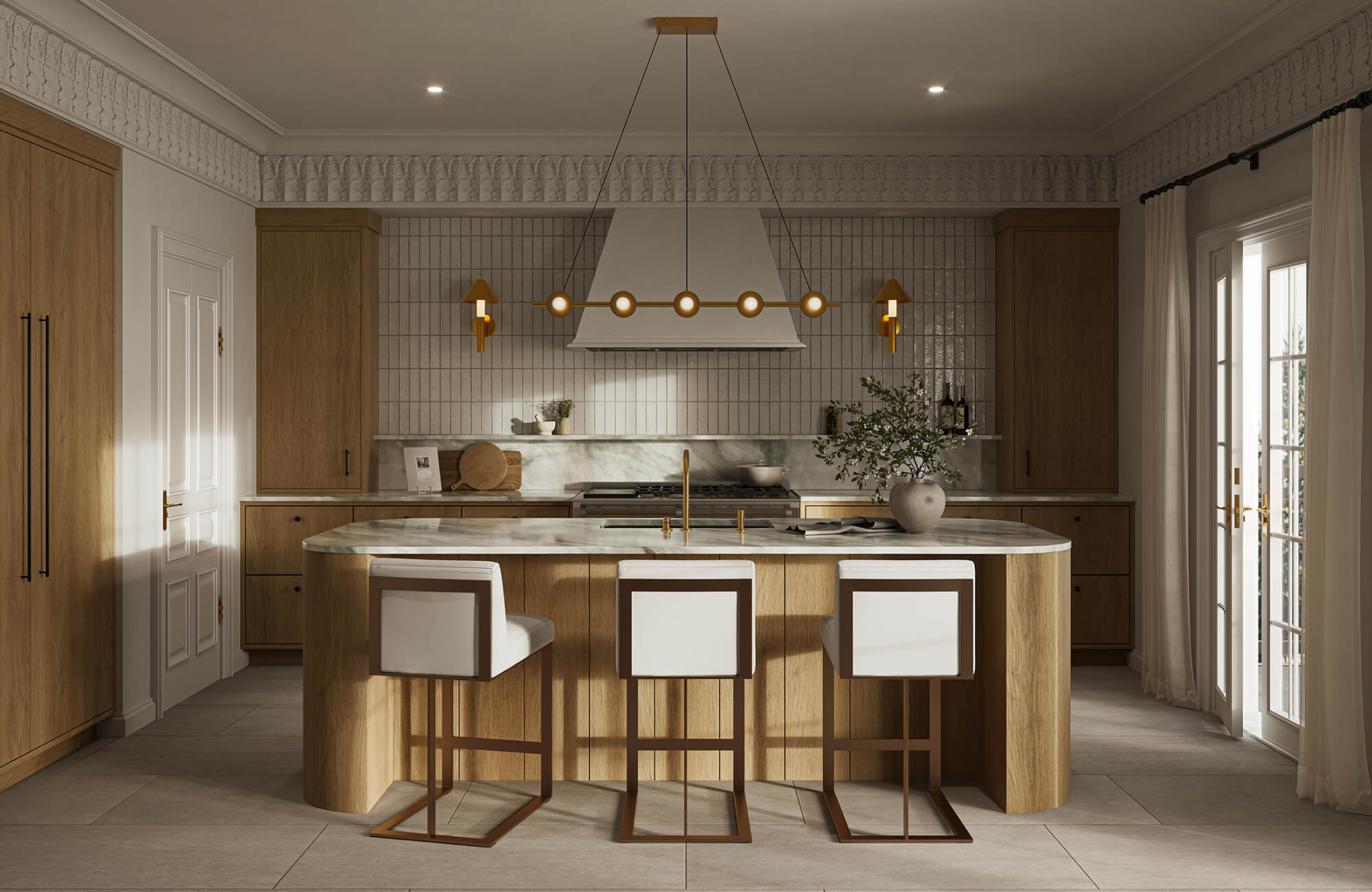
This principle is reflected in the layout pictured above, where Edward Martin’s Grant Counter Stool in White is evenly spaced along the island’s curve. The measured distance between each stool reinforces how thoughtful spacing supports both comfort and visual balance, showing how restraint can make seating feel intentional rather than crowded.
Overhang Depth and Knee Clearance
Counter overhang has a significant impact on how usable stools feel day-to-day. When the overhang is too shallow, knees end up pressed against the cabinet face, and stools are forced outward, which quickly becomes uncomfortable. Over time, seats like these tend to be avoided altogether.
In most kitchens, an overhang of about 12 inches is suitable for light or occasional seating, while 15 inches or more is better for regular meals. If you are planning a custom island, this detail is especially important. Proper knee clearance allows stools to slide in easily, making sitting feel supported rather than awkward.
Walkway Clearance Around the Island
The space surrounding the island plays an important role in how easily stools can be pulled in and out. It helps to leave enough open room so that seated stools do not interfere with drawers, appliances, or nearby counters.
When space is limited, choosing fewer stools often leads to a better experience. Removing even one seat can make the kitchen easier to move through and more comfortable to use throughout the day. In many cases, this small adjustment noticeably improves everyday comfort and functionality.
How the Island Is Actually Used
Once the physical limits are clear, it is important to consider how the island fits into your daily routine. Not every island serves as a dining table, and the number of stools works best when it reflects how the space is actually used rather than how it is expected to look.
Quick Meals vs. Full Dining
Some islands are used primarily for coffee, snacks, or a quick breakfast. In these situations, fewer stools are often sufficient, with two or three seats meeting most needs without making the space feel crowded.
When an island serves as a dining table, the approach naturally shifts. In that case, it makes sense to allow seating for everyone who regularly eats together. Even so, comfort should come before adding extra seats. Most households find that well-spaced stools create a more enjoyable experience than fitting in as many as possible.
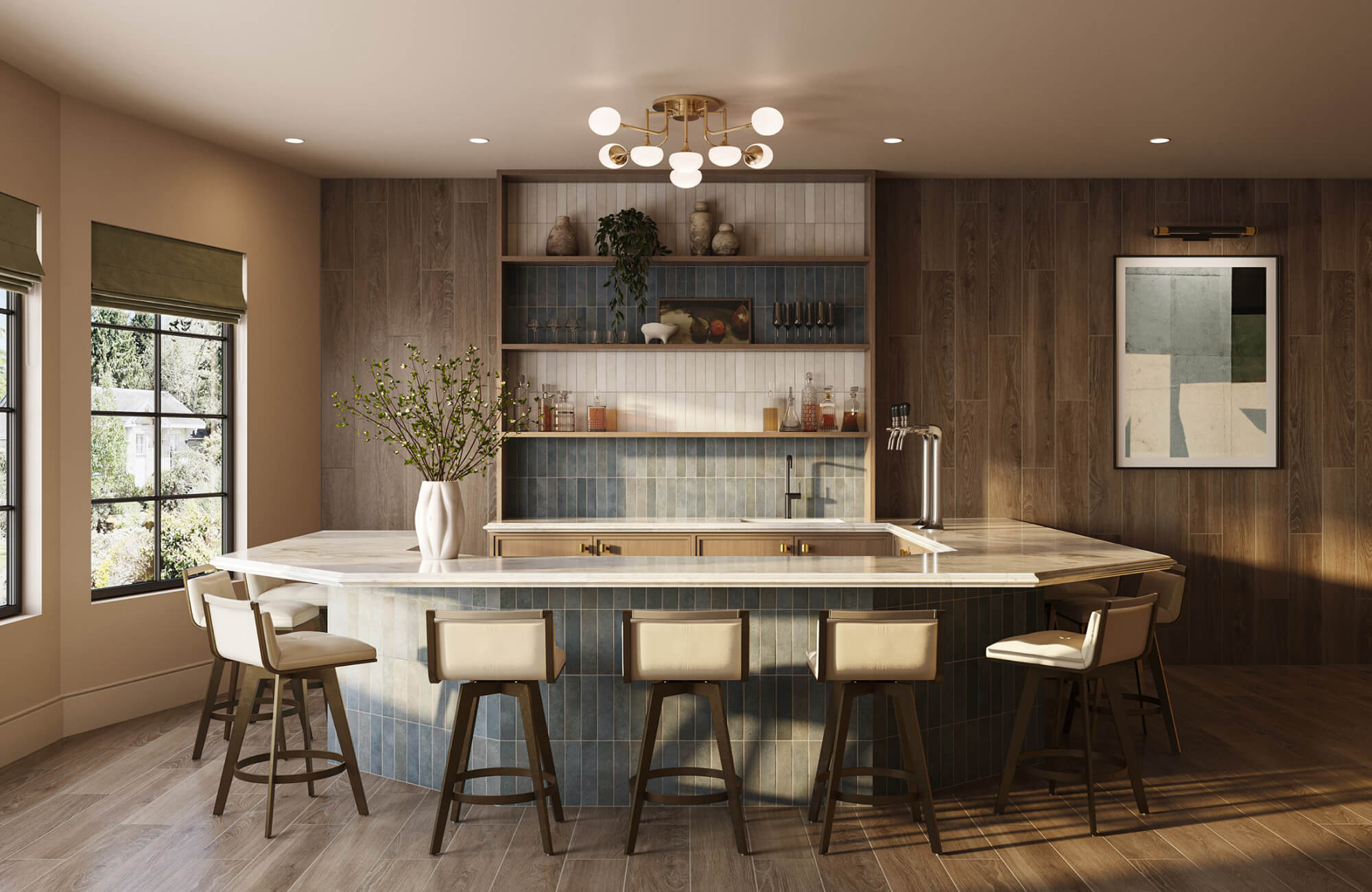
This balance is illustrated in the photo featured above, where Edward Martin’s Savannah Counter Stool in Cream is arranged to support everyday dining while maintaining generous spacing that keeps the island comfortable and inviting.
Work Zones and Shared Tasks
Many islands also function as work surfaces for laptops, homework, or food preparation. These activities are generally easier to manage when there is more open surface and less emphasis on adding extra seating. Fewer stools make it easier to spread out papers, devices, and shared tools without the area feeling cramped.
In these situations, spacing stools farther apart or keeping one side of the island clear can be especially helpful. This approach maintains flexibility and allows the island to adapt easily during busy moments throughout the day.
Hosting and Social Gatherings
When the island is used as a gathering spot, stools are often meant for casual conversation rather than sit-down meals. In many homes, having three or four stools feels more comfortable and inviting than lining the entire island with seats. During larger get-togethers, people often choose to stand or lean nearby rather than sit for extended periods. The island functions as a central point for interaction rather than a line of chairs, and a smaller number of stools helps keep the setting relaxed and adaptable.
Comfort Rules People Often Ignore
Comfort is what ultimately determines whether stools are used or avoided. Even a well-designed island can fall short if sitting feels awkward or tiring. Paying attention to ergonomic details makes a noticeable difference in how the seating performs over time.
Elbow Room Between Seats
Each person needs enough side-to-side space to move their arms comfortably. When stools are positioned too close together, meals can feel hurried and conversations less relaxed. Allowing at least 24 inches per stool is a good starting point, while 26 to 28 inches provides a more comfortable experience when space allows. That extra room makes longer meals and casual conversations noticeably more enjoyable.
Stool Height and Counter Relationship
Stool height should align with counter height to ensure comfortable seating. Standard counters work best with counter-height stools, while taller surfaces call for bar-height options. When the height relationship is off, seating can feel either too low or too high, leading to unnecessary strain on the back and shoulders. Getting this measurement right is one of the simplest ways to improve comfort and usability.
Backrests and Foot Support
Backless stools can work well for brief seating and in more compact kitchens. However, when people tend to sit for longer periods, back-supported stools make a clear difference in comfort. Footrests also play an important role, as they give the legs a place to rest and help support better posture. Without foot support, even a properly sized stool can start to feel uncomfortable after a short time.
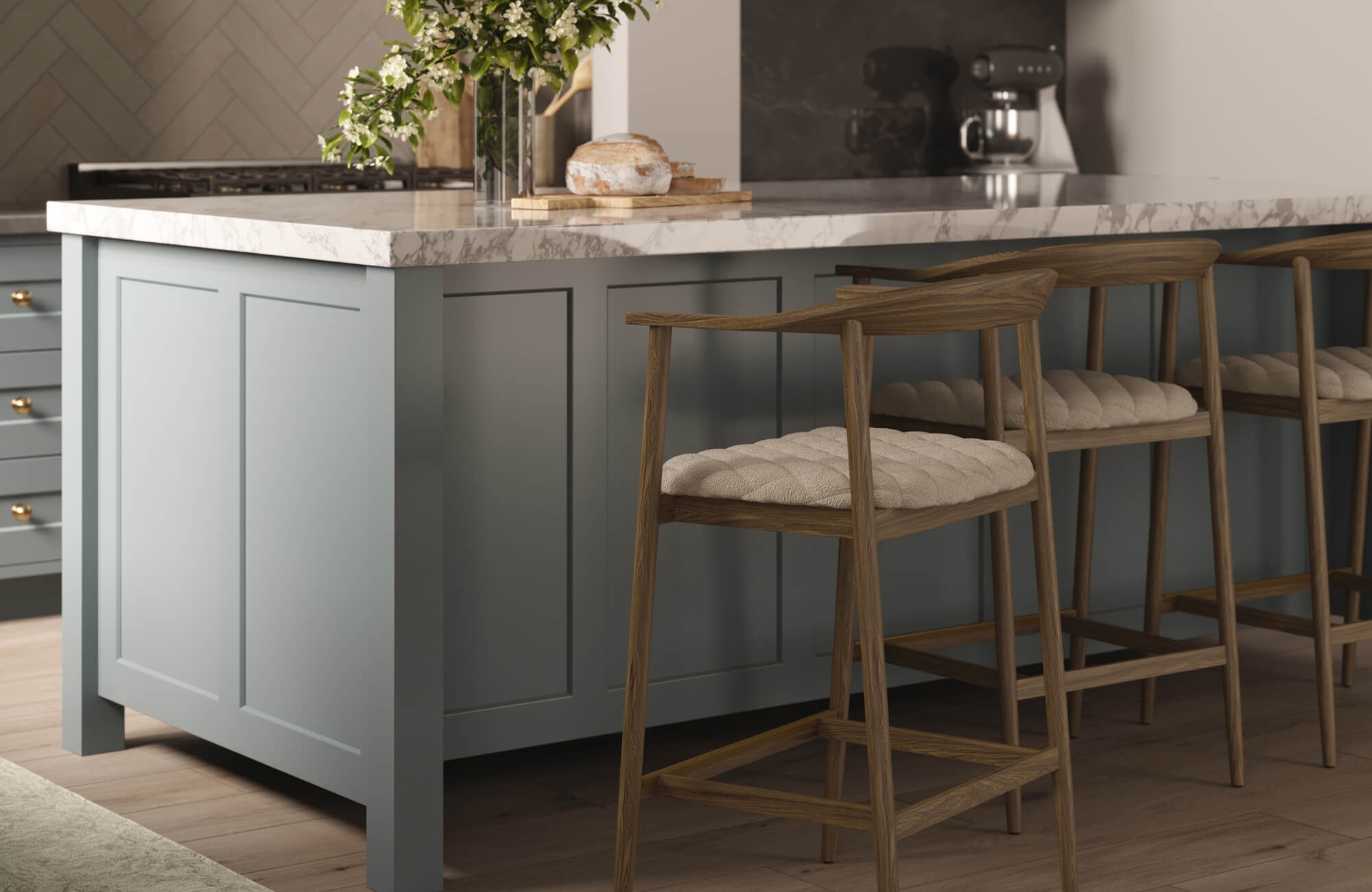
This attention to comfort is reflected in the photo featured above, where Edward Martin’s Joel Counter Stool in Dove Cream pairs supportive seating with a well-positioned footrest. The design illustrates how thoughtful details can make stools better suited for longer, more relaxed use at the island.
Household Size and Lifestyle Fit
The number of stools should reflect who uses the kitchen daily. When seating aligns with household routines and patterns, the island feels supportive and functional rather than crowded or underused.
Couples and Small Households
In smaller households, fewer stools often provide the best balance. Two or three seats typically meet daily needs without overwhelming the space. This approach preserves more room for cooking and preparation while still offering a comfortable place to sit and connect. It also helps the kitchen maintain an open, balanced feel.
Families With Children
Families often benefit from additional seating, but that does not mean filling every available inch. Children grow, routines shift, and flexibility becomes especially important over time. Choosing a stool count that supports everyday routines rather than occasional needs helps keep the kitchen easier to manage. It also creates a safer, more comfortable environment for younger users.
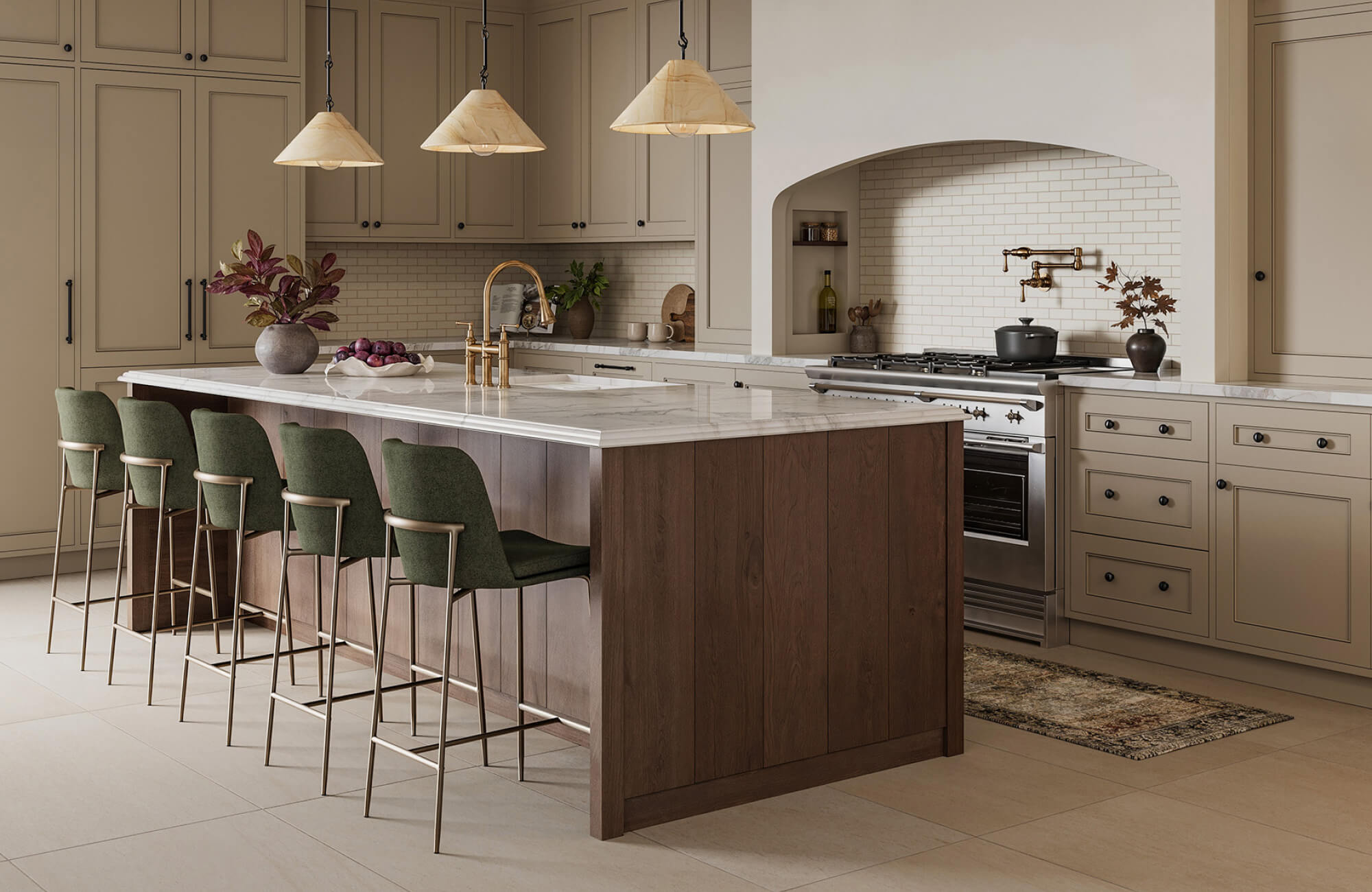
That balance is evident in the photo displayed above, where Edward Martin’s Shaw Counter Stool in Bergen Olive provides ample seating without overwhelming the island. The evenly spaced arrangement demonstrates how a family-friendly kitchen island can accommodate multiple stools while still leaving enough room for movement, making the space practical for daily use rather than just peak moments.
Multi-Generational or Shared Homes
In shared or multi-generational homes, seating needs can vary widely. Some people use stools mainly for meals, while others rely on them for work or casual conversation. Spacing stools thoughtfully and avoiding overfilling the island helps accommodate these different preferences. This approach also helps reduce wear on the space and keeps the island functional for everyone.
Design Balance and Visual Weight
Even when measurements and daily use are well considered, visual balance still plays an important role. The number of stools should feel proportional to the island itself and in harmony with the surrounding space.
Proportion to Island Mass
Islands with thicker countertops or waterfall edges may feel more substantial, which allows them to support more stools without looking crowded. Lighter, slimmer islands usually feel more balanced when paired with fewer seats. Looking at how the island anchors the room helps guide a stool count that feels grounded without appearing crowded. Considering the scale of nearby cabinetry and surfaces can further reinforce a sense of proportion.
Open Concept Sightlines
In open kitchens, stools are almost always in view, which makes their number more noticeable. Too many seats can disrupt sightlines and make the space feel visually busy. Choosing fewer stools often helps the kitchen feel calmer and allows other design elements to stand out without competing for attention. This approach also helps maintain a smoother visual connection between adjoining living areas.
Matching Stool Style to Quantity
When stools have a bold or sculptural presence, fewer pieces tend to make a stronger visual statement. More understated designs can support a slightly higher count without overwhelming the space. Balancing stool style with quantity helps the island feel deliberate and well considered rather than accidental. The goal is to let the stools complement the island rather than dominate it.
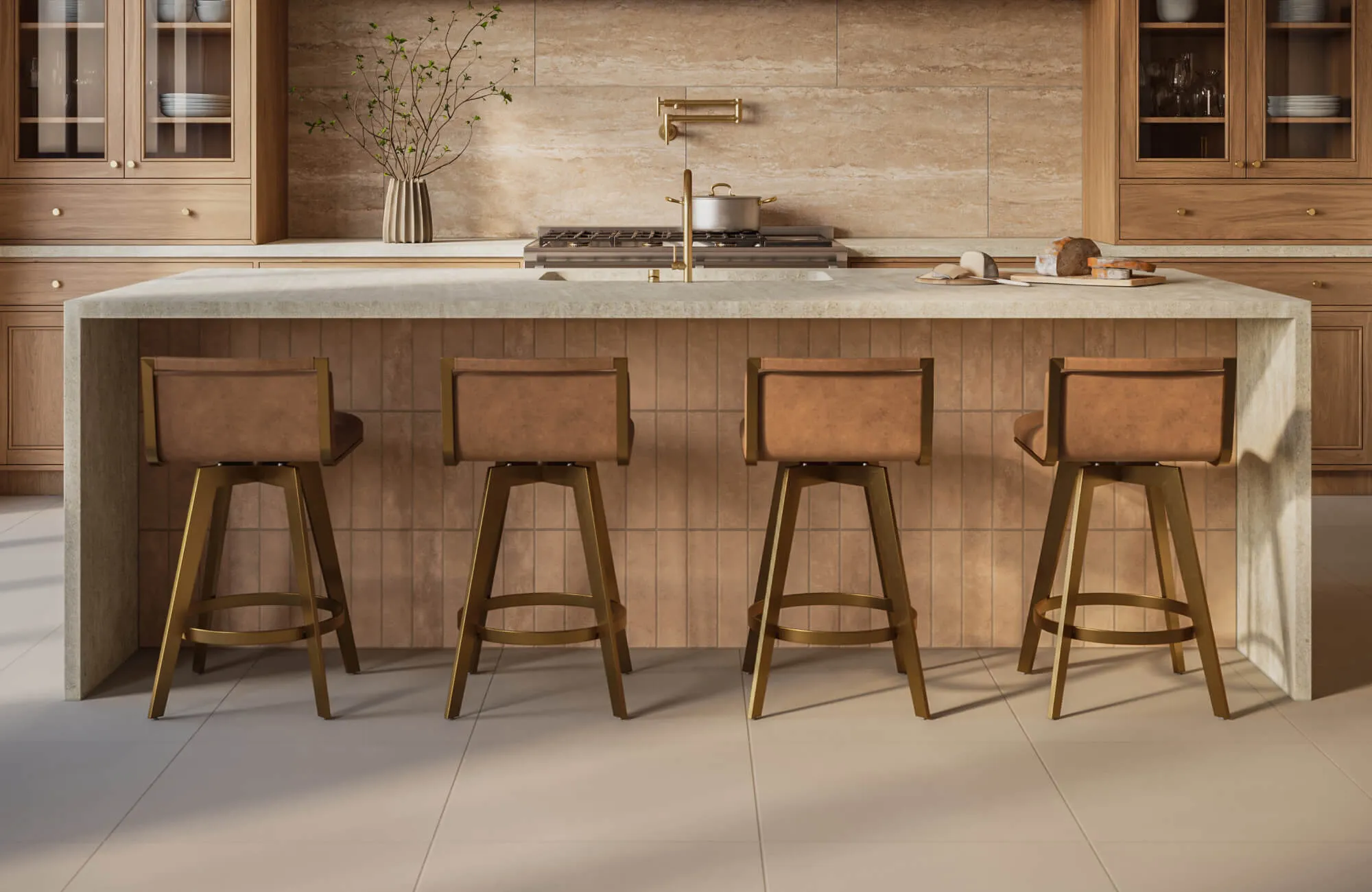
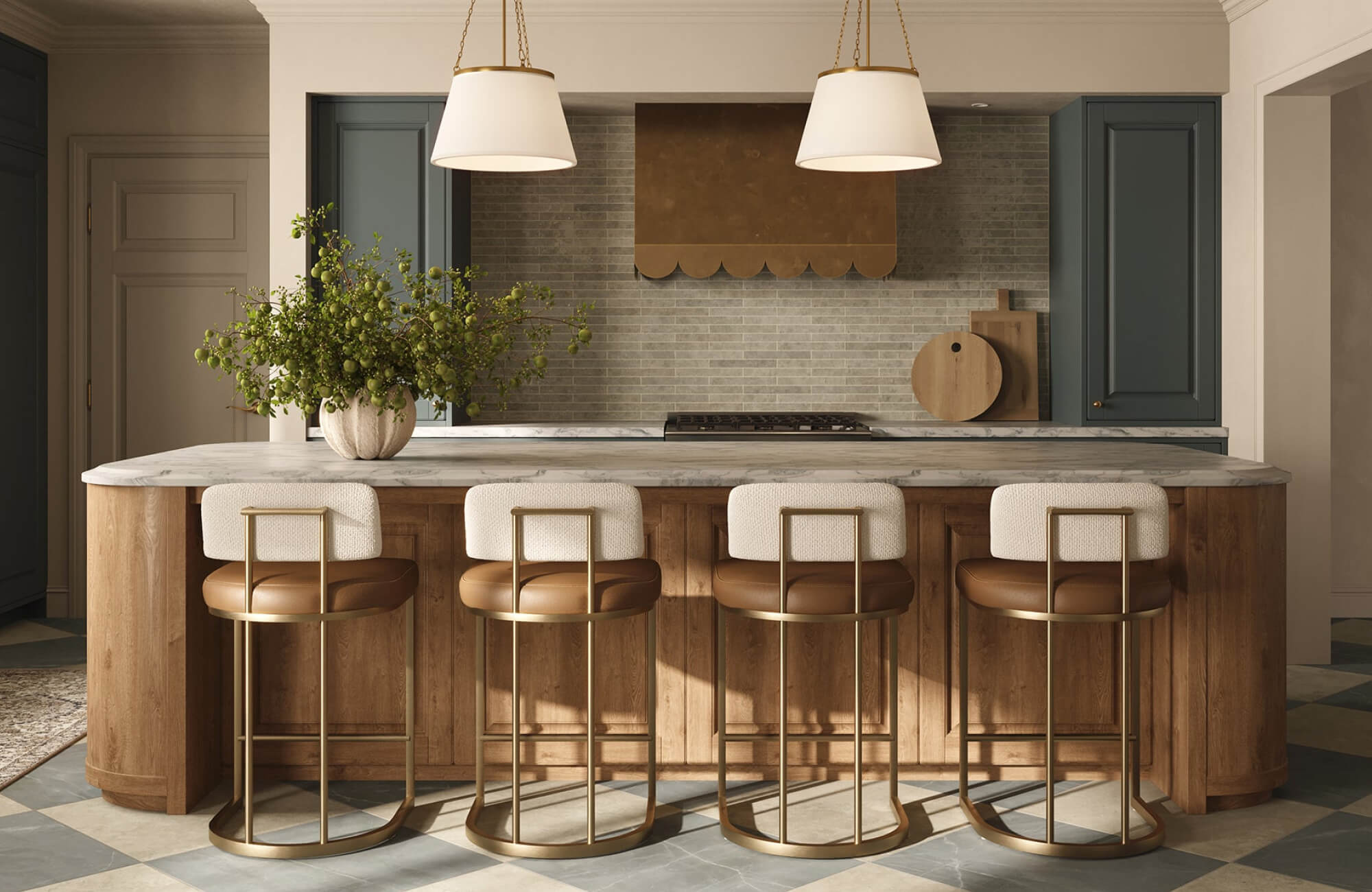
This relationship is evident in the photo featured above, where Edward Martin’s Kenzie Counter Stool in Napa Cognac adds visual interest without overpowering the island. The stool’s defined shape and material presence are balanced by a measured number of seats, illustrating how thoughtful selection and spacing work together to maintain a cohesive, well-proportioned layout.
Finding the Right Number of Stools for Your Island
The number of stools a kitchen island should have often falls between two and four, depending on the island’s length, how it is used day to day, and how much space is needed for comfortable seating. When proper spacing, knee clearance, stool height, and visual balance are taken into account, the right number becomes easier to identify. Choosing the maximum number of stools that fit on paper often leads to discomfort and underused seating. In many kitchens, fewer well-spaced stools improve comfort and usability, allowing the island to function smoothly as both a workspace and a gathering place.
If you would like help applying these guidelines to your own space, our design team can offer thoughtful, practical guidance. Feel free to contact us to discuss layout considerations, seating options, and design services tailored to how your kitchen is used every day.
Follow us on Instagram
@EDWARD.MARTIN
)
)
)
)
)
)
)
)
)
)
)
)
)
)
)
)