Choosing the right bathroom vanity starts with more than just style. It begins with smart, accurate measurements. A vanity that’s too wide, too deep, or poorly positioned can disrupt the layout and create unnecessary frustration in your daily routine.
In this article, we’ll walk you through the essential tools, step-by-step measuring tips, and practical factors to consider when selecting the right size. Whether you're updating a small powder room or planning a full bathroom remodel, taking the time to measure properly will help you avoid costly mistakes and choose a vanity that truly fits your space and lifestyle.

Why Accurate Vanity Measurements Matter
Getting the measurements right is the first and most important step in choosing a vanity that truly fits your space. Beyond just fitting the wall, the right dimensions impact how comfortably and efficiently you can move around and use the bathroom each day. Below, we’ll look at why size and spacing play a bigger role than most people realize.
Maximize Function Without Overcrowding
When a vanity is too wide or deep for the space, it can throw off the entire bathroom layout. You might find yourself bumping into corners, blocking drawers, or limiting access to nearby fixtures like the toilet or shower. Accurate measurements help ensure there's enough clearance to move freely and that doors and cabinets open without obstruction. This becomes especially important in smaller bathrooms, where every inch matters. A vanity that’s properly scaled to the room supports smooth flow and practical use without feeling cramped.
Support Daily Use and Comfort
A vanity that fits well in your space doesn’t just look good; it makes daily routines more comfortable. The right height ensures you’re not bending awkwardly or straining during use, while the proper depth keeps you close enough to the sink without feeling crowded. Too large a vanity can make the room feel tight, while too small may leave you short on surface area and storage. When measurements align with how the space is actually used, the bathroom feels more natural and intuitive. It’s these small, functional details that contribute to long-term satisfaction.
Prevent Costly Layout Mistakes
Inaccurate measurements can lead to more than inconvenience; they can result in expensive corrections down the line. Ordering a vanity that doesn’t fit may require returns, replumbing, or even tile patching if adjustments are needed after installation. It can also throw off mirror placement, lighting alignment, or disrupt electrical outlets. Taking time to measure correctly up front helps avoid these ripple effects and keeps your remodel or refresh on schedule. A little precision early on can save time, money, and frustration later.

Factors That Influence Your Vanity Size Decision
Choosing the right vanity size isn’t just about measuring the wall—it also depends on how your household uses the space. The number of users, your daily routines, and how much storage you really need all influence what will work best long term. Here, we’ll walk through key considerations that should guide your decision before you take any measurements.
Consider How Many People Use the Bathroom
The more people sharing a bathroom, the more important it is to choose a vanity that supports flow and function. In a shared space, a wider vanity or double sink might feel necessary, but only if the room allows it without creating clutter. For solo or occasional use, a smaller vanity may be more practical and leave extra room for movement. Think about how many people will use the bathroom at once and what routines overlap. A well-sized vanity should make mornings smoother, not more crowded.
Balance Storage Needs With Available Space
Storage is often a top priority, but bigger isn't always better if it overwhelms the room. Think about what you truly need to keep in the bathroom and how often you access it. A vanity that provides essential storage while maintaining breathing room around it will serve you better than one that forces a tight fit. Open shelving, wall-mounted cabinets, or drawer inserts can help supplement space without relying solely on the vanity. It’s about finding a balance between practical storage and physical comfort.
Prioritize Function Over Aesthetic Scale
It’s easy to be drawn to a vanity that looks impressive, but a bulky piece that disrupts how the space functions won’t hold its appeal for long. Before choosing based on appearance, consider how the unit will affect movement, door clearance, and daily use. A smaller, well-fitted vanity often performs better than one that dominates the room. The goal is to support your routine, not work around your furniture. When in doubt, practical fit should come before visual scale.
Account for Cleaning and Maintenance Space
A vanity that’s too close to the wall or adjacent fixtures can make cleaning difficult. Narrow gaps can collect dust, hair, or moisture, especially in tight bathrooms. Leave enough space to easily reach around and beneath the vanity to wipe down surfaces and avoid buildup. A layout that supports regular maintenance helps your bathroom stay fresher and feel more usable long-term. Don’t just measure for fit—measure for access too.
Think About Fixture Compatibility and Movement Flow
The size of your vanity affects more than just its footprint; it can interfere with toilets, towel bars, drawers, or even mirror height. Before finalizing a size, think through how drawers will open, how far doors swing, and how the vanity lines up with nearby features. This helps prevent awkward blockages and ensures that everything in the room works together smoothly. It’s not just about fitting the space—it’s about letting the space work naturally.

Tools You’ll Need Before You Start Measuring
Before you take any measurements, having the right tools on hand makes the process smoother and more accurate. You don’t need anything complicated, just a few simple items that help you capture dimensions clearly and avoid second-guessing later.
Tape Measure and Level
A reliable tape measure is essential for capturing wall-to-wall dimensions, depth, and clearance space. Use it to measure everything from vanity width to the distance between fixtures. A level is equally helpful, especially if you're marking reference points or confirming whether floors or walls are even. Slight slopes can throw off your measurements, so checking for level surfaces adds an extra layer of accuracy. These two tools form the foundation of a clean, functional vanity layout.
Pencil and Notepad or Sketch App
It’s easy to forget a measurement once you’ve taken it, so writing things down is key. A pencil and notepad let you sketch out the space and note exact numbers as you go. If you prefer a digital method, using a tablet or phone with a sketch app can help you draw to scale and save your layout. Labeling plumbing lines, outlets, and clearance zones also makes it easier to shop for vanities later. The more organized your notes, the fewer surprises you’ll face during installation.
Existing Fixture and Plumbing Map
Knowing where your current plumbing and electrical lines are located is just as important as measuring wall space. Take note of where the sink, drain, water lines, and nearby outlets are positioned—these will dictate what types of vanities can realistically fit. If you’re replacing an old vanity, measure how far those connections sit from the wall edges. A quick sketch with these positions marked helps prevent design choices that require unnecessary reworking. Keeping your new vanity aligned with existing plumbing can save time, effort, and budget.

Step-by-Step: How To Measure for a Bathroom Vanity
Once you have your tools ready, it’s time to measure your space with accuracy and confidence. The steps below will help you capture the essential dimensions that determine what type of vanity will fit, not just physically, but comfortably and practically. Take your time with each step, and double-check as needed to avoid surprises later on.
Measure the Width of the Available Wall Space
Start by measuring the total width of the wall where you plan to install the vanity. Use a tape measure from one end to the other, noting any baseboards, trim, or corners that could reduce usable space. If the vanity will sit between two walls, measure in multiple spots—walls aren’t always perfectly straight. Be sure to leave a few inches of clearance on either side for comfort and cleaning. This measurement sets the outer limit for how wide your vanity can be.
Measure the Depth Without Obstruction
Depth is just as important as width, especially in tighter bathrooms. Measure from the back wall outward to see how far your vanity can extend without blocking entryways, doors, or other fixtures. Pay close attention to toilet clearance and how drawers or cabinets might open. You’ll want enough space to walk by comfortably without squeezing past corners. A well-measured depth helps maintain open flow and avoids daily frustration.
Check the Height for Mirror and Backsplash Fit
Next, check the vertical space available between the floor and any objects above the vanity, such as windows, shelves, or mirrors. Measure the current vanity height if replacing one, then measure from the floor to the bottom edge of any mirrors or lighting. This tells you how tall your new vanity can be while still fitting under existing fixtures. If you plan to add a backsplash, include that height in your planning. Getting this right ensures your new setup looks balanced and avoids awkward gaps.

Common Measurement Mistakes to Avoid
Even careful planning can go off track if you miss a few key details while measuring. Some of the most common mistakes aren’t about the tools, but about what gets overlooked. Here are a few easy-to-miss errors that can lead to unexpected problems after the vanity arrives.
Forgetting to Include Door Swing and Trim
When measuring, it’s important to factor in how nearby doors, drawers, or cabinet fronts move through the space. If a vanity is too deep or too close to a door, it can prevent smooth opening, or worse, cause damage over time. Trim along the wall or baseboard can also eat into the usable width, which throws off tight measurements. Always measure from the outer edge of the trim, not the wall itself. Leaving just a few extra inches of clearance can make all the difference in usability.
Ignoring Plumbing Alignment
It’s easy to focus on wall space and overlook where your pipes and outlets are actually located. A vanity that doesn’t line up with your plumbing may require drilling, rerouting, or returning the piece entirely. Before choosing a size or shape, note the positions of the water lines, drain, and electrical outlets. If they don’t match your new vanity’s layout, installation could get complicated. Measuring with these connections in mind can help you avoid costly or time-consuming changes.
Assuming Standard Sizes Always Fit
Just because a vanity comes in a “standard” 30 or 60 inches doesn’t mean it will automatically work in your space. Walls can be slightly uneven, and bathrooms often have odd angles, protrusions, or built-ins that affect fit. Treat every space as unique; take actual measurements rather than guessing based on product labels. Standard sizes are a starting point, not a guarantee. Measuring down to the inch helps avoid tight squeezes and saves you from last-minute surprises.

Single vs. Double Vanity: Which One Fits Best?
Choosing between a single and double vanity often comes down to more than just preference; it’s about whether your bathroom can support the size comfortably. While double vanities offer added function, they also require extra space and careful planning. Below, we’ll break down what you need to consider before deciding which layout works best.
Space Requirements for Single vs. Double Sinks
A standard single-sink vanity typically starts around 24 to 30 inches wide, while a double-sink option often needs at least 60 inches to avoid feeling cramped. It's not just about the vanity fitting on the wall—it also needs breathing room on both sides to allow for comfortable use. Be sure to account for how drawers and doors will open, especially near corners or doorways. If you’re close to the minimum width, a single sink may function better even in a larger space. Leaving enough clearance ensures both sinks, if you go that route, are actually usable, not just squeezed in.
When Two Sinks Are Worth the Extra Width
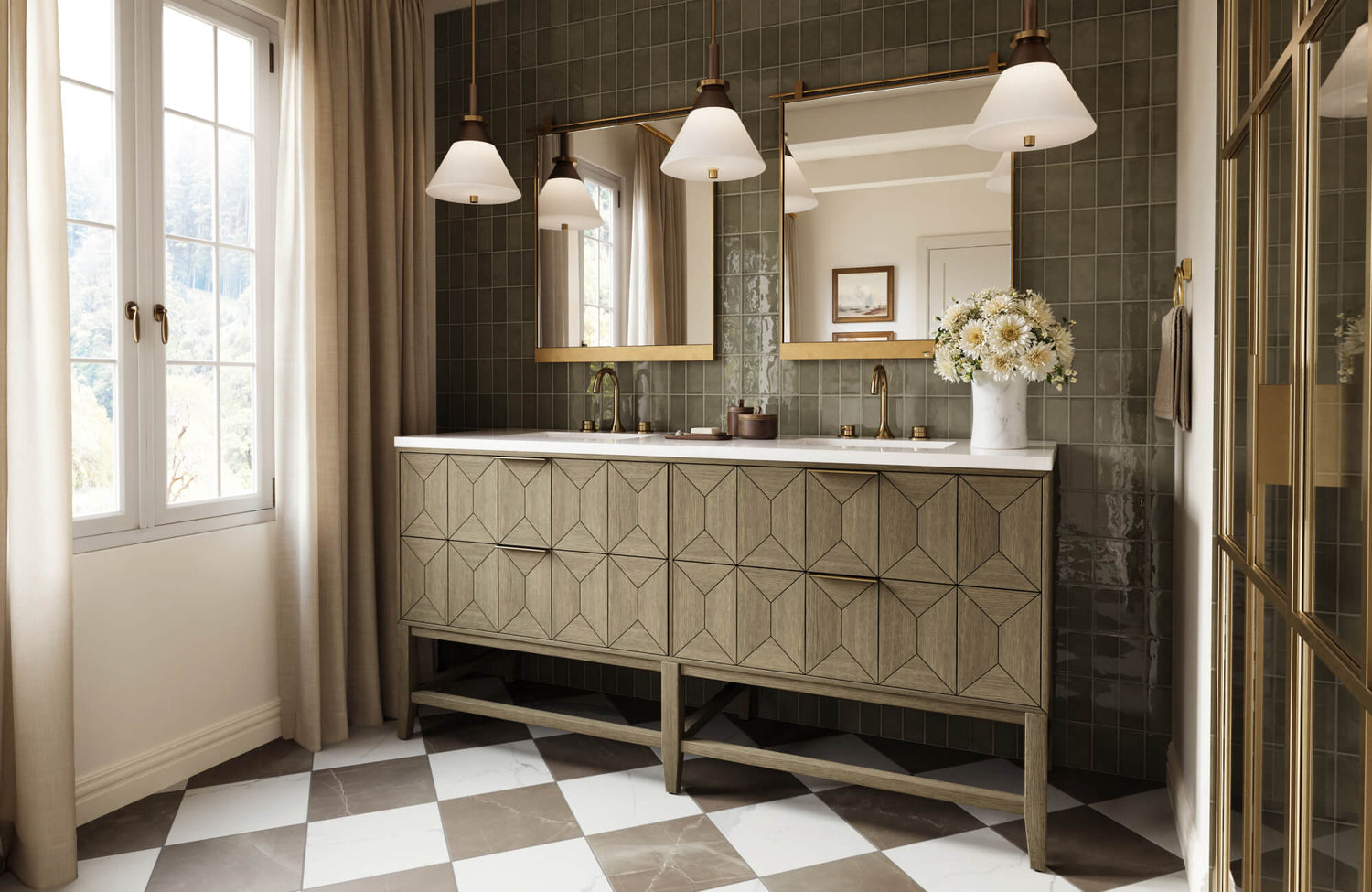
Adding a second sink is only practical if the room layout supports it without sacrificing walkability or storage. Double vanities, such as our Colton 72" Double Vanity in Coastal Driftwood with 3 cm White Zeus Quartz Top above, work well in shared primary bathrooms, but they can feel excessive in tighter spaces. Ask whether two people actually use the sink at the same time, and whether the extra width will affect nearby features like the toilet or shower. If space allows and simultaneous use is common, the added sink might be a helpful upgrade. Otherwise, the extra space may be better spent elsewhere in the room.
Storage and Countertop Trade-Offs
With a double vanity, you often gain counter space but may lose storage, especially if plumbing for two sinks takes up room beneath. A single vanity, on the other hand, typically offers more uninterrupted cabinet or drawer space. Think about what’s more valuable to you: the ability to spread out or the room to store toiletries and cleaning supplies. In some layouts, a long single-sink vanity provides the best of both worlds—surface area and storage without compromising function. Whichever direction you lean, make sure the layout supports your day-to-day needs.

Vanity Sizes and Layouts: What Fits Where
Not every vanity works for every bathroom, and knowing the typical size ranges for each space can make planning a lot easier. Whether you’re outfitting a compact powder room or a shared primary bath, choosing the right size ensures comfort, usability, and a layout that feels intentional.
Compact Vanities for Powder Rooms
Powder rooms are usually the smallest bathrooms in a home, so vanities here often range from 18 to 24 inches wide. The goal is to save floor space while still providing a functional sink and some minimal surface area. Shallow depths and narrower profiles work best, especially when the door swings into the room. Compact vanities also help preserve walking space, which keeps the room from feeling cramped. Even in a tight layout, the right size can make the powder room feel polished and purposeful.
30 to 48 Inch Options for Guest Bathrooms
Guest bathrooms benefit from mid-sized vanities that balance space and function. Widths between 30 and 48 inches allow for one full sink, decent countertop area, and enough storage for daily essentials. These sizes tend to suit hall baths or shared bathrooms that don’t require the scale of a primary suite. A well-fitted vanity in this range provides comfort without overwhelming the space. It's the sweet spot for practical design in moderately sized bathrooms.
60+ Inch Double Vanities for Primary Bathrooms
Primary bathrooms often have more square footage, which opens the door for larger vanities, especially double-sink setups. A vanity 60 inches, like our Abigail 60" Single Vanity in Light Natural Oak with 3 cm White Zeus Quartz Top above, or wider, can accommodate two sinks, more counter space, and a mix of drawers and cabinets. These sizes are ideal for couples or households where the bathroom gets a lot of daily use. Just be sure the layout still allows for easy movement and doesn’t crowd other fixtures. Bigger vanities can add value and comfort if the room supports them well.
Planning for a Vanity That Works for You
Measuring for a bathroom vanity may seem straightforward, but the right approach involves more than just checking wall space. From accounting for plumbing and door clearance to balancing daily function with room flow, each detail plays a role in choosing a vanity that fits both your space and your lifestyle. A thoughtful measuring process helps avoid layout issues and ensures your bathroom feels functional, not forced.
If you’re unsure where to start or need help translating your numbers into a real design, we’re here to assist. Schedule a free design consultation with our team and get one-on-one guidance tailored to your space. Whether you’re planning a full renovation or simply replacing a vanity, we’ll help you make confident choices that support both comfort and long-term satisfaction.