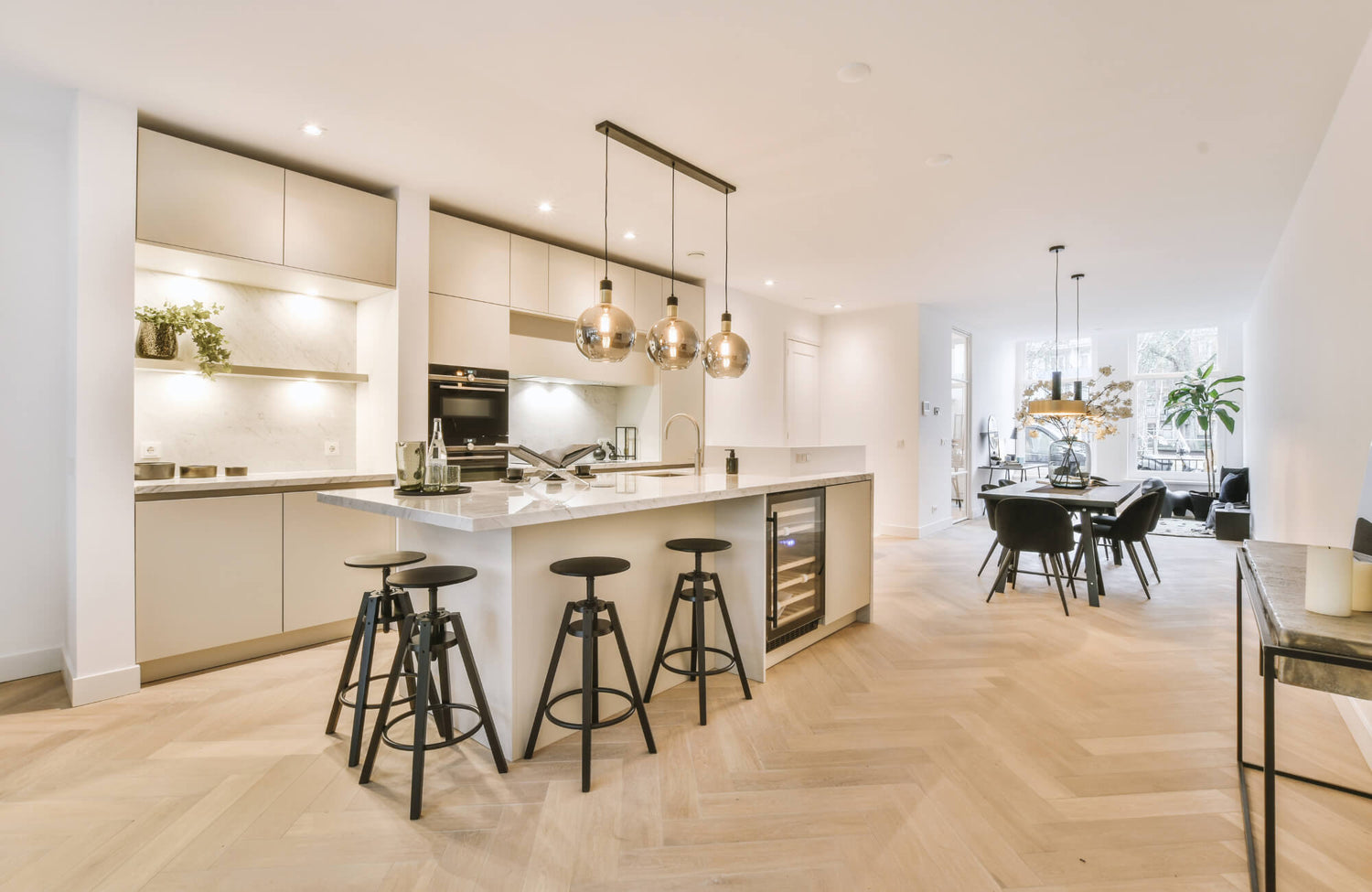
Pendant lights do more than brighten your kitchen island; they shape how the space feels, functions, and flows. These suspended fixtures offer targeted illumination for everyday tasks while acting as sculptural elements that draw the eye and define the room’s visual rhythm.
Smart placement and thoughtful design can also turn lighting into a tool for both performance and personality. Whether you're layering with brass accents or having a minimalist layout, the right pendant anchors the kitchen island as a true focal point. In the sections that follow, we’ll explore how to choose and install pendant lights that strike the perfect balance between function and design impact.

The Multifaceted Role of Kitchen Island Pendant Lighting
Pendant lights aren't just eye-catching; they're strategic design tools that shape how your kitchen looks, feels, and functions. From focused illumination to mood-setting glow and standout style, they pull triple duty in ways that go far beyond decoration.
Task Lighting Excellence
At their core, kitchen island pendants excel at delivering focused task lighting for key activities like prepping, dining, and working. Fixtures equipped with LED bulbs producing 800–1100 lumens per pendant provide the bright, shadow-free illumination needed for these multifunctional surfaces. Additionally, shades made from clear glass or opaque materials help concentrate light downward, maximizing visibility while minimizing glare.
To achieve balanced lighting across the island, designers typically recommend mounting pendants 30 to 36 inches above the countertop and spacing them 24 to 30 inches apart. In wider layouts, broader beam spreads or multiple linear fixtures improve coverage. Furthermore, pairing dimmable drivers with layered controls allows users to adjust brightness throughout the day to suit different tasks and moods.
Ambient Atmosphere Creation
In addition to practical lighting, pendants contribute significantly to a kitchen’s ambient glow, particularly when overhead lighting or daylight is insufficient. When combined with recessed lights, wall sconces, or under-cabinet strips, they also help create a layered and cohesive lighting scheme that minimizes harsh contrasts.
To soften the environment, diffused shades, such as frosted glass or fabric, cast a warm, inviting glow ideal for dining or evening relaxation. Moreover, many integrated LED pendants offer adjustable color temperatures (ranging from 2700K to 4000K), allowing for seamless transitions between energizing daylight tones and soothing warm hues.
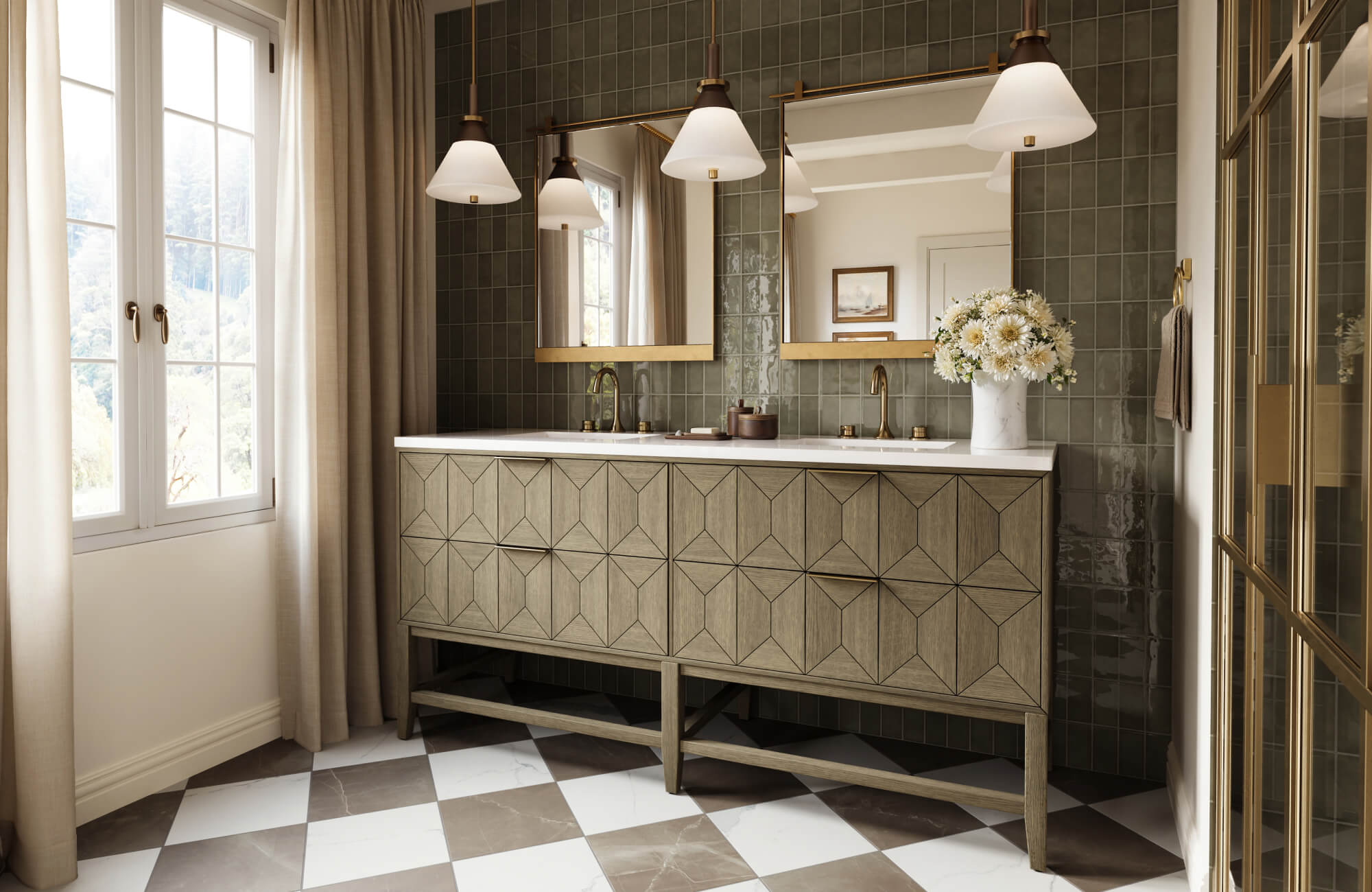
One standout example is Edward Martin’s Barnes 14" Pendant in Aged Antique Distressed Bronze, as featured in the photo above. With its opal glass dome and aged metallic finish, it offers both sculptural appeal and ambient softness. Its frosted diffuser scatters light evenly, effortlessly bridging daytime utility with evening comfort.
Aesthetic Focal Point
Beyond performance and atmosphere, pendant lights also function as visual anchors, centerpieces that lend structure, symmetry, and style to your kitchen design. Whether your aesthetic leans modern farmhouse or urban industrial, the form, finish, and scale of a pendant should harmonize with your kitchen’s overall design language.
Strategic placement, such as evenly spaced rows or artfully staggered clusters, can introduce rhythm and dimension. Meanwhile, materials like hand-blown glass, matte black metal, or brushed brass add layers of visual interest. In many cases, pendants echo architectural elements like curved stools or angular cabinetry, helping tie the space together. With countless customizable and artisan-crafted options, pendants offer an expressive way to reflect your personality through design.

Choosing the Right Pendant Aesthetic
Choosing the right pendant light isn’t just about what fits; it’s about what feels right for your space. By aligning the fixture’s aesthetic with your kitchen’s design style, you can create a cohesive look that elevates both form and function.
Modern and Minimalist Appeal
At the forefront, minimalist kitchens favor clean lines and functional simplicity. Pendants that suit this aesthetic typically showcase sleek geometric forms, low-profile designs, and modern materials like matte black, polished chrome, or frosted acrylic. Integrated LEDs and slender suspension cables further support the understated, streamlined look.
Instead of commanding attention, these fixtures work in quiet support of the space’s overall clarity. Cool white color temperatures (3000K–3500K) pair well with glossy surfaces like frameless cabinetry and quartz countertops. In addition, tone-on-tone finishes and subtle textures reinforce a minimalist palette without visual noise.
A refined complement to this aesthetic is Edward Martin’s Sable Pendant in Distressed Bronze/Ceramic Ivory Crackle, as shown in the picture above. With its curved ceramic shade and soft glaze, it introduces tactile warmth while preserving the space’s calm, contemporary rhythm.
Farmhouse and Rustic Charm
Shifting to a more relaxed, textured approach, farmhouse and rustic kitchens emphasize authenticity and comfort. Pendant lighting here often incorporates weathered wood, aged metals, or hand-forged iron to create a lived-in, nostalgic feel. Lantern-style fixtures, wire cages, and Edison bulbs also add handcrafted charm.
Moreover, using oversized pendants or arranging fixtures in clusters amplifies the welcoming, down-to-earth vibe. Warm bulbs (around 2700K) work especially well with materials like shiplap or butcher block countertops. Finally, braided cords and vintage-inspired hardware naturally reinforce the room’s rustic storytelling.
Industrial Edge and Urban Chic
For a more rugged aesthetic, industrial and urban kitchens highlight raw materials and mechanical elements. Pendant fixtures in this category often feature blackened steel, gunmetal, or antique brass and may expose structural components such as fasteners, pulleys, or cages.
Here, form and function intertwine. These pendants deliver maximum brightness through open-bulb or clear-glass designs, while dimmers provide versatility. This balance is especially useful in loft-style kitchens or rooms with high ceilings and architectural boldness. Additionally, mounting pendants lower helps define intimate spaces within open floor plans.
Traditional and Classic Elegance
Rounding out the style spectrum, traditional kitchens call for lighting that exudes refinement and enduring charm. Pendants in this category frequently feature polished nickel, antique bronze, or alabaster glass, along with graceful touches like scrollwork, fluted edges, or crystal accents.
Typically, bell-shaped or drum pendants are arranged in symmetrical rows to maintain formality. Diffused lighting (2700K–3000K) preserves a soft, ambient quality, perfect for these timeless spaces. As a finishing touch, matching metal finishes to cabinet hardware ensures a cohesive, polished look that supports the room’s overall harmony.

Sizing and Placement
Getting the proportions right is just as important as picking the perfect pendant. From size and height to spacing, every detail influences how well your lighting performs and how polished your kitchen looks.
Determining the Ideal Size
Fundamentally, selecting the correct pendant size ensures a harmonious relationship between your lighting and the kitchen island beneath it. Oversized fixtures can overwhelm the space, while undersized ones may fade into the background or fail to illuminate effectively. As a starting point, subtract 12 inches from your island’s width to determine the maximum combined width for all pendants. Then, divide that figure by the number of fixtures to find an ideal diameter per pendant.
For example, a 72-inch island allows for approximately 60 inches of total fixture width, suitable for two pendants measuring 12 to 14 inches each, or three between 8 and 10 inches. Beyond diameter, fixture height also matters: tall pendants complement 9-foot ceilings or higher, while compact ones are better suited to standard 8-foot ceilings. Ultimately, the pendant’s volume should match the proportions of the island and the surrounding space.
As an illustration, Edward Martin’s Sebastian Pendant in Aged Brass Iron, measuring 16 inches wide by just over 7 inches tall, strikes this balance perfectly. As displayed in the picture above, it provides ample surface illumination while preserving sightlines, making it an ideal choice for mid-sized islands with standard ceiling heights.
Optimal Hanging Height
Once you've settled on size, the next consideration is height. The placement of your pendant greatly influences both visibility and lighting performance. Generally, the bottom of the fixture should hang 30 to 36 inches above the countertop. This range offers optimal task lighting while preserving open sightlines for conversation and movement.
For taller ceilings, add about 3 inches of mounting height for every foot above 9 feet. Fortunately, many fixtures come with adjustable stems or telescoping downrods, which allow for custom placement, especially helpful for sloped or vaulted ceilings.
Keeping the light low enough to serve its function, yet high enough to maintain spatial openness, is key to achieving a well-balanced installation.
Spacing Multiple Pendants
Finally, when using multiple pendants, spacing becomes just as crucial as size and height. Proper distance between fixtures ensures even lighting and visual consistency. A widely accepted rule is to maintain 24 to 30 inches between the outer edges of each pendant, along with at least 6 to 12 inches of space from either end of the island.
To visualize, a 72-inch island with three pendants would typically have one centered in the middle, with the outer fixtures placed equidistant on either side. Aligning the fixtures along the island’s centerline not only improves symmetry but also enhances the overall professional finish.
Don’t forget to factor in the beam spread of each pendant, especially those with directional lighting, to avoid uneven illumination or dark zones along your work surface.

Practical Considerations and Smart Features
While style may draw you in, it’s the practical features that truly shape your day-to-day experience with pendant lighting. From energy use to ease of upkeep, the right choices behind the scenes can make all the difference in comfort, efficiency, and long-term value.
Dimmable Capabilities
As a foundational feature, dimmable lighting allows you to tailor brightness to the time of day or task at hand, adding both comfort and flexibility. Most quality pendants support TRIAC or ELV dimmers, depending on the bulb and driver configuration, while many integrated LED fixtures offer built-in dimming, easily controlled through wall plates or wireless systems.
Before purchasing, it’s essential to confirm that both the fixture and bulb are labeled as dimmable. This functionality not only enhances ambiance but also helps extend the lifespan of the light source by reducing thermal stress during lower output.
A great example of this balance between function and mood is Edward Martin’s Lennie 12" Pendant in Patina Brass/Bronze. As featured in the photo above, its opal glass diffuser softens illumination, while dimmer compatibility ensures a smooth transition from bright prep lighting to a relaxing evening glow, perfect for kitchens that serve multiple purposes throughout the day.
Energy Efficiency and Bulb Choices
Building on lighting performance, energy efficiency is another critical factor to consider. LED technology has become the gold standard, thanks to its extended lifespan (25,000–50,000 hours) and minimal energy consumption. Additionally, many pendants carry ENERGY STAR® certification, offering assurance of verified efficiency and durability.
When choosing bulbs, match the color temperature to your goals: 2700K provides a warm, cozy feel; 3000K–3500K delivers neutral, welcoming light; and 4000K or higher produces a cooler, daylight-like effect. A high CRI (90+) is also important, as it preserves accurate color rendering of surfaces and finishes. Lastly, confirm the correct base type, commonly E26 or GU10, and ensure compatibility with any dimming systems you plan to use.
Smart Home Integration
In addition to dimming and efficiency, today’s pendant lighting increasingly supports smart functionality. Many fixtures now integrate with platforms like Alexa, Google Assistant, or Apple HomeKit, allowing for voice commands or app-based control over brightness, scheduling, and even color temperature.
To enhance convenience further, smart bulbs with Wi-Fi or Zigbee/Bluetooth connectivity can sync with a variety of smart home systems. These platforms offer automation features such as motion sensors, preset lighting scenes, and remote access, particularly valuable in open-concept kitchens where lighting needs fluctuate throughout the day.
To ensure your lighting aligns with your overall design vision, Edward Martin’s design consultation service provides personalized support from concept through delivery. Whether you're selecting pendant lights, coordinating tile and rug selections, or furnishing your space, this one-on-one guidance helps unify aesthetics and functionality. And for expert recommendations or tailored assistance, simply contact the Edward Martin team.
Maintenance and Cleaning
Finally, consider long-term upkeep. Pendant lights in kitchens are exposed to grease, dust, and humidity, making cleanability a key factor. Selecting fixtures crafted from easy-to-maintain materials like sealed glass, smooth metal, or composite finishes will simplify care while preserving aesthetics.
For best results, clean fixtures regularly using a microfiber cloth and mild soap, steering clear of abrasive cleaners that may damage surfaces. Opt for designs with removable shades or tool-free bulb access to streamline maintenance. While integrated LED pendants generally require less frequent attention, it's important to shield built-in components from buildup and moisture. As always, consult the manufacturer’s care guidelines to preserve performance and protect warranty coverage.

Installation and Professional Guidance
Installing pendant lighting may seem straightforward, but it involves more than just picking a fixture and flipping a switch. Depending on your setup, it can range from a simple DIY project to a task best left to a licensed electrician, especially when safety and code compliance come into play.
DIY Considerations and Safety
If the wiring is already in place, confident DIYers can often tackle basic fixture replacements with ease. This usually involves removing an existing ceiling light and installing a pendant with comparable wattage and electrical configuration. That said, even in these simpler DIY installations, safety is critical. Always shut off power at the breaker and confirm with a voltage tester before handling any wiring.
Additionally, use UL-listed wire connectors and ensure the fixture is properly grounded in accordance with the National Electrical Code (NEC). While standard ceiling boxes typically support up to 50 pounds, heavier pendants or fixtures with longer drops may require a reinforced or fan-rated box. Furthermore, the mounting hardware must be aligned precisely to prevent swaying or loosening over time.
In more complex situations, such as sloped ceilings, atypical heights, or group installations, further adjustments may be necessary. Pendants must hang level and clear of nearby cabinetry or range hoods without obstructing views. In these cases—or anytime uncertainty arises—it’s best to consult or hire a licensed professional. Doing so not only ensures code-compliant work and safe installation but may also protect your fixture’s warranty and your peace of mind.
When to Call an Electrician
However, when the installation involves new electrical lines, relocating a junction box, or integrating advanced dimming or smart controls, it’s best to bring in a licensed electrician. Not only can they ensure proper code compliance, but they’ll also assess circuit load, install safely, and avoid risks associated with outdated or ungrounded wiring systems.
Moreover, for those interested in smart lighting systems, electricians are equipped to install compatible switches, drivers, and wireless hubs that sync with platforms like Google Assistant or Apple HomeKit. In older homes, especially, professionals can retrofit outdated components, such as aluminum wiring or undersized switch boxes, to meet modern standards.
Beyond safety and code adherence, professional installation protects your investment. Many lighting manufacturers, including Edward Martin, require licensed installation to validate warranties. Hiring a professional also provides peace of mind through insurance coverage, workmanship guarantees, and liability protection in the event of electrical faults or failures.
One instance where expert help is especially advised is with Edward Martin’s Oswald Pendant in Dusty Iron. With its bold, tiered silhouette and substantial iron construction, this statement piece demands precise mounting and alignment. A sculptural pendant of this scale and weight deserves to be properly secured and displayed with confidence, something a licensed electrician can guarantee.
The Pendant Light Advantage
Pendant lighting is more than an accent; it’s a precision tool that blends utility, ambiance, and design into one striking feature. When carefully chosen and properly placed, these fixtures bring clarity to your workspace, warmth to your gatherings, and cohesion to your overall aesthetic.
At Edward Martin, we see lighting as a vital part of the design equation, not just a finishing touch, but a foundational one. Let our expert team help you find pendants that perform beautifully and reflect your unique style with intention!