Designing a small bathroom often feels like a balancing act between style and practicality. One way to achieve both is by incorporating a mid-century modern vanity. Known for its clean lines, thoughtful storage, and timeless appeal, this design style adapts beautifully to compact spaces without making them feel crowded. In this guide, we’ll explore why mid-century modern vanities are such a smart fit, how to select the right size and features, and tips for styling them in smaller bathrooms.

Why Mid-Century Modern Vanities Work in Small Bathrooms
Mid-century modern vanities bring a thoughtful mix of style and function, making them especially well-suited for smaller spaces. Their balance of clean design and practical features ensures bathrooms feel uncluttered yet polished.
Clean Lines and Minimalist Appeal
The hallmark of mid-century modern design is its emphasis on clean lines and simple forms. In small bathrooms, this approach prevents the vanity from feeling bulky or overwhelming. The streamlined look creates a sense of openness, allowing other design elements to flow more naturally. For example, tapered legs and smooth edges make the piece appear lighter and more spacious. This minimalist appeal helps maximize both style and visual space.
Functional Storage Without Bulk
Mid-century modern vanities are designed to balance form and function, often including built-in drawers or shelving that provide storage without unnecessary bulk. This makes them an excellent fit for compact bathrooms where space is limited but organization is key. For instance, slim-profile drawers can easily house daily essentials while keeping countertops clear. The storage feels intentional rather than excessive, supporting a clean and uncluttered look. This thoughtful balance ensures small bathrooms stay practical without losing their style.
Timeless Style That Blends Easily
Another strength of mid-century modern vanities is their timeless aesthetic that pairs well with a wide range of décor styles. Whether your bathroom leans toward contemporary, transitional, or even rustic, this design adapts seamlessly. The mix of natural woods, simple finishes, and subtle detailing allows the vanity to stand out without dominating the space. For example, a walnut finish can warm up a cool-toned bathroom, while a white vanity can keep things bright and airy. This versatility makes it a lasting choice that evolves with your design preferences.
As seen above, a great example is our Gabriella 48" Single Vanity in Light Natural Oak with 3 cm White Zeus Quartz Top, which blends modern lines with natural textures for a timeless appeal. The cathedral grain of its white oak veneer is accented by subtle vertical detailing, while panel-style doors open to reveal spacious storage with a built-in power and USB outlet. With soft-close drawers, a quartz-based sinktop, and protective finishes, this vanity balances durability and mid-century style in a way that suits small bathrooms perfectly.

Choosing the Right Size and Proportions
Selecting the right vanity for a small bathroom is as much about proportion as it is about style. The goal is to maximize functionality while keeping the space open and comfortable to move in.
Single vs. Double Vanities
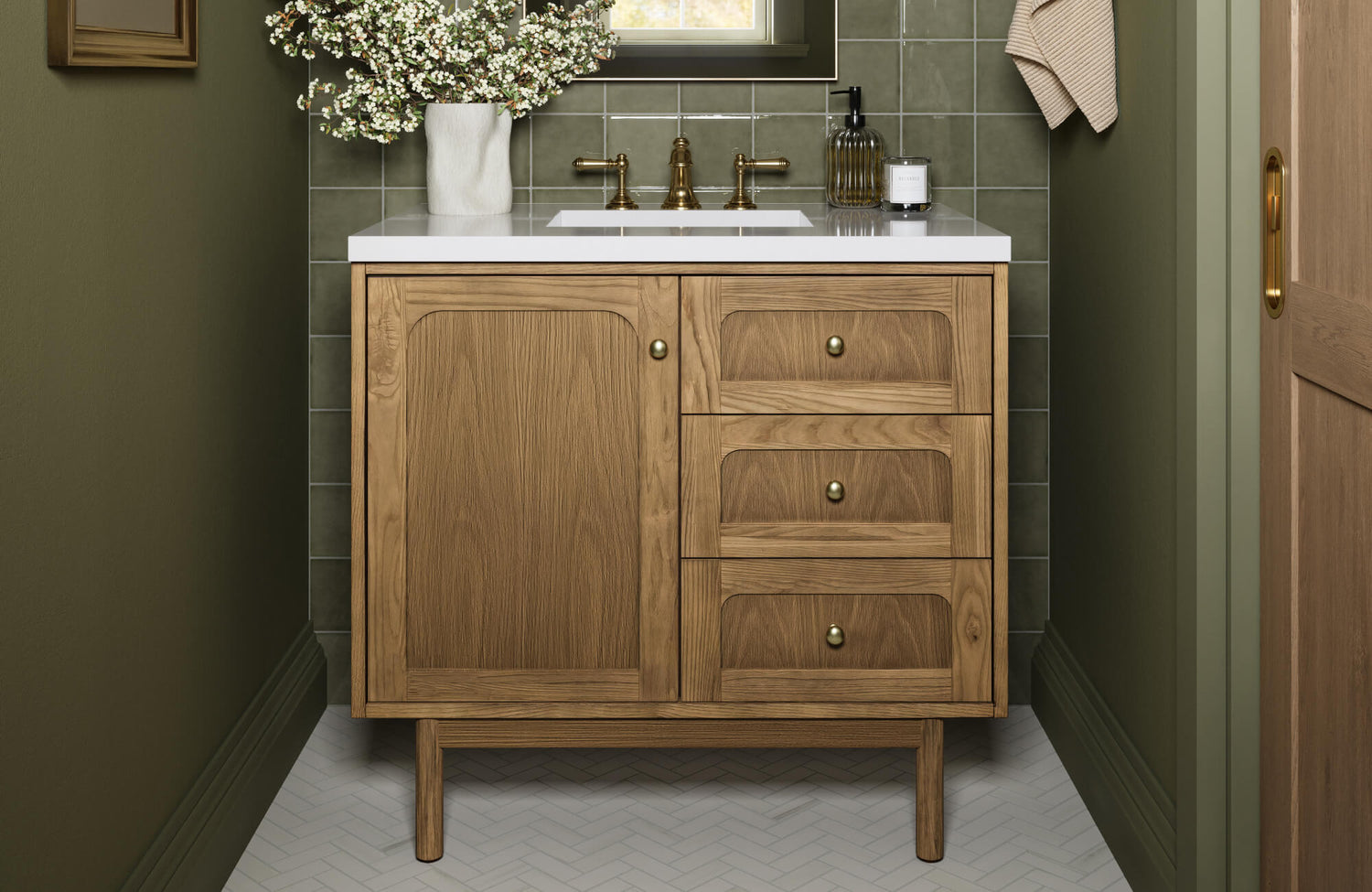
In compact bathrooms, single vanities such as our Rosalie 36" Single Vanity in Amber Birch with 3 cm White Zeus Quartz Top above, are often the most practical choice because they provide essential storage and sink space without overwhelming the layout. Their streamlined design makes it easier to maintain flow, ensuring the room doesn’t feel cramped. For example, a narrow single vanity with drawers can still meet daily storage needs while fitting neatly against one wall. This allows you to prioritize space for movement and other fixtures. A single vanity often feels intentional, offering balance without excess.
Double vanities, on the other hand, can work in slightly larger small bathrooms where two users need convenience. The key is choosing a slim-profile design that stretches horizontally without eating into depth. This makes it possible to share space without creating clutter. For instance, a double vanity with integrated sinks but limited cabinetry can support two people while preserving openness. When sized correctly, even a double vanity can feel proportional rather than overpowering.
Floating vs. Freestanding Options
Floating vanities are a favorite in small bathrooms because they free up floor space and create the illusion of a larger room. By being mounted to the wall, they leave visible floor area beneath, which makes the bathroom appear more open and airy. This effect also provides opportunities for subtle storage, such as baskets tucked underneath. For example, a floating mid-century vanity with tapered edges keeps the design light without sacrificing function. This option works especially well when you want both style and the illusion of extra space.
Freestanding vanities, however, offer a different kind of appeal and practicality. They often provide more storage through built-in cabinets or drawers, which can be beneficial in a smaller bathroom with limited shelving. The key is to select a freestanding vanity with slim legs or a compact frame to avoid a heavy look. For instance, a freestanding piece with raised legs can combine storage with the visual openness of a floating design. Choosing freestanding doesn’t mean sacrificing space—it just requires careful attention to proportion.
Considering Scale With Other Fixtures
The vanity should always be scaled in relation to other fixtures like the toilet, shower, or bathtub. If the vanity is too large, it can crowd these elements and disrupt the natural flow of the room. Instead, aim for a size that feels balanced alongside the rest of the layout. For instance, a 24-inch vanity may be ideal for a half bath, while a 30–36-inch option might suit a compact full bathroom. This consideration keeps the room harmonious and easy to navigate.
Spacing between fixtures is equally important in maintaining comfort and usability. There should be enough clearance for doors, drawers, and general movement without feeling constrained. For example, ensuring at least a few inches of space between the vanity and the toilet creates both visual breathing room and practical comfort. Small bathrooms thrive on this kind of careful planning, where every inch is accounted for. Thoughtful scaling ensures that the vanity enhances the bathroom rather than dominates it.

Maximizing Functionality with Smart Features
Small bathrooms benefit most from vanities that are designed with usability in mind. Mid-century modern pieces often include clever features that enhance convenience without adding clutter.
Built-In Storage Solutions
Built-in storage is essential in a small bathroom, and mid-century modern vanities often excel with drawers or shelving that feel integrated rather than bulky. These compartments keep daily essentials organized while maintaining a clean, streamlined appearance. For example, slim drawers can store toiletries while open shelving offers room for towels or baskets. By blending storage into the design, the vanity maximizes functionality without overwhelming the limited space.
Durable Materials for Everyday Use
Durability is just as important as style when choosing a vanity for a small bathroom. Mid-century modern vanities often feature sturdy woods, veneers, or engineered surfaces that stand up to daily use. These materials also handle the moisture and wear common in compact bathrooms where ventilation may be limited. For instance, a vanity crafted with sealed wood or laminate ensures long-term performance without constant upkeep. Choosing durable materials guarantees your vanity remains both stylish and dependable over time.
Integrated Sinks and Countertops
Integrated sinks and countertops simplify bathroom maintenance while enhancing the vanity’s sleek design. By combining the sink and surface into one piece, seams and grout lines are minimized, making cleaning much easier. This design also helps save space by offering a streamlined look that reduces visual clutter. For example, a porcelain or stone composite countertop with a built-in sink keeps the vanity practical without sacrificing mid-century appeal. It’s a feature that adds both efficiency and elegance to a small bathroom.
As seen above, a great example is our Royce 36" Single Vanity in Chestnut with 3 cm White Zeus Quartz Top, which blends bold mid-century style with everyday practicality. Its ribbed Acacia veneer doors conceal drawers and shelving, while the floating base keeps the design feeling open in a compact bathroom. Finished with an integrated quartz sinktop that resists stains and moisture, this vanity delivers both durability and sleek functionality.

Styling a Mid-Century Modern Vanity
Once the right vanity is in place, thoughtful styling can elevate it from a functional piece to a design centerpiece. The key is choosing accents that highlight its mid-century character while keeping the bathroom cohesive.
Pairing with Mirrors and Lighting
Mirrors and lighting are essential for enhancing a mid-century modern vanity’s clean lines. Round or oval mirrors echo the soft geometry often seen in this style, while globe sconces or tapered fixtures add period-appropriate charm. Positioning lighting on either side of the mirror rather than above also creates a balanced, flattering glow. For example, a walnut vanity paired with a brass-rimmed mirror and frosted globe lights feels instantly polished. These touches ensure the vanity feels anchored within the broader design.
Choosing Hardware and Fixtures
Hardware and fixtures are small details that make a big difference in tying the vanity into the bathroom’s overall aesthetic. Sleek pulls in matte black, brushed brass, or chrome align well with mid-century modern design. Coordinating faucet finishes with the hardware helps maintain visual consistency and prevents the space from feeling disjointed. For instance, a minimalist chrome faucet paired with matching drawer pulls reinforces the vanity’s streamlined character. These details bring cohesion without overwhelming the simplicity of the design.
Balancing Color and Finish
Color and finish choices around the vanity can either highlight or soften its presence in a small bathroom. Warm wood tones pair beautifully with neutral backdrops, while painted vanities in muted hues can add a subtle pop of personality. It’s also helpful to balance matte and glossy surfaces, for example, pairing a matte vanity finish with glossy tiles for contrast. This interplay keeps the design dynamic without feeling cluttered. By balancing these elements, the vanity becomes a natural centerpiece rather than a competing feature.

Design Tricks to Make Small Bathrooms Feel Larger
In compact bathrooms, thoughtful design choices can make the space feel more open and inviting. Beyond the vanity itself, color, layout, and visual balance all play important roles in creating the illusion of extra space.
Using Light Colors and Reflective Surfaces
Light colors naturally make small bathrooms appear larger by reflecting more light throughout the room. Soft whites, pale greys, and muted pastels expand the visual field, while glossy tiles or mirrors enhance brightness. For instance, a light-colored backsplash above the vanity paired with a large mirror, such as our Fitz Mirror in Antiqued Iron above, can instantly open the space. Reflective finishes also help bounce both natural and artificial light, adding depth without clutter. This approach creates a clean, airy atmosphere that feels more spacious.
Optimizing Layout with Vertical Space
Vertical space is often overlooked in small bathrooms, yet it’s one of the best ways to maximize function without crowding the floor. Installing wall-mounted shelves, tall cabinets, or even elongated mirrors draws the eye upward and creates the impression of added height. For example, a vertical mirror above the vanity doubles as both a design element and a space enhancer. Open shelving can also be placed higher on the wall to keep essentials accessible while preserving floor space. By using height strategically, the room feels taller and less confined.
Keeping Lines Clean and Uncluttered
Clutter quickly makes a small bathroom feel crowded, so maintaining clean lines is essential. Choosing simple fixtures, frameless glass shower doors, and minimal accessories helps preserve openness. For example, a vanity with streamlined hardware and limited countertop items keeps the focus on design rather than mess. Consistency in shapes, such as rectangular mirrors and straight-edged tiles, also reinforces this sense of clarity. With fewer visual distractions, the room feels larger and more intentional.

Maintenance Tips for Mid-Century Modern Vanities
Keeping a mid-century modern vanity in good condition requires consistent care, especially in small bathrooms where humidity and daily use are constant factors. With the right maintenance habits, your vanity will remain both functional and stylish for years.
Protecting Wood and Finishes from Moisture
Wood finishes in mid-century modern vanities are particularly vulnerable to humidity, so protection is key. Using proper ventilation, such as an exhaust fan, helps reduce the risk of warping or fading over time. It’s also wise to seal or treat wood surfaces to add an extra layer of defense. Wiping away water splashes promptly prevents moisture from seeping into seams and edges. These small steps go a long way in preserving the natural warmth and finish of the vanity.
Easy Cleaning Routines for Daily Use
Daily cleaning doesn’t have to be complicated; gentle, consistent routines often work best. A soft cloth with mild soap and water can remove most residue without damaging surfaces. Avoid harsh chemicals or abrasive pads, as they can strip finishes and leave scratches. Keeping the countertop free of excess clutter also makes wiping down the surface quick and efficient. A few minutes of attention each day keeps the vanity looking polished and prevents buildup.
Caring for Countertops and Sinks
Countertops and sinks require slightly different care depending on the materials used. Stone composites and porcelain are usually easy to clean, but they benefit from non-abrasive, pH-neutral cleaners to maintain their finish. Regularly checking for stains or soap scum and addressing them early prevents long-term damage. It also helps to dry surfaces after use, reducing the risk of water spots. Consistent upkeep ensures both function and appearance remain intact.
Preserving Hardware and Fixtures
Hardware and fixtures are often the details that tie a mid-century vanity together, so keeping them in good shape is important. Polishing with a microfiber cloth maintains their shine, while using gentle cleaners prevents corrosion or tarnish. It’s also helpful to periodically tighten handles and knobs to avoid wear from looseness. Matching the cleaning approach to the finish, brass, chrome, or matte black, ensures longevity. With a little care, these accents continue to complement the vanity’s design without losing their appeal.
Making the Most of Mid-Century Style
Incorporating a mid-century modern vanity into a small bathroom is about more than just saving space; it’s about creating balance between style and function. With their clean lines, thoughtful storage, and timeless design, these vanities make compact bathrooms feel both open and inviting. By choosing the right size, proportions, and features, you can ensure your vanity not only fits the room but also enhances its overall flow and comfort.
If you’re unsure where to begin, scheduling a design consultation can help you confidently move forward. Our experts can guide you through selecting the best vanity style, finish, and layout for your bathroom’s unique needs. With professional insight, you’ll save time, avoid common design challenges, and create a space that feels practical, cohesive, and distinctly yours.