Rugs collect more than what is visible on the surface. Dust, allergens, and the residue of daily use settle deep into the pile over time, and the cleaning method that works for one fiber can cause lasting damage to another. Knowing how to clean a rug correctly, starting with what it is made from and how it was constructed, is what determines whether the process preserves the piece or gradually shortens its life. In this blog, we'll cover how to identify your rug type, treat common stains before they set, and choose the right tools and methods to keep every rug in your home looking and feeling its best.

A close look at the hand-woven multicolor surface and knotted fringe of the Marcela Cotton Rug in Natural/Ocean.
Identifying Your Rug Before You Clean It
The safest place to start before reaching for any cleaning product is with the rug itself. Its fiber, construction, and any care certifications it carries all determine which methods will preserve it and which ones will cause damage that cannot be undone.
How Rug Fiber Determines The Right Cleaning Approach
Every rug fiber responds differently to water, heat, and cleaning products, and knowing what you are working with before you start is what separates a successful clean from an irreversible mistake. Wool, like our Mallory Rug in Khaki, is naturally resilient but sensitive to heat and excess moisture, and can shrink or lose its shape if treated with the wrong method or temperature. Silk is even more demanding, losing its sheen or breaking down entirely when exposed to strong cleaners or rough handling. Synthetic rugs made from materials like polypropylene or nylon are considerably more forgiving and can handle more aggressive cleaning solutions without the same risk of damage.
If a label is missing or unclear, a simple tactile test offers a starting point. Natural fibers tend to feel warmer and more textured, while synthetics are smoother and cooler to the touch. Applying a small amount of moisture to a hidden area will also reveal whether the fiber absorbs quickly, which signals a natural material that needs careful drying. Taking a few minutes to identify what you are working with before choosing a cleaning method is one of the simplest ways to protect a rug from unnecessary damage.
Hand-Woven Versus Machine-Made Construction
Material is only part of the picture. How a rug is constructed is equally important in determining how carefully it needs to be handled during cleaning. Hand-woven rugs, such as our Marcela Cotton Rug in Natural / Ocean, have a less uniform structure and a more delicate backing than machine-made alternatives, which means aggressive vacuuming, heavy equipment, or hard scrubbing can disturb the weave and loosen threads over time. Their construction carries more complexity, and that complexity requires a more measured approach to every stage of cleaning.
To identify construction, turn the rug over and examine the underside. Irregular knots and a slightly uneven pattern indicate a hand-knotted piece that warrants a gentler approach throughout the cleaning process. Machine-made rugs have a consistent, grid-like backing and are generally more tolerant of standard cleaning methods, though they still benefit from proper technique and periodic professional care depending on the fiber and how heavily the rug is used.
Reading Care Labels And Certifications Before You Start
A rug's care label is the most direct source of information about how it should be cleaned, and reading it before trying any method or product is always the right first step. The label typically lists fiber composition, compatible cleaning procedures, and any temperature or moisture restrictions the manufacturer has specified. Some rugs carry additional certifications, such as the Woolmark label, which confirms the rug is made from pure wool and indicates which cleaning practices are compatible with that fiber. Ignoring these instructions can lead to faded dyes, distorted pile, or weakened structure, damage that is often permanent.
Even if professional cleaning is the plan, knowing what the label says helps communicate the rug's needs accurately and avoids mismatches in treatment that can do more harm than the original soiling. Care tags are also worth keeping in mind when purchasing a new rug, as a piece without one, or with vague instructions, can be more difficult to maintain confidently over time. When the label is present and legible, it removes much of the guesswork from the cleaning process and gives a clear starting point for every decision that follows.

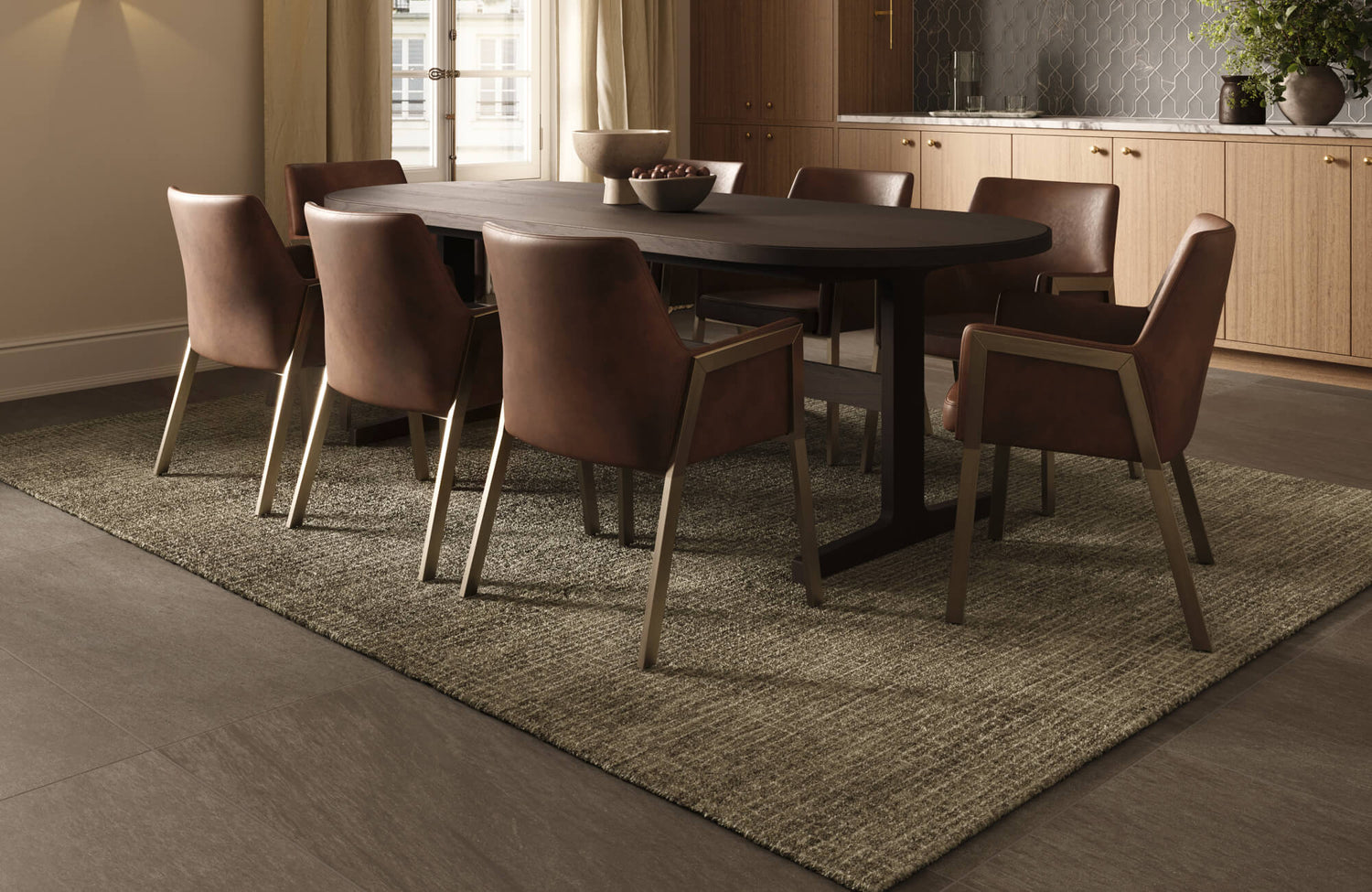
The Mallory Rug in Forest defines a soft walkway layer while Vesper 12 x 24 Matte Porcelain Tile in Beige forms a calm base beneath it, showing how placement shapes everyday use and upkeep.
How Placement And Daily Use Shape A Cleaning Routine
Where a rug lives in the home and how much activity it sees every day are the two most practical factors in determining how often it needs attention. A consistent routine built around those realities keeps a rug looking its best without overcleaning or neglecting it.
Rugs In Busy Areas Versus Quieter Spaces
A rug placed in an entryway, hallway, or family room collects dust, dirt, and debris at a faster rate than one in a less active part of the home, because movement through those areas continuously works particles deeper into the fibers. Vacuuming at least once a week and addressing spills as soon as they occur is the most reliable way to stay ahead of buildup in these zones. Rugs in less-used spaces like formal dining rooms or guest bedrooms accumulate dirt more slowly and typically only need a thorough vacuum every two to three weeks, along with occasional airing out to prevent mustiness from developing in the pile.
Cleaning More Often When Kids Or Pets Are Part Of The Household
Homes with children or pets place a higher demand on rugs than most other living situations. Spills, crumbs, fur, dander, and muddy paws are a regular reality, and each one requires a prompt response to prevent stains or odors from settling into the fibers. Vacuuming multiple times per week and spot cleaning immediately after any mess occurs is the most effective approach in these households. For rugs with significant value, layering a washable cover or secondary rug over the piece during periods of heavy use adds a practical layer of protection without requiring the primary rug to absorb the full impact of daily life.
Adjusting Your Cleaning Routine With The Seasons
The seasons introduce their own set of challenges, particularly for rugs placed near doors, windows, or outdoor transitions where pollen, moisture, leaves, and fine dust are regularly tracked in from outside. Spring and fall tend to be the most demanding periods, and increasing vacuuming frequency to twice weekly during those months helps manage the additional debris before it works its way deeper into the pile. A doormat placed outside an exterior threshold reduces how much material reaches the rug in the first place, and shaking smaller rugs out periodically during high-pollen months removes allergens that standard vacuuming does not always fully extract.

A close-up of yellow rubber gloves scrubbing a gray shag rug with a green brush and spray cleaner.
How To Treat Common Rug Stains Before They Set
Stains are easier to remove in the first few minutes than they are an hour later, and the method matters as much as the timing. Always check the manufacturer's recommendations before applying any cleaner or technique, as the right approach for one fiber can cause damage to another.
Removing Food And Drink Spills Without Setting The Stain
The instinct when something spills on a rug is to scrub, but blotting with a clean, dry cloth is always the more effective first response, lifting the liquid out of the fibers rather than pushing it deeper. For water-based spills like juice, soda, or wine, a solution of mild detergent and lukewarm water addresses most of what blotting leaves behind, and club soda can also help loosen the stain without saturating the pile. Grease and oil spills require a different approach entirely. Sprinkling baking soda or cornstarch directly over the spot and allowing it to sit for 15 to 30 minutes absorbs the oil before it bonds with the fibers, making it far easier to vacuum away the residue. Once the bulk of the spill has been addressed, a damp cloth with a small amount of gentle cleaner is enough to freshen the area without overwetting the rug.
Cleaning Up Pet Messes Without Making Them Worse
Pet stains require prompt removal of any solid material first, followed by blotting the affected area with a paper towel to absorb as much of the liquid as possible before applying any cleaning product. Ammonia-based cleaners should be avoided entirely, as they can mimic the scent of pet urine and encourage the animal to return to the same spot. Enzyme-based cleaners are the most effective option for pet messes because they break down the organic compounds responsible for both the stain and the odor rather than simply masking them. After applying the cleaner and allowing it to sit for the recommended time, blot up the solution thoroughly and allow the area to dry completely before the rug is used again, as residual moisture can attract dirt and undo the cleaning.
Treating Oil-Based And Ink Stains On Rug Fibers
Oil and ink stains respond poorly to water-based cleaning methods, which is why addressing them with the right solvent from the start produces better results than working through a series of ineffective attempts. Isopropyl alcohol applied to a cotton ball or clean cloth is one of the more reliable options for both stain types, but testing it on a small, hidden area of the rug first is essential to confirm it will not affect the dye or fiber. The solvent should always be applied to the cloth rather than poured directly onto the rug, and the stain should be worked from the outside inward to prevent it from spreading further across the pile. Once the mark begins to lift, following with a damp cloth removes any remaining residue, and allowing the area to dry fully before the rug sees use again prevents the cleaned spot from attracting additional soiling.

Two people in rubber gloves sitting on a cream shag rug with a bucket of cleaning supplies and spray bottles ready for a deep cleaning session.
Deep Cleaning Strategies For Long-Term Rug Care
Routine vacuuming keeps surface dirt under control, but does not address what settles deeper into the pile over time. A deeper cleaning approach, matched to the rug's fiber and construction, is what maintains its texture, color, and structure across years of use.
When Steam Cleaning Works And When It Causes Damage
Steam cleaning is a practical option for rugs made from synthetic fibers like nylon or polyester, which handle moisture and heat well enough to allow for deeper extraction of embedded dirt and allergens. The key is using a low-moisture setting, avoiding aggressive detergents, and allowing enough drying time for the pile to recover fully before the rug is used again. If the care label permits steam cleaning, testing a small hidden area first confirms the method is safe for that specific rug before committing to the full surface.
Natural fiber rugs made from wool, silk, or jute are a different matter entirely. These materials are sensitive to both heat and moisture and can shrink, distort, or lose color when exposed to steam, making the method more likely to cause damage than to clean effectively. Rugs with glued backings face the same risk, as saturation can weaken or separate the layers over time. When a care label is absent or the fiber composition is uncertain, skipping steam cleaning and choosing a lower-risk method is always the safer decision.
How To Give A Durable Rug A Gentle Water Bath
Small to medium rugs made from cotton or wool can often be cleaned safely with a gentle water bath when the care label permits it. Soaking the rug in a clean tub with cool water and a mild pH-neutral detergent, then agitating it gently by hand, loosens embedded soil without placing stress on the fibers or backing. Scrub brushes and excessive pressure should be avoided entirely, as they can disturb the weave or break down the pile structure even on rugs that are otherwise durable enough for wet cleaning.
After rinsing thoroughly and pressing out the water without twisting or wringing, the rug should be laid flat on a clean, absorbent surface in a shaded, well-ventilated space to dry. Direct sunlight fades color and stiffens fibers, so drying near open windows or fans indoors produces better results. Hanging the rug should also be avoided, as the weight of the water can stretch the backing and distort the shape before it has a chance to dry. Depending on the pile density, full drying can take a day or more, and the rug should not be returned to use until it is completely dry throughout.
Recognizing When A Rug Needs Professional Cleaning
Some rugs are better served by professional care than by any home cleaning method, regardless of how carefully the process is approached. Antique pieces, hand-knotted rugs, and those made from sensitive materials like silk or viscose carry a level of complexity that standard home equipment is not designed to handle without risk of damage. Persistent odors, deep pet stains, and heavily embedded dirt also tend to require the kind of tools and controlled conditions that professional cleaners provide, including dusting machines and immersion tanks that remove soil without stressing the rug's structure. If a previous cleaning attempt made the problem worse, or if the rug holds significant personal or monetary value, professional treatment is a more reliable path than repeating a method that has already fallen short.

Spray bottles, a blue cleaning solution, a scrub brush, and yellow rubber gloves in a teal bucket, everything needed for an eco-friendly rug cleaning session.
Cleaning Your Rug With Natural And Eco-Friendly Solutions
Harsh chemicals are not a requirement for effective rug cleaning, and in many cases, the gentler the approach, the better the outcome for the fiber. Before applying any natural remedy, check the manufacturer's guidelines, as some fibers and constructions are sensitive to certain ingredients, even when those ingredients are plant-based or non-toxic.
Cleaning With Baking Soda And Vinegar
Baking soda and vinegar are two of the most reliable pantry options for rug care, each addressing a different kind of cleaning need. Baking soda absorbs odors at the source rather than masking them, and sprinkling a generous layer over the rug and leaving it for 15 to 30 minutes before vacuuming is an effective way to refresh the pile without introducing any moisture or residue. Vinegar diluted with water works differently, breaking down grime and neutralizing bacteria on synthetic and cotton rugs, where the acidity is unlikely to cause fiber damage. For more stubborn spots, combining the two into a paste creates a natural lifting agent that can be applied directly to the stain, allowed to dry completely, and then vacuumed away to restore a clean surface.
Choosing A Biodegradable Or Non-Toxic Commercial Cleaner
When a ready-to-use cleaner is the more practical choice, the label is the most important thing to read before purchasing. Terms like plant-based, biodegradable, and free from VOCs indicate a formula designed with both safety and environmental impact in mind, and these products typically avoid the harsh chemicals that can irritate skin or trigger sensitivities during use. For wool and handwoven rugs in particular, a pH-neutral, wool-safe formula is worth seeking out specifically, as standard commercial cleaners can break down natural fibers or strip the softness from the pile even when used as directed. Third-party certifications and verified reviews offer additional reassurance that the product performs as labeled and is genuinely compatible with the rug type it will be used on.
Using Water Carefully During The Cleaning Process
A more considered approach to water use during rug cleaning produces better results and reduces the risk of moisture-related damage at the same time. Targeting only the soiled areas with a damp cloth or sponge rather than saturating the full rug surface keeps the fiber stable and reduces the drying time significantly, which matters most with natural materials like jute or wool, where prolonged moisture exposure can lead to mildew or dye bleeding. Applying diluted cleaning solutions sparingly and avoiding unnecessary rinsing keeps the process controlled and minimizes the structural stress that overwetting places on both the pile and the backing over time.

A wooden-handled brush with natural bristles resting on a light blue dustpan over a fringed flat-woven rug in brown and gray tones.
Tools And Equipment That Make Rug Cleaning More Effective
The right tools make a measurable difference in how thoroughly a rug can be cleaned and how safely the process can be carried out. Choosing equipment suited to the specific fiber and construction of the rug protects its structure while producing a more consistent result than working with whatever happens to be on hand.
Choosing A Vacuum With Adjustable Height And Suction Settings
Not all vacuums are equally suited to every rug, and the ability to adjust both height and suction is what allows the same machine to work effectively across different pile depths and fiber types. A higher setting prevents the vacuum head from pulling or fraying the fibers of dense or shaggy rugs, while a lower setting brings the suction into closer contact with flat-woven styles where direct engagement is needed to lift dust effectively. Suction control matters most with delicate materials like silk blends or vintage wool, where strong suction can distort fine fibers or pull at the structure of the weave in a way that accumulates into visible damage over time. Dialing the suction back on these rugs allows for a thorough clean without placing the fiber under stress it was not constructed to absorb.
When Manual Tools Reach What A Vacuum Cannot
Soft-bristled brushes, rubber squeegees, and rug beaters each address cleaning needs that a vacuum alone cannot fully resolve. A soft-bristled brush loosens surface dirt from natural fiber rugs like jute or sisal without disturbing the weave, working the debris free so it can be vacuumed away more completely in a follow-up pass. Rubber squeegees are particularly effective at lifting pet hair that clings stubbornly to pile fibers even after vacuuming, using the friction of the rubber surface to gather and release strands that suction alone tends to skip over. For seasonal deep cleaning or situations where wet methods are not appropriate, a traditional rug beater used outdoors in a well-ventilated space dislodges embedded dirt from deep within the pile in a way that modern machines rarely replicate.
Why A Quality Rug Pad Is Part Of The Cleaning Equation
A rug pad is most commonly thought of as a grip aid, but its contribution to cleaning ease and long-term rug condition goes considerably further than keeping the rug in place. The cushioned layer it provides beneath the rug reduces the pressure and compression that accumulate in areas of consistent use, helping the pile maintain its structure and preventing the uneven flattening and edge fraying that make a rug harder to clean evenly over time. The airflow a pad creates between the rug and the floor surface also reduces moisture buildup and trapped dust beneath the rug, which lowers the frequency at which deep cleaning becomes necessary and keeps the underside of the rug in better condition between sessions. When a rug stays firmly positioned, it also eliminates the shifting and curling that can cause fiber stress at the edges and make routine vacuuming less effective across the full surface.
Keeping Your Rug In Its Best Condition Long-Term
A rug that is cleaned with the right method for its fiber, addressed promptly when something spills, and maintained on a routine that reflects how it is actually used will hold its texture, color, and structure far longer than one that is cleaned reactively or with the wrong approach. The decisions covered in this blog, from identifying the material before reaching for a product to choosing tools suited to the pile, are what make the difference between rug care that preserves and rug care that gradually degrades. When the approach is matched to the rug rather than applied uniformly across every piece in the home, the results are both more effective and less damaging over time.
If you are comparing rug materials, constructions, or trying to determine which options are best suited to how your household uses a space, our Personalized Design Consultation can help bring clarity to the process. Our team can offer tailored guidance based on your rooms, your lifestyle, and your long-term goals for the space, helping you choose rugs that are as practical to maintain as they are to live with.