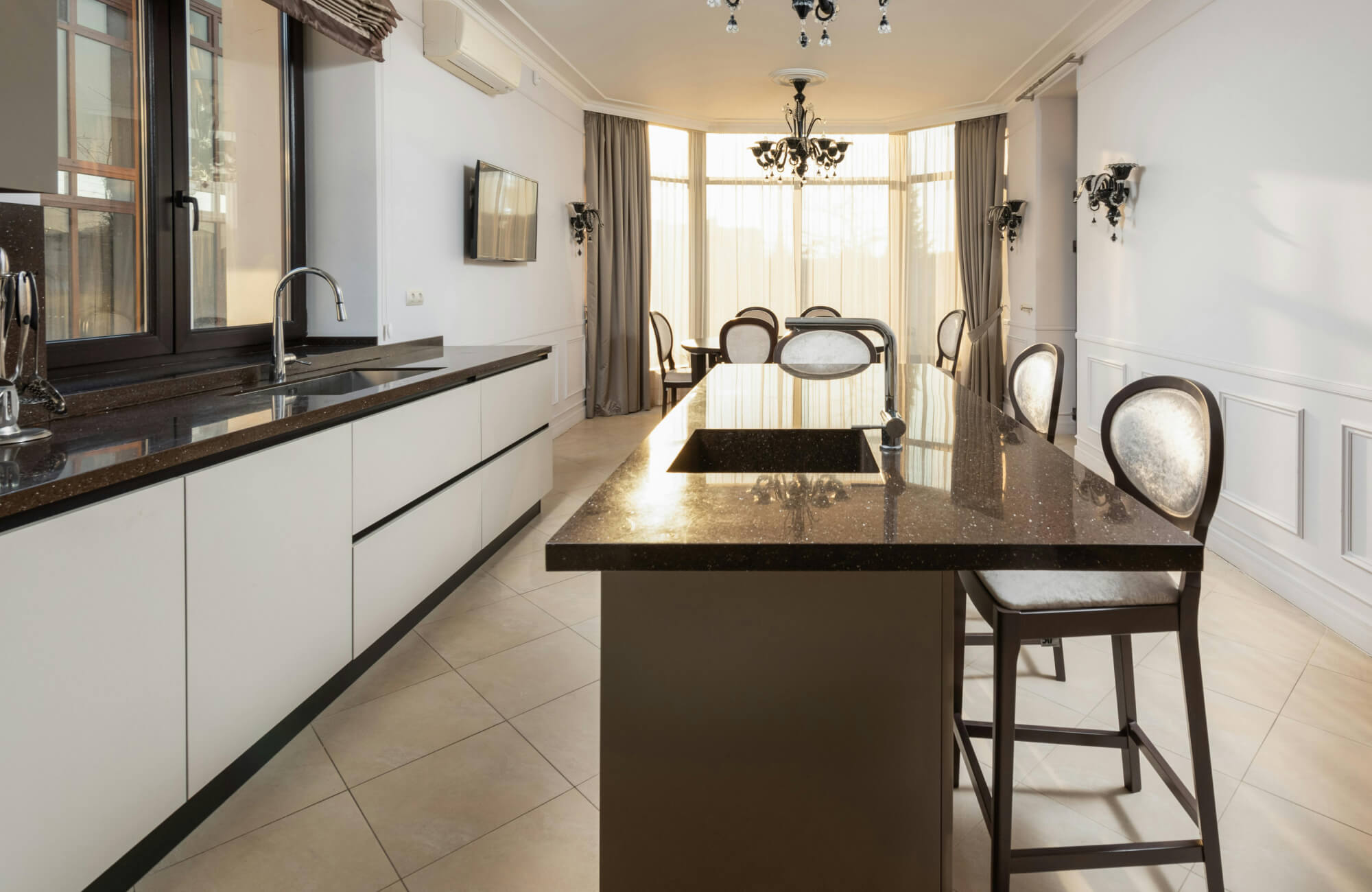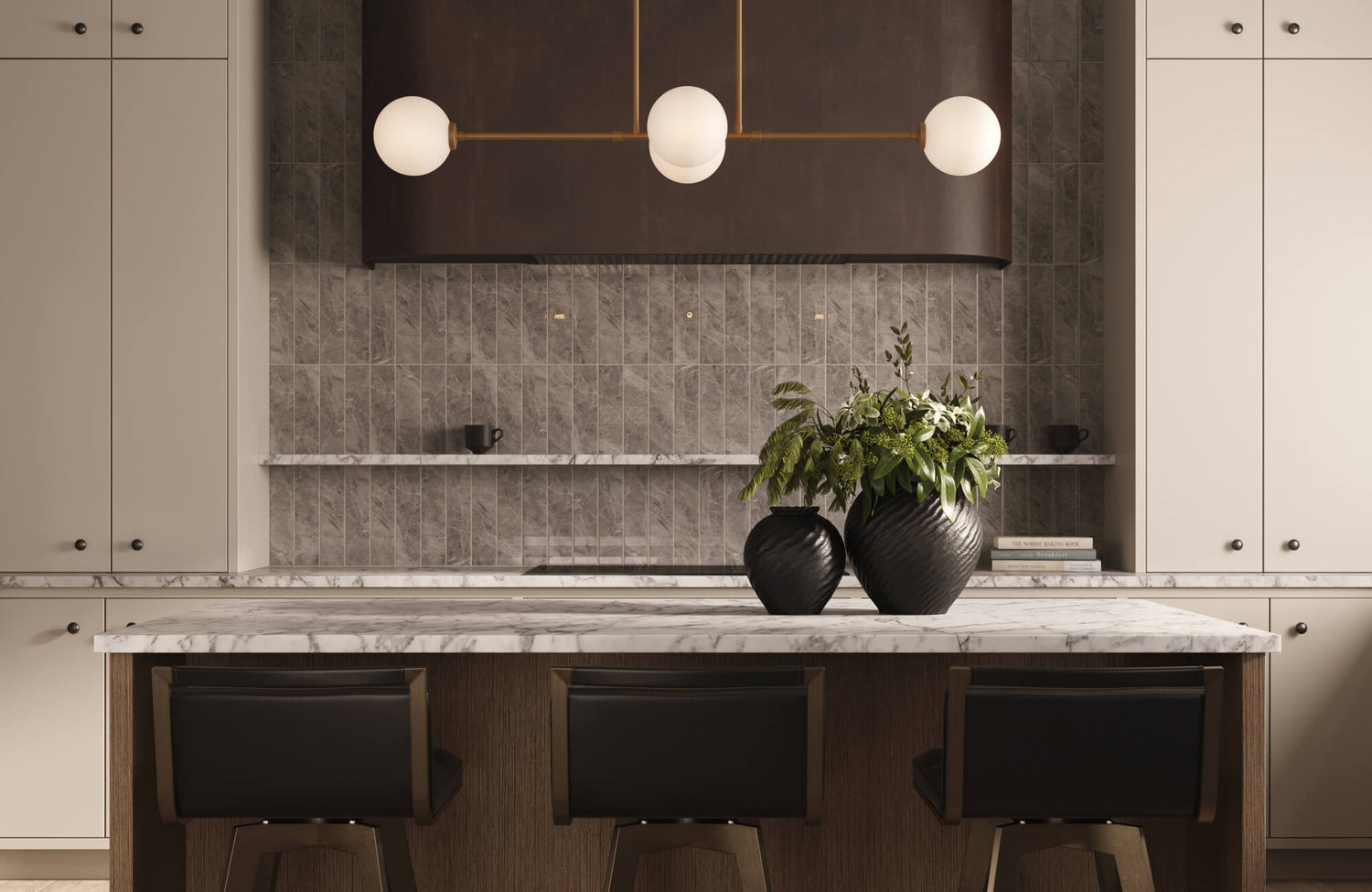
Kitchens and bathrooms may serve different purposes, but the wall tile you choose often needs to work comfortably in both. Because these spaces are used every day and visually connect more than we realize, tile decisions tend to carry more weight than they first seem. In this blog, we’ll talk through how material, finish, color, pattern, and layout influence how wall tile looks, feels, and performs across both rooms, plus when using one tile may not be the best choice.

Why Choosing One Tile for Multiple Spaces Makes Sense
Choosing the same wall tile for both kitchens and bathrooms can feel like a big commitment, but it often helps the home feel more intentional as a whole. When handled thoughtfully, a shared tile creates visual continuity while easing the mental load that comes with managing too many finishes. Below, we’ll talk about how this approach can simplify decisions and help different spaces feel connected without sacrificing function.
How Shared Wall Tile Creates Visual Flow
Using the same wall tile in kitchens and bathrooms helps the home feel visually connected, even though those rooms serve very different purposes. The eye naturally picks up on repeated surfaces, which makes moving between spaces feel smoother and more intentional. This is especially noticeable in open or semi-open layouts, where sightlines often extend beyond a single room. Instead of each space trying to stand on its own, the shared tile quietly links them together. Because of that continuity, the home feels less segmented and more thoughtfully composed. The transition from one room to the next starts to feel effortless rather than abrupt.
Over time, this kind of visual flow adds a sense of calm and order that becomes more noticeable in everyday use. The tile acts as a familiar backdrop, which also gives other elements more freedom to shift without disrupting the overall feel. For example, cabinetry or fixtures can change slightly from room to room while the shared surface keeps everything grounded. Because the tile appears in more than one space, it feels less like a design statement and more like part of the home’s structure. That familiarity helps the design settle in naturally and supports the space quietly, rather than asking to be noticed.
When Repeating Tile Feels Intentional Rather Than Repetitive
Repeating the same wall tile works best when the choice feels deliberate rather than convenient. When the color, scale, and surface character are well balanced, the tile can appear in multiple rooms without feeling overused. Instead of reading as duplication, the repetition starts to feel purposeful, like a design thread running through the home. This is often where the difference between cohesive and accidentally matched becomes clear. A tile that doesn’t dominate visually is easier to repeat because it doesn’t compete for attention. That restraint allows the repetition to feel natural rather than forced.
What really makes repetition feel intentional is how the tile supports the spaces around it. In kitchens and bathrooms, wall tile usually plays a background role, which also makes consistency easier to live with. The repeated surface creates rhythm, while other details can still vary to suit each room. For instance, lighting, hardware, or cabinetry can change without breaking the overall flow. When handled this way, the tile fades into the background in a good way. It anchors the design quietly, as well as gives the rest of the space room to breathe.
Situations Where One Tile Simplifies Design Decisions
Choosing one wall tile for multiple spaces can make the design process feel far more manageable, especially in the early stages. Instead of juggling separate tile options for each room, a shared tile helps narrow the field in a useful way. Because there’s already a clear visual anchor, other decisions start to feel easier to evaluate. For example, it becomes simpler to compare cabinetry, fixtures, or finishes when the wall surface is already set. This clarity keeps choices from pulling in different directions. The overall process feels more focused rather than overwhelming.
This approach works particularly well in homes where kitchens and bathrooms are renovated around the same time. A shared tile reduces the need for constant side-by-side comparisons between rooms. It also builds confidence, since the tile has already proven it can work in more than one setting. As decisions stack up, the design starts to feel cohesive without extra effort. Rather than feeling like a shortcut, this strategy often feels more intentional. It supports momentum while still leaving room for thoughtful variation elsewhere.

Material Considerations That Hold Up in Both Environments
When a wall tile is used in both kitchens and bathrooms, it has to handle more than just one type of exposure. Moisture, heat, and everyday activity show up differently in each space, which makes material choice especially important. Below, we’ll look at which tile materials are best suited to perform consistently in both environments without requiring special treatment in one room or the other.
Ceramic vs Porcelain for Shared Wall Applications
Ceramic and porcelain often get grouped together because they can look nearly identical once installed, but they don’t always behave the same way in daily use. Ceramic wall tile generally works well in areas with lighter moisture exposure, which is why it’s commonly used for kitchen backsplashes or bathroom walls away from direct splash zones. Porcelain, however, is denser and less absorbent, so it tends to handle humidity and occasional water contact more comfortably. That added durability makes porcelain a more dependable option when the same tile is expected to perform consistently across both rooms. It also helps reduce the chance that one space will show wear sooner than the other. Over time, that consistency can make a noticeable difference.
A great example of how porcelain performs well across both kitchens and bathrooms is our Mariel 1x12 Glossy Porcelain Tile in Sand, shown above. Its calmly rippled glaze and soft beige tones bring subtle movement to the wall, which helps the surface feel relaxed rather than overly polished. Because the tile is dense and low-absorption, it handles humidity and everyday exposure with ease while still feeling refined. That balance makes it an easy choice for backsplashes, shower walls, or anywhere you want continuity without sacrificing durability.
How Glaze and Density Affect Long-Term Performance
Glaze and density work together behind the scenes to shape how a tile holds up over time. A properly applied glaze creates a sealed surface that helps protect the tile body from moisture exposure. Density plays a quieter but equally important role, since it affects how much water the tile can absorb beneath that surface. When a tile is denser, it’s less likely to react to shifts in temperature or ongoing humidity. This becomes especially relevant in homes where kitchens and bathrooms experience very different daily conditions. Together, glaze and density help ensure the tile performs reliably in both spaces without surprises.
Where Natural Stone Needs Extra Consideration
Natural stone adds depth and character, but it behaves differently from manufactured tile when exposed to moisture and heat. Some stones are more porous, which means they can absorb water or react to humidity more readily. In kitchens, moisture exposure is often occasional, while bathrooms introduce more consistent damp conditions. That difference can cause the stone to age unevenly if it isn’t chosen with care. Understanding how stone responds in each environment helps prevent one room from wearing differently from the other. When stone is used across multiple spaces, that awareness becomes especially important.
Why Wall Tile Ratings Still Matter in Wet Zones
Tile ratings are easy to overlook, yet they offer useful insight into how a material is expected to perform in real-world conditions. These ratings take water absorption and suitability for wet areas into account, which directly affects performance in bathrooms. When the same tile appears in kitchens as well, those ratings provide reassurance rather than restriction. They help confirm the tile can handle humidity without becoming a weak point over time. This is especially valuable when visual consistency across rooms is the goal. Paying attention to ratings keeps design choices aligned with long-term reliability.

Finish and Texture Choices That Transition Well
Finish and texture play a quiet but important role in how wall tile feels day to day. The same surface can behave differently depending on light, humidity, and how often the room is used. Choosing finishes that transition well between kitchens and bathrooms helps the tile feel consistent, comfortable, and easy to live with over time.
Glossy Finishes in Kitchens and Bathrooms
Glossy finishes naturally reflect light, which can help both kitchens and bathrooms feel brighter and more open. In spaces with limited natural light, that reflectivity helps carry illumination across walls and into darker areas. At the same time, gloss tends to define surface details more clearly, giving tile a crisp, clean look. This works best when the tile design itself is simple, since the finish already adds visual presence. When used across both rooms, glossy surfaces help maintain continuity without highlighting differences in lighting. Choosing a softer, more refined gloss keeps the finish feeling polished rather than overly shiny.
A great example of a glossy finish that transitions smoothly between kitchens and bathrooms is our Graham 3x6 Glossy Ceramic Tile in Mushroom, shown above. Its warm, earthy tone feels grounded rather than stark, which helps the shine read as inviting instead of overly reflective. The glossy surface catches light gently, brightening the wall while still highlighting the tile’s subtle variation and handcrafted character. That balance makes it easy to use in backsplashes, shower walls, or accent areas without the finish feeling out of place.
Matte and Soft-Sheen Options for Everyday Use
Matte and soft-sheen finishes offer a calmer, more relaxed feel that many people find easier to live with day to day. Instead of bouncing light directly, these surfaces diffuse it, creating a softer visual effect in both kitchens and bathrooms. This can be especially comfortable in rooms that already receive strong or directional lighting. Matte finishes also tend to be more forgiving, since they don’t emphasize reflections, shadows, or subtle surface shifts. When used consistently across spaces, they help the tile feel grounded and balanced. That steadiness makes them a dependable choice for shared wall tile.
Subtle Texture That Adds Interest Without Complicating the Space
A small amount of texture can go a long way in adding depth to wall tile without making the space feel busy. Subtle surface variation helps break up larger tiled areas, giving the eye something to engage with as well. This becomes especially helpful when the same tile appears in more than one room. Instead of feeling repetitive, the texture adds quiet interest while still allowing the tile to adapt to different settings. In both kitchens and bathrooms, this restraint keeps the design from feeling flat. The tile feels considered and intentional, rather than decorative for decoration’s sake.
Finishes That Are Easier to Live With Over Time
Some finishes simply feel easier to live with as time goes on. Surfaces that respond well to changing light and humidity tend to maintain a more consistent appearance throughout the day. This matters when the same tile is used in spaces with different patterns of use and activity. A finish that looks comfortable in morning bathroom light should also feel right in an evening kitchen. Choosing finishes with that kind of flexibility helps the tile stay visually balanced long after it’s installed. That ease often becomes one of the most appreciated aspects of the design.

Color and Pattern Strategies That Stay Cohesive
Color and pattern choices play a big role in how well wall tile carries across kitchens and bathrooms. Because these spaces often differ in lighting, scale, and visual rhythm, finding the right balance helps the tile feel connected without looking copied. Below, we’ll look at how tone, pattern, and variation can stay cohesive while still adapting to each room’s needs.
Neutral Colors That Work in Both Kitchens and Bathrooms
Neutral tile colors, such as our Graham 3x6 Glossy Ceramic Tile in Bone above, tend to adapt easily across different rooms because they respond well to changing light and surrounding finishes. Shades like warm whites, soft grays, beiges, and muted earth tones feel grounded without leaning too warm or too cool. That balance allows the tile to sit comfortably alongside different cabinetry, fixtures, or countertops without clashing. In kitchens, neutrals read clean and composed, while in bathrooms, they help maintain a calm, relaxed feel. Because these colors don’t dominate the space, they leave room for other elements to evolve over time. That flexibility makes neutral tile a dependable foundation for shared wall applications.
Using Pattern Without Locking Into One Room’s Style
Patterns can work across multiple spaces when they’re approached with a bit of restraint. Designs built around subtle movement or gentle repetition tend to feel more adaptable than bold or highly graphic patterns. This allows the tile to complement both kitchens and bathrooms without clearly favoring one setting over the other. When a pattern feels balanced, it supports the room rather than defining it too strongly. That makes it easier to repeat the tile without it feeling themed or overly styled. The pattern settles into the background, adding interest without taking over.
How Lighting Changes Tile Color Perception
Lighting plays a bigger role in tile color than most people realize, especially when the same tile shows up in different rooms. Kitchens usually have brighter, more direct lighting, while bathrooms often rely on softer or more diffused light. Because of that, the same tile can read slightly warmer in one space and cooler in another as the day goes on. Choosing tones that stay fairly consistent under both conditions helps avoid that mismatch. Tiles with balanced undertones tend to adapt more easily as lighting shifts. Keeping this in mind makes it easier to use one tile without surprises.
When Variation Adds Interest Instead of Distraction
A little bit of variation can actually make wall tile feel more natural when it’s used across multiple rooms. Gentle tonal shifts or subtle surface movement keep larger tiled areas from feeling flat or overly uniform. When that variation is restrained, it adds depth without pulling attention in too many directions. This is especially useful when the same tile appears more than once throughout the home. Instead of feeling repetitive, the tile starts to feel intentional and thoughtfully chosen. The variation helps tie spaces together while still letting each room feel like its own.
Why Overly Bold Patterns Limit Long-Term Flexibility
Bold patterns can be exciting at first, but they often make it harder for a space to evolve over time. When the same strong pattern is used in both kitchens and bathrooms, it can tie the tile too closely to a specific style or moment. That makes future updates feel more complicated, because new elements have to work around the tile instead of alongside it. Over time, this can start to feel limiting rather than expressive. Choosing calmer patterns keeps more options open as tastes shift and needs change. The tile stays supportive instead of steering every design decision.
Finding the Right Balance Between Plain and Decorative
Tiles that land somewhere between plain and decorative tend to age more comfortably across multiple spaces. A touch of character helps the tile feel intentional, while restraint keeps it from overpowering the room. This balance allows the same tile to work naturally in both kitchens and bathrooms without extra adjustment. It also helps transitions between rooms feel smoother and less abrupt. When the tile isn’t asking for attention, it gives the rest of the design room to breathe. That balance is often what makes shared wall tile choices feel right long-term.

Tile Size and Layouts That Feel Natural in Both Rooms
Tile size and layout shape how a space feels more than most people realize, especially when the same tile appears in both kitchens and bathrooms. Proportion, rhythm, and repetition all influence whether the design reads as fluid or slightly forced.
Tile Sizes That Translate Well Between Spaces
Some tile sizes naturally work better across both kitchens and bathrooms because they scale comfortably in different wall applications. Medium-format tiles, in particular, tend to strike a good balance, large enough to avoid visual clutter but not so large that they overwhelm smaller rooms. That flexibility makes them easy to use for backsplashes, shower walls, or even full-height installations. When the size feels right in both spaces, the tile reads as intentional rather than like a compromise. It also reduces the need for room-specific adjustments that can disrupt visual flow. As a result, transitions between rooms feel cleaner and more cohesive.
Layout Patterns That Feel Familiar in Both Rooms
Familiar layout patterns help the shared wall tile feel natural instead of overly designed. Options like straight stack, simple offset, or classic vertical layouts are easy for the eye to follow, which supports a smooth visual flow between spaces. Because these patterns don’t rely heavily on room shape, they adapt well to both kitchens and bathrooms. They also tend to stay visually quiet, which keeps them from competing with other elements in the room. This allows cabinetry, fixtures, or lighting to take the lead where needed. Over time, the layout feels steady and comfortable rather than visually demanding.
Adjusting Orientation Without Changing the Tile
Using the same tile in different orientations is an easy way to add variation without losing cohesion. For instance, running the tile horizontally in a kitchen backsplash and vertically in a bathroom shower can subtly change how each space feels. That simple shift affects how height or width is perceived, helping each room respond better to its proportions. At the same time, the material stays consistent, so the connection between spaces remains intact. This approach keeps the tile familiar while allowing each room to have its own rhythm. It’s a flexible solution that feels thoughtful rather than forced.
How Grout Lines Affect Visual Continuity
Grout lines may seem like a small detail, but they have a big influence on how tile reads across multiple rooms. Wider or high-contrast grout can call attention to the layout, which becomes more noticeable when the same tile is repeated elsewhere. Softer grout tones, on the other hand, allow the surface to feel more continuous, helping the eye move easily from one space to the next. Consistent grout spacing also plays a role, since it reinforces rhythm instead of creating visual stops. When grout supports the tile rather than competing with it, the overall look feels calmer. That consistency helps shared tile choices feel cohesive instead of fragmented.

When One Wall Tile Works — and When It Doesn’t
Using one wall tile across kitchens and bathrooms can feel satisfying when everything clicks, but it isn’t always the right solution. The difference comes down to whether consistency supports how each space functions or quietly works against it. Here, we’ll look at how to tell when a single tile strengthens the overall design and when a small adjustment leads to a more balanced result.
Signs a Wall Tile Can Work Across Multiple Rooms
A wall tile tends to work well across multiple rooms when it feels adaptable instead of attention-grabbing. If the color stays steady under different lighting conditions and the surface doesn’t constantly ask to be noticed, repetition starts to feel natural. Tiles that act as a calm backdrop usually transition easily between kitchens and bathrooms because they support the space rather than define it. This makes movement from one room to another feel connected instead of staged. Over time, the tile blends into the home’s overall rhythm rather than standing out as a design moment. That quiet consistency is often the clearest sign the choice is doing its job.
When Kitchens and Bathrooms Need Different Tile Choices
There are times when using the same tile in both rooms creates more compromise than cohesion. Kitchens and bathrooms have different patterns of use, and sometimes a single tile struggles to support both comfortably. If the tile feels balanced in one space but starts to feel heavy, busy, or out of place in the other, that mismatch usually becomes obvious quickly. In those cases, forcing consistency can make the design feel rigid rather than intentional. A small adjustment, such as a related color or similar texture, can ease that tension without breaking visual flow. Knowing when to allow that flexibility is part of making a confident, well-considered choice.
Balancing Consistency With Room-Specific Function
Consistency doesn’t always have to mean repeating the exact same choice in every space. More often, it’s about carrying a shared tone or feel while still letting each room respond to how it’s actually used. When kitchens and bathrooms feel related but not identical, the home comes across as cohesive rather than overly matched. This approach gives each space the freedom to function well without feeling visually disconnected. It also makes future updates easier, since the design isn’t locked into a rigid formula. Over time, that flexibility tends to feel more natural and far easier to live with.
Choosing Wall Tile That Feels Right Across Your Home
Choosing wall tile that works well in both kitchens and bathrooms is really about balance. When color, material, finish, size, and layout are considered together, one tile can move comfortably between spaces without feeling repetitive or forced. The goal isn’t perfection, but consistency that supports how each room is used day to day. When the tile feels adaptable rather than attention-seeking, it naturally becomes part of the home’s rhythm.
If you’re feeling unsure about how a tile will translate across both spaces, a second perspective can make all the difference. Our design consultation helps you think through real layouts, lighting conditions, and everyday use, not just isolated samples. We’ll help you decide when one tile truly works everywhere and when a subtle shift makes more sense. Book a design consultation to get guidance that’s tailored to your home and how you actually live in it.