Choosing the right bathroom color palette is essential to creating a space that remains stylish, functional, and visually appealing for years to come. Timeless colors create a strong design foundation that adapts effortlessly to evolving decor trends while maintaining a sense of elegance and cohesion. Whether you're remodeling an existing bathroom or designing a new one, choosing the right shades can help you achieve a balanced space that feels both contemporary and classic.
Timeless bathroom colors also work well with a wide range of materials, fixtures, and design styles. Their versatility allows them to complement changing decor elements over time, giving you the freedom to update accessories or accents without needing a full renovation.
In this article, we’ll explore some of the most popular timeless bathroom colors, along with tips on pairing them with complementary design elements. We’ll also share practical strategies to help you create a bathroom that remains beautiful, functional, and relevant for years to come.

Popular Timeless Bathroom Colors
Timeless bathroom colors remain popular for their versatility, sophistication, and ability to complement a wide range of design styles. Neutral shades, in particular, create a calm, balanced atmosphere and serve as an ideal backdrop for a variety of materials, textures, and accents. Their understated appeal allows them to adapt effortlessly to changing trends, making them a reliable choice for bathrooms designed to look elegant and relevant over time.
White
White remains one of the most enduring choices for bathroom color palettes because of its clean, classic appeal. It instantly brightens a space and helps create the illusion of a larger room, making it particularly beneficial for smaller bathrooms or areas with limited natural light. Its ability to reflect both natural and artificial light enhances the space's overall brightness, contributing to a fresh, open atmosphere.
This effect is beautifully illustrated by Edward Martin’s Natasha 2x6 Glossy Porcelain Tile in Oat, as featured in the photo above, where soft white tones and a glossy finish help reflect light throughout the shower space. Its subtle tonal variation adds visual depth while maintaining the clean and understated look that makes white such a timeless choice.
Aside from its visual clarity, white is widely associated with cleanliness and simplicity, qualities that naturally align with bathroom design. Its neutral nature also allows it to pair effortlessly with a wide range of materials, such as wood, metal, stone, and glass. This versatility makes white an ideal foundation for a timeless bathroom, as it can easily adapt to changing styles, accents, and decor updates over time.
Gray
Gray has become a staple in modern bathroom design due to its refined neutrality and exceptional versatility. As a balanced and understated shade, it provides a calming backdrop that complements both bold accents and subtle decorative elements. This versatility makes gray an excellent choice for a timeless color palette that can easily adapt to evolving styles.
One of gray’s key advantages is its ability to complement a wide range of materials and textures. It pairs effortlessly with natural elements such as wood and stone, as well as with metallic finishes like chrome or brushed nickel. This versatility allows homeowners to create a bathroom that feels cohesive, sophisticated, and easy to update over time.
Gray is also highly practical for bathroom spaces. Compared to lighter shades, it tends to conceal water spots, wear, and minor imperfections more effectively. Its ability to maintain a polished appearance while supporting various design approaches makes gray a reliable and enduring choice for timeless bathroom color schemes.
Beige and Cream
Beige and cream tones add warmth and softness to bathroom spaces, making them ideal for creating a relaxing and welcoming environment. These shades are often associated with spa-like interiors, helping create a calm and inviting atmosphere that encourages relaxation.
As neutral colors, beige and cream can provide a subtle backdrop that enhances surrounding design elements without overpowering the overall aesthetic. They work particularly well with natural materials such as wood and stone, allowing these textures to stand out while maintaining a balanced and cohesive look.
Another advantage of beige and cream is their versatility. These tones transition seamlessly between traditional and contemporary design styles, making them a reliable option when selecting timeless bathroom colors. Their ability to complement a wide range of fixtures, finishes, and decorative accents ensures that the space can evolve while maintaining its elegant appeal.
If you'd like to see how these timeless colors will look in your own space, you can explore different options using our augmented reality (AR) tool. This allows you to visualize various color tones and tile styles in real time, helping you make a more confident design decision before committing to a final selection.

Considering Undertones When Choosing Bathroom Colors
While neutral colors are often regarded as timeless, paying attention to their undertones is key to achieving a cohesive and well-balanced design. Undertones influence how colors appear in different lighting conditions and how they interact with surrounding materials, finishes, and decor elements. Carefully considering these subtle color variations can help ensure that every element in your bathroom works together harmoniously.
Warm Undertones
Warm undertones often include subtle hints of yellow, red, or brown, which can give neutral colors a softer and more inviting appearance. These tones help create a cozy and welcoming atmosphere, making them a great choice for bathrooms designed to feel relaxing and comfortable. Warm neutrals, such as creamy whites, soft beiges, and warm grays, work particularly well in timeless bathroom designs because they pair naturally with materials like wood and stone. When paired with finishes such as brass or gold, these colors can also help create a balanced and harmonious environment that feels both elegant and timeless.
Cool Undertones
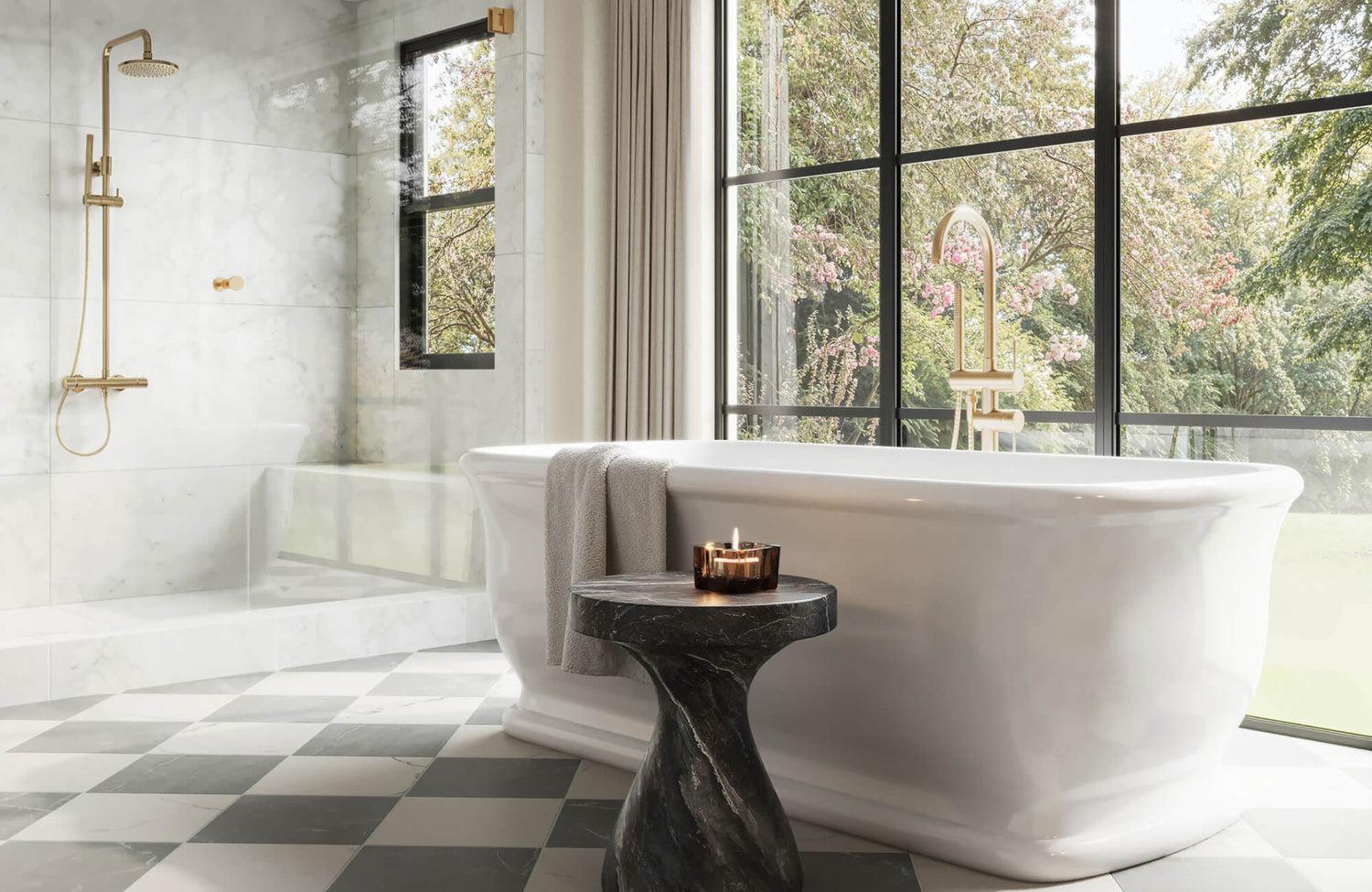
Cool undertones often contain subtle hints of blue, green, or violet, giving neutral colors a crisp and refreshing appearance. These shades work especially well in bathrooms with contemporary or minimalist designs, helping to create a clean and calming atmosphere. Additionally, cool-toned colors pair beautifully with materials such as marble and finishes like chrome, stainless steel, or polished nickel. When thoughtfully incorporated, they can also help create a refined, sophisticated bathroom design that feels fresh while still maintaining a timeless appeal.
This balance is well illustrated in the space featured above, where Edward Martin’s Mila 4x4 Glossy Ceramic Tile in Jade introduces a soothing green tone that enhances the bathroom’s cool, refreshing character. The glossy finish subtly reflects light, adding dimension to the shower and vanity surfaces while reinforcing the serene atmosphere often associated with cool-toned palettes. Complementing this, our Astrid 24x48 Matte Porcelain Tile in Sand, featuring delicate bands of gold and light gray veining flowing across an almost translucent beige base, provides a soft neutral backdrop that balances the vibrant green hues. This subtle contrast helps ground the space while maintaining a refined and timeless aesthetic.

Using Color Schemes for a Balanced Bathroom Design
Choosing timeless colors involves more than selecting individual shades; it also requires creating a balanced color scheme that enhances the overall design. Thoughtfully combining colors can add depth and visual interest while maintaining a cohesive and enduring look throughout the bathroom.
Monochromatic Schemes
Monochromatic color schemes use varying shades of a single color to create depth and visual interest while maintaining a cohesive look. By adjusting the intensity, texture, or finish within the same color family, you can introduce subtle contrast without disrupting the overall harmony of the space. Layering lighter and darker variations of the same shade can help create a refined and balanced bathroom design that feels calm and visually cohesive. This approach also prevents the space from feeling overly busy, allowing the materials and textures to add character without overwhelming the overall aesthetic.
This effect is thoughtfully demonstrated in the space featured above, where Edward Martin’s Juliet 7x8 Hexagon Matte Porcelain Tile in Rust introduces warm, earthy tones that anchor the room while remaining within the same natural color family. The subtle tonal variation of the tile adds depth to the floor without disrupting the soft, neutral palette. Complementing this foundation, the Pascal Rug in Smoke / Multi introduces layered hues and texture that echo the surrounding warm tones, reinforcing the cohesive look while adding visual interest and comfort.
Another advantage of monochromatic palettes is their flexibility. Because the base color remains consistent, it becomes easier to refresh the bathroom over time by updating accessories, textiles, or decorative accents without altering the overall design.
Two-Tone Combinations
Two-tone color schemes introduce contrast while maintaining a timeless and balanced appearance. Classic pairings such as black and white, navy and cream, or gray and white add visual interest without overwhelming the space, making them a reliable choice for enduring bathroom designs. These combinations work particularly well when one color serves as the primary backdrop, while the second highlights architectural features, cabinetry, or tile patterns. This thoughtful contrast also adds depth and dimension while preserving a cohesive and elegant overall look.
In addition, two-tone palettes offer the opportunity to introduce subtle personality into the bathroom while still maintaining a classic aesthetic that can adapt to changing design trends over time.

Choosing Materials That Complement Timeless Colors
Selecting the right materials can further enhance the impact of timeless bathroom colors. The textures and finishes you incorporate add depth, character, and durability, helping create a design that feels both cohesive and enduring.
Natural Materials
Natural materials such as stone, wood, and marble pair beautifully with timeless bathroom colors, particularly neutral palettes. These elements introduce natural texture that can soften the space while adding depth and visual interest.
For instance, wood vanities or shelving can bring warmth to bathrooms with white or gray color schemes, creating a more inviting atmosphere. Similarly, marble surfaces complement both warm and cool tones, making them a versatile choice for a variety of color palettes. Because these materials age gracefully, they can also enhance the enduring and timeless quality of the overall design.
Classic Fixtures and Finishes
Bathroom fixtures also play an important role in reinforcing a timeless color palette. Finishes such as brushed nickel, chrome, and matte black are widely favored for their durability and lasting style, making them reliable choices for bathrooms designed to remain elegant over time.
Brushed nickel is particularly practical for busy bathrooms because it helps conceal fingerprints and water spots. Chrome, meanwhile, reflects light and can brighten the space, making it a popular option for smaller or darker bathrooms. Matte black fixtures, on the other hand, create a bold yet sophisticated contrast that pairs especially well with neutral color palettes.
By choosing classic finishes, you can enhance the overall cohesion of your bathroom design while ensuring the space maintains a polished and timeless appearance.

Considering Lighting and Space When Selecting Colors
Lighting and room size can significantly influence how bathroom colors appear. Taking these factors into account can help you choose shades that enhance the overall atmosphere while ensuring the space feels balanced, bright, and visually inviting.
Maximizing Natural Light
Bathrooms with abundant natural light can accommodate a wider range of color tones. Sunlight highlights subtle variations in color and texture, allowing neutral shades to appear more dynamic and visually interesting. In well-lit spaces, slightly darker neutrals such as medium gray or warm beige can add depth and dimension without making the room feel enclosed. Taking advantage of natural light when selecting colors can also help create a balanced and visually comfortable bathroom environment.
Brightening Smaller Bathrooms
For smaller bathrooms or spaces with limited natural light, lighter colors are often the most effective choice. Shades such as white, soft gray, and pale cream reflect light more effectively, creating the illusion of a brighter, more open space.
To further enhance this effect, pairing light-colored surfaces with reflective elements, such as mirrors, glass, or chrome fixtures, can amplify available light and make the room feel more spacious. Thoughtfully selecting colors with light reflection in mind can help maximize both the visual brightness and perceived size of a smaller bathroom.
Designing a Bathroom with Timeless Colors
Choosing timeless bathroom colors is one of the most effective ways to create a space that remains stylish and functional for years to come. Classic shades such as white, gray, beige, and cream provide a versatile foundation that can easily adapt to evolving design trends.
By considering undertones, using balanced color schemes, and selecting complementary materials and fixtures, you can design a bathroom that feels both elegant and enduring. Thoughtful color choices not only enhance the bathroom’s visual appeal but also help ensure that the design remains relevant and beautiful over time.
If you're planning to update your bathroom or need guidance in selecting the right colors and design elements, feel free to contact us. Our team is ready to help you explore the best options for creating a bathroom that perfectly balances style, comfort, and lasting appeal.