A vase may seem like a small decorating decision, but the wrong size, shape, or material can make it feel disconnected from everything around it. A sculptural vase that looks perfect on a showroom shelf may feel oversized on a narrow console, while a beautiful ceramic piece can lose its impact if it is competing with stronger elements nearby. The most successful choices are not just attractive on their own, but work naturally with the room, the furniture, and the way the space is used every day. In this blog, we'll look at how to choose the right vase size, shape, and material for your space so it feels intentional, balanced, and right at home.

Decide What Role The Vase Will Play In The Room
Before choosing a vase, it helps to think about what purpose it will serve within the space. A vase can act as a focal point, support surrounding decor, add visual interest to an overlooked surface, or simply help a room feel more complete. Starting with its role often makes the rest of the decision-making process much easier because it gives you a clearer direction before evaluating size, shape, or material.
When A Vase Is Meant To Be The Main Focal Point
Some vases are meant to command attention the moment someone enters a room. You will often see this approach used on entry consoles, large dining tables, fireplace mantels, or other prominent locations where the vase becomes a defining part of the overall design. In these situations, the vase is not simply filling empty space but helping establish the room's visual identity. Because it carries more responsibility within the composition, it should feel intentional rather than like an accessory added at the last minute. Thinking about whether the vase is meant to lead the design or support it can make every decision that follows feel much more straightforward.
When A Vase Is Supporting Other Decorative Elements
In many homes, a vase works best as part of a larger arrangement rather than as the main attraction. It may sit alongside artwork, decorative books, trays, lamps, candles, or other accessories that already contribute personality to the space. When that is the case, the goal is usually creating balance and visual connection rather than drawing all the attention to one object. A supporting vase can help soften an arrangement, add texture, or introduce another layer of interest without competing with everything around it. Looking at the entire display rather than focusing on the vase alone often leads to a result that feels more natural and cohesive.
This approach often works best when the vase is helping complete a larger arrangement rather than trying to carry the entire display on its own. As shown above, our Ingram Porcelain Vase Set contributes texture, shape, and visual warmth through its wheel-formed silhouettes and painterly antique white and light brown glazing, while still allowing the mirror, lamp, and console to remain important parts of the composition. The result feels layered and collected because no single piece is competing for all the attention. When choosing a vase for a styled surface, that sense of balance is often more valuable than having the most dramatic object in the room.
Choosing Locations That People Naturally Notice
Not every surface in a home receives the same level of attention, which is why placement matters before anything else. A vase displayed on an entry table, kitchen island, or coffee table will likely be seen multiple times throughout the day and from several different angles. Meanwhile, a vase on a bookshelf or side table may play a quieter role within the room. Understanding how visible the location is helps you decide how much presence the vase should have within the overall design. A piece that feels perfectly appropriate in a secondary spot may not create the same impact in a highly visible area where more attention is naturally directed.
Thinking About How The Space Is Actually Used
The most successful vase placements consider how the room functions on a daily basis, not just how it looks in a styled photograph. A dining table hosts meals, a kitchen island often becomes a workspace, and a coffee table usually needs to accommodate everything from drinks to remote controls. If a vase constantly gets moved, blocks everyday activities, or feels like it is in the way, the placement may not be working as well as it should. Decorative pieces tend to feel more intentional when they coexist comfortably with daily routines instead of competing against them. Thinking about how you actually live in the space often leads to decisions that remain satisfying long after the initial styling is finished.

Getting The Scale Right So A Vase Doesn't Feel Too Small Or Too Large
Choosing the right vase is often less about the vase itself and more about its relationship to everything around it. A beautiful piece can feel awkward if it is out of proportion with the surface it sits on, the furniture nearby, or the room as a whole. Understanding scale helps create arrangements that feel intentional and balanced rather than accidental.
How Surface Size Should Influence Vase Size
The size of the surface should almost always be one of the first factors you consider when selecting a vase. A small vase placed on a large dining table or expansive kitchen island can feel visually disconnected because it lacks enough presence to anchor the space. On the other hand, a large vase positioned on a narrow shelf or compact side table may feel crowded and overpowering. The goal is to create a sense of balance where the vase feels appropriately scaled to its surroundings rather than competing against them. Looking at the available surface area often helps narrow your options before you even begin evaluating style or shape.
It can be helpful to think about how much visual space the vase occupies relative to the furniture beneath it. Larger surfaces generally allow for more substantial pieces, while smaller surfaces often benefit from more restrained proportions. This doesn't mean every large table requires an oversized vase, but there should be enough visual weight to make the arrangement feel intentional. When the scale feels right, the vase appears naturally connected to the furniture rather than looking like it was placed there as an afterthought. These small proportion decisions often have a greater impact than many homeowners realize.
The Relationship Between Vase Height And Ceiling Height
Ceiling height can influence how a vase is perceived within a room, especially when you're considering taller decorative pieces. In spaces with higher ceilings, taller vases often feel more comfortable because they help draw the eye upward and complement the room's vertical proportions. A shorter vase may still work beautifully, but it often benefits from being grouped with other objects that help create visual height. Larger rooms generally provide more flexibility because there is enough surrounding space for taller pieces to feel balanced. Paying attention to the room's architecture helps prevent decorative elements from feeling disconnected from their environment.
Creating Balance With Nearby Decor
A vase rarely exists in isolation. It usually shares space with lamps, books, artwork, candles, trays, or other decorative objects, all of which influence how large or small it appears. A vase that looks perfectly sized on its own may suddenly feel undersized when placed next to a large table lamp or substantial artwork. Likewise, a larger vase may dominate the arrangement if surrounding accessories lack enough visual weight to support it. Looking at the entire grouping rather than evaluating individual pieces often leads to better decisions.
Balance does not necessarily mean every object should be the same size. In fact, some variation often creates a more interesting and layered arrangement. What matters is that the pieces feel connected and proportionate to one another. A taller vase may work beautifully when paired with lower objects that provide contrast, while a wider vase may help ground a collection of smaller accessories. Thinking about the relationship between objects helps create arrangements that feel composed rather than randomly assembled.
When Oversized Vases Make The Biggest Impact
Oversized vases can be incredibly effective when used in the right setting. Large entryways, open-concept living spaces, expansive dining rooms, and areas with substantial architectural features often benefit from decorative pieces that can hold their own visually. In these environments, a smaller vase may disappear against the scale of the room, while a larger piece can help create a focal point and establish a stronger sense of presence. Oversized vases are particularly useful when you want a decorative object to contribute to the room's architecture rather than simply accessorize a surface. Their scale allows them to become part of the overall design experience.
That said, oversized does not automatically mean better. A large vase should still feel proportional to the room and the furniture around it. The most successful oversized pieces are often placed where they have enough surrounding space to be appreciated rather than squeezed into areas that feel cramped. When given room to breathe, a large vase can add drama, structure, and visual interest without overwhelming the space. Context is what ultimately determines whether the scale feels intentional or excessive.

Choosing A Vase Shape That Complements The Space
Size often gets most of the attention when selecting a vase, but shape plays an equally important role in how the piece interacts with a room. Different silhouettes can influence visual weight, create a sense of movement, or reinforce the overall design direction of a space. By considering shape alongside scale, you can choose a vase that feels more connected to its surroundings rather than simply occupying empty space.
Cylinder Vases For Clean, Architectural Spaces
Cylinder vases are known for their simple, structured silhouette, making them a natural fit for interiors that emphasize clean lines and architectural clarity. Their straight sides create a sense of order that works particularly well alongside contemporary furniture, streamlined shelving, and modern design elements. Because the shape is visually restrained, cylinder vases often integrate easily into a wide variety of settings without competing for attention. This versatility makes them a reliable choice when you want a decorative object that feels refined rather than overly expressive. Their balanced proportions also allow them to work well as standalone pieces or as part of larger decorative groupings.
Another advantage of cylinder vases is their ability to complement existing architectural features within a room. In spaces filled with rectangular furniture, linear lighting, or geometric details, the shape reinforces those design cues and helps create visual consistency. Even when displayed on their own, cylinder vases tend to feel calm and intentional because of their straightforward form. This makes them especially useful in interiors where simplicity is part of the overall design philosophy. Their appeal often comes from what they don't do, which is draw unnecessary attention away from the rest of the room.
Rounded Shapes For Softer And More Relaxed Interiors
Rounded vases introduce a sense of softness that can help balance rooms filled with straight lines and angular furniture. Their curved profiles naturally feel more approachable and relaxed, making them particularly effective in spaces that prioritize comfort and warmth. Whether displayed on a coffee table, console, or shelf, rounded forms often create a gentler visual presence than more structured silhouettes. This can help soften modern interiors or add an inviting quality to transitional and traditional spaces. The shape encourages the eye to move more naturally through an arrangement, contributing to a relaxed atmosphere.
These softer forms also work well in rooms that already feature organic materials and curved elements. If your space includes rounded furniture, arched details, or layered textures, a rounded vase can help reinforce that design language. Rather than introducing another hard edge, it contributes to the sense of flow throughout the room. Many homeowners are drawn to these shapes because they feel timeless and adaptable rather than tied to a specific trend. Their versatility allows them to remain relevant even as surrounding decor evolves over time.
Tall Narrow Vases For Vertical Emphasis
Tall, narrow vases are excellent tools for introducing height and drawing attention upward within a space. Their elongated proportions naturally create vertical movement, making them particularly useful in rooms that need a stronger sense of balance or visual lift. These shapes often work well on consoles, buffets, and entry tables where additional height helps fill wall space and complement nearby artwork or mirrors. Because their footprint remains relatively compact, they can add presence without occupying excessive surface area. This makes them especially practical in rooms where decorative space is limited.
In addition to their visual impact, tall, narrow vases can help create variety within a larger arrangement. When paired with lower objects, they contribute contrast that makes the overall composition feel more dynamic. They can also help connect furniture to taller architectural features such as windows, shelving, or high ceilings. The effect is often subtle but effective, helping the room feel more balanced without requiring major design changes.
Wide-Bodied Vases For Statement Styling
Wide-bodied vases tend to carry more visual weight than slimmer alternatives, making them effective focal points within a room. Their broader proportions allow them to establish a stronger presence on larger surfaces such as dining tables, coffee tables, and expansive consoles. Even when displayed without additional decor, they often feel substantial enough to anchor an arrangement on their own. This quality makes them particularly useful in spaces where smaller accessories may feel lost against larger furniture or open floor plans. Their shape naturally commands attention without relying on excessive ornamentation.
One advantage of a wide-bodied vase is that it can bring substance to a large surface without relying on extra height. As shown above, our Farrow Porcelain Vase, Large uses its rounded silhouette and intricate blue patterning to draw attention across the island, where it remains noticeable from multiple viewpoints throughout the room. The broad form gives the arrangement a sense of permanence, while the hand-applied detailing rewards a closer look. That combination is often what makes wider silhouettes such a natural fit for larger tables and islands.
Sculptural Vases As Decorative Objects
Not every vase needs to function primarily as a container. Sculptural vases are often selected for their shape, craftsmanship, and artistic presence rather than their ability to hold arrangements. These pieces can introduce character and individuality into a room while serving as decorative objects in their own right. Their forms may be asymmetrical, abstract, geometric, or inspired by organic shapes, allowing them to contribute visual interest even when left empty. This makes them particularly appealing for homeowners who want decor that feels curated and expressive.
Sculptural vases also provide an opportunity to introduce artistry without committing to larger decorative pieces. A thoughtfully chosen form can add texture, movement, and personality to shelves, consoles, or coffee tables while still feeling functional within the space. Because they often blur the line between art and decor, they can help create arrangements that feel more collected and less formulaic. These pieces encourage you to think beyond traditional decorating rules and focus on how an object contributes to the overall mood of the room. In many cases, the vase itself becomes the focal point rather than what it contains.

Vase Materials And Where They Work Best
Material influences far more than a vase's appearance. It affects visual weight, texture, durability, and how the piece interacts with the rest of the room. Understanding the strengths of different materials can help you choose vases that not only suit your style but also feel appropriate within their surroundings.
Glass For Lightness And Versatility
Glass vases are often favored for their ability to blend into a wide range of interiors without feeling visually heavy. Their transparent nature allows them to occupy space without adding significant visual weight, making them particularly useful in smaller rooms or on surfaces that already contain multiple decorative elements. Glass also reflects and interacts with natural light throughout the day, helping arrangements feel brighter and more open. This versatility allows glass vases to work comfortably in contemporary, traditional, coastal, and transitional spaces alike. Because they tend to feel less imposing than many other materials, they can complement a room without becoming its focal point.
Another advantage of glass is its ability to adapt to changing decor over time. A clear glass vase can look equally appropriate alongside modern furnishings, classic wood pieces, or more eclectic styling choices. This flexibility makes it a practical option for homeowners who enjoy updating accessories periodically without replacing every decorative object. Rather than dictating a particular style, glass often acts as a supporting element that allows surrounding materials and finishes to take center stage.
Ceramic For Texture And Character
Ceramic vases bring a sense of craftsmanship and personality that many other materials struggle to replicate. Their surfaces can range from smooth and refined to heavily textured and artisanal, allowing them to contribute visual depth even when displayed on their own. This variety makes ceramic one of the most versatile vase materials available because it can support everything from minimalist interiors to more layered and collected spaces. The material naturally introduces warmth and character, helping decorative arrangements feel less manufactured and more personal. For many homeowners, ceramic offers a balance between functionality and artistic appeal.
Ceramic also performs well when a room needs additional texture. In spaces dominated by smooth materials such as glass, metal, or polished stone, a ceramic vase can introduce a subtle contrast that makes the overall composition feel more dynamic. Matte finishes, hand-finished glazes, and organic shapes further contribute to this effect. Rather than relying on color alone, ceramic often creates interest through surface variation and tactile qualities. These details help make a room feel richer and more thoughtfully layered.
Stone And Concrete For Visual Weight
Stone and concrete vases bring a sense of permanence and substance that immediately grounds a space. Their weighty appearance makes them particularly effective on larger surfaces where lighter materials might feel insignificant or disconnected. These materials often work well in contemporary, industrial, and minimalist interiors because they introduce texture while maintaining a restrained palette. Even simple forms can feel impactful because the material itself carries so much visual presence. This quality makes stone and concrete especially useful when you want a vase to function as a strong decorative anchor within a room.
The visual weight of these materials can also help balance spaces that contain large furniture pieces or expansive architectural features. A substantial concrete vase on a large console, for example, often feels more proportional than a delicate glass alternative. At the same time, restraint is important because these materials can quickly dominate smaller surfaces. When used thoughtfully, they contribute structure and stability without making the room feel heavy. Their appeal often comes from their ability to make a quiet but confident statement.
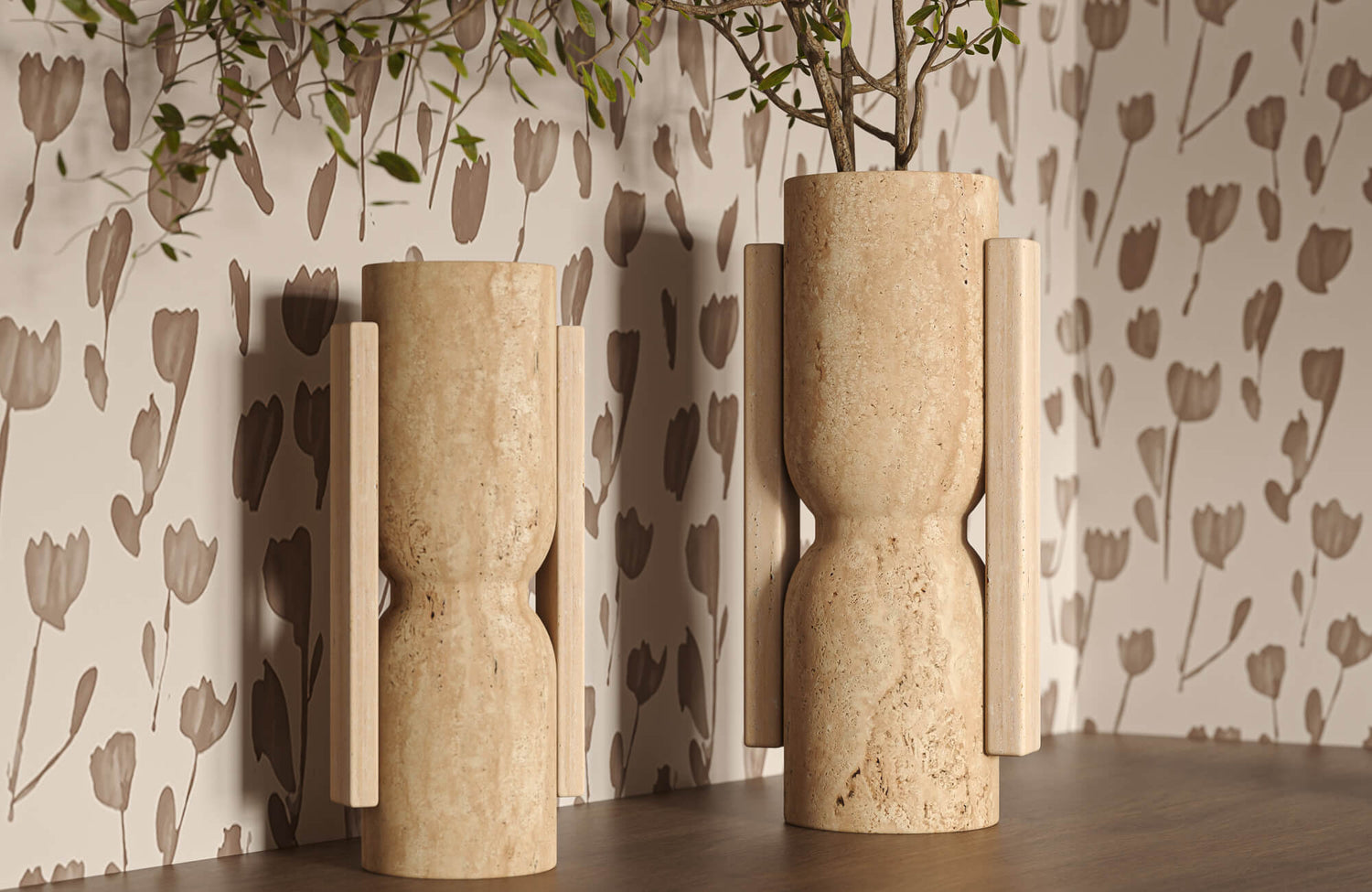
As shown above, our Cavendry Travertine Vase Set introduces that quality through its hand-carved travertine construction, where geometric forms and organic surface pitting create interest without relying on bold color or ornamentation. Against the darker cabinetry and richly layered finishes in this space, the stone's softer beige tones provide contrast while still feeling connected to the room's material palette. Pieces like these often work best when you want decorative objects to contribute texture and substance rather than simply fill an empty surface.
Metal For Contemporary Sophistication
Metal vases offer a refined and polished look that naturally complements many contemporary interiors. Whether finished in brass, bronze, blackened steel, or brushed aluminum, they introduce subtle reflectivity that can help break up rooms filled with softer materials. Unlike glass, which often feels light and airy, metal tends to bring a greater sense of precision and sophistication. This makes it particularly effective in spaces that emphasize clean lines, tailored furnishings, and architectural details. The material's ability to reflect light also adds dimension without relying on bold colors or intricate patterns.
Woven And Natural Materials For Organic Warmth
Woven materials such as rattan, wicker, seagrass, and other natural fibers introduce a relaxed character that feels distinctly different from more structured vase materials. Their textures immediately add warmth and softness, making them especially appealing in spaces inspired by coastal, rustic, organic, or casual design styles. These materials often feel approachable and lived-in, helping rooms avoid becoming overly polished or formal. Because much of their appeal comes from texture rather than color, they can integrate comfortably into a wide range of palettes. This makes them useful for homeowners who want decorative accents that feel natural and welcoming.
Mixing Multiple Materials Throughout A Home
Using the same vase material in every room can sometimes make a home feel repetitive, even when the individual pieces are attractive. Introducing a variety of materials allows different spaces to develop their own identity while still feeling connected to the larger design of the home. Glass may feel appropriate in one room, while ceramic, metal, or woven materials may better support the mood of another. This variation creates visual interest and prevents decorative accessories from feeling overly coordinated. The goal is not to match every vase but to allow each material to contribute something unique.

Using Vases To Support The Overall Design Of A Room
A well-chosen vase should feel connected to the room rather than existing as a separate decorative object. While size, shape, and material all play important roles, the most successful selections are often the ones that reinforce the overall character of the space. By considering the room's furniture, finishes, and decorative elements, you can choose vases that contribute to a more cohesive and intentional design.
Matching The Mood Rather Than Everything Else
One of the most common decorating misconceptions is that a vase needs to match the surrounding furniture or accessories exactly. In reality, it's often more important for the vase to support the mood of the room rather than duplicate specific colors or finishes. A relaxed, casual space may benefit from organic shapes and softer textures, while a more refined room might call for cleaner silhouettes and a stronger sense of structure. Focusing on atmosphere rather than exact coordination gives you far more flexibility when selecting decorative pieces. This approach also helps prevent rooms from feeling overly staged or formulaic. When a vase reflects the feeling of the space, it tends to feel naturally at home, regardless of whether every detail matches perfectly.
Echoing Materials Already Present In The Space
One of the easiest ways to make a vase feel integrated into a room is by drawing subtle inspiration from materials that already exist there. If the space features natural wood furniture, stone surfaces, woven accents, or metallic finishes, a vase that references those elements can help strengthen the overall design story. The connection doesn't need to be literal, as even a small visual relationship can make decorative objects feel more intentional. These repeated material cues create continuity throughout the room and help different elements feel connected to one another. Rather than standing apart from the design, the vase becomes another layer within it.
This strategy is particularly useful when decorating rooms that already contain several different finishes. A ceramic vase may help bridge wood and stone elements, while a metal vase can subtly connect lighting, hardware, and furniture details. Looking for opportunities to repeat materials encourages a more thoughtful approach to styling without making the room feel overly coordinated. The strongest interiors often rely on these quiet connections to create a sense of cohesion.
Creating Contrast Without Making The Arrangement Feel Disconnected
Contrast can be a valuable design tool when used thoughtfully. A room filled with smooth finishes may benefit from a more textured vase, while a space dominated by organic materials may feel stronger with a cleaner, more structured piece. These differences create visual interest and prevent the room from feeling too predictable. The key is introducing contrast in a way that still feels connected to the overall design rather than completely unrelated to it. Decorative objects should contribute something new without disrupting the visual flow of the space.
One helpful way to approach contrast is to focus on a single element rather than changing everything at once. Perhaps the vase introduces a different texture, shape, or finish while still relating to the room through scale or color. This creates variation without making the arrangement feel disconnected. The goal is to add depth and personality while maintaining a sense of harmony throughout the room.
Choosing A Vase That Continues To Feel Right Over Time
The best vase is rarely the one that simply looks good on a shelf in a store or in a perfectly styled photo. It is the one that feels appropriate for where it lives, works comfortably with the scale of the room, and supports the overall character of the space without demanding constant attention. When size, shape, material, and placement are considered together, a vase starts to feel less like an accessory and more like a natural part of the home's design. Those decisions may seem small individually, but they often have a significant impact on how polished and intentional a room ultimately feels.
If you are trying to decide between different vase styles or wondering how a piece will work with your existing furniture, finishes, and decor, our Personalized Design Consultation can help bring greater clarity to the process. Sometimes an outside perspective makes it easier to identify which option feels most balanced within the room and which one may not be supporting the overall design as well as you hoped. Rather than relying on guesswork, you can make decisions with a clearer understanding of how each piece contributes to the larger picture.