Wood-look tiles have grown in popularity in interior design due to their remarkable ability to replicate the classic charm of natural wood while also offering greater durability. These tiles are known for their aesthetic versatility across a wide range of settings—from modern minimalist to rustic traditional—making them a popular flooring choice in both residential and commercial spaces.
Choosing the right finish for wood-look tiles is critical, not only to complement the overall design theme but also to ensure the tiles perform well in a variety of environments. This article will cover the key points on how different finishes affect both their functional properties and visual appeal, helping you decide which finish is best for your next project.

Comparing Wood-Look Tile Finishes to Real Wood
Wood-look tile finishes are engineered into the surface, while real wood finishes are applied as protective topcoats. This fundamental difference shapes how each material expresses sheen, texture, and long-term visual character.
How Finishes Are Formed
Natural wood depends on applied topcoats—such as oil or polyurethane—to seal and protect its surface. These treatments can enhance grain definition, enrich tone, or introduce varying levels of sheen, yet they remain distinct layers that sit above the timber itself.
By contrast, wood-look tile finishes are integrated into the material during the manufacturing and firing process. Rather than being applied as a surface coating, the sheen and texture are engineered into the tile from the outset. This integrated approach allows for greater precision in appearance, resulting in a refined, uniform finish across every plank.
Sheen and Visual Consistency
With hardwood, sheen can vary subtly from board to board depending on grain density, absorption, and the way the finish is applied. As the surface ages, areas of frequent use may begin to reflect light differently, creating natural shifts in luster over time.
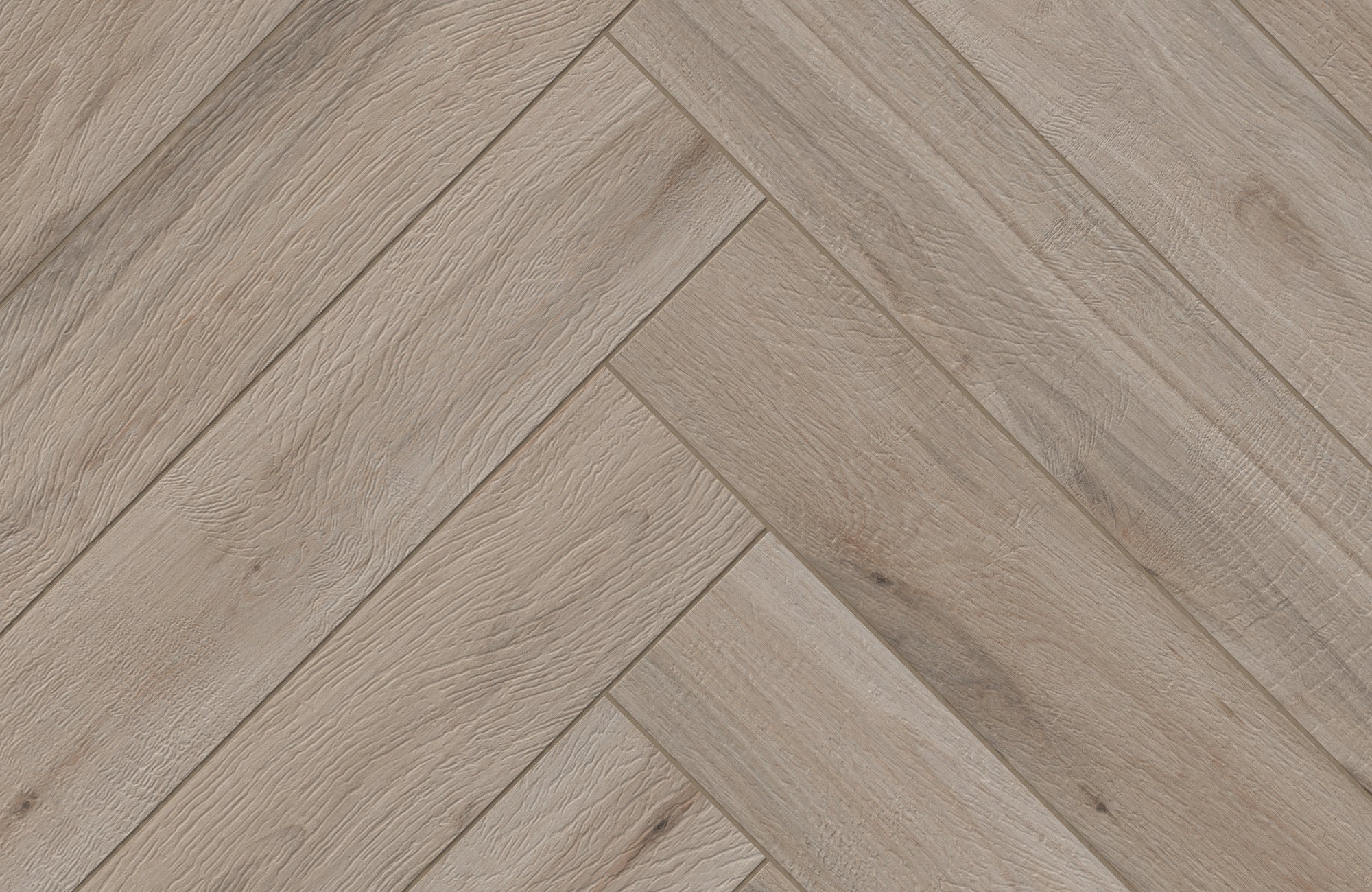
Wood-look tiles, by comparison, provide a more controlled and consistent result. Whether matte, polished, or textured, the sheen remains even across the entire installation. This level of uniformity supports a cohesive aesthetic, especially in expansive or open-plan environments where continuity is key. This consistency is evident in Edward Martin’s Preston 8x48 Matte Porcelain Tile in White Oak, as featured in the photo above, where its soft matte finish diffuses natural light evenly across the space, maintaining a balanced tone and seamless visual flow from plank to plank.
Surface Evolution Over Time
Real wood naturally evolves with age. Exposure to sunlight, daily use, and environmental fluctuations can gradually soften its tone and alter its sheen, resulting in a patina that many homeowners find appealing.
Wood-look tile finishes, in contrast, are engineered for visual stability. Their color and surface quality remain consistent over time, helping preserve the original design intent without the tonal shifts or surface changes typical of natural wood.

Types of Wood-Look Tile Finishes
Selecting the right finish for your wood-look tiles plays a key role in shaping both the visual atmosphere and overall performance of your space. Each finish offers distinct surface qualities that influence how the tile looks, feels, and functions within different environments.
Matte Finish
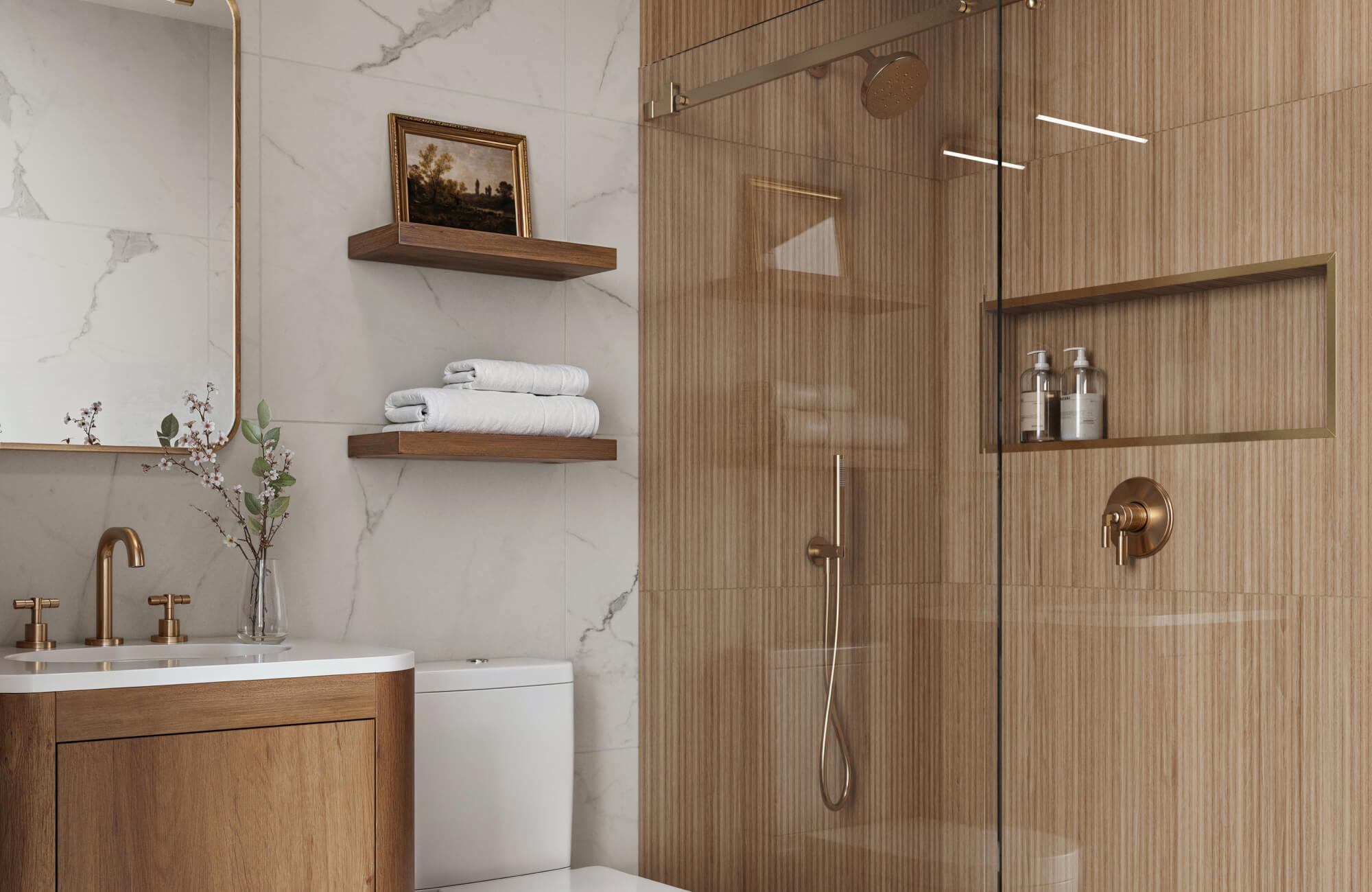
Matte wood-look tiles feature a smooth, non-reflective surface that absorbs light, offering a subtle, sophisticated look. This finish not only conceals smudges and watermarks for easier cleaning but also provides better slip resistance, making it a safer choice for frequently used areas like mudrooms, kitchens, and even bathrooms. Matte wood-look tiles are perfect for creating a rustic or traditional ambiance as well, delivering warmth and natural charm. Edward Martin’s Jameson 8x48 Matte Porcelain Tile in Camel, as shown in the image above, showcases this finish, offering the appearance of timeless hardwood planks with enhanced safety and minimal maintenance.
Grip Finish
Grip finishes provide enhanced traction, perfect for both indoor and outdoor spaces. These finishes are typically more slip-resistant than matte options, making them ideal for frequently used areas that require added safety and durability. Additionally, grip tiles effectively conceal dirt, reducing the appearance of wear over time. They are an excellent choice for families with pets or children, offering a safe, resilient flooring solution that can withstand the rigors of daily life.
Polished Finish
A polished finish on wood-look tiles creates a shiny, reflective surface that brightens a room and makes it feel more open and spacious. This finish is perfect for sleek, modern spaces like kitchen backsplashes and bathrooms, offering a clean and sophisticated aesthetic. By enhancing natural light, these tiles can also make smaller rooms appear larger and more vibrant.

Key Factors to Consider When Choosing a Finish
Choosing the right tile finish involves more than aesthetics alone. It requires a thoughtful evaluation of how each option influences performance, visual impact, and long-term upkeep within the intended setting. By considering these factors carefully, you can determine which finish best aligns with the functional demands and design goals of your residential or commercial space.
Usage Frequency
Areas that see consistent daily activity, such as entryways or commercial settings, benefit from durable options like matte or grip finishes, which are better suited to handle regular use while minimizing the visibility of surface marks.
In more private or lightly used spaces, such as bedrooms, polished finishes can be a fitting choice, placing greater emphasis on visual refinement. Selecting a finish that reflects how the space functions helps support both the longevity and overall performance of your flooring.
Aesthetics & Style
The finish of your wood-look tile should align with the overall design direction of the space, reinforcing a cohesive and well-balanced interior. Polished surfaces bring a sleek, contemporary edge that complements clean lines and modern detailing, while matte finishes offer a softer, more understated warmth suited to classic or rustic settings. Textured or grip finishes introduce an organic quality that enhances relaxed, nature-inspired environments.
In modern interiors, smoother finishes can help emphasize openness and clarity, especially when paired with streamlined fixtures. Matte surfaces pair beautifully with warm lighting and layered natural materials, adding depth without overwhelming the design. Textured finishes, meanwhile, complement raw wood accents, woven elements, and greenery. When thoughtfully coordinated with surrounding materials and décor, the right finish elevates both the visual harmony and character of the space.
Lighting Conditions
Lighting plays a significant role in how a wood-look tile finish is perceived. Both natural and artificial light can influence the way color, texture, and sheen appear within a space.
Polished finishes reflect light, helping to brighten dimmer rooms and enhance a sense of openness. Matte finishes, by contrast, diffuse light more softly, reducing glare and creating a calmer, more natural look in well-lit areas. Textured or grip finishes introduce subtle depth through shadow and surface variation, adding dimension that shifts throughout the day as lighting conditions change.
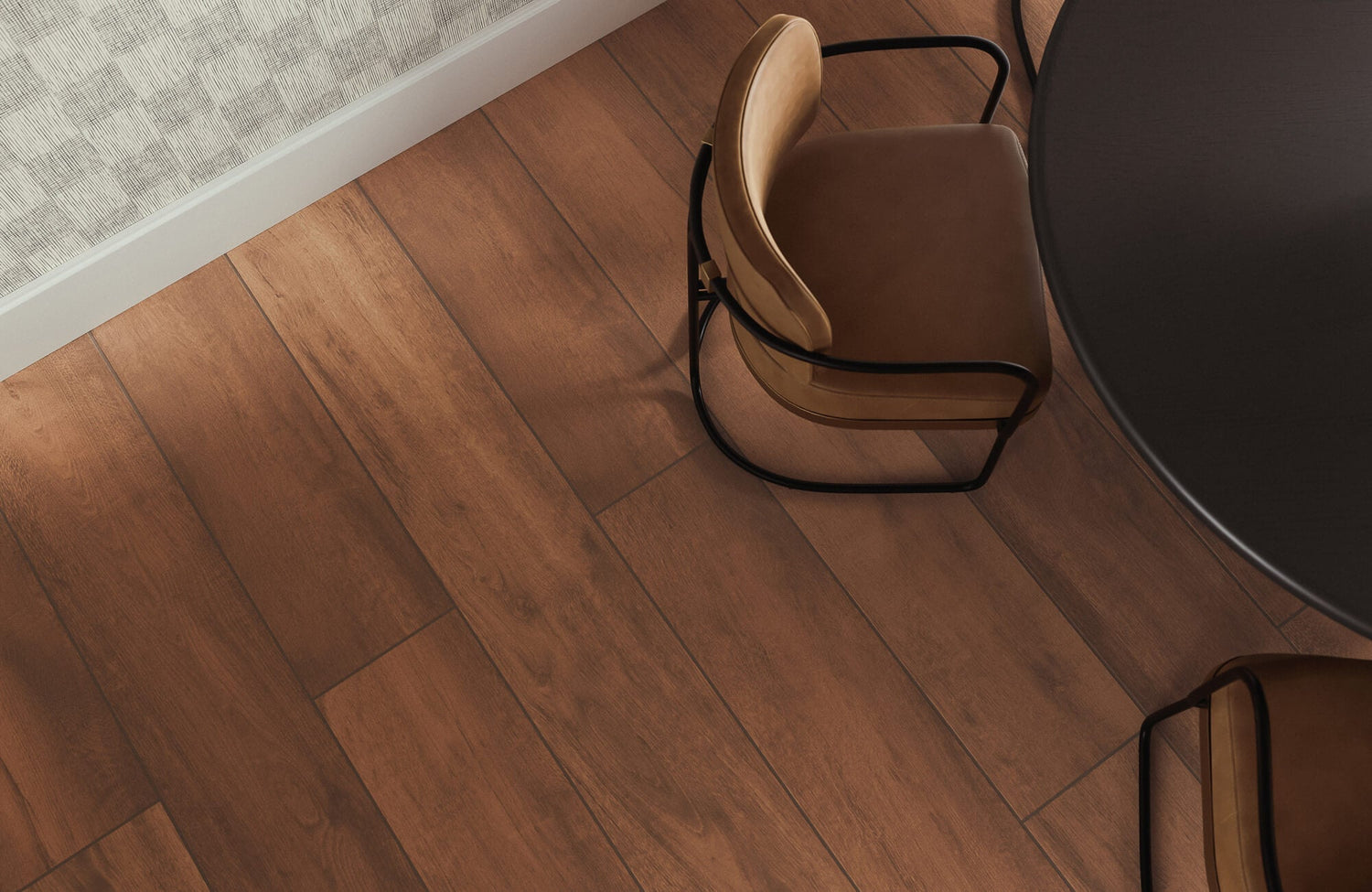
This interplay is beautifully demonstrated in the photo featured above, where Edward Martin’s Nora 8x48 Matte Porcelain Tile in Espresso responds to both ambient daylight and the warm glow of the Jeremy 14" 3 Lights Pendant in Matte Black/Glossy Opal Glass. The matte surface gently absorbs and softens the illumination, allowing the rich espresso tones to appear balanced rather than overly reflective. By considering how light interacts with your chosen finish, you can more intentionally shape the mood, warmth, and overall visual harmony of the space.
Maintenance Requirements
Aside from aesthetics and performance, maintenance is another important factor to consider. Each finish comes with its own care requirements that can influence day-to-day upkeep. Polished wood-look tiles, for instance, offer a sleek and refined appearance but may reveal smudges or water spots more readily, calling for more frequent wiping to maintain their shine.
In contrast, matte finishes tend to conceal minor marks and residue more effectively, making them a practical option for active households. Likewise, textured or grip surfaces help minimize the visibility of dirt, though they may require more attentive cleaning to preserve their surface definition.
Ultimately, aligning your maintenance routine with the characteristics of your chosen finish helps protect its appearance over time and supports the long-term value of your wood-inspired flooring.
Making the Right Choice for Your Space
Choosing the right finish for wood-look tiles involves balancing performance with design intent. Consider how the space is used, the level of moisture or daily activity it experiences, and how lighting interacts with the surface. At the same time, ensure the finish complements your overall aesthetic—whether you prefer a sleek, modern look, a soft and natural feel, or added texture for depth and traction. By aligning functionality with style, you can select a finish that enhances both the appearance and long-term performance of your space. To make the process even more seamless, explore our AR tool to visualize different finishes in your own setting or connect with our design service team for personalized guidance tailored to your project.