A kitchen island is more than just a work surface; it’s where meals come together, conversations unfold, and guests naturally gather. The right pendant lights connect the style you love with the practical light you need, making the island both welcoming and functional in everyday life. Aside from simple illumination, a well-placed pendants shape the mood of the room and creates an easy flow between cooking and conversation. In this article, we’ll walk you through the key considerations for choosing pendant lights that can add function, comfort, and design into perfect balance.

The Role of Pendant Lights in the Kitchen Island
Before considering sizes or finishes, it’s important to clarify how you use the island. Once the purpose of the lighting is defined, choices about style and placement naturally follow.
Task vs Ambient Lighting
Start by identifying the island’s primary role. If it’s where you chop vegetables, read recipes, or help with homework, task lighting is key because it provides bright, focused illumination. If the island is more often a place for casual meals, conversation, or evening tea, ambient lighting creates a softer, more relaxed atmosphere. In many kitchens, the most effective solution is a combination of pendants that accommodate bright bulbs for cooking paired with a dimmer to shift the mood as needed. By clarifying your top island activities, you can determine whether task or ambient lighting should take priority.
Creating a Focal Point
Pendant lights naturally draw the eye to the island, giving the kitchen a clear center of attention. To achieve this, opt for shapes and finishes that complement the existing features, making the lighting feel like a thoughtful part of the overall design rather than an afterthought. For instance, if your cabinets are simple and flat-front, a textured shade or sculptural form can add interest and depth. Conversely, when the backsplash carries a bold pattern, a cleaner pendant shape helps maintain balance without overwhelming the space. In this way, the pendants can serve as a visual guide, drawing people naturally to the island as the heart of the kitchen.
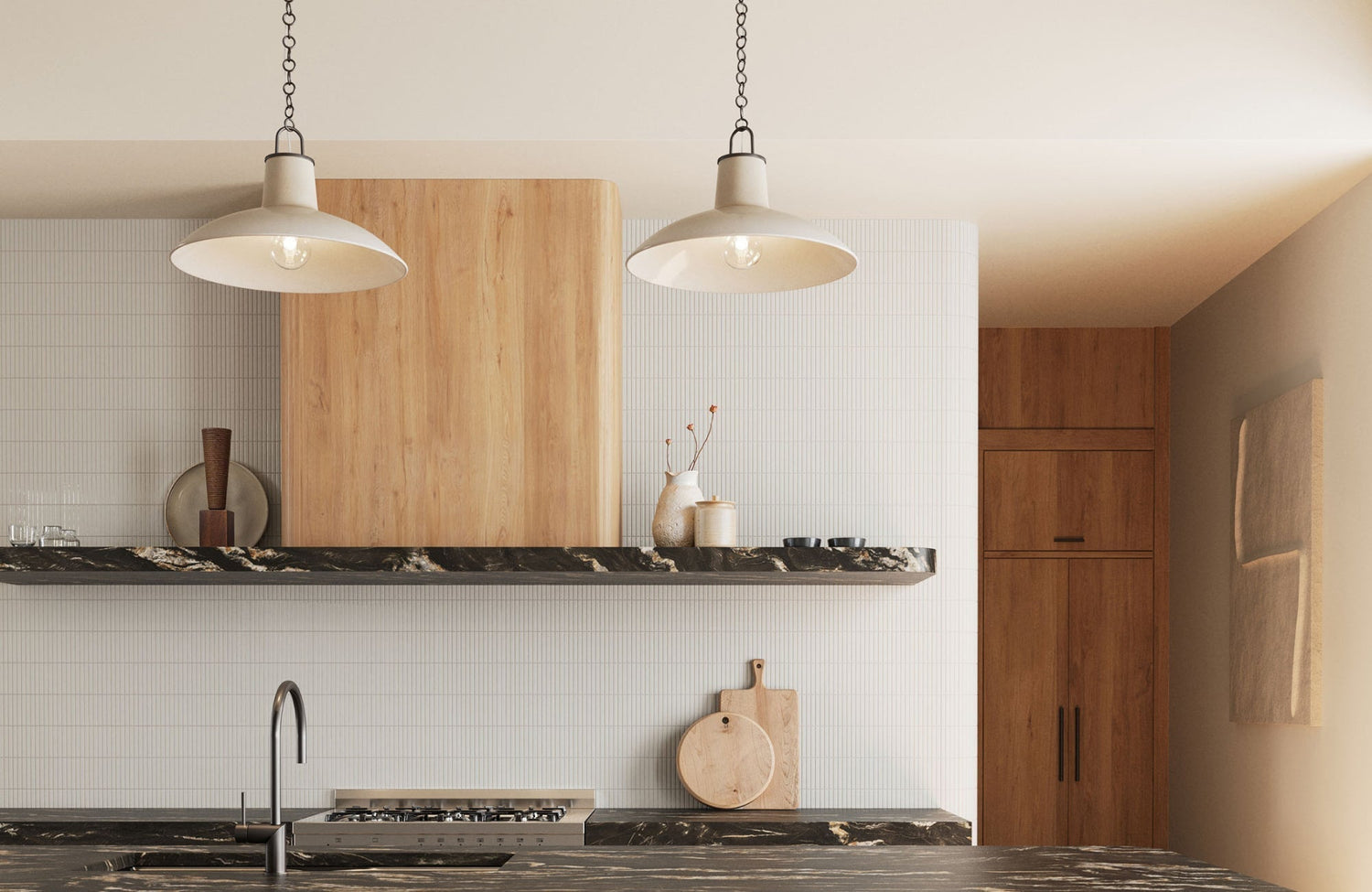
A good example of this approach can be seen in the photo displayed above, where Edward Martin’s Barnes 14" Pendant in Aged Antique Distressed Bronze anchors the island with a timeless yet modern touch. Its rounded form pairs well with the clean-lined cabinetry and tiled backsplash, reinforcing the island as the kitchen’s natural gathering point while adding just the right amount of contrast.
Enhancing Proportions
Lighting has a strong impact on how the island feels within the room’s overall layout. For example, a row of slender pendants can visually stretch a shorter island, while a single broad shade can anchor a longer island and give it a sense of balance. Similarly, when the ceiling height is generous, taller pendant profiles help fill the vertical space and prevent it from looking empty. In contrast, with lower ceilings, compact fixtures keep sightlines open and the room comfortable to move through. By considering proportion carefully, you can also ensure the island feels visually balanced within the surrounding space.

Determining the Right Size and Scale
Getting the proportions right is essential for both comfort and style. By relying on a few straightforward measurements, you can ensure the fixture looks balanced in the space while staying practical and comfortable for daily use.
Measuring the Island Length
Start by measuring the full length of your kitchen island in inches. If you plan to install multiple pendants, allow at least 6 inches of clearance from each end of the island to the center of the nearest fixture. Next, decide on the spacing between pendants, with 24 to 30 inches apart being a reliable and practical guideline. From there, subtract the end clearances and total spacing from the island length, then divide the remaining measurement by the number of pendants. This gives you the maximum shade diameter that will fit neatly without overcrowding the space. For a single pendant, a shade size that measures about one-third of the island's length usually feels visually balanced, as long as it doesn’t extend into seating areas.
Considering Ceiling Height
Ceiling height plays a major role in determining the size and style of pendants that will work best. In kitchens with an 8-foot ceiling, a compact fixture that hangs so the bottom of the shade sits about 30 to 36 inches above the countertop helps prevent glare while keeping sightlines clear. When the ceiling rises to 9 or 10 feet, you have room to use taller pendants or designs with layered glass, which add presence without overwhelming the space. For vaulted or sloped ceilings, adjustable stems or swivel canopies are also useful, as they keep the pendants level and ensure the overall arrangement feels balanced.
Number of Pendants
The number of pendants should reflect both the length of the island and the overall look you want to achieve. To begin with, a single pendant works well for islands under five feet or when you prefer a clean, singular statement. In contrast, for islands between five and seven feet, two pendants often provide a balanced rhythm across the surface. When the island is even longer, three smaller pendants usually offer the best solution, as they can spread light evenly and create a more dynamic feel. Finally, to ensure your choice works in practice, it’s also helpful to test the layout with paper cutouts or painter’s tape on the ceiling, giving you a clear sense of spacing and scale before installation begins.
This approach is demonstrated in the photo featured above, where Edward Martin’s Hilda 12" Pendant in Distressed Bronze is used in a pair to illuminate a medium-length island. The two fixtures not only deliver balanced light but also create a steady visual rhythm, reinforcing how the number of pendants directly influences both functionality and design harmony.

Selecting Styles That Match the Kitchen Design
After determining the right size and number of pendants, the next step is to consider style, since this is what truly brings the island to life. At this stage, attention shifts to finishes, shapes, and materials that work with the existing features of your kitchen, ensuring the entire space feels cohesive and tells a unified design story.
Coordinating With Cabinetry and Finishes
Pendant finishes don’t need to match every element in the kitchen, but they should relate in a way that feels intentional. For instance, if your faucet and hardware are brushed nickel, selecting pendants with a similar brushed finish helps maintain a cohesive palette. When cabinets are dark and countertops are light, a warm brass or bronze pendant can serve as a bridge between the two, softening the contrast. It’s also important to consider the character of the countertop itself: strong veining pairs best with a simple pendant, while a more understated surface can support a bolder finish without overwhelming the design.
Exploring Shape and Material Options
The shape and material of a pendant light play a key role in both its appearance and performance. A cone shape directs light downward, keeping the focus on the surface while reducing brightness on surrounding walls. In contrast, a globe shape spreads light evenly in every direction, creating an open and airy feel. Domes, with their gentle curves, also offer a classic look that blends easily with many kitchen styles.
While shape sets the direction and character of the light, materials play an equally important role in how it feels within the space. For example, clear glass spreads light broadly and highlights the bulb inside, making it a strong choice for decorative lamps. Conversely, opal glass softens brightness and creates a gentle, diffused glow that feels comfortable for dining or conversation. Similarly, metal shades focus light into a more defined beam, making them ideal for task-oriented areas. Finally, natural materials like rattan can also add warmth and texture, lending the kitchen a relaxed and organic character.
This idea is illustrated in the photo shown above, where Edward Martin’s Kaley 16" Pendant in Aged Brass features a globe-shaped opal shade. The combination of its rounded form and diffused material allows light to spread evenly, while the brass finish adds warmth that complements the surrounding cabinetry. It’s a clear example of how both shape and material work together to create pendants that are functional and visually cohesive within the kitchen design.
Balancing Boldness and Subtlety
When choosing pendants, it’s equally important to think about how much visual attention they should command. In a kitchen with clean, understated lines, a bold color or striking silhouette can serve as a signature feature that defines the space. On the other hand, if the room already includes a strong focal point, such as a dramatic range hood or a patterned backsplash, more subtle pendant designs allow those elements to stand out while still providing balance. Ultimately, the goal is harmony rather than competition, with each feature contributing to the overall design without overwhelming or duplicating the others.

Choosing the Right Light Output and Bulb Type
The right bulb can transform a pendant from a simple fixture into a highly effective lighting tool. By considering brightness, color quality, and control, you can ensure the island remains both practical and inviting, no matter the time of day or the activity taking place.
Lumens and Brightness Levels
Lumens measure the amount of light a bulb produces, making them the most reliable way to compare brightness. For a kitchen island used for food prep, reading labels, or other detailed tasks, a combined output of about 2,000 to 4,000 lumens across all pendants usually provides the right balance; bright enough to be functional without creating glare. Naturally, larger islands will require more light, while smaller fixtures may only need bulbs in the 450 to 800 lumen range each. On the other hand, wide shades can accommodate bulbs with higher output to cover the surface area. Since countertops and finishes reflect light differently, it’s often best to test one pendant first and adjust before selecting bulbs for the entire setup.
Bulb Types and Color Temperature
LED bulbs are a practical choice because they provide strong light output while using very little energy and producing minimal heat. They also come in a wide variety of shapes, including filament-style options that mimic the look of traditional lamps, making them especially attractive in clear glass pendants. Aside from the bulb type, color temperature plays a major role in setting the mood of the kitchen. A warm white in the 2700 to 3000 Kelvin range creates a cozy atmosphere for meals and conversation, while a slightly cooler range of 3000 to 3500 Kelvin feels clean and neutral, making it easier to chop ingredients or read recipes. For the best results, it’s also worth paying attention to the color rendering index (CRI). A CRI of 90 or higher ensures that food, finishes, and surrounding details appear accurate and vibrant under the light.
Dimmable Options
Adding a dimmer is one of the easiest ways to make pendant lighting more versatile, allowing a single set of fixtures to adapt to different needs throughout the day. When paired with compatible dimmer switches, dimmable LED bulbs can transition smoothly from bright, focused light for cooking to a softer glow for evening meals, all without flicker. For added flexibility, smart dimmers or smart bulbs allow you to save custom lighting scenes, ranging from bright light for homework at the island to a relaxed setting for weeknight dinners or a warm glow for weekend gatherings. What matters most is ensuring the bulbs and controls are well-matched so the system provides consistent and reliable performance.

Placement and Installation Guidelines
Proper placement has a direct impact on how pendant lights function and feel in everyday use. While there are standard measurements that provide a reliable starting point, small adjustments are often needed to ensure the arrangement looks balanced and feels comfortable from every angle in the room.
Spacing Between Pendants
When installing two or more pendants, spacing is measured from center to center, with 24 to 30 inches being a reliable guideline. For longer islands, the distance can be stretched slightly, especially when using larger shades that naturally take up more visual space. It’s also important to leave a margin of about 6 to 12 inches between the end of the island and the nearest pendant, ensuring the lights are positioned over the main work area rather than at the corners. In kitchens with seating, pendants should be aligned with stool placements so each person enjoys clear, shadow-free light.
This principle is demonstrated in the photo shown above, where Edward Martin’s Phineas Pendant in Historic Bronze is used in a pair over the island. Their generous scale is balanced by thoughtful spacing, which keeps the lights centered over the work and seating areas while maintaining harmony with the room’s proportions.
Hanging Height
The height of your pendants plays a major role in both comfort and appearance. A good starting point is to hang the bottom of the shade 30 to 36 inches above the countertop, which helps keep sightlines open while reducing glare. From there, it’s useful to stand in the room and check the view from the sink, the range, and each seating position to be sure the lights feel balanced from every angle. Taller users often prefer the higher end of this range for added clearance. In kitchens with very high ceilings, extending the stem slightly can further help the fixtures feel visually connected to the island instead of floating too far above it
Wiring and Electrical Considerations
Before finishing work such as patching or painting, it’s equally important to confirm that the junction boxes are aligned with the planned layout. If you’re replacing a single fixture with multiple pendants, an electrician can add new boxes and run wiring so each light is positioned correctly. For sloped ceilings, a canopy designed to keep the pendant vertical ensures a clean and balanced look. It’s also best to place the pendants on their dimmer switch, with recessed or undercabinet lighting controlled separately. This setup makes it easier to layer light effectively, giving you bright illumination for cooking and a softer atmosphere when it’s time to gather around the island.

Adding Personal Touches Through Customization
Once the essentials are in place, small custom choices can make the kitchen feel uniquely yours. Through elements like color, pattern, or modular components, you can update the look over time and keep the space feeling fresh without the need for a complete redesign.
Mixing Pendant Styles
It’s possible to mix pendant shapes while still maintaining a cohesive look, as long as there is a unifying detail. For example, you might pair a smooth dome with a ribbed globe in the same finish, or mix two finishes while maintaining a consistent silhouette. What matters most is ensuring the visual weight of each pendant is similar so the arrangement feels deliberate. By balancing variation with one repeated element, the overall composition appears thoughtfully curated rather than accidental.
Seasonal or Swappable Shades
For those who enjoy refreshing their space from time to time, pendants with interchangeable shades offer an easy solution. A clear glass shade, for instance, can be swapped for opal in the winter to create a softer, cozier glow, then switched back to clear when you want more sparkle and brightness. Decorative bulbs also play a role in setting the mood, ranging from a gentle opal lamp to a filament style with visible lines that add character. Since the hardware remains fixed, these changes require minimal effort and no rewiring, making it a practical way to keep the look current and versatile.
Choosing Pendant Lights for Your Kitchen Island
Choosing the right pendant lights for your kitchen island is much easier when you take it step by step. By first defining the role of the lighting, then determining the proper size, selecting a style that complements your finishes, matching the bulb to your needs, and paying close attention to placement, you can create a design that is both functional and cohesive. Adding small custom touches further personalizes the space, ensuring the island not only provides practical light but also serves as a comfortable centerpiece that enhances cooking, conversation, and everyday living with ease.
If you’d like guidance tailored to your home, contact us to schedule a design consultation and explore pendant options that bring your kitchen vision to life!