



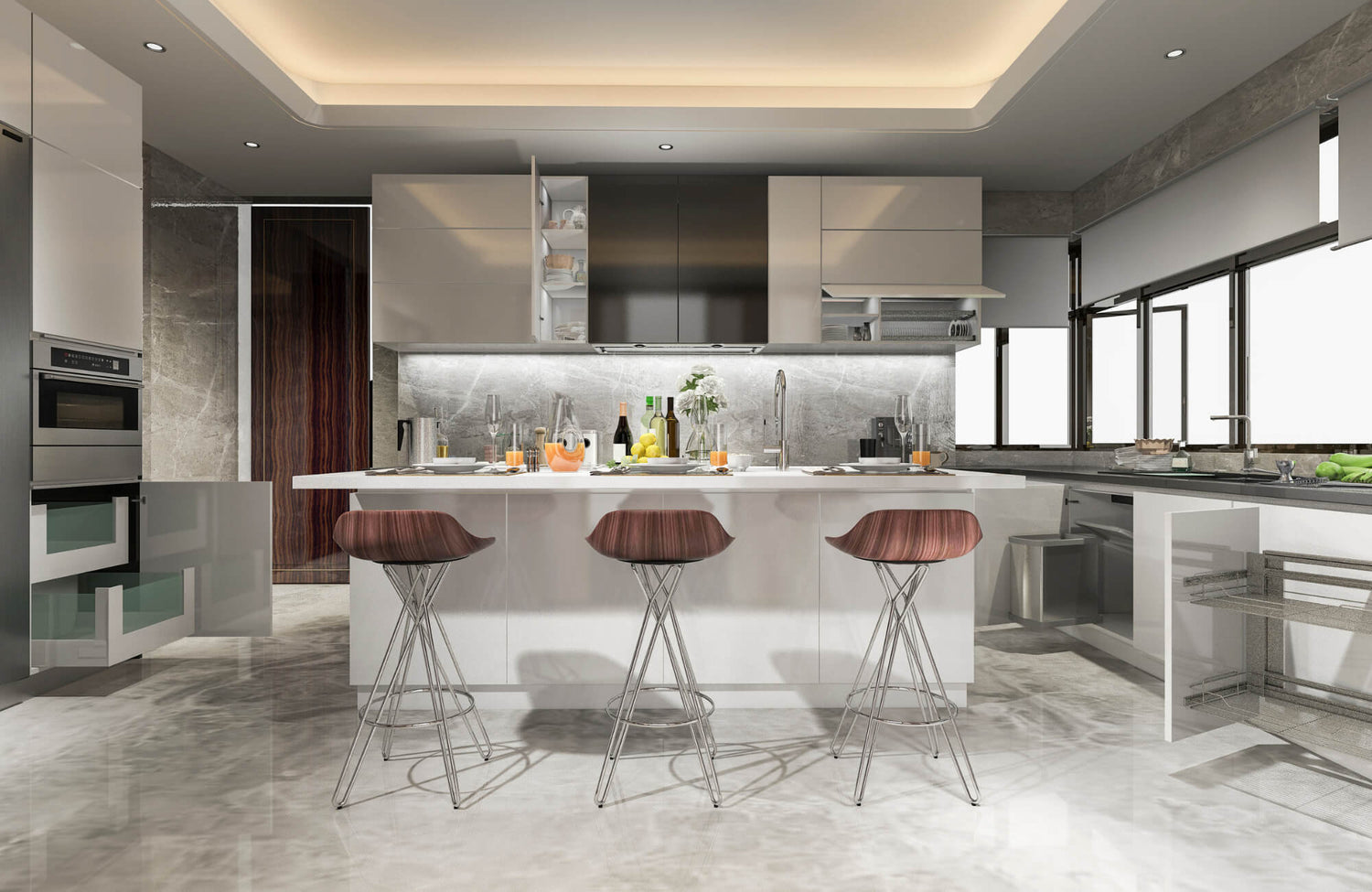
Lighting is more than just a functional necessity; it’s a powerful tool for shaping the mood and feel of a home. From warm-toned accent lamps that create intimacy to well-placed recessed lighting that highlights architectural details, the right strategy transforms any space.
Designers often rely on the interplay of ambient, task, and accent lighting to balance comfort and practicality. Homeowners can also harness dimmers, color temperatures, and smart controls to fine-tune brightness throughout the day. Below, we’ll discuss how to achieve lighting schemes that elevate both design and everyday living.

The Three Main Types of Lighting
Creating the right ambiance starts with knowing the building blocks of lighting design. Ambient, task, and accent lighting each serve a unique purpose, and together they form the foundation for a balanced and functional space.
Ambient Lighting
Ambient, or general, lighting establishes the overall illumination of a room, acting as the foundation upon which other lighting layers are built. It ensures safe navigation and visual comfort while setting the tone for the space. Common sources include ceiling-mounted fixtures, chandeliers, and recessed downlights. Designers often recommend warm color temperatures (2700K–3000K) for residential settings, as they create an inviting environment. Uniform distribution and adequate lumen output are also critical to preventing glare and uneven brightness.
Task Lighting
Once a room’s base level of light is in place, task lighting introduces more precise illumination for activities that demand focus, such as reading, cooking, or grooming. Unlike ambient light, it must be directional and strong enough to reduce eye strain without creating harsh shadows. Under-cabinet LEDs in kitchens, adjustable desk lamps in offices, and vanity sconces in bathrooms are common solutions.
A piece like Edward Martin’s Lainey Wall Sconce in Burnt Brass, shown above, demonstrates how functional lighting can also add warmth and character. Ideally, task lighting should provide higher foot-candle levels than ambient light, typically 50–100, depending on the activity. Positioning and beam spread remain essential to ensuring efficiency.
Accent Lighting
Building on both ambient and task layers, accent lighting adds depth and visual drama by highlighting specific architectural features, artwork, or décor elements. This layer relies on contrast, with light levels about three times brighter than the surrounding ambient illumination to guide the eye effectively. Wall-washing, spotlighting, and track or directional recessed fixtures are popular techniques. Beyond simply drawing attention, accent lighting enhances the overall design narrative, allowing you to personalize spaces and emphasize details that reflect their style.

Selecting The Right Fixtures and Finishes
Once the layers of light are understood, the next step is choosing the fixtures that bring them to life. Style, material, finish, and scale all influence how lighting performs and how seamlessly it integrates into the room’s overall design.
The Impact of Fixture Style
The first consideration is fixture style, which sets the tone for a room’s design language. A crystal chandelier can establish a sense of luxury in a formal dining area, while minimalist pendant lights convey a sleek, contemporary aesthetic. Architects and designers often rely on fixture silhouettes to reinforce interior themes, whether traditional, industrial, or transitional. To achieve balance, the style should complement surrounding furnishings and architectural details rather than compete with them, ensuring visual harmony.
The Role of Material and Finish
Once the style is defined, material and finish choices further refine both the performance and the look of a fixture. Metals like brushed nickel and matte black lend a modern edge, while brass and bronze introduce warmth and timeless character. Finishes also influence reflectance and durability; powder-coated surfaces, for example, resist corrosion in damp environments, making them ideal for bathrooms or outdoor use.
As shown above, Edward Martin’s Noelle Wall Sconce in Vintage Brass demonstrates how the right finish elevates a design, combining soft, diffused light with a metallic accent that enriches the surrounding space. Glass shades can diffuse or direct illumination depending on opacity, while fabric shades soften the glow with added texture.
Choosing The Right Size
Finally, size is essential to ensuring both visual balance and adequate illumination. Oversized fixtures can overwhelm smaller rooms, while undersized options risk looking insignificant or failing to provide sufficient light. To guide selection, designers often apply proportional formulas, such as choosing a chandelier with a diameter equal to the sum of a room’s length and width in feet (converted to inches). Fixture height must also be considered, with ceiling clearance factored in to provide functionality without obstructing sightlines.

Mastering Color Temperature and Brightness
With fixtures in place, fine-tuning light quality becomes essential. By adjusting color temperature, brightness, and layering techniques, homeowners can transform lighting from a simple utility into a tool for atmosphere and comfort.
The Meaning Behind Kelvin
A key factor in light quality is color temperature, measured in degrees Kelvin (K). This scale defines the visual “warmth” or “coolness” of light and sets the emotional tone of a space. Warm light (2700K–3000K) mimics the glow of incandescent bulbs, ideal for bedrooms and living rooms where relaxation is prioritized. Neutral white (3500K–4100K) provides clarity without harshness, making it well-suited for kitchens and offices. At the higher end, cool white to daylight (5000K–6500K) enhances alertness and is often chosen for task-oriented or commercial settings. Matching the Kelvin range to the activity ensures that both function and atmosphere are aligned.
The Power of Dimmers
Once the right color temperature is selected, brightness becomes the next consideration. Brightness, measured in lumens, determines how much light a fixture emits, but dimmers allow users to adjust that output to suit the moment. From traditional rotary switches to advanced smart controls, dimming systems make it possible to shift lighting from task-ready brightness to a softer, more ambient glow. This flexibility not only supports diverse activities but also extends bulb life and reduces energy consumption. With LEDs, proper dimmer-driver compatibility is critical to ensure smooth performance without flicker.
Layering Light Sources
Even with Kelvin and brightness optimized, a space benefits most when light is layered thoughtfully. Combining ambient, task, and accent sources ensures each serves its role while contributing to overall harmony. Recessed downlights may provide general illumination, pendants offer task lighting, and wall sconces soften the atmosphere with accent light.
Featured above, Edward Martin’s Dempsey Pendant in Hammered Dark Antique Brass exemplifies how a pendant can anchor a space, offering functional brightness while adding depth to a layered scheme. This multi-source approach minimizes shadows, reduces eye strain, and introduces dimension, achieving both visual comfort and design sophistication.

Creating Zones and Focal Points
After balancing tone and intensity, lighting can be used more strategically to shape how a space is experienced. Thoughtful zoning and focal-point design highlight function, architecture, and art, bringing depth and personality to interiors.
Defining Spaces With Light
In open-concept layouts, lighting becomes essential for distinguishing between functional zones without introducing physical barriers. Pendant lights above a kitchen island, for instance, clearly define the culinary workspace, while a chandelier positioned over the dining table anchors the eating area. Varying fixture types, mounting heights, and beam spreads not only establish spatial hierarchy but also signal the intended use of each zone, giving clarity and flow to a shared environment.
Highlighting Architectural Details
Beyond defining functional areas, lighting can be used to celebrate the architectural character of a space. Cove lighting emphasizes ceiling height and introduces depth, while wall grazing draws attention to textured surfaces like stone or brick. Directional recessed lights or adjustable track systems can spotlight niches, columns, or fireplaces, turning structural elements into design focal points.
Achieving the right balance requires careful control of contrast ratios so that differences in luminance guide the eye naturally without overpowering the room. For those unsure how to strike that balance, an Edward Martin design consultation offers tailored expertise, ensuring confident style decisions aligned with project goals. For personalized recommendations, product questions, or assistance with tile, rug, or furniture selections, simply contact Edward Martin for support.
Bringing Focus To Artwork
Just as lighting enhances architecture, it can also preserve and highlight fine art. Proper fixtures safeguard delicate pieces while ensuring they are presented with clarity and depth. LED picture lights, adjustable spotlights, or ceiling-mounted track heads with narrow beam angles are ideal for creating controlled highlights. A high Color Rendering Index (CRI) of 90 or above is essential for accurate color reproduction, ensuring artwork appears as intended by the artist.
Additionally, UV-free and low-heat LEDs help protect fragile materials from long-term damage. Seen above, Edward Martin’s Vicente Picture Light in Aged Old Bronze demonstrates how a refined fixture can frame artwork with precision, adding both emphasis and elegance to sophisticated interiors.
Illuminating Spaces With Purpose
Perfect ambiance is achieved through intentional choices that balance technical precision with design vision. By understanding how ambient, task, and accent lighting interact, selecting fixtures that align in scale and finish, and managing both color temperature and brightness, homeowners can craft interiors that feel layered and dynamic.
Strategic zoning strengthens functionality, while focal lighting elevates architectural and artistic details with sophistication. Ultimately, thoughtful lighting design transforms interiors into environments that support comfort, style, and utility. Careful planning, guided by expert insight, remains the first step toward creating a home that truly shines.


