The art of outdoor entertaining is elevated by thoughtfully selected seating that invites guests to linger long after the meal has ended. A beautifully curated outdoor dining set becomes more than a functional arrangement, transforming into a refined extension of the home where comfort and design exist in quiet harmony. In this setting, each dining chair serves a purposeful role, offering both visual elegance and the ergonomic support needed for extended gatherings. Carefully considered materials, proportions, and finishes shape an atmosphere that feels composed, inviting, and enduring. When every element is thoughtfully integrated, outdoor dining chairs become essential to creating memorable and comfortable open-air experiences.

Ergonomic Foundations for Extended Seating Comfort
Enduring comfort is rooted in ergonomic precision, where carefully balanced proportions and angles support the body with ease over extended periods. Subtle refinements in structure allow a dining chair garden arrangement to feel intuitive, ensuring relaxation without compromising posture.
Optimal Seat Dimensions and Proportions
Well-proportioned dimensions establish the foundation for comfort within any outdoor dining set, particularly when gatherings extend beyond the table. A seat height of 17 to 19 inches aligns naturally with standard dining tables, allowing the feet to rest flat while maintaining proper knee positioning. In tandem, a seat depth between 16 and 18 inches provides adequate thigh support without exerting pressure behind the knees, preserving healthy circulation. This balance encourages even weight distribution, reducing fatigue over time.
Gently contoured seating surfaces further refine the experience by minimizing pressure points and enhancing support. As these elements work together, they create a seating profile that feels both structured and effortlessly accommodating. In more refined dining chair patio arrangements, these proportional details also contribute to visual harmony alongside functional performance. Over time, such precision ensures that comfort remains consistent, even during extended outdoor gatherings.
Backrest Angle and Lumbar Support
The geometry of the backrest plays a defining role in sustaining comfort, particularly in a dining chair patio setting designed for extended use. A recline angle between 100 and 110 degrees introduces a relaxed posture while maintaining an appropriate dining position. Integrated lumbar support also reinforces the natural curvature of the spine, helping to prevent slouching and reduce muscular strain over time. This becomes increasingly valuable in outdoor dining set arrangements where conversations continue well beyond the meal.
Subtle curvature along the backrest further enhances this support, allowing the body to settle naturally into the chair. Together, these features ensure that comfort remains consistent without feeling overly rigid. When thoughtfully executed, the backrest becomes a seamless extension of the chair’s ergonomic intent. This continuity allows guests to remain comfortably supported throughout longer dining experiences.
Armrest Placement and Upper Body Support
Thoughtfully positioned armrests contribute to a sense of ease, allowing the upper body to relax without conscious adjustment. When set approximately 7 to 9 inches above the seat, they support the arms while maintaining a natural shoulder position. This alignment helps reduce tension across the neck and upper back, particularly in dining chair garden layouts designed for lingering.
Adequate spacing between armrests also ensures freedom of movement, preventing the seating experience from feeling confined. When integrated seamlessly into the frame, armrests enhance both functionality and visual continuity. This careful attention to proportion elevates the overall comfort and usability of each chair.
This approach is exemplified by Edward Martin’s Vetra Club Chair, as displayed in the photo above, where slim, well-positioned armrests complement its deep, cushioned seat while maintaining proper upper body alignment. Its open-frame design enhances both comfort and visual lightness, making it ideal for relaxed outdoor seating.

Material Performance in Outdoor Environments
Material selection defines how outdoor seating responds to its surroundings, influencing both longevity and tactile comfort. A well-composed dining chair patio arrangement relies on materials that withstand environmental exposure while maintaining a refined appearance.
Breathable and Flexible Seating Surfaces
Breathable materials such as textilene mesh and sling fabric are frequently chosen for outdoor dining set designs due to their ability to promote airflow. By allowing heat to dissipate, these surfaces remain comfortable even in warmer climates. Their inherent flexibility also enables them to adapt subtly to the body, creating a supportive yet responsive seating experience. This adaptability reduces pressure points, making them well-suited for extended gatherings.
In addition, their quick-drying properties prevent moisture from lingering after exposure to rain or humidity. As a result, these materials contribute to a seating experience that feels both practical and consistently comfortable. In dining chair garden environments, this balance between airflow and support becomes particularly noticeable during prolonged use. Over time, these material qualities help maintain both comfort and structural integrity.
Weather-Resistant Frame Materials
The structural frame must endure fluctuating conditions without compromising strength or appearance. Powder-coated aluminum, in particular, offers a balance of lightweight durability and corrosion resistance, making it a reliable choice for dining chair patio configurations. Teak wood, valued for its natural oil content, also resists moisture, insects, and environmental wear while maintaining its integrity over time. High-density polyethylene alternatives further extend durability with minimal maintenance requirements. Each of these materials supports long-term performance while preserving visual refinement. Selecting resilient frame materials ensures that outdoor dining chairs remain stable, dependable, and visually cohesive.
This durability is well illustrated by the Kendra Outdoor Dining Chairs in Natural, Set of 2, as shown in the picture above, where a solid SVLK-certified Grade-A teak frame resists rot, pests, and moisture while aging gracefully into a refined silver-gray patina. Complemented by a handwoven all-weather rope seat and backrest, the open structure enhances airflow while maintaining strength, making it especially suited for comfortable and weather-resistant outdoor dining set arrangements.
UV Stability and Thermal Regulation
Extended exposure to sunlight requires materials that retain both their structure and appearance over time. With this, UV-resistant finishes help prevent fading, cracking, and surface degradation, preserving the integrity of the outdoor dining set. Lighter tones and specialized coatings further enhance comfort by reflecting heat rather than absorbing it. This thermal control becomes especially important in dining chair garden arrangements exposed to direct sunlight.
Advanced surface treatments also provide added resistance to humidity and environmental stressors. Together, these qualities ensure that seating remains both visually appealing and comfortable under varying outdoor conditions. As environmental demands shift throughout the day, these protective features continue to support usability. This consistency allows outdoor seating to remain inviting regardless of climate conditions.

Advanced Cushioning and Upholstery Systems
Cushioning introduces a layer of softness that enhances the seating experience, yet its effectiveness depends on thoughtful material selection and construction. High-performance upholstery systems ensure that comfort is maintained without compromising durability in outdoor settings.
High-Resilience Foam Technologies
The composition of cushion cores plays a significant role in long-term comfort and performance. Quick-dry and reticulated foams, for instance, are engineered to allow water to pass through efficiently, preventing moisture retention and reducing the risk of mildew. With densities typically ranging from 1.8 to 2.5 pounds per cubic foot, these materials provide a balance of support and softness. This also ensures that cushions retain their shape even with frequent use.
Moreover, their responsive structure adapts to body contours, enhancing overall seating comfort. As a result, these foam technologies are particularly well-suited for outdoor dining environments designed for extended use. In a patio setting, this level of support allows seating to remain consistently comfortable throughout prolonged gatherings. Over time, the resilience of these materials contributes to both durability and user satisfaction.
Performance Fabrics for Outdoor Use
Outdoor upholstery fabrics must offer durability while maintaining a refined tactile quality. In particular, solution-dyed acrylic materials are widely favored for dining chair garden applications due to their resistance to fading, staining, and UV exposure. Their color remains consistent over time, even under prolonged sunlight. Breathable construction further contributes to comfort by preventing heat buildup. In addition, mildew-resistant properties support longevity in humid climates. These qualities allow the fabric to maintain both its visual appeal and functional performance. Within a cohesive outdoor dining set, these fabrics also enhance the overall sensory experience. Their softness and resilience ensure that comfort is sustained without compromising elegance.
Cushion Construction and Maintenance
The way cushions are constructed directly influences both their longevity and ease of care, shaping how well they perform over time in everyday use. Removable covers with concealed closures make cleaning more convenient while preserving a tailored appearance, and this practicality is further supported by ventilated designs that encourage airflow so moisture can dissipate more efficiently after exposure to the elements. Secure fastening systems add another layer of function by keeping cushions in place, ensuring consistent comfort, while reinforced seams and high-quality stitching strengthen the structure to withstand repeated use.
These elements work together rather than in isolation, creating a seating experience that remains both practical and refined over time. With this kind of thoughtful construction, routine maintenance becomes easier to manage, helping preserve the integrity of the outdoor dining set, and ultimately supporting long-term usability without compromising comfort or appearance.

Structural Engineering and Load Distribution
Beneath the surface, structural design determines how effectively a chair supports the body over extended periods. A well-engineered outdoor dining set distributes weight evenly, ensuring stability while maintaining comfort.
Reinforced Frame Construction
Durability begins with construction methods that prioritize strength and longevity. This is reflected in welded aluminum joints, which create seamless connections that resist loosening over time. Hardwood frames also often employ mortise-and-tenon joinery, providing a secure, enduring structural bond, while cross-bracing elements enhance stability, particularly in dining chair patio arrangements subject to frequent use. These techniques work together to prevent movement or imbalance, and as a result, the chair maintains consistent support and reliability. In larger outdoor dining set configurations, this structural integrity ensures uniform performance across all seating pieces. This consistency enhances both safety and overall comfort.
Weight Capacity and Stability
A chair’s weight capacity reflects its structural integrity and its suitability for regular use, offering a clear indication of how well it has been engineered. In high-quality outdoor dining chairs, this typically falls between 250 and 350 pounds, a range that signals reliable construction and consistent performance over time. Even distribution of weight across the seat and backrest also minimizes pressure points and enhances comfort, while stable bases reduce the likelihood of shifting or tipping, even on uneven surfaces. This stability is particularly important in dining chair garden settings where the terrain may vary. Together, these factors contribute to a secure and comfortable seating experience. Over time, dependable weight support reinforces confidence in the durability of the outdoor dining set. This assurance allows guests to relax fully without concern.
Flexible Support Systems
Incorporating flexibility into structural design enhances comfort while still maintaining durability, allowing function and strength to work together. Materials such as woven resin wicker and tensioned webbing introduce a controlled responsiveness that gently adapts to body movement, supporting comfort without compromising structure. This flexibility also allows weight to be distributed more evenly, reducing localized strain. Within an outdoor dining set, such adaptability creates a more relaxed seating experience.
At the same time, these systems are engineered to retain their shape over time. This balance of resilience and responsiveness elevates both comfort and functionality. In dining chair patio environments, this adaptability becomes especially valuable during extended gatherings. It allows the seating to respond naturally to movement while maintaining consistent support.

Functional Design and Aesthetic Integration
Beyond performance, outdoor dining chairs contribute to the overall composition of the space, where functionality and visual harmony must coexist. A thoughtfully arranged dining chair patio setting reflects both practical intent and a cohesive design language.
Space-Saving and Adaptable Features
Flexibility in design allows outdoor dining spaces to adapt smoothly to changing needs over time. Stackable and foldable dining chair patio options support this adaptability by offering efficient storage while still maintaining structural integrity and dependable everyday use. This adaptability also makes it easier to accommodate both intimate meals and larger gatherings. Lightweight frames further enhance mobility, allowing seating to be repositioned with ease. Despite these practical features, comfort and durability remain uncompromised. This balance ensures that functionality integrates seamlessly into the overall design. In evolving outdoor dining set arrangements, such versatility allows the space to remain responsive and efficient.
Cohesive Styling for Outdoor Spaces
A unified aesthetic enhances the overall atmosphere of a dining chair garden arrangement. For example, neutral palettes, natural textures, and well-proportioned forms allow seating to blend harmoniously with the surrounding environment. Combining materials such as wood, stone, and woven elements also introduces depth while maintaining visual balance. Consistency across the outdoor dining set reinforces a composed and intentional design. This cohesion elevates the experience, making the space feel both curated and inviting. Thoughtful styling ensures that each element contributes to a refined outdoor setting.
This sense of harmony is beautifully reflected in our Calandor Outdoor Dining Chair in Vintage Natural, where its fully woven silhouette introduces warmth and texture that seamlessly integrates with the neutral-toned outdoor dining table and surrounding finishes. As shown in the photo above, its sculptural form and consistent weave pattern create a cohesive visual rhythm around the table, enhancing the overall balance of the space.
Maintenance-Friendly Enhancements
Ease of maintenance contributes to the longevity and continued appeal of outdoor dining furniture, helping it stay functional and visually consistent over time. UV-resistant coatings play a key role in this by protecting surfaces from fading and environmental wear, which in turn reduces the need for frequent upkeep. Rust-resistant hardware also ensures durability in humid or coastal conditions, while adjustable glides improve stability on uneven surfaces, enhancing everyday usability. Moreover, materials that are easy to clean simplify routine care while preserving appearance. These practical enhancements ensure that outdoor dining chairs remain reliable and visually refined over time. In a well-maintained outdoor dining set, these features contribute to long-term performance and ease of use. This allows the space to retain its elegance with minimal effort.

Proportional Harmony Between Dining Chairs and Outdoor Table Settings
Achieving visual and functional balance within an outdoor dining set relies on the precise relationship between dining chairs and the outdoor dining table. Scale plays a defining role, as chair height, width, and overall mass must align proportionally with the table’s dimensions to ensure both comfort and spatial coherence. When chairs are too low or too bulky relative to the tabletop, the dining experience can feel awkward and visually disjointed. Conversely, well-proportioned seating allows for proper leg clearance, comfortable reach, and a natural dining posture. This alignment not only enhances usability but also creates a refined, cohesive aesthetic that elevates the entire outdoor setting.
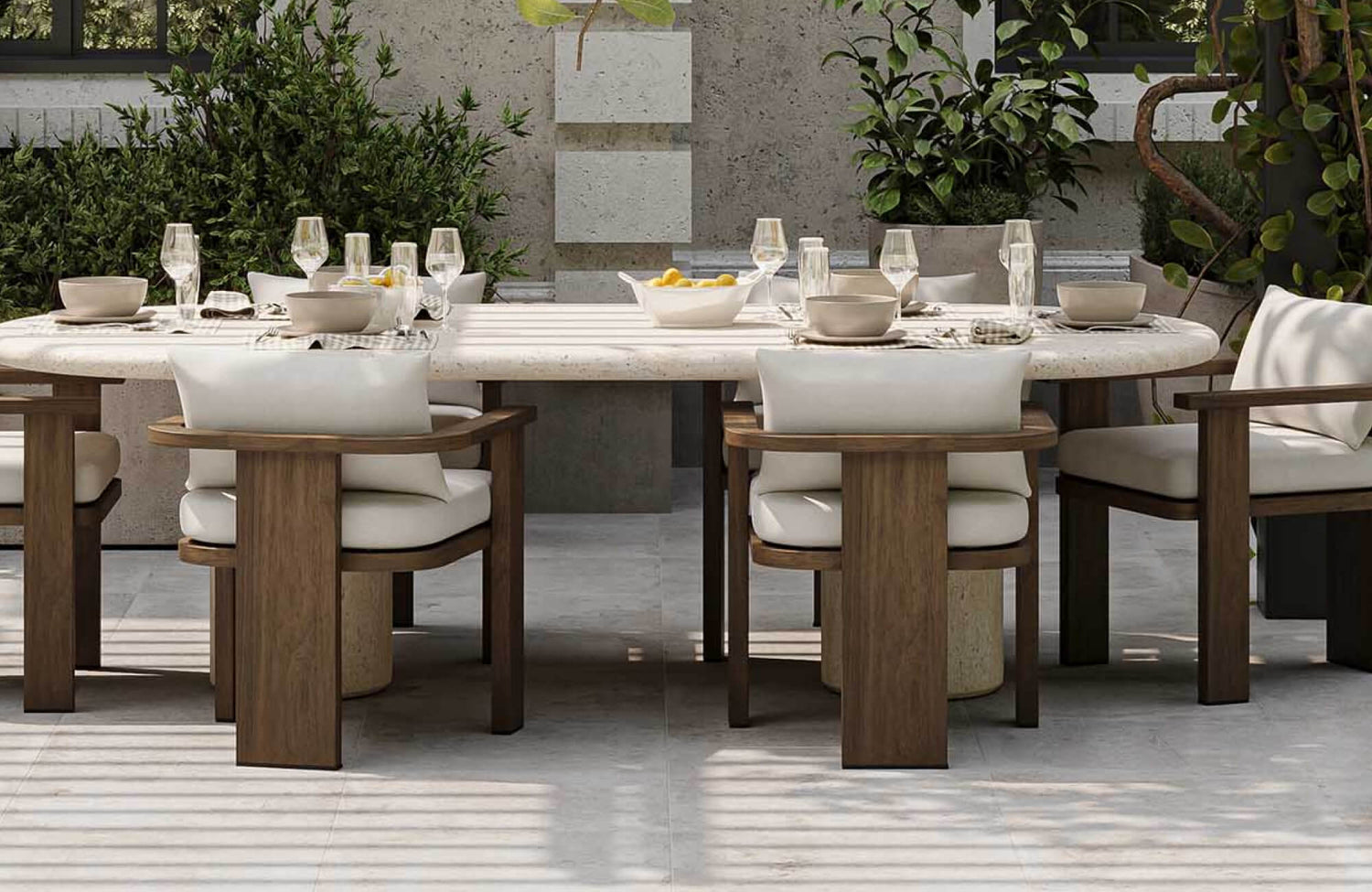
This sense of proportion is clearly demonstrated through the pairing of Edward Martin’s Hightide Outdoor Dining Armchair in Stained Aged Grey/Alessi Linen with the Seabrook Outdoor Dining Table, 102", where the substantial yet streamlined chair frames complement the table’s elongated form and solid base. As featured in the photo above, the armchair’s structured wood frame and cushioned seating height align seamlessly with the table’s thickness and scale, creating a balanced silhouette across the entire outdoor dining set.
The spacing between each chair further reinforces a natural rhythm, allowing movement while maintaining visual order. At the same time, the soft linen upholstery introduces a subtle contrast against the table’s stone surface, adding depth without disrupting cohesion. This thoughtful coordination ensures that every element, from material to proportion, works in harmony. The result is an outdoor dining arrangement that feels grounded, elegant, and effortlessly unified.
Designing Outdoor Dining Comfort That Lasts
A well-appointed outdoor dining set reflects a careful balance of comfort, durability, and thoughtful design. Each dining chair contributes to an environment where guests can relax with ease while enjoying extended gatherings. Through the integration of supportive ergonomics, resilient materials, and refined construction, seating becomes both functional and enduring. As these elements come together within a dining chair garden setting, they create a seamless experience that feels considered and inviting. Ultimately, investing in well-crafted outdoor dining chairs allows every gathering to unfold with comfort, elegance, and lasting appeal.
For a more personalized approach, Edward Martin’s design services can help you create an outdoor dining space that balances comfort, durability, and style. Contact us to get expert guidance tailored to your space and lifestyle!