Restaurant bar stools sit at the intersection of function, aesthetics, and constant use, making them one of the most demanding furniture choices in any hospitality space. Although they must endure continuous movement, weight, and environmental exposure, they also play a powerful role in shaping first impressions and reinforcing brand identity. For that reason, selecting the right bar stool is less about choosing what looks good in a catalog and more about understanding how design and durability work together in real-world conditions.

Understanding Real-World Wear in Restaurant Environments
In a busy restaurant or bar, stools function less like decorative furnishings and more like heavy-use equipment, constantly subjected to stress from repeated seating, shifting, and movement. As a result, durability must be evaluated through the lens of real-world use rather than appearance alone. High turnover rates also amplify pressure on joints, fasteners, and structural connections, while frequent dragging and repositioning place additional strain on legs and stretchers. By recognizing how movement patterns and daily handling affect furniture, you can make more informed decisions that reduce failure risk and long-term maintenance costs.
At the same time, environmental exposure plays an equally critical role in wear and degradation. Spills, moisture, grease, and commercial cleaning agents continuously test the resilience of finishes, upholstery, and frame materials. Without proper protective coatings and reinforced construction, even well-designed stools can deteriorate quickly under these conditions. Therefore, understanding both the mechanical forces and environmental challenges at work allows you to select bar stools engineered to withstand daily abuse, maintain safety standards, and preserve a polished appearance throughout years of service.

Selecting Materials That Support Both Strength and Style
The selection of materials for a restaurant bar stool is an exercise in balancing "wearability" with aesthetic identity. In a commercial setting, the material is the first line of defense against the physical and chemical rigors of a hospitality environment. Although a material must align with the interior design narrative, its structural properties dictate the replacement cycle and the overall safety of the establishment.
Solid Wood Versus Engineered Wood Options
In the hierarchy of commercial furniture, solid hardwoods—specifically European beech, white oak, and maple—are the gold standard for structural longevity. Solid wood possesses superior "screw-holding" capacity and fiber density, which allows it to withstand the constant vibration and movement of a busy bar. Moreover, a significant advantage of solid wood is its repairability; surface scratches and dents can be sanded out and refinished, allowing the stool to be "refreshed" rather than replaced after a few years of heavy use. A well-crafted example of this approach is our Joel Counter Stool in Dove Cream, which features a solid wood frame designed to support long-term commercial use while maintaining a clean, approachable aesthetic.
By contrast, engineered wood products serve a different functional purpose within stool construction. Engineered woods, such as MDF or plywood with veneers, are often utilized in backrests or molded seats to achieve complex, ergonomic curves that solid wood cannot sustain without cracking. However, in high-moisture environments or busy zones, lower-grade engineered wood can delaminate or swell if the protective edge-banding is compromised. To ensure commercial durability, professionals recommend choosing solid wood frames treated with catalyzed lacquer finishes, which provide a moisture-resistant barrier that is significantly more durable than traditional oil or wax treatments.
Metal Frames and Hybrid Constructions
Metal frames, typically constructed from gauge-specific steel or extruded aluminum, offer the highest strength-to-weight ratio in the furniture industry. Steel is preferred for its rigidity and "non-flexing" properties, making it nearly impossible to break under normal human weight loads. Aluminum, while lighter and naturally resistant to rust, is the primary choice for outdoor patios or coastal environments. In addition, the longevity of a metal stool is largely determined by its joints; fully-penetrated welds are infinitely more durable than bolted assemblies, which can rattle loose over time.
To prevent a metal-heavy space from feeling "cold" or clinical, designers often employ hybrid constructions. This involves pairing a robust metal frame with "warm" organic elements, such as a solid wood seat or a woven cane backrest. Additionally, sophisticated finishes like brushed brass plating or textured powder coatings can soften the industrial profile. These hybrid approaches allow a venue to benefit from the indestructible nature of a metal sub-structure while maintaining a tactile, high-end guest experience.
Upholstery Materials and Surface Treatments
Upholstery in a restaurant setting is a functional filter that must resist abrasion, staining, and microbial growth. Commercial-grade vinyl (PVC) or Polyurethane (PU) are the primary choices for high-turnover seating due to their non-porous nature and ease of sanitization. Many modern performance vinyls are also engineered with "silver-ion" antimicrobial treatments and "ink-resistant" topcoats, making them nearly impervious to permanent damage from denim dye transfer or food spills.
For venues seeking a more luxurious feel, performance fabrics treated with a fluorocarbon-free water-repellent finish offer the breathability of textiles with the durability of a synthetic. When selecting colors and textures, a heathered or "distressed" pattern is tactically superior to solid, flat colors, as it effectively camouflages micro-scratches and minor stains. For high-use seats, prioritize materials with a Wyzenbeek abrasion rating of at least 50,000 double rubs to ensure the fabric does not "pill" or wear through the backing during its first year of service.
A practical illustration of these principles can be seen in our Shaffer Counter Stool in Charcoal Black Leather, displayed above, where the frame is paired with a cushioned seat upholstered in black leather, a commonly used neutral in commercial interiors. The leather surface offers a non-porous, easy-to-clean finish well-suited for high-turnover environments, while its darker tone helps conceal minor wear over time. This type of upholstery choice reinforces how material performance and visual restraint can work together to support both durability and design consistency in restaurant settings.

Structural Design Elements That Extend Stool Lifespan
The lifespan of a restaurant bar stool is largely determined by how well its structure manages constant movement and uneven forces. In busy settings, stools are subjected not only to vertical weight but also to lateral torque, sudden shifts, and repeated impacts. As a result, strong joinery and reinforced frames are essential for preventing loosening, squeaking, and eventual failure. High-quality construction methods, such as reinforced wood joints or fully welded metal frames, further allow stress to be distributed evenly across the stool rather than concentrated at vulnerable connection points. This structural integrity keeps the stool stable and quiet, even after years of heavy use.
Equally important is how design elements like footrests and leg geometry contribute to overall balance and durability. Footrests often absorb significant force, so when they are integrated as load-bearing stretchers and protected with scuff-resistant materials, they help stabilize the entire frame. Meanwhile, leg shape and stance directly influence tipping resistance and long-term joint health. A wider footprint and slightly splayed legs also improve stability, while adjustable floor glides eliminate wobble on uneven surfaces. Together, these structural details ensure that the stool remains safe, comfortable, and visually consistent, making it a reliable investment in demanding restaurant environments.
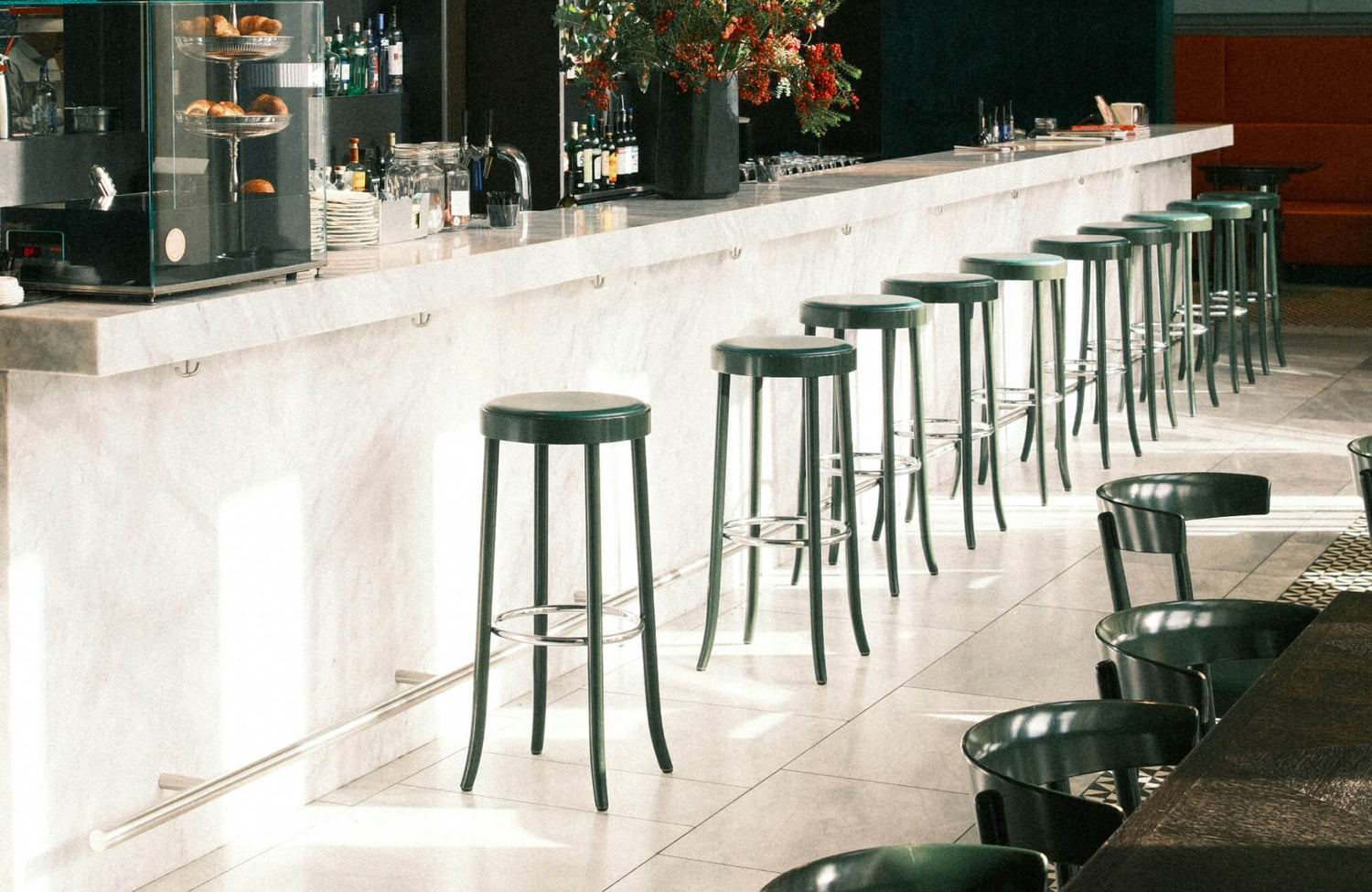
A strong example of these principles in action is our Savannah Counter Stool in Black, seen in the image above, which combines a stable metal frame with thoughtfully engineered support points. Its slightly splayed legs and integrated circular footrest function as load-bearing elements, helping distribute weight evenly while resisting lateral movement and everyday impact. Finished in a black tone, the stool balances structural durability with visual warmth, demonstrating how intentional leg geometry and reinforced footrests can significantly extend stool lifespan in busy hospitality environments.

Aligning Stool Design with Brand and Interior Concept
In a restaurant setting, bar stools play a critical role in shaping first impressions and reinforcing brand identity. Because they are often positioned in prominent, highly visible areas, their form, materials, and proportions immediately signal the type of experience you are offering. A well-aligned stool design supports your concept by matching the tone of the space, whether that means inviting guests to linger in a refined environment or encouraging quick, social interaction in a more casual setting. At the same time, choosing silhouettes with timeless appeal helps ensure that your investment remains relevant even as the brand evolves.
Beyond overall style, finishes, colors, and textures work together to connect aesthetics with practicality. Thoughtful finish selection can disguise everyday wear, while color choices should complement lighting conditions and maintenance realities. Equally important is visual consistency across different seating zones, which creates cohesion without forcing uniformity. By repeating materials, finishes, or detailing across bar stools and other seating, you establish a clear design language that feels intentional and polished. Ultimately, aligning stool design with your interior concept allows durability and branding to coexist, strengthening both the guest experience and the longevity of the space.
A thoughtfully designed stool like our Bower Counter Stool in Brown illustrates how material and silhouette choices can subtly reinforce a restaurant’s identity. Its warm brown finish adds visual depth while complementing a wide range of interior palettes, from modern rustic to refined contemporary. With clean lines and a balanced profile, the stool supports visual consistency across bar and dining zones, helping the space feel cohesive, intentional, and aligned with the overall brand concept.

Comfort, Ergonomics, and Customer Experience
In restaurant and bar settings, comfort is not a luxury but a direct driver of customer behavior and revenue. The way a bar stool supports the body influences how long guests choose to stay, how relaxed they feel, and how positively they perceive the space. Proper ergonomics begin with correct proportions, ensuring that seat height, depth, and posture align naturally with the bar counter and the human frame. When these fundamentals are handled well, guests can settle in without strain, creating an experience that feels effortless rather than physically taxing.
Beyond basic dimensions, supportive design details elevate comfort over extended periods. Thoughtful seat contouring reduces pressure points, while the presence or absence of a backrest shapes how long guests are inclined to linger. Cushion construction further determines whether the stool feels firm yet welcoming or quickly becomes uncomfortable with repeated use. When ergonomic considerations are integrated into stool design, comfort becomes a silent asset, encouraging longer visits, repeat patronage, and a stronger emotional connection to the venue.
A well-considered example of ergonomic comfort is our Shaw Counter Stool in Bergen Olive, which pairs supportive proportions with a gently contoured, upholstered seat. The muted olive green tone adds visual calm while maintaining a welcoming, design-forward presence at the bar. With its balanced seat depth and cushioned construction, the stool also encourages guests to remain comfortable over longer periods, illustrating how ergonomic design directly enhances customer experience without drawing attention away from the overall interior concept.
Creating Bar Stools that Last and Elevate your Space
Balancing durability and design in restaurant bar stools ultimately comes down to intentional decision-making at every level. When materials are chosen for strength, structures are engineered for heavy use, and ergonomics are designed around real human behavior, the result is seating that performs consistently without sacrificing style. At the same time, aligning stool design with your brand identity ensures that durability does not come at the expense of visual appeal. By considering long-term value, comfort, and cohesion together, you create bar stools that not only withstand the demands of daily service but also elevate the overall guest experience and reinforce the character of your space.
If you are investing in bar stools that need to perform day after day, having the right guidance makes the process easier and more effective. A knowledgeable partner can help you navigate materials, finishes, and design details so your seating not only holds up to daily use, but also feels intentional, cohesive, and true to the character of your space. For personalized support or project-specific questions, visit our Contact Us page to connect directly with our team.