A well-lit bathroom mirror can elevate everyday routines by improving clarity and creating a more inviting atmosphere. When you understand what your mirror needs and how different lighting options function, you can build a setup that feels purposeful, practical, and visually balanced. This article guides you through the essential considerations, installation methods, and design styles that will help you confidently add lighting to your bathroom mirror.

What Your Mirror Needs
Before choosing a lighting option, it’s equally important to consider how you use the mirror and what type of illumination best supports those tasks. This approach ensures that any lighting you add serves a clear purpose rather than simply acting as an extra source of brightness.
Assess Mirror Size and Position
The size and placement of your mirror affect how light is distributed across your face. For example, a wider mirror often requires fixtures with enough spread to maintain even illumination from side to side, while a mirror mounted higher or lower on the wall may need adjustments in fixture height to keep the lighting centered where it’s most useful. Considering these proportions helps you select bathroom mirror lights that feel balanced and deliver consistent visibility.
In the photo displayed above, Edward Martin’s Tristan Square Mirror in Rustic Black pairs seamlessly with the Emmery 29" LED Vanity Light in Brushed Gold/Opal Glass, illustrating how the right mirror scale and lighting placement work together to create even, well-directed illumination.
Identify Primary Tasks
Every bathroom mirror supports a different mix of daily activities, so it helps to start by considering how you use yours. If tasks like shaving or makeup application are a priority, choose lighting that clearly defines facial features without introducing harsh contrast. If you want a calmer, more relaxed atmosphere, softer illumination may be the better match. By clarifying these needs, you can easily decide whether your project requires brighter task lighting, gentler ambient lighting, or a blend of both.
Evaluate Existing Light Conditions
Before adding new lighting, take a close look at what the room already provides. Natural light from a window can create sharp shadows, while an overhead fixture may brighten the space but still leave the mirror area uneven. By identifying where illumination is lacking or overly concentrated, you can place new fixtures in positions that reduce glare and minimize shadows. This step ensures the added lighting enhances clarity rather than competing with what is already installed.

Selecting the Right Lighting Style for Your Mirror
Once you know what your mirror needs, you can begin exploring lighting styles that influence both the look and performance of the space. Each option brings its own visual qualities and level of precision, and comparing these differences helps you choose a style that supports your routines and complements the bathroom’s overall design.
Side Mounted Sconces
Side sconces provide illumination at face level, creating balanced lighting that minimizes shadows beneath the eyes and chin. As a result, the light falls across your features more naturally, which is especially helpful for tasks that require clear visibility. To maintain a cohesive look, choose wall sconces that match the mirror’s scale and leave enough space between the fixture and the edge for the light to spread evenly.
Integrated LED Mirrors
Integrated LED mirrors offer a streamlined solution by combining the mirror and lighting into a single unit. The built-in illumination creates a uniform halo that wraps evenly around your face, improving visibility without casting sharp shadows. This style works well when you want a minimalist design or when you prefer a mirror that contributes both function and visual simplicity. Before selecting one, consider power access and the existing wall structure to ensure it fits your layout.
Backlit Floating Designs
Backlit mirrors offer soft, indirect lighting that glows from behind the glass, creating a subtle floating effect. This approach diffuses light gently across the wall, reducing glare while adding a modern, atmospheric quality to the room. Choosing LED strips with steady output and pairing them with diffusers helps create a smooth, even halo. These designs are ideal when you want aesthetic impact paired with comfortable, low-contrast illumination.
Over Mirror Bars and Rails
Over-mirror bars are a suitable choice for narrower bathrooms or layouts where side sconces are not practical. They cast light downward toward the mirror, and adjustable designs allow you to angle the fixture for better visibility. Selecting the right color temperature helps control how the light interacts with your skin tone and the surrounding materials. This style supports a classic, space-efficient look while still offering reliable facial illumination. In the photo featured above, Edward Martin’s Sylvia 19" 2 Lights Wall/Vanity Light in Aged Gold/Opal Matte Glass demonstrates how a compact over-mirror fixture can brighten a smaller vanity area while complementing the mirror’s scale and the room’s warm finishes.

Electrical Requirements and Safety Considerations
Adding lighting to a bathroom mirror involves more than selecting a fixture. It’s equally important to consider how the light will be powered, how it will perform in a humid environment, and how you’ll control it daily. Thinking through these factors helps ensure the setup is safe, reliable, and comfortable to use.
Determine Power Source Options
There are a few ways to power your mirror lighting, depending on how your bathroom is wired. In some bathrooms, you can connect to an existing vanity circuit if it has adequate capacity, whereas others may require a new dedicated line to ensure safe operation. Taking time to understand the electrical layout helps you choose the safest and most straightforward option.
Understand Bathroom Safety Zones
Because bathrooms involve moisture, lighting fixtures must be rated for the conditions in which they’ll be used. Damp-rated fixtures are suitable for humid areas, while wet-rated models are necessary where direct water exposure is possible. It’s also important to consider placement distances to keep lights safely out of splash zones. Following these guidelines helps ensure your lighting remains reliable and meets safety requirements.
Plan Switches and Dimming Controls
Switch placement and dimming options play an equally important role in how comfortable your lighting feels each day. A switch positioned too far from the mirror can be inconvenient, so accessibility matters. A dimmer lets you shift effortlessly from bright task lighting to a softer evening setting, and smart switches add even more convenience with programmable schedules and easy adjustments from a connected device.
Know When to Hire an Electrician
While some projects are manageable for experienced DIYers, others require a licensed professional. If wiring needs to be rerouted or you’re unsure about circuit capacity, an electrician can confirm that everything meets code. They can also assist with tasks such as adding junction boxes or extending circuits. Recognizing when to bring in a professional keeps the project safe, efficient, and properly executed.

How to Install Different Light Types
Once you’ve chosen a lighting style and confirmed how it will be powered, the next step is to install the fixtures. Each type of light requires its own installation method, and following the right sequence helps ensure the setup works safely and performs as expected. For any advanced wiring or structural work, it’s best to involve a qualified professional to ensure the installation meets safety standards and performs reliably.
Installing Side Sconces
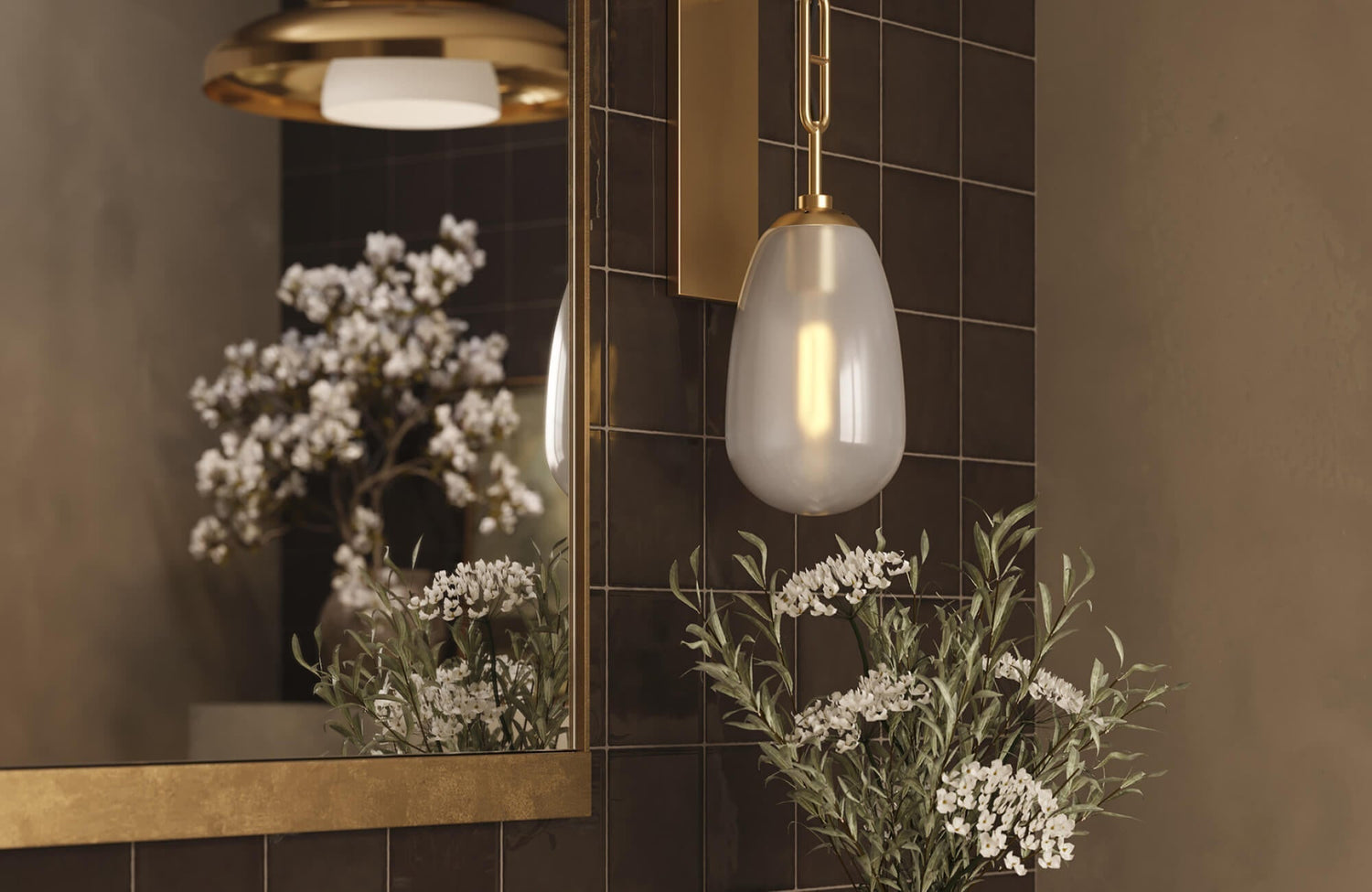
Side sconces need to be mounted at the right height to distribute light evenly across your face. Start by marking the placement on both sides of the mirror so the fixtures align properly. After locating studs or choosing suitable anchors, connect the wiring as directed by the manufacturer and secure the sconces in place. Taking time to align both sides carefully results in a balanced look and consistent illumination. In the photo displayed above, our Esmeralda Small Mirror in Polished Brass pairs with the Rue Bath and Vanity Light in Aged Brass, offering a clear example of how thoughtful placement and coordinated finishes can create a well-lit, visually cohesive vanity area.
Mounting an Over-Mirror Light Bar
An over-mirror light bar relies on precise placement to ensure the illumination reaches the mirror rather than shining above or behind it. Begin by marking the center point above the mirror and establishing the correct mounting height. Reinforce the electrical box or mounting plate if necessary, then attach the fixture and adjust its angle before tightening the hardware. Switching on the light as you position it helps confirm that the spread is even and directed exactly where you need it to be.
Attaching LED Strips for Backlighting
Backlighting installation starts by preparing the surface behind the mirror to ensure the strips adhere properly. After the area is clean, attach the LED channels or adhesive strips, making sure they create a smooth and consistent outline. Conceal the wiring along the frame or through the wall, then connect everything to a compatible driver. If bright spots appear, adjusting the spacing or adding a diffuser can help create a more even, comfortable glow.
Hardwiring Integrated LED Mirrors
Integrated LED mirrors usually come with a mounting bracket designed to support their weight. Start by securing the bracket, then route the wiring to the connection point and complete the low-voltage setup as instructed. Once the mirror is hung, leave a small gap behind it to allow heat to dissipate and help the light spread evenly. After the wiring is finished, the mirror should sit flush and provide a consistent, clean illumination.

Design Tips for Mirror Lighting
Lighting does more than brighten the room; it influences how the bathroom looks and feels. Thoughtful design choices help your mirror lighting work seamlessly with surrounding materials, surfaces, and other fixtures.
Pairing Light Temperature with Bathroom Materials
Color temperature plays a major role in how bathroom materials read. Warm lighting can soften the stone or wood finishes, while cooler tones tend to brighten whites and grays. Choosing a temperature that complements the finishes around the mirror helps the room feel cohesive and well-balanced. This thoughtful selection ensures the space looks intentional rather than mismatched.
Using Reflective Surfaces Strategically
Mirrors and glossy surfaces can amplify brightness by reflecting light throughout the room. When positioned thoughtfully, they help illumination reach areas that might otherwise feel dim. The goal is to place your mirror lighting so that reflections enhance clarity without creating glare. This balanced use of reflection supports a more effective and cohesive lighting plan.
Balancing Light Levels with Layered Fixtures
Mirror lighting performs best when it’s part of a layered lighting plan. Ceiling fixtures can brighten the upper portion of the room, while accent lighting highlights architectural details or key areas. When these layers work together, the space feels evenly lit and comfortable to use at any time of day. Approaching lighting in layers also helps avoid areas that feel too bright or too dim.

Maintaining Your Mirror Lighting
Even with careful installation, lighting may need occasional adjustment. Knowing how to recognize and resolve common issues helps keep your mirror lighting consistent and reliable.
Fixing Uneven or Shadowy Lighting
If shadows appear after installation, start by checking the alignment of the fixtures. Adjusting their angle or adding diffusers can help the light spread more evenly across your face. When LED strips create bright spots, repositioning them or using a stronger diffuser often resolves the issue. These small adjustments can significantly improve clarity.
Handling Flicker or Color Shift
Flickering often points to a problem with the LED driver or an incompatible dimmer, while color shift can occur when components age or the power supply becomes unstable. Replacing a faulty driver, selecting a compatible dimmer, or checking the wiring are effective ways to resolve these issues. Addressing them promptly helps keep your lighting reliable.
Routine Cleaning and Care
Bathrooms naturally collect moisture and residue, so regular cleaning helps your fixtures maintain their performance. Gently wiping the lenses and frames prevents buildup that can dull the light. For LED strips, using mild cleaners protects both clarity and adhesive strength. With consistent care, your lighting lasts longer, and the bathroom continues to feel fresh.
Adding Lights to a Bathroom Mirror
Learning how to add lights to a bathroom mirror begins with identifying what the space needs, selecting a lighting style that supports both function and aesthetics, and installing it safely for lasting performance. By considering how you use the mirror and choosing fixtures that enhance clarity and comfort, you can create a lighting setup that feels intentional and elevates the entire room. Contact us if you would like assistance refining your layout, selecting fixtures, or developing a cohesive lighting plan. Our design team can help you explore solutions that fit your space and achieve the look you want.