Bathroom lighting affects everything from daily grooming tasks to the overall visual balance of a room, yet it’s one of the most commonly misjudged design details during a renovation. Determining the correct mounting height for vanity lights requires a blend of technical accuracy, aesthetic judgment, and an understanding of how people actually use their spaces.
When done well, lighting becomes seamless and supportive—bright enough for precision, gentle enough to flatter, and positioned in a way that feels cohesive with the room’s architectural lines. This guide breaks down the core height standards, the logic behind them, and the adjustments needed for different layouts and users so you can create a bathroom that is both functional and beautifully resolved.

The Universal Eye Level Rule for Wall Sconces
Good bathroom lighting starts with getting the basics right, and wall sconces are where that foundation begins. This section breaks down the eye-level rule that ensures even, flattering illumination at the vanity.
The 60 to 70 Inch Sweet Spot
Mounting wall sconces beside a bathroom mirror follows a longstanding design principle rooted in human ergonomics: lights should sit roughly at eye level to distribute illumination evenly across the face. For most households, this places the center of each sconce somewhere between sixty and seventy inches from the finished floor. Within this range, shadows are minimized and the light reaches the cheeks, forehead, and under-eye area without casting harsh angles. Selecting a height that aligns with the majority of users in the home ensures that grooming tasks feel comfortable and accurate. Even a slight shift outside this window can noticeably change the balance of shadow and brightness, making the space feel either over-lit from above or dim where clarity is needed most.
Adjusting for Bulb Location Versus Backplate Center
Fixtures vary widely in design, and not all manufacturers position the light source at the same point as the backplate center. Because of this difference, the height of the bulb rather than the height of the mounting plate should determine where the fixture sits. A sconce with an elongated shade, for example, might place the actual bulb closer to the top edge, which means mounting the backplate too high could push the illumination above eye level, weakening the effectiveness of the setup. Conversely, a downward-facing sconce may place the bulb lower than expected, requiring the backplate to sit slightly higher. Treating each fixture as a unique object rather than assuming all share the same proportions ensures accuracy in your rough-in and avoids awkward lighting angles once everything is installed.
Why Symmetry and Spacing Matter
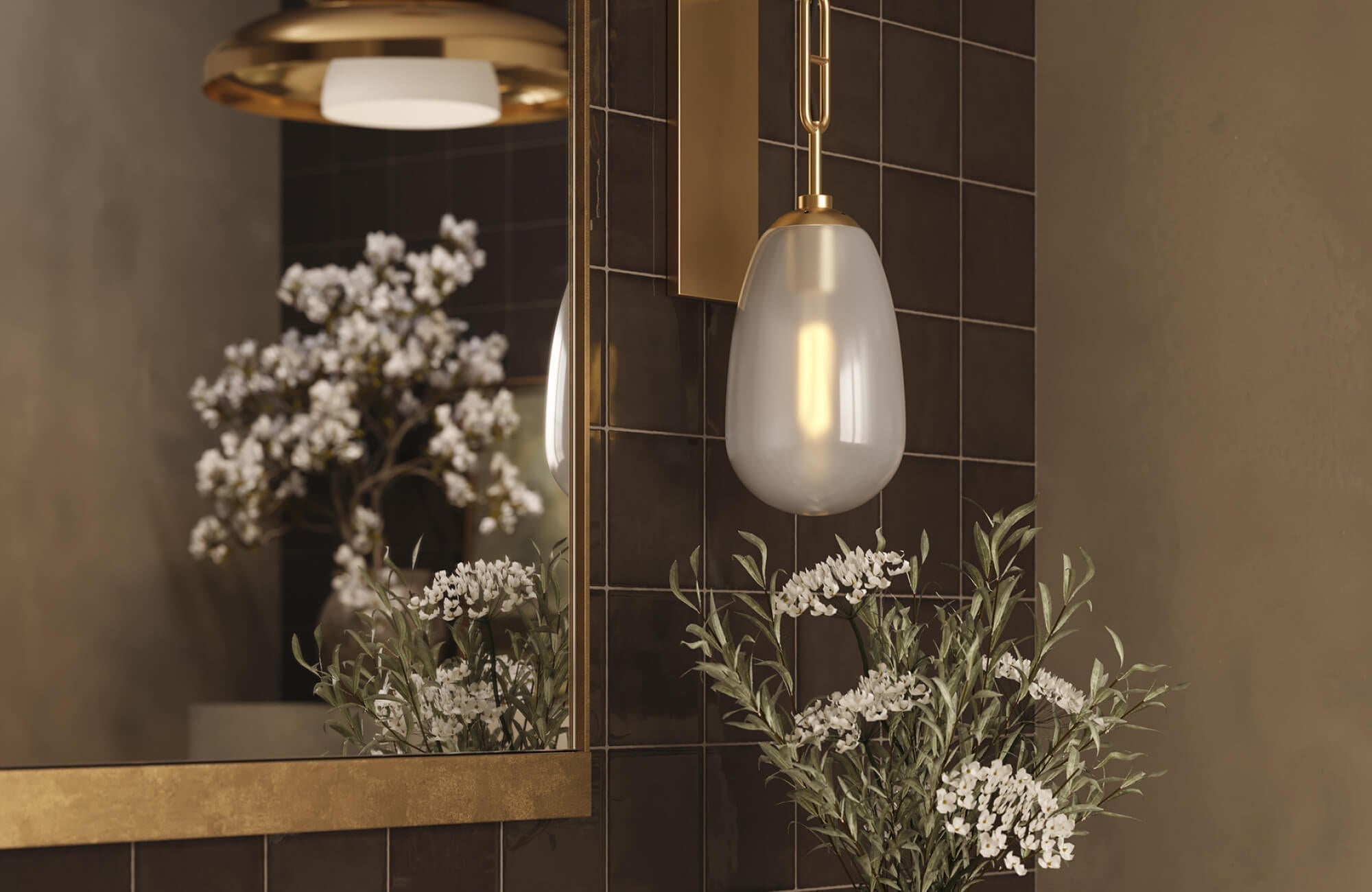
Even when the overall height is correct, uneven spacing or misaligned fixtures can disrupt the visual rhythm that makes a vanity area feel polished. Symmetry acts as a stabilizing force, especially in bathrooms where mirrors, cabinetry, and plumbing lines create strong vertical and horizontal references. Incorporating pieces like Edward Martin’s Coraline Wall Sconce in Patina Brass, shown in the image above, highlights how matching heights and balanced placement keep the sightline cohesive. Proper spacing also affects performance; fixtures placed too close to the mirror can cause intense light bounce, while those set too far apart may leave the center of the face in shadow. By treating symmetry and spacing as functional tools rather than purely decorative choices, you ensure an environment that looks refined and performs reliably.

Positioning Overhead Bath Bars for Optimal Clearance
Once the logic behind eye-level sconces is clear, it becomes easier to understand how overhead bath bars provide their own form of support that’s just as impactful. Here, the focus shifts upward to explore placement that provides balanced light without overpowering the mirror.
The 75 to 80 Inch Standard Guideline
When using an overhead bath bar instead of side sconces, the height increases to accommodate both user comfort and fixture safety. Mounting a bath bar between seventy-five and eighty inches from the floor typically produces balanced illumination without shining directly into the eyes. This range also ensures the fixture sits comfortably above the mirror frame, creating a unified composition rather than a cramped or floating effect. Most bathrooms fall naturally within this interval unless the ceiling height or mirror scale demands deviation. Keeping the fixture within this guideline maintains a dependable balance between brightness, visibility, and visual hierarchy, ensuring that the bar complements rather than competes with the architectural features nearby.
Managing the Gap Between Mirror and Fixture
The space between the top of the mirror and the bottom of the light fixture shapes the room’s overall sense of proportion. A gap that is too narrow makes the lighting feel squeezed, while an overly large gap can make the composition appear disjointed. Designs such as Edward Martin’s Posey Wall Sconce in Aged Brass, seen in the image above, demonstrate how a thoughtful two- to five-inch clearance gives the mirror breathing room while allowing the fixture to anchor the wall gracefully. This spacing also ensures the light projects outward effectively rather than grazing the mirror surface too closely. Thoughtful management of this gap can elevate the entire vanity wall, making the lighting feel intentional instead of like an afterthought.
Handling High Ceilings and Tall Mirrors
Bathrooms with lofty ceilings or expansive mirrors challenge standard measurements because the vertical space can dwarf the usual placement of an overhead light. In these situations, the goal is not to raise the fixture to match the ceiling height but to maintain proper proximity to the mirror and the user’s visual field. Even in a room with ten-foot ceilings, the fixture should remain within the typical seventy-five to eighty-inch range unless the mirror extends significantly higher. If the mirror reaches near ceiling height, the fixture should align with a comfortable lighting angle rather than the mirror’s full scale. Keeping the user's needs at the center of the decision ensures that the fixture remains functional and visually grounded.

Adjusting Measurements for Specific Users and Layouts
Building on the standard guidelines for sconces and bath bars, every bathroom still needs adjustments to suit the people who use it. This section looks at how household height, layout, and daily routines influence ideal fixture placement.
Tailoring Height for Taller Households
When a household consists primarily of taller individuals, adjusting sconce or bath bar height upward can improve comfort and reduce glare. Raising fixtures by a few inches brings the illumination closer to the eye level of the users who interact with it daily, improving visibility during grooming tasks and reducing shadowing under the chin or brow. In setups that feature pieces like Edward Martin’s Arlette 23" LED Wall/Vanity Light in Natural Brass, shown in the image above, these small adjustments help maintain even lighting without disrupting the room’s proportions. A thoughtful, modest shift typically provides the best outcome, maintaining ergonomic balance while respecting the space’s architectural lines.
Considerations for Children's Bathrooms
Children’s bathrooms require a different perspective because the users are significantly shorter, and their needs evolve rapidly as they grow. While it may be tempting to mount fixtures lower to match their current eye level, it is rarely practical or visually stable for the long term. Instead, maintaining standard adult measurements ensures that the space will age gracefully as the child grows. Effective solutions often involve supporting tools, such as step stools or mirrors hung at versatile heights, rather than altering the lighting installation itself. This approach prevents future renovations while still providing safe, functional visibility for younger users.
Accommodating Seated Makeup Vanities
Rooms that include seated makeup stations change the height dynamics considerably, as illumination must suit a lower eye level without feeling misaligned when viewed from standing positions. In these scenarios, sconces or small-scale fixtures mounted slightly lower than usual can provide the necessary clarity for cosmetic tasks while still maintaining harmony with nearby cabinetry and mirrors. The key is ensuring that the seated user receives even, shadow-free light across both sides of the face. Fixtures should be tested from both seated and standing angles before final installation, ensuring that the lighting feels consistent and intentional across multiple positions.

Avoiding Common Rough In and Installation Mistakes
After honing the right measurements, the next step is making sure nothing interferes with proper installation. This final section highlights the most frequent rough-in errors and spatial conflicts to watch for so your lighting plan comes together flawlessly.
The Medicine Cabinet Protrusion Conflict
Recessed or surface-mounted medicine cabinets often interfere with sconce placement if the rough-in location has not been carefully planned. A cabinet that protrudes farther than expected can cause sconces to sit awkwardly close to the cabinet edge or prevent them from mounting flush to the wall. This misalignment detracts from both aesthetics and functionality. Before any wiring begins, the depth and width of the cabinet should be confirmed so the junction boxes sit in a location that respects its footprint. Accounting for these dimensions ensures that fixtures align cleanly and maintain the balanced composition that vanity lighting requires.
Clearing the Faucet and Backsplash
The interplay between lighting, plumbing, and countertop surfaces becomes especially important when dealing with limited space. Installing sconces too low can crowd the faucet area or encroach on the backsplash, creating awkward reflections or obstructing cleaning access. Fixtures like Edward Martin’s Garnet Wall Sconce in Vintage Brass, visible in the image above, show how keeping the lighting slightly elevated preserves usability while protecting finishes from water exposure. Ensuring precise clearance between the lighting elements and the sink area creates a seamless relationship between both, allowing the vanity to function efficiently without compromising aesthetics.
Checking for Door Swings and Obstructions
Bathroom layouts often include a surprising number of moving elements: doors, shower enclosures, mirrors on hinges, and storage units. Any of these can interfere with lighting placement if not considered early in the design phase. A sconce positioned too close to a door swing may restrict movement or risk impact damage. Mirrored medicine cabinets that tilt forward may collide with fixtures mounted without sufficient side clearance. Checking all moving parts ensures that the lighting remains accessible, safe, and unobstructed. This careful attention to spatial choreography allows the room to function smoothly without compromising on style.
Precision Is the Key to Polish
Thoughtful lighting placement has the power to transform a bathroom from purely utilitarian to quietly refined. Whether determining the sweet spot for wall sconces, balancing the relationship between a bath bar and a mirror, or tailoring measurements for specific users, accuracy is what brings harmony to the space. Every inch matters, from the height of the bulb to the clearance around cabinetry and doors.
When homeowners treat lighting as a foundational design element rather than a finishing detail, the result is a bathroom that feels cohesive, comfortable, and beautifully illuminated. The path to a polished room begins with precise measurements and a clear understanding of how each component interacts with the next, and Edward Martin’s design consultation service can support that process with personalized recommendations across lighting, tile, rugs, and furniture. For added guidance or product questions, you can always contact Edward Martin to ensure each choice aligns confidently with your project vision. With these principles in place, your vanity lighting will serve as both a functional asset and an aesthetic anchor for years to come.