Marble has long been associated with timeless elegance, gracing everything from classical architecture to modern interiors. Yet in busy spaces like kitchens and bathrooms, its beauty often comes with practical limitations. From susceptibility to stains to ongoing maintenance, natural marble may not always align with the demands of everyday living.
Marble look tiles offer a compelling alternative, capturing the refined veining and luminous appeal of real stone while delivering enhanced durability and ease of care. Designed to withstand moisture, wear, and frequent use, they bring together style and performance in equal measure. In this article, we explore how marble look tiles perform in kitchens and bathrooms, along with the design versatility that makes them a smart, lasting choice for modern homes.

The Enduring Appeal of Marble Look Tiles
Marble has long been associated with luxury, influencing interior design through its distinctive veining and tonal depth. Classic varieties like Carrara and Calacatta continue to define refined stone surfaces in both traditional and contemporary spaces.
Interpreting Natural Stone Through Tile Design
Carrara marble is recognized for its soft gray or white background with fine, linear veining, creating a subtle and timeless effect. Calacatta, by contrast, features a brighter white base with more pronounced gold or gray veining, often used to introduce contrast and visual impact.
Marble look tiles translate these characteristics with notable precision. Through advanced manufacturing, they replicate the depth, movement, and variation of natural stone while offering greater consistency in pattern and finish. This level of control allows for intentional layouts, making it easier to achieve visual symmetry across large surfaces such as floors, feature walls, and full-height installations.
Balancing Aesthetics with Practical Value
In addition to their visual appeal, marble look tiles offer a more practical approach to achieving a marble-inspired look. Natural marble, while elegant, often requires regular maintenance and a higher upfront investment.
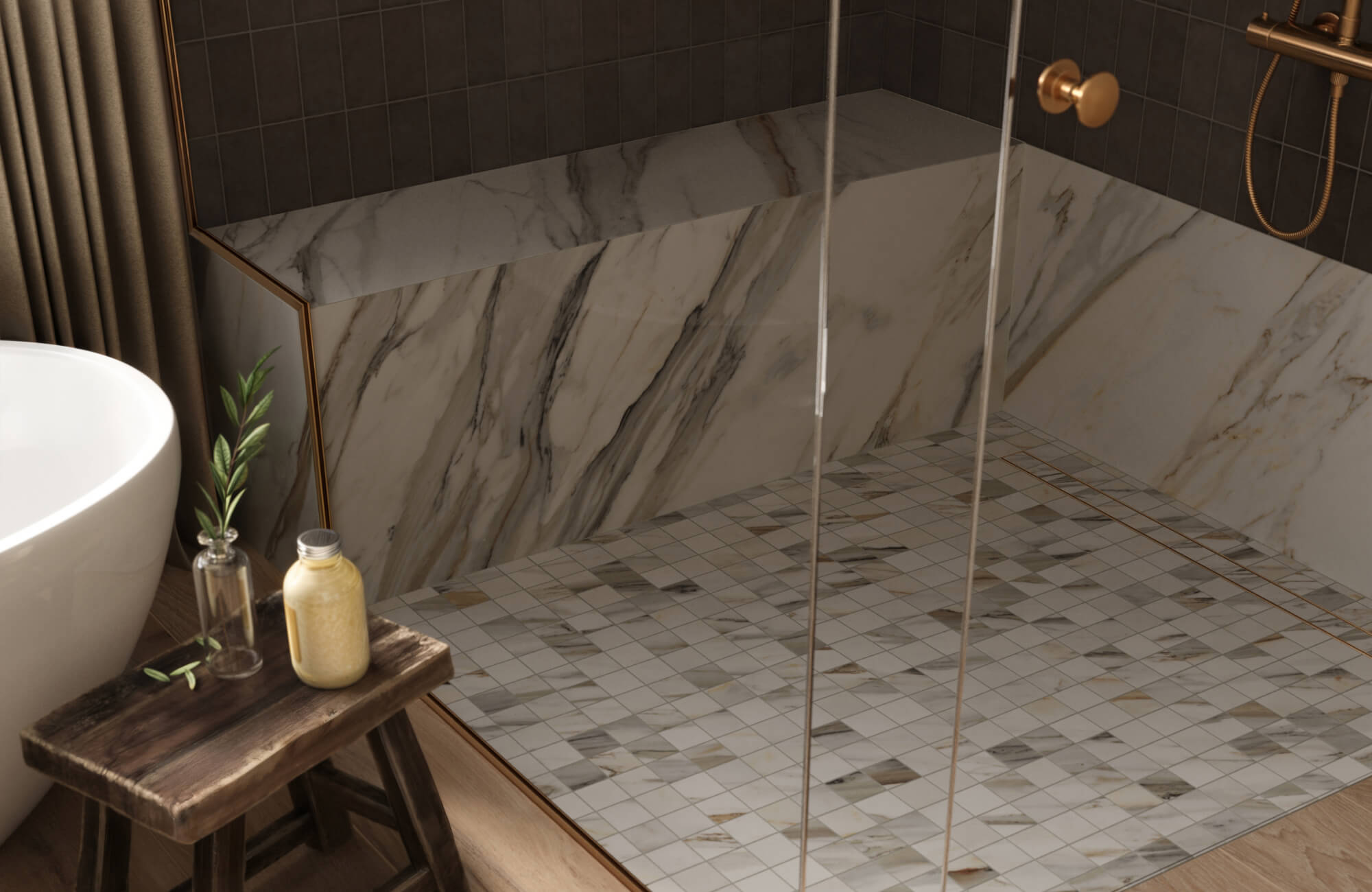
Marble look tiles provide a comparable aesthetic with enhanced durability and easier upkeep. This balance is evident in applications like Edward Martin’s Leona 24x24 Checkerboard Matte Porcelain Tile in Calacatta and Amani Grey, as seen in the image above, where soft tonal contrast delivers a refined, structured look without the maintenance demands of natural stone. Their dense composition helps resist everyday wear, while their surface treatments reduce the risk of staining or etching, making them well-suited for spaces that demand both lasting luxury and reliability.

Performance in Kitchens and Bathrooms
With their refined appearance established, the next consideration is how these tiles perform under daily demands. Kitchens and bathrooms require surfaces that can handle constant use, exposure to moisture, and occasional impact—all without compromising visual appeal. Marble look porcelain tiles, in particular, are well-suited to these environments due to their low porosity, structural density, and resistance to wear.
Material Distinction: Porcelain vs. Ceramic
Understanding the difference between porcelain and ceramic is key when specifying marble look tiles. Porcelain is fired at higher temperatures, resulting in a denser, less porous material that performs exceptionally well in busy and moisture-prone areas. Ceramic, while still durable, is better suited for vertical applications or spaces with lighter use, where impact resistance is less critical.
Tackling High-Use Areas in Kitchens
In kitchens, surfaces must withstand frequent movement, spills, and the occasional dropped object. Marble look porcelain tiles perform exceptionally well on floors, offering a hardwearing surface that resists scratches and maintains its finish over time. This is especially effective in layouts like Edward Martin’s Leona 24x24 Checkerboard Matte Porcelain Tile in Marfil and Nero Marquina, featured in the image above, where bold contrast enhances both durability and visual structure in active zones.
Their heat and stain resistance also make them a practical option for backsplashes and surrounding wall areas, where both function and visual continuity are important. Ceramic tiles, on the other hand, are more appropriate for backsplashes or decorative wall features, where they can deliver the same aesthetic without being subjected to heavy impact.
Adapting to Bathroom Conditions
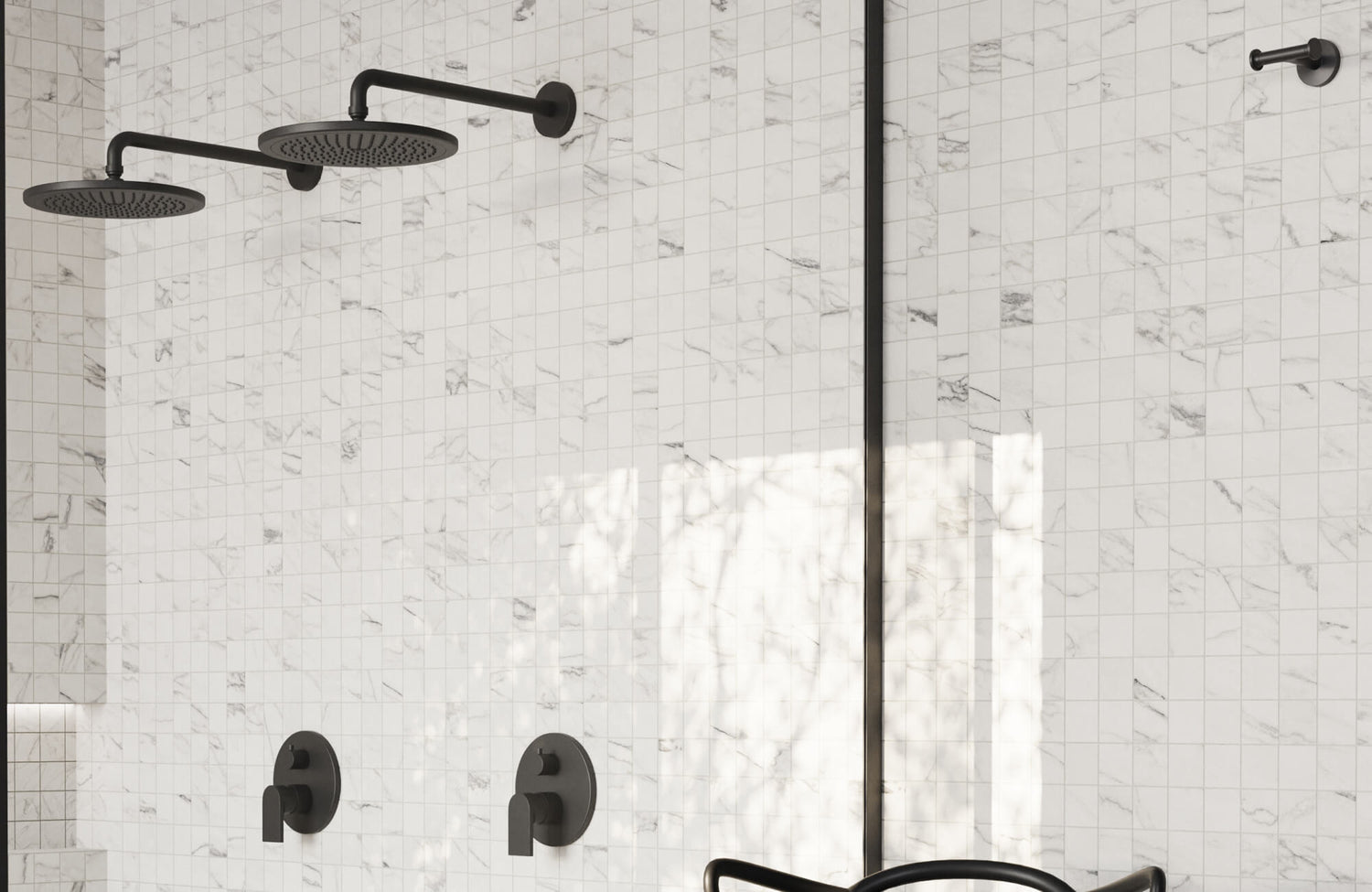
Bathrooms introduce a different set of challenges, primarily related to moisture and safety. Porcelain marble look tiles excel in wet areas due to their water-resistant properties, making them suitable for shower walls, vanity surrounds, and even ceilings. For flooring, especially within showers, smaller-format marble look mosaics are often preferred. Their increased grout lines provide better traction, enhancing slip resistance while maintaining a cohesive design.
Extending Design Continuity Outdoors
In addition to indoor applications, marble look porcelain tiles can extend seamlessly into outdoor environments. Their ability to withstand temperature fluctuations, moisture exposure, and UV conditions makes them suitable for outdoor kitchens, shower areas, and entertainment spaces. This continuity allows for a unified design language, visually connecting interior and exterior zones without sacrificing performance.

Maintaining Everyday Performance and Appearance
To preserve the visual integrity of marble look tiles, maintenance should be straightforward and consistent. One of their key advantages over natural stone is ease of care. Routine cleaning, such as sweeping and occasional mopping with warm water, is typically sufficient to keep surfaces looking polished—particularly in installations like Edward Martin’s Leona 24x24 Checkerboard Matte Porcelain Tile in Calacatta and Nero Marquina, shown in the image above, where high-contrast surfaces benefit from consistent upkeep.
For more thorough cleaning, a mild, non-abrasive solution can be used without risking damage to the tile surface. Unlike natural marble, porcelain and ceramic tiles generally do not require sealing, simplifying long-term upkeep while maintaining their finish. However, achieving and preserving this level of performance also depends on proper installation and appropriate care, as factors such as site conditions, grout selection, and usage can influence long-term results.
Following manufacturer recommendations for both tile and grout ensures surfaces retain their appearance and function as intended. With the right approach, marble look tiles continue to perform reliably while maintaining their refined, marble-inspired aesthetic in even the most active environments.
Selecting Marble Look Tiles for High-Use Spaces
Marble look tiles offer a thoughtful balance of timeless beauty and everyday performance, making them especially well-suited for busy kitchens, bathrooms, and even outdoor areas. Their ability to withstand frequent use while maintaining a refined appearance allows you to achieve elevated spaces without the demands typically associated with natural stone. From polished backsplashes to slip-resistant mosaic shower floors, these tiles adapt seamlessly to both functional and aesthetic needs.
To support your selection process, Edward Martin’s Augmented Reality (AR) Visualization Tool allows you to preview how different marble look tiles will appear within your own space, helping you make more confident design decisions. You can also explore tile samples to better understand each option’s texture, tone, and overall look. With the right choice, marble look tiles can bring lasting style and reliability to even the most active areas of your home.