

)
)
)
)
)
)
)
)
How Many Lights Should A Bathroom Vanity Have?
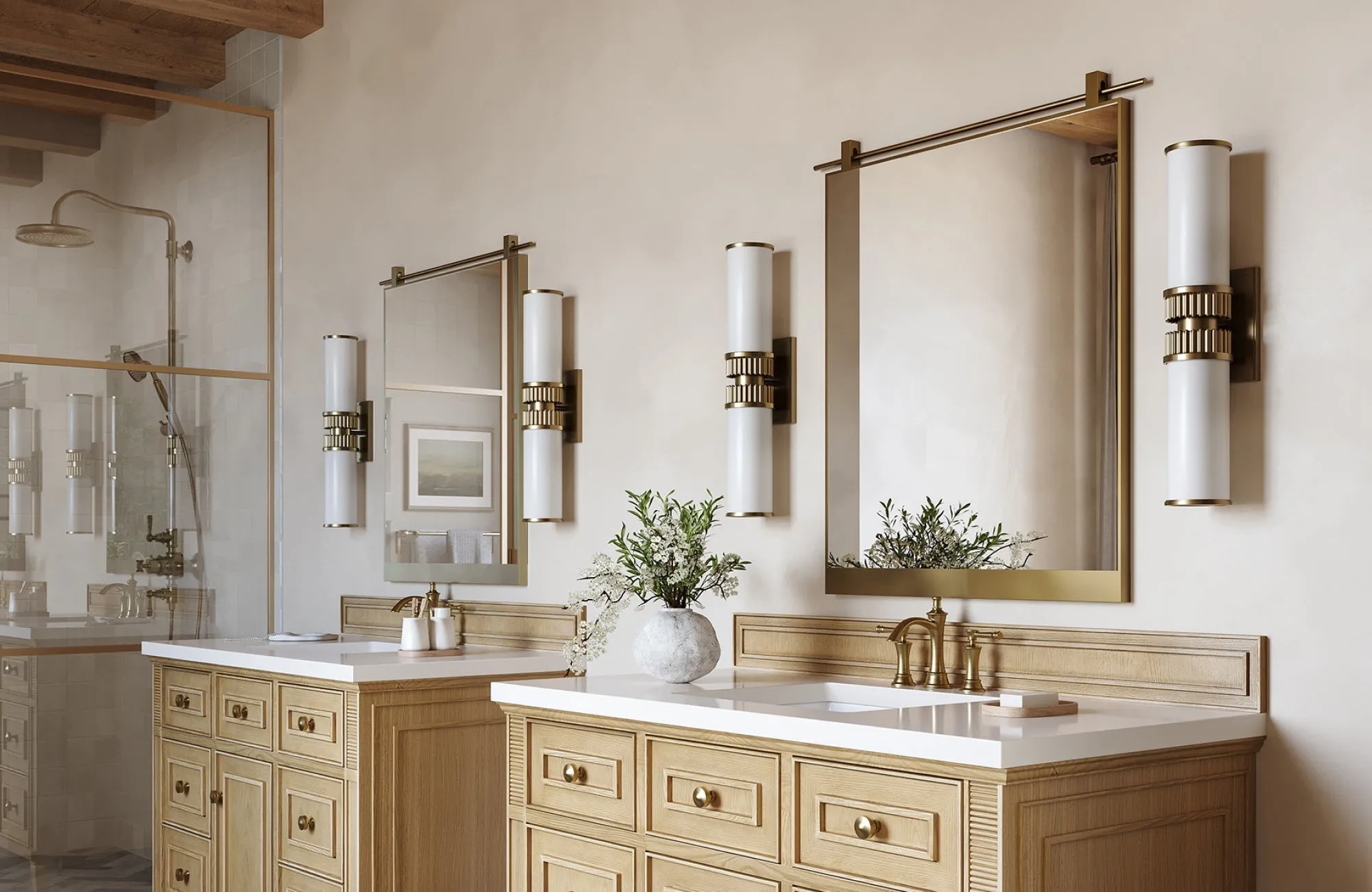
A well-lit vanity isn’t just about brightness; it’s about finding the perfect balance of light, clarity, and comfort. The right number of lights and their placement can transform your bathroom, making it both functional and flattering while enhancing its overall design. Whether you’re creating a new space or updating an existing one, understanding how to layer and position lighting helps you eliminate shadows, highlight your vanity’s best features, and make daily routines more enjoyable. In this article, we’ll explore how to determine the ideal number of lights for your bathroom vanity and how fixture style and light quality work together to create a space that feels polished, inviting, and beautifully balanced.
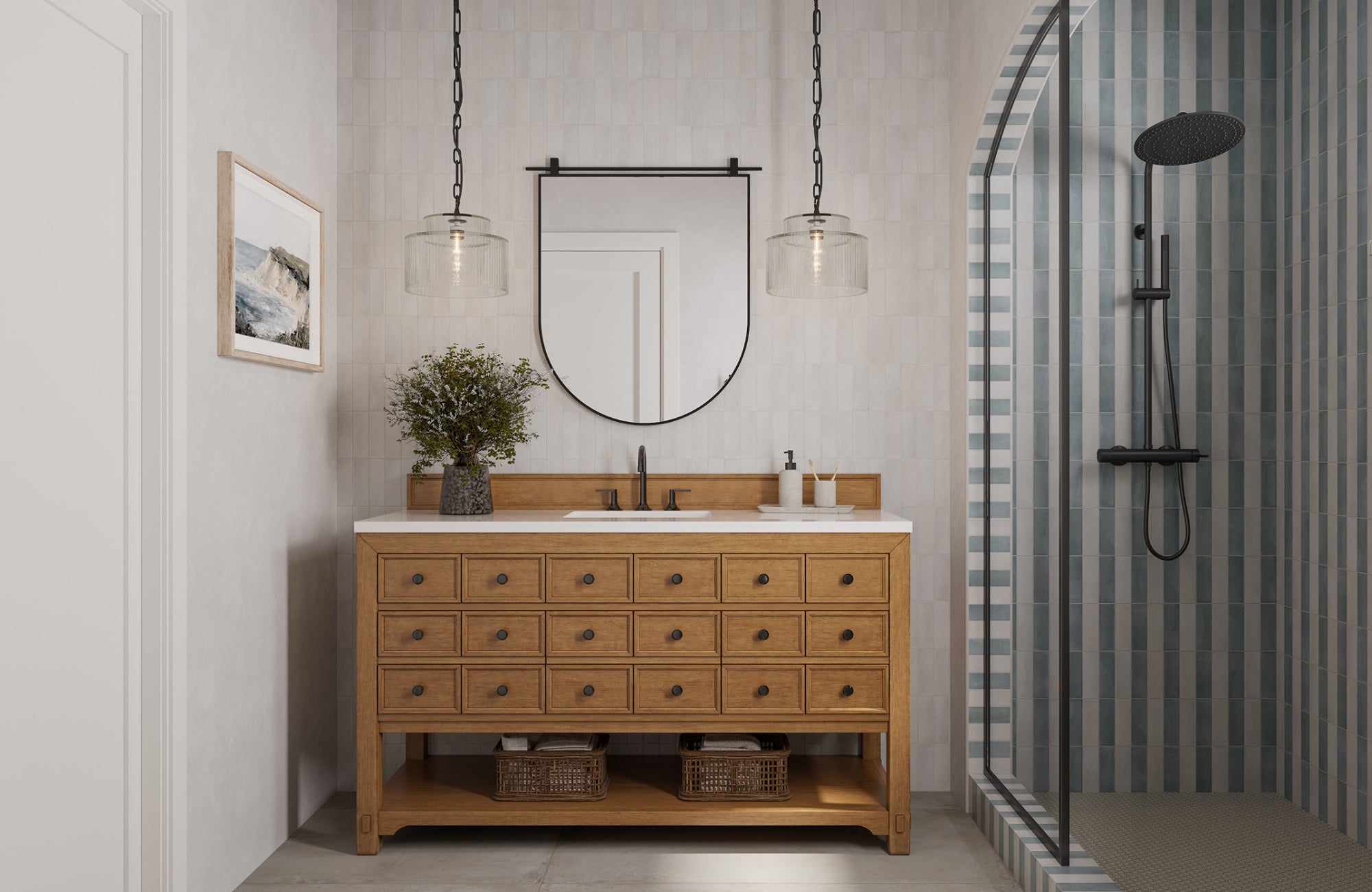
The Role of Vanity Lighting
Lighting around a vanity serves both practical and aesthetic purposes. Before deciding how many fixtures you need, it helps to understand how each type of light influences visibility, sets the mood, and shapes the overall atmosphere of your bathroom.
Task Lighting Essentials
Task lighting forms the foundation of a well-functioning vanity. It provides the focused illumination you need for everyday routines such as shaving, grooming, or applying makeup, moments that rely on accuracy and clarity. The key is to achieve even lighting on both sides of your face to prevent shadows that can distort reflection. Side-mounted sconces are often the best choice since they cast light at eye level, delivering uniform brightness across your features.
Relying only on overhead lighting, however, can create downward shadows that emphasize lines and uneven tones. By placing fixtures at roughly face height on either side of the mirror, you can create natural, balanced light that closely resembles daylight.
Ambient and Accent Layers
While task lighting ensures clarity, ambient and accent lighting bring balance and depth to the space. Ambient lighting provides general illumination, often coming from ceiling fixtures or recessed lights, helping your eyes adjust comfortably to the room’s brightness. Accent lighting adds dimension by drawing attention to architectural details, textures, or decorative elements. When these layers work in harmony with your task lights, the vanity area feels inviting and well-rounded; bright enough for daily routines yet soft and relaxing when you need a calmer atmosphere.
Function Meets Style
Lighting around your vanity does more than brighten the space; it defines its character. The fixtures you choose can influence both the mood and the overall aesthetic of the bathroom. Sleek metal sconces can lend a clean, modern feel, while frosted or fabric shades introduce warmth and softness. Color temperature also plays an important role: warm white light creates a cozy, flattering glow, whereas cooler tones deliver a sharper, more contemporary look. When style and function are balanced thoughtfully, your vanity becomes a focal point that feels both purposeful and beautifully designed.
Factors That Determine How Many Lights You Need
The ideal number of lights for your vanity depends on several key factors. Understanding these considerations helps you create a lighting plan that suits your space perfectly, providing enough brightness for daily tasks without feeling harsh or overwhelming.
Mirror Size and Shape
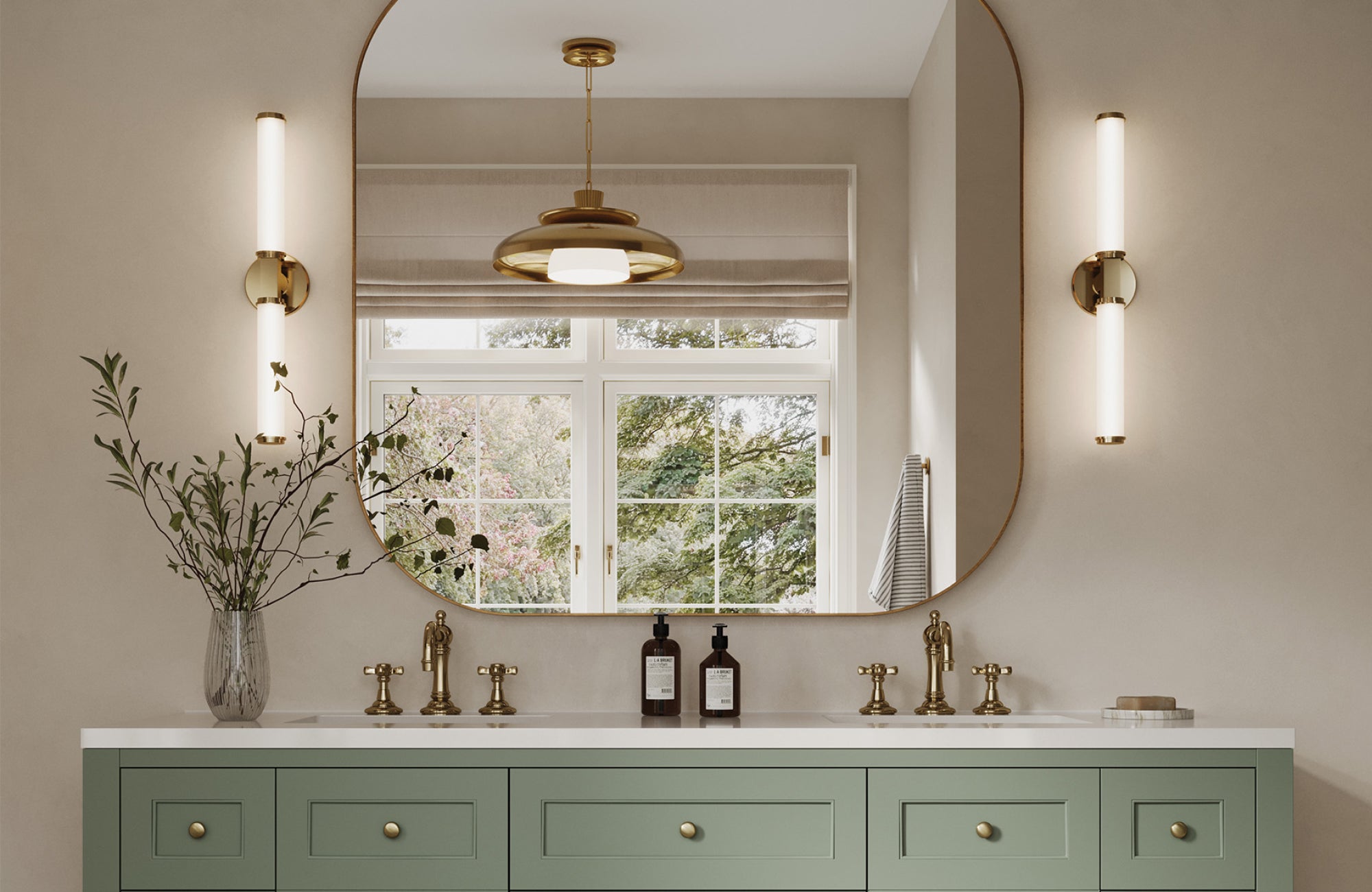
The size and shape of your mirror play a major role in determining how many lights you’ll need. A wide rectangular mirror often requires multiple fixtures to distribute light evenly across its surface, such as two sconces on either side or a mix of vertical and horizontal lighting. Round or oval mirrors, by contrast, tend to look best with a pair of sconces placed slightly above eye level to maintain symmetry. The key is to achieve consistent illumination across the mirror, avoiding uneven brightness or dark areas that can distort reflection.
This concept is perfectly illustrated in the photo displayed above, featuring Edward Martin’s Bridgette 72" Double Vanity in Smokey Celadon with a 3 cm White Zeus Quartz Top and Maguire Wall Sconce in Aged Brass. The vertical sconces placed beside the wide, gently curved mirror provide even coverage from top to bottom, enhancing visibility while complementing the vanity’s refined design. This balanced arrangement demonstrates how proportion and placement work together to create a beautifully illuminated, cohesive look.
Vanity Width and Layout
The width and layout of your vanity directly influence the number of lights you’ll need. A single-sink vanity usually looks and functions best with two sconces or one centered fixture that provides even illumination. For a double-sink design, you may need four or more lights: two per mirror or a continuous bar fixture above each basin, to ensure both sides are equally bright. In shared spaces, giving each user their own balanced light source also keeps the setup comfortable and visually harmonious, preventing one side from appearing lighter or more prominent than the other.
Ceiling Height and Room Dimensions
Ceiling height and room size both influence how effectively light reaches your vanity. In bathrooms with high ceilings, overhead fixtures can feel too far, resulting in uneven or insufficient illumination. To balance this, you may need additional sconces or brighter bulbs to bring light closer to face level. In smaller spaces, however, softer lighting helps prevent glare and keeps the room feeling comfortable. Considering the proportions of your bathroom also helps decide whether light should spread more horizontally or vertically to achieve natural, even coverage throughout the space.
Natural Light Availability
Natural light plays an equally important role in how your vanity lighting performs. Bathrooms with large windows often need fewer artificial fixtures during the day, while interior or windowless spaces rely completely on installed lighting. Pay attention to how sunlight shifts throughout the day and plan your setup to balance those changes. When natural and artificial light work together, your bathroom maintains consistent, comfortable brightness at any time of the day.
Recommended Lighting Configurations for Different Vanity Types
Each vanity layout calls for its own ideal lighting arrangement. Understanding what works best for your specific setup helps you achieve balanced illumination and a cohesive, visually appealing design.
Single Sink Vanity
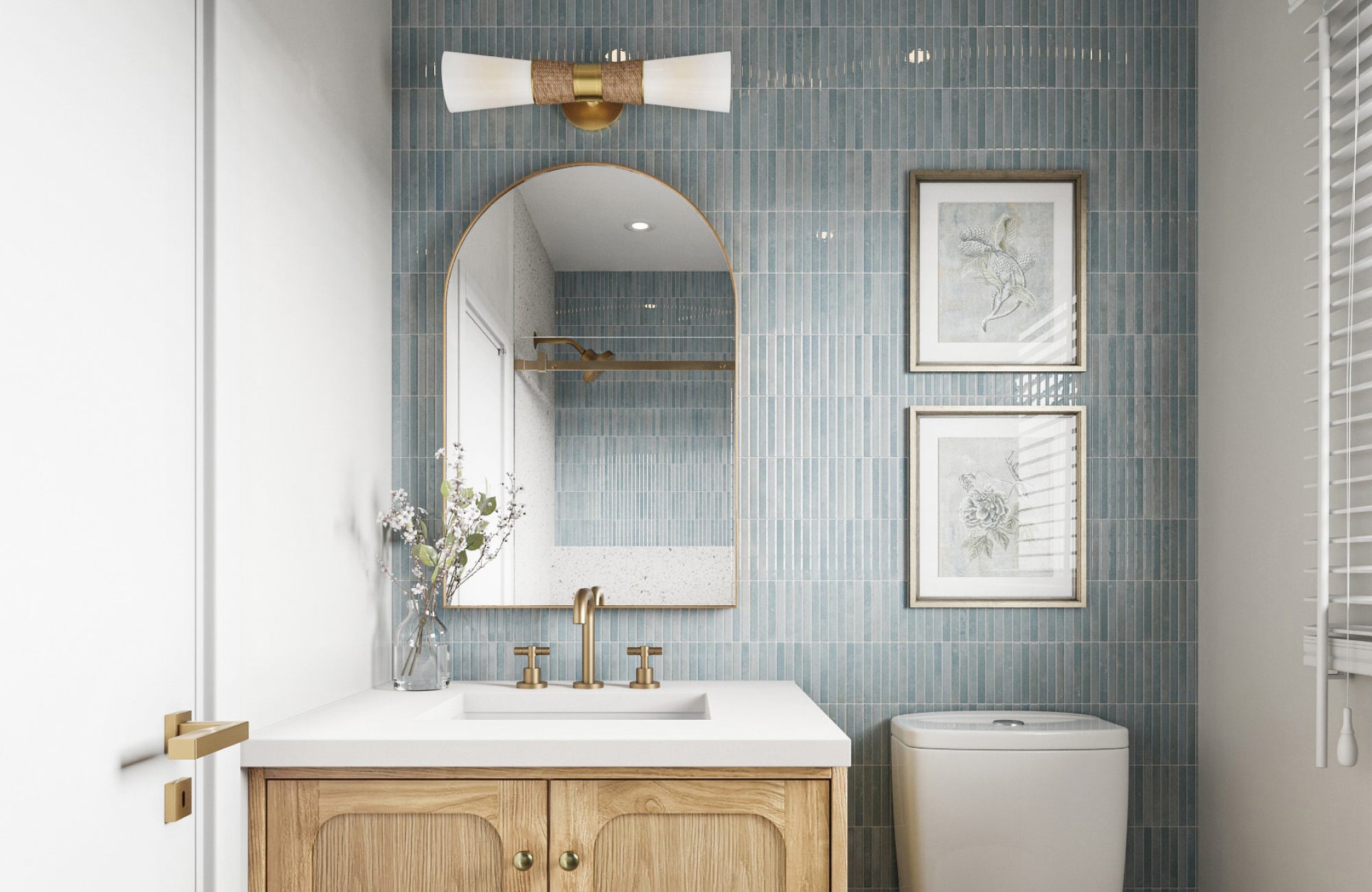
For a single-sink vanity, simplicity and balance make the biggest difference. Mounting two sconces at eye level on either side of the mirror typically provides the most even and flattering illumination. If your wall space is limited, a single fixture above the mirror can also work, just choose one with a wide shade or multiple bulbs to spread light evenly across your face. Center the lighting on the mirror rather than the sink to ensure your reflection stays well-lit and natural-looking.
This approach works particularly well in compact layouts, as seen in the photo above featuring Edward Martin’s Abigail 30" Single Vanity in Light Natural Oak with a 3 cm White Zeus Quartz Top paired with the Posey Wall Sconce in Aged Brass. The single over-mirror light complements the mirror’s shape and the vanity’s scale, creating a balanced, space-efficient design that delivers both function and warmth.
Double Sink Vanity
Double vanities require thoughtful planning, especially since two people often use the space at once. The most effective setup usually features two mirrors, each paired with a set of sconces or a horizontal fixture above each sink. This arrangement gives both users equal, shadow-free illumination. If your vanity has one large shared mirror, space four lights evenly across its width to maintain uniform brightness from one side to the other, ensuring the entire area feels balanced and well-lit.
Wall-to-Wall Mirror Vanity
A wall-to-wall mirror creates a sense of luxury and openness, but can be tricky to light evenly. The best solution is to use vertical fixtures or linear LED strips placed along the top and sides of the mirror to provide consistent illumination across its entire surface. These continuous light sources maintain a clean, streamlined appearance while eliminating dark spots. Adding recessed lighting above the mirror can enhance depth and reduce glare, especially when paired with softer side lighting for a balanced, polished look.
Floating or Minimalist Vanity
For floating or minimalist vanities, lighting should complement the design’s clean, open feel. Recessed downlights or concealed LED strips beneath the mirror or vanity can add subtle illumination without drawing attention to the fixtures themselves. Integrated lighting built directly into the mirror is another excellent choice, offering a sleek, seamless look while providing bright, shadow-free light. These approaches can also preserve the modern aesthetic and ensure the space remains both functional and visually effortless.
Placement and Height Guidelines for Optimal Lighting
After determining how many fixtures your vanity needs, placement is the next crucial step. Even the best lighting choices can lose their effectiveness if they’re not positioned correctly, so understanding proper height and spacing is key to achieving balanced, flattering illumination.
Sconce Height and Distance
The ideal height for wall sconces is often around eye level, about 65 to 70 inches from the floor. At this height, the light spreads evenly across your face, reducing shadows under the eyes and chin. Spacing is equally important; placing sconces about 28 to 36 inches apart works well for most mirror widths. When properly positioned, they can frame the mirror gracefully and provide soft, balanced illumination that enhances both visibility and comfort.
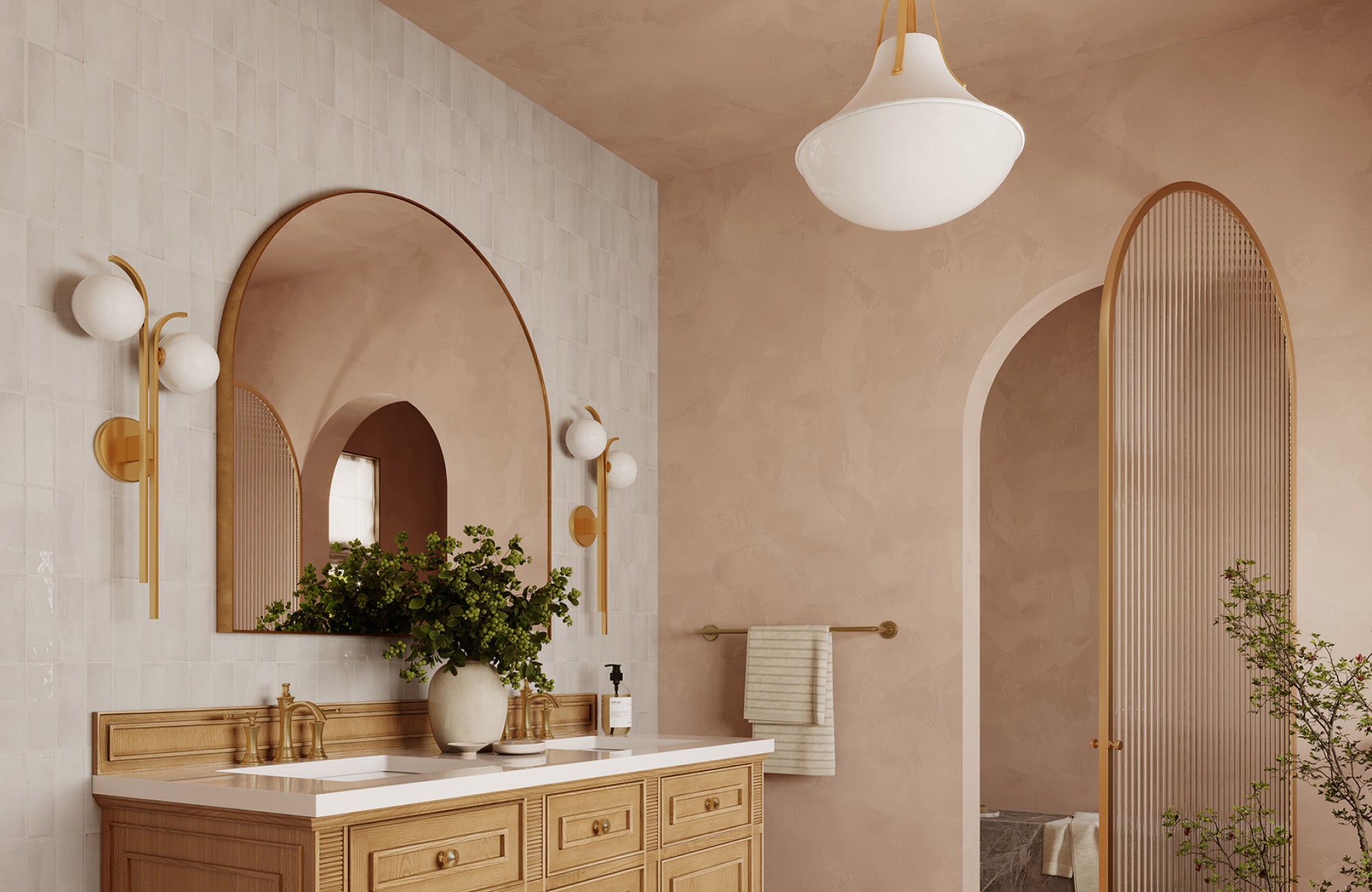
This concept is beautifully demonstrated in the photo displayed above, featuring Edward Martin’s Elodie 60" Double Vanity in Light Natural Oak with a 3 cm White Zeus Quartz Top and Enola Wall Sconce in Aged Brass. The sconces are mounted at an ideal height beside the arched mirror, allowing the light to fall evenly across the face. Their warm brass finish adds both contrast and cohesion, showcasing how thoughtful placement and design work together to create flattering, functional lighting.
Over-Mirror Lighting
If you opt for an overhead fixture, careful placement is essential to achieve balanced lighting. Mounting it too high can create unflattering shadows, while placing it too low may produce glare. The ideal position is above the top edge of the mirror, angled slightly forward if possible. Fixtures with multiple bulbs or diffused LED strips also work best for spreading light evenly without harshness. Overhead lighting is most effective when paired with side sconces, ensuring your face is evenly illuminated from every angle.
Layering for Depth
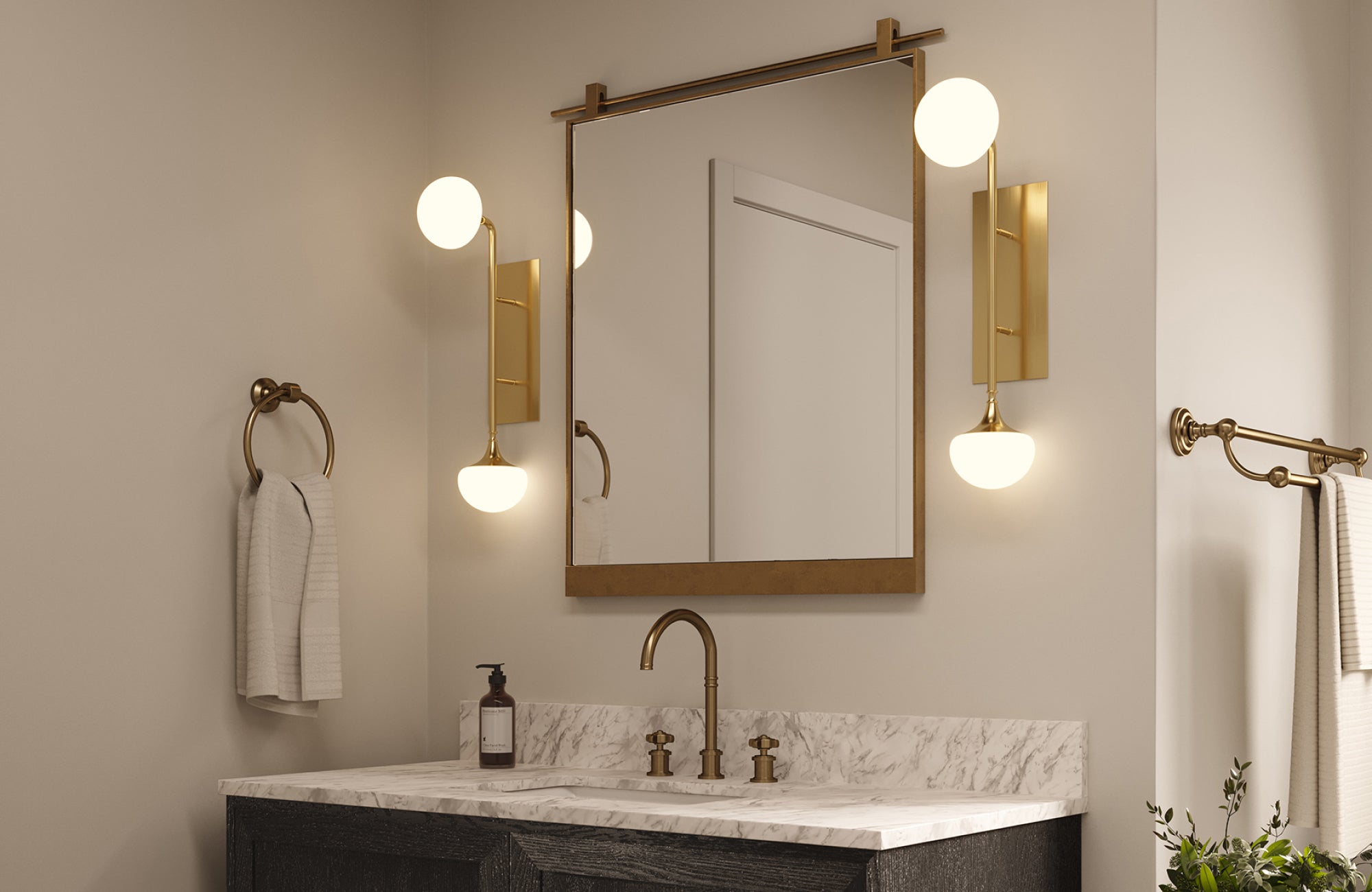
Layering light adds both depth and harmony to your bathroom. By combining ambient ceiling lights, task sconces, and accent lighting, you can eliminate dark areas and create a balanced, adaptable atmosphere. For example, pair a central ceiling fixture with wall sconces and subtle under-vanity lighting to achieve a mix of brightness and warmth. This flexibility allows you to adjust the lighting to suit the time of day, bright and energizing in the morning, softer and more relaxing in the evening. With thoughtful layering, your vanity feels cohesive, comfortable, and visually refined.
Light Quality and Fixture Choice
Aside from quantity and placement, the type and quality of light play a major role in creating a space that’s both functional and flattering. The number of lights matters, but their quality makes the biggest difference in how your bathroom feels and performs.
Brightness and Wattage Levels
Brightness directly affects how clearly and comfortably you see yourself within the vanity. For most bathrooms, a total output of around 1,500 to 3,000 lumens provides an ideal level of illumination. LED bulbs are an excellent choice since they deliver steady, energy-efficient light without generating excess heat. Aim for fixtures that spread light evenly rather than concentrating it in one area; this helps maintain a soft, natural look. Avoid lighting that’s too harsh, which can flatten facial features, or too dim, which makes grooming more difficult.
Color Temperature and CRI
Color temperature and CRI (Color Rendering Index) play a key role in how natural your reflection appears. A color temperature between 2700K and 3000K produces a warm, flattering glow, while 3500K to 4000K offers a brighter, more contemporary feel. The CRI indicates how accurately a light source reveals true colors: a rating of 90 or higher is ideal for bathrooms, ensuring skin tones and finishes appear realistic. Paying attention to these qualities helps your mirror reflect a clear, authentic image rather than one distorted by poor lighting.
Fixture Design and Material
The design and material of your fixtures greatly influence how light behaves in your bathroom. Matte finishes help diffuse light gently, while polished metals create sharper reflections that add brightness and dimension. Clear glass shades can deliver strong, direct illumination, whereas frosted or opaque shades soften the glow for a more relaxed look. When choosing materials, consider both aesthetics and performance. A simple, well-designed fixture that distributes light evenly often outperforms an ornate one that creates uneven lighting. The goal is to find fixtures that enhance your space visually while providing effective, balanced illumination.
Common Mistakes to Avoid When Choosing Vanity Lights
Even with thoughtful planning, it’s easy to make lighting choices that don’t perform as expected. Being aware of common mistakes helps you avoid uneven illumination, glare, or poor balance, ensuring your vanity lighting looks and functions exactly as intended.
Relying on a Single Overhead Fixture
Relying only on a ceiling light is one of the most common lighting mistakes. Overhead fixtures often create uneven illumination and cast deep shadows that distort your reflection. Adding sconces or vertical fixtures beside the mirror helps distribute light more evenly and eliminates harsh contrasts. When the mirror is surrounded by light from multiple angles, your face appears naturally illuminated, enhancing both visibility and comfort.
Ignoring Scale and Proportion
Choosing fixtures that don’t match the scale of your vanity can throw off the entire design. Oversized sconces can overwhelm the wall, while fixtures that are too small may leave the area dim and unevenly lit. Aim for lighting that feels proportional to the size of your mirror and vanity; substantial enough to brighten the space without overpowering it. Maintaining proper scale ensures the setup looks cohesive, balanced, and visually comfortable.
Overlooking Dimming and Controls
Incorporating adjustable lighting is one of the most practical ways to improve your vanity setup. Dimmers allow you to shift easily between bright, focused light for grooming and softer illumination for relaxation. Smart controls or layered switches also provide flexibility for different times of day and personal preferences. Without these features, lighting can feel too harsh or one-dimensional, reducing both comfort and functionality in the space.
Creating a Well-Lit, Balanced Vanity Space
The ideal number of lights for a bathroom vanity depends on its size and layout, but most spaces achieve the right balance with two to four fixtures. A single-sink vanity often works best with a pair of side sconces or a single wide horizontal fixture; a double-sink setup typically benefits from four lights or a mix of sconces and overhead bars. What matters most is achieving even, shadow-free illumination that enhances both function and comfort. When the number, placement, and quality of lights work together seamlessly, your vanity becomes a space that feels bright, inviting, and beautifully balanced every day.
If you’re planning a bathroom update or need guidance choosing the perfect vanity lighting, our design specialists are here to help. Contact us today to learn more about our personalized design services and discover lighting solutions that bring your vision to life.
Follow us on Instagram
@EDWARD.MARTIN
)
)
)
)
)
)
)
)
)
)
)
)
)
)
)
)