Selecting the right pattern for a large rug, especially one as substantial as a 10x14, can completely transform the look and feel of a room. Because of its scale, a rug of this size doesn’t just sit within a space, it defines it. The right pattern can harmonize your existing décor, balance visual weight, and even change how large or intimate a room feels.
Whether your style leans classic, modern, or somewhere in between, understanding how color, scale, and pattern interact with your furnishings is key. Let’s explore how to choose a rug pattern that complements your space beautifully and confidently.

First Assess Your Room’s Existing Character
Before choosing a pattern, take a close look at what your space already communicates. Every room has its own rhythm, defined by color, furniture, and light, and your rug should enhance that, not compete with it. Understanding your room’s character is the foundation for making a confident, cohesive choice.
Start with Your Existing Color Palette
A 10x14 rug covers significant floor area, meaning its colors will have a large influence on your room’s atmosphere. Begin by identifying the primary and secondary tones already present, such as wall color, upholstery, drapery, and wood finishes.
As shown in the image above, Edward Martin’s Bowie Wool Blend Rug in Sand / Graphite beautifully illustrates how a rug can complement neutral interiors while adding quiet texture and movement. Its hand-drawn linear design and soft, sand-toned base integrate seamlessly with light woods and natural materials, enhancing depth without overpowering the palette.
If your room features neutral walls and understated furnishings, your rug can serve as a focal point. Consider introducing a patterned rug with subtle pops of color to create depth without overwhelming the space. Conversely, if your room already includes bold hues or accent walls, opt for a more restrained pattern, something with tonal variation or a limited color palette, to tie the space together harmoniously.
A good rule of thumb: repeat at least one or two existing colors from your décor in the rug to ensure cohesion.
Consider Your Current Furniture Style
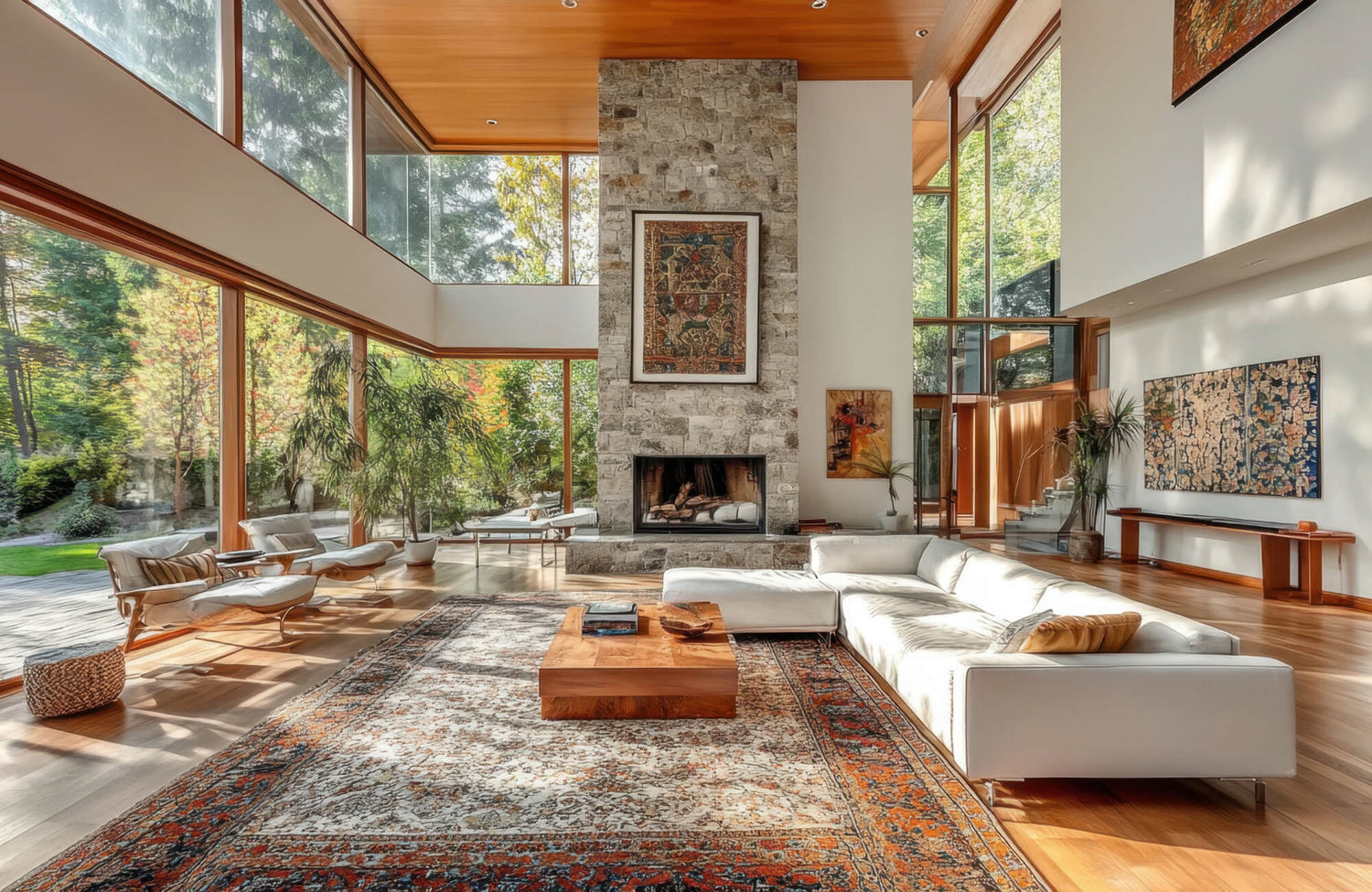
Your furniture style heavily influences which rug patterns will feel natural in the room. For example, mid-century modern furniture, with its clean lines and sculptural shapes, pairs beautifully with geometric or abstract rug designs. Traditional or farmhouse furniture, on the other hand, shines when grounded by classic motifs like florals, medallions, or bordered Persian-inspired patterns.
If you’re working with mixed styles, say a modern sofa paired with vintage chairs, choose a transitional rug pattern. These designs bridge eras with balanced motifs and flexible color palettes, helping create a cohesive look.
Ultimately, your rug should complement, not compete with, your furniture’s form and texture. Let the dominant design style in your space guide your choice.
Look at the Room’s Visual Weight and Energy
Every room has a visual “temperature”, some spaces feel calm and airy, while others feel bold and dynamic. Patterns play a big part in controlling that energy.
If your room already includes statement elements, like a dramatic chandelier, colorful artwork, or textured wallpaper, a simpler rug pattern can provide grounding balance. On the other hand, if the space feels sparse or lacks a visual focal point, a bold rug pattern can inject personality and vibrancy.
When in doubt, step back and squint at your space. If your eyes are drawn everywhere at once, simplify the rug. If the room feels flat, don’t be afraid to choose a pattern with movement or contrast.

Understand the Visual Impact of Pattern Types
Once you’ve analyzed your space, it’s time to explore how different pattern types influence mood and movement. From geometric precision to organic flow, each design category interacts uniquely with your room’s personality. Recognizing these visual effects helps you choose a rug that feels perfectly aligned with your aesthetic.
Geometric Patterns for Structure and Order
Geometric patterns, such as chevrons, lattices, and hexagons, introduce rhythm and precision to a room. Their structured repetition appeals to those who favor order and modern design.
In a contemporary space, a geometric rug can echo architectural lines and furniture silhouettes, creating a cohesive, intentional look. Even in traditional rooms, a geometric pattern can add a refreshing modern twist without disrupting harmony.
For example, a neutral rug with a subtle geometric outline can add quiet energy to a minimalist living room, while a bold black-and-white trellis pattern creates strong visual contrast in modern interiors.
Organic Patterns for Softness and Flow
Organic patterns, think floral, vine, or watercolor-inspired motifs, introduce movement and softness, perfect for spaces that aim to feel restful or inviting. These designs add a sense of flow that mimics nature, making them particularly effective in rooms meant for relaxation.
As shown above with Edward Martin’s Hutchinson Polyester Face Rug in Sage / Graphite, organic motifs bring together gentle curvature and tonal depth to create balance in a contemporary setting. The rug’s muted greens and layered neutrals provide quiet sophistication, softening modern furniture lines while adding a lived-in warmth.
A large 10x14 rug with a nature-inspired pattern like this can anchor a room beautifully, guiding the eye across the space while maintaining a calm, cohesive aesthetic.
Abstract Patterns for a Modern Artistic Statement
Abstract patterns give you freedom from symmetry and tradition. They often blend color, shape, and texture to create a unique, painterly effect, perfect for homeowners who love modern art or statement pieces.
An abstract rug works well in open-concept living areas or spaces with neutral furniture, adding personality without feeling busy. For balance, pair an expressive rug with minimal accessories and clean-lined furniture so the pattern can shine as a centerpiece.
Because abstract designs often incorporate layered tones, they also help disguise everyday wear and stains, an added bonus in high-use areas.

Master the Crucial Details of Scale and Color
After identifying the right pattern style, the next step is fine-tuning the details. Scale and color determine whether a rug complements or dominates your space, creating either harmony or tension. By mastering these nuances, you ensure your pattern choice feels balanced, intentional, and timeless.
The Vital Importance of Pattern Scale
Scale determines how visually dominant a rug feels. In a large 10x14 format, small, intricate patterns can appear busy or repetitive, while oversized motifs create a bolder, more expansive impression. Finding the right scale ensures your rug enhances rather than overwhelms the space.
For open-concept or spacious living rooms, medium-to-large pattern scales are often ideal, they help define furniture groupings and preserve balance across the room. In cozier settings, finer details work beautifully to add visual texture without overpowering. When possible, view rug samples or full-room images from a distance to better understand how the pattern reads once spread out.
If you’re unsure which scale best complements your layout, Edward Martin’s design consultation service offers personalized guidance from experienced designers who tailor recommendations to your project’s size, lighting, and aesthetic goals. Our expertise helps you visualize scale confidently before making a final decision. For additional support, contact Edward Martin for assistance with selecting the right rug, tile, or furniture pieces to complete your space.
Choosing Between High Contrast and Low Contrast
Contrast influences not just a rug’s visual impact but also the overall mood of your space. High-contrast rugs, those featuring light and dark tones placed boldly side by side, create a sense of energy and structure. They draw the eye and make a statement, ideal for modern living rooms or busy areas where you want visual definition.
In contrast, rugs with softer tonal shifts offer quiet elegance and versatility. As seen above in Edward Martin’s Charlise Polypropylene & Polyester Pile Rug in Cream / Fog, low-contrast patterns achieve a layered, calming effect that feels refined and timeless. Its blend of cream, beige, and fog-gray tones delivers subtle sophistication that works beautifully in serene bedrooms or minimalist interiors.
Practicality also comes into play, high-contrast designs can show debris or pet hair more easily, while low-contrast options like the Charlise rug naturally disguise daily wear, maintaining a polished look with minimal effort.
How Many Colors Should Your Pattern Have
Color quantity affects how cohesive or complex a rug feels. For most rooms, a rug pattern with two to four key colors strikes the right balance between visual interest and harmony.
Fewer colors lend a refined, understated elegance, while multi-hued patterns add liveliness and personality. If you’re layering patterns, such as pairing your rug with patterned drapes or throw pillows, choose a rug with fewer, more muted tones to maintain visual calm.
A good tip: anchor your palette around one dominant color found elsewhere in your décor, and let supporting hues play secondary roles within the rug design.

Aligning Pattern Choice with Room Function
Once you’ve settled on the right pattern, scale, and palette, it’s time to think practically about where your rug will live. Every room serves a different purpose, and the ideal design should both elevate the look and perform beautifully in daily life. Aligning form with function ensures your rug stays stylish and sensible for years to come.
Patterns That Perform Best in Busy Living Rooms
Living rooms are the heart of most homes, often bustling with activity. Durability and practicality are key. Choose rug patterns that can handle movement while maintaining beauty, such as tightly woven geometrics, distressed textures, or layered abstract motifs.
Patterns with moderate contrast and mid-tone colors disguise everyday wear, pet hair, and footprints. Additionally, repeating motifs create visual flow, helping large spaces feel connected and cohesive.
If your living room features neutral upholstery, a lively pattern can bring warmth and character; if your furniture already has visual weight, a subtler design helps maintain balance.
The Right Patterns for a Serene Master Bedroom
Bedrooms benefit from soft, soothing visuals. Organic or tone-on-tone patterns in muted hues, like sage, taupe, or dusty blue, encourage rest and relaxation.
For large bedrooms, a rug with gentle movement, such as a watercolor wash or soft geometric lines, adds just enough visual texture without disturbing the calm.
To create an intimate atmosphere, let the rug extend beneath the bed and nightstands; this visually grounds the furniture and adds a layer of plush comfort underfoot.
Strategic Patterns for Under a Dining Room Table
Dining rooms demand both practicality and refined design. The rug beneath your table should balance visual appeal with function, its pattern needs to enhance the setting while masking the inevitable signs of daily use. Repeating designs, such as herringbone, lattice, or distressed motifs, are ideal for concealing chair marks and small spills.
As seen above with Edward Martin’s McGowan Polyester & Polypropylene Pile Rug in Moss / Sand, a subtly distressed pattern introduces quiet movement that complements natural wood tones and soft lighting. The muted green and sand hues create warmth and texture, enriching the dining space without overpowering it.
When selecting a rug for your dining area, consider how lighting affects the color palette, warm tones invite a cozy atmosphere, while cooler ones feel sleek and modern. With the right pattern and durable materials like those in the McGowan rug, your dining room will remain both elegant and easy to maintain, meal after meal.
Your Guide to Choosing the Perfect Pattern with Confidence
Choosing a pattern for a large 10x14 rug is both an art and a strategy. By considering your room’s existing character, understanding the impact of pattern types, and mastering details like scale, color, and function, you can make a choice that feels both personal and timeless.
A thoughtfully chosen rug doesn’t just complete a room, it elevates it. It anchors your furniture, harmonizes your palette, and sets the tone for everyday living.
Whether you’re drawn to bold geometric lines, soft organic forms, or contemporary abstract designs, trust your instincts and the architecture of your space. With careful consideration, your 10x14 rug won’t just fit your room, it will define it with confidence and style.