Walls have long served as quiet canvases for personal expression, and today, long-lasting peel and stick wallpaper for modern interiors transforms them with effortless sophistication. Designed with advanced pressure-sensitive adhesive technology, this removable wall covering blends convenience with refined visual impact, allowing spaces to evolve without permanent renovation. Beyond its decorative appeal, homeowners and designers often ask an important question: how long does peel and stick wallpaper last on interior walls when installed correctly?
In most well-prepared interiors, high-quality removable wallpaper can last typically between 5 and 15 years, depending on materials, wall conditions, and environmental exposure. By understanding the balance between material composition, adhesive engineering, wall preparation, and environmental stability, peel and stick wallpaper becomes a durable, removable wallpaper solution for stylish, adaptable living spaces rather than simply a short-term decorative accent.

Typical Lifespan of Peel and Stick Wallpaper
The durability of peel and stick wallpaper depends largely on manufacturing quality, adhesive formulation, and how well the wall surface supports bonding. When properly installed on compatible surfaces, most premium removable wallpapers maintain adhesion and visual quality for approximately 5 to 15 years in stable indoor environments.
Material Composition and Structural Durability
The substrate material used in removable wallpaper significantly affects long-term peel and stick wallpaper durability. Most high-quality products are manufactured from polyvinyl chloride (PVC) vinyl, woven polyester fabric, or non-woven cellulose fiber composites. Vinyl peel and stick wallpaper, for instance, is widely used because it offers excellent tensile strength, moisture resistance, and dimensional stability.
These structural properties also allow the wallpaper to resist stretching, tearing, and warping as environmental conditions fluctuate. Fabric-backed removable wallpaper, meanwhile, features micro-textured fibers that improve surface grip and flexibility, allowing the material to conform more easily to smooth wall surfaces. Because these substrates maintain structural integrity over time, they help removable wallpaper remain visually intact for up to 10–15 years in ideal interior conditions.
Adhesive Engineering and Bond Performance
The adhesive layer used in peel and stick wallpaper plays a crucial role in determining how long removable wallpaper stays attached to walls. Most manufacturers rely on acrylic pressure-sensitive adhesives (PSA) that activate when consistent pressure is applied during installation. These adhesives are engineered to balance repositionability with cohesive strength, allowing installers to adjust panels without sacrificing long-term adhesion.
Advanced formulations also often include microsphere adhesive technology, which distributes bonding pressure evenly across the wallpaper backing. This design prevents concentrated stress points that could otherwise cause premature lifting or bubbling. With correct installation and stable environmental conditions, PSA adhesives typically maintain performance for around 5–12 years before noticeable adhesive fatigue begins.
Manufacturing Quality and Product Grade
Beyond materials and adhesives, the manufacturing process also influences how long peel and stick wallpaper performs without failure. Premium wallpaper brands use precision digital printing and protective surface laminations to improve resistance to abrasion, fading, and humidity. These protective coatings help preserve color saturation and pattern clarity even in busy interior environments.
Lower-cost wallpaper products may lack these protective layers, making them more susceptible to fading and surface wear. Manufacturing tolerances also affect panel alignment and dimensional consistency during installation. When high production standards are maintained, the resulting wallpaper performs reliably as a long-lasting, removable wall décor solution, often maintaining visual appeal for well over a decade.

Surface Preparation and Wall Compatibility
Proper wall preparation directly affects adhesive bonding strength and peel and stick wallpaper longevity. Because removable wallpaper relies on mechanical adhesion rather than paste penetration, the wall surface must provide a stable and compatible substrate.
Ideal Wall Surfaces for Adhesive Bonding
Pressure-sensitive adhesives achieve the strongest bond on smooth, sealed, and non-porous wall surfaces. Walls finished with satin or semi-gloss interior paint provide a uniform surface that supports maximum adhesive contact. Smooth primed drywall is also highly compatible with peel and stick wallpaper installations. On these surfaces, the adhesive layer can create consistent molecular contact across the entire backing material. This continuous contact reduces the risk of air pockets, edge curling, and premature panel detachment. As a result, properly prepared smooth walls significantly extend the lifespan of peel and stick wallpaper installations, often allowing them to remain secure for more than 10 years.
Limitations of Textured or Porous Walls
Wall texture can reduce the effectiveness of pressure-sensitive adhesive bonding. Surfaces such as orange peel drywall texture, knockdown finishes, or exposed brick contain irregular peaks and valleys that limit adhesive contact. These surface inconsistencies create micro-gaps where the adhesive cannot fully adhere. Over time, these weak bonding areas can cause bubbling, lifting seams, or panel shifting. Highly porous materials may also absorb adhesive compounds, further weakening the bond. Because of these limitations, heavily textured surfaces are generally unsuitable for long-lasting peel and stick wallpaper applications, and installations on these surfaces may last closer to 3–5 years before lifting occurs.
Importance of Paint Curing and Wall Cleaning
Surface preparation also includes ensuring the wall is properly cleaned and fully cured before installation. Freshly painted walls continue releasing volatile organic compounds (VOCs) during the curing process, which can interfere with adhesive performance. Most professional installers recommend allowing three to four weeks for paint curing before applying removable wallpaper. During preparation, walls should also be cleaned using isopropyl alcohol or mild degreasing solutions to remove dust and oils, as even thin layers of residue can prevent adhesives from forming a secure bond. Thorough surface preparation, therefore, plays a crucial role in maximizing the long-term durability of peel and stick wallpaper, helping it maintain adhesion for well over a decade.

Environmental Conditions That Influence Durability
Environmental conditions strongly influence the performance of removable wallpaper adhesives and materials. Temperature stability, humidity levels, and sunlight exposure all affect how long peel and stick wallpaper lasts inside a home.
Temperature Stability and Adhesive Strength
Pressure-sensitive adhesives used in removable wallpaper perform most effectively within stable indoor temperature ranges between 60°F and 80°F (16–27°C), where the adhesive polymers maintain optimal flexibility and tack. Within this range, the adhesive layer can also form a consistent bond with the wall surface, supporting the long-term adhesion of peel and stick wallpaper installations. When exposed to excessive heat, however, adhesive polymers may soften, gradually reducing their bonding strength and causing panels to shift slightly or detach from vertical surfaces.
In contrast, extremely low temperatures can make the adhesive layer more rigid, limiting its ability to maintain consistent surface contact. This loss of flexibility weakens the adhesive interface between the wallpaper backing and the wall substrate. For this reason, maintaining a climate-controlled interior environment also helps preserve both adhesive stability and installation integrity. Under these stable conditions, high-quality peel-and-stick wallpaper can often perform reliably for approximately 10–15 years.
Humidity and Moisture Exposure
Humidity introduces another environmental variable that can influence the durability of removable wallpaper adhesives. In areas where moisture levels fluctuate, such as bathrooms, kitchens, and laundry rooms, walls are frequently exposed to steam, condensation, and airborne humidity. Over time, this moisture can penetrate microscopic gaps between the wallpaper backing and the wall surface, gradually weakening adhesive cohesion. As the adhesive absorbs moisture, its bonding capacity may also decline, leading to lifting edges or subtle panel movement.
To address these challenges, some premium wallpapers incorporate moisture-resistant vinyl coatings and protective laminate finishes that help shield the material from water infiltration. These protective layers slow the rate at which humidity affects the adhesive and structural stability of the wallpaper. Even with these safeguards, consistently high humidity may shorten the lifespan of removable wallpaper to approximately 4–8 years in moisture-prone environments.
UV Exposure and Color Preservation
Sunlight exposure plays a significant role in the long-term visual performance of peel and stick wallpaper. Prolonged exposure to ultraviolet radiation gradually affects pigments, polymer coatings, and adhesive compounds, leading to subtle changes in color and material structure. In rooms with large windows or strong direct sunlight, decorative patterns may slowly lose vibrancy as pigments undergo photodegradation.
Over time, this process can also produce mild color fading or slight variations in tone across the wallpaper surface. Many high-quality wallpapers address this issue by incorporating UV-resistant inks, protective laminates, or fade-resistant coatings that help slow the effects of prolonged sunlight exposure. While these technologies improve durability, they cannot eliminate long-term fading. As a result, wallpaper installed in sunlit areas may begin to show noticeable color changes after approximately 5–7 years of strong direct UV exposure.

Installation Techniques That Extend Wallpaper Lifespan
Installation quality has a direct impact on how long peel and stick wallpaper remains securely attached to walls. Careful application ensures consistent adhesive activation and prevents structural issues that may develop over time.
Surface Cleaning and Preparation Steps
A successful installation begins with meticulous wall preparation, as the adhesive layer relies on direct surface contact to achieve optimal bonding strength. Even small amounts of dust, grease, or residue can create microscopic barriers that weaken pressure-sensitive adhesive adhesion on painted walls. For this reason, professional installers also typically clean the wall using isopropyl alcohol solutions or mild degreasing agents, which effectively remove oils and contaminants without damaging the paint finish.
Once the wall has been cleaned, it should be allowed to dry completely to prevent moisture from interfering with adhesive activation. This brief waiting period ensures that the adhesive backing can make uninterrupted contact with the wall surface. As a result, thorough preparation becomes the foundation for long-lasting peel and stick wallpaper adhesion and durability.
Panel Alignment and Pressure Application
Once the surface is prepared, precise panel alignment ensures that both adhesion and pattern continuity remain consistent throughout the installation. Installers often begin by marking vertical plumb lines on the wall, creating a reliable guide that keeps each wallpaper panel straight and visually balanced. As the panel is positioned, a plastic smoothing tool or wallpaper squeegee is used to press the material firmly against the wall surface.
This gradual pressure also activates the pressure-sensitive adhesive layer, allowing it to bond evenly while pushing out trapped air. Working from the center outward encourages uniform contact and reduces the likelihood of bubbles or wrinkles forming beneath the surface. When performed with care, these steps contribute to a durable peel and stick wallpaper installation that maintains alignment and adhesion over time.
Edge Sealing and Seam Reinforcement
While the main panel surface typically bonds securely, the edges require additional attention to prevent gradual lifting. During installation, professionals often reinforce these areas using a wallpaper seam roller, applying controlled pressure along panel borders where adhesion is most vulnerable. This focused pressure strengthens the bond between adjacent panels and ensures the seams remain tightly aligned.
Proper seam alignment also reduces mechanical tension that could otherwise lead to visible separation over time. Many modern removable wallpapers further enhance installation performance through air-release adhesive channels, which allow trapped air to escape during application. Together, these techniques support the long-term structural stability of peel and stick wallpaper seams, helping the wallcovering maintain a smooth and refined appearance for years.

Maintenance Wear Indicators and Replacement Timeline
Even durable removable wallpaper will eventually show signs of aging as environmental exposure and normal use accumulate. Monitoring early signs of wear helps homeowners determine when replacement may be necessary.
Early Signs of Adhesive Fatigue
As peel and stick wallpaper matures over time, the pressure-sensitive adhesive backing may gradually lose a portion of its original bonding strength, particularly in areas exposed to environmental stress or frequent physical contact. One of the earliest and most recognizable indicators of adhesive fatigue is subtle edge curling along wallpaper seams, where adhesion typically begins to weaken at panel borders. This gentle lifting often appears first in corners or along vertical seams where airflow, temperature shifts, or wall movement place additional stress on the adhesive layer.
As time progresses, small air pockets or slight lifting may also emerge, especially in spaces with regular movement such as hallways, staircases, or other busy interior areas. Because these changes tend to develop gradually, periodic visual inspection can help preserve the long-term durability of peel and stick wallpaper installations. In certain cases, applying firm pressure with a smoothing tool or seam roller can temporarily restore adhesive contact, though persistent lifting generally signals the early stages of adhesive performance decline.
Surface Wear and Pattern Degradation
Alongside adhesive aging, the decorative surface of removable wallpaper may also reveal subtle signs of natural wear as years pass. Continuous exposure to sunlight can gradually influence pigment stability, causing mild fading or color desaturation across areas that receive consistent light. In locations where walls experience routine contact, such as near seating arrangements, entryways, or hallway transitions, minor scuffs or surface abrasions may slowly appear along the outer coating.
Environmental conditions can also play a role in how the wallpaper ages, particularly in spaces with elevated humidity levels, where slight material expansion may lead to gentle edge waviness. These visual shifts generally develop slowly and often remain cosmetic rather than structural in nature. Even so, gradual changes in color vibrancy or surface texture may subtly affect the overall balance of a room’s design. For this reason, maintaining the aesthetic integrity of peel and stick wallpaper wall designs may eventually involve refreshing or updating older installations.
Replacement and Interior Design Refresh Cycles
One of the defining advantages of peel and stick wallpaper lies in its ability to be removed cleanly without disturbing the underlying wall surface. Because the pressure-sensitive adhesive formulation is engineered for controlled removability, replacing wallpaper panels typically becomes a straightforward and low-impact process. Many homeowners choose to update their removable wallpaper approximately every 5–8 years, not necessarily due to adhesive failure but as part of evolving interior design preferences.
This flexibility also allows spaces to adapt easily to new color palettes, design trends, or seasonal décor updates. In commercial interiors such as retail environments, hospitality spaces, or staged properties, design refresh cycles may occur even more frequently to maintain a current and polished aesthetic. During removal, panels are gently peeled away from the wall so the adhesive releases gradually without damaging the painted surface. As a result, peel and stick wallpaper functions as a long-lasting yet adaptable wall covering solution for modern interior design.

Alternatives to Peel and Stick Wallpaper
While peel and stick wallpaper offers flexibility and convenience, several alternative wall finishes provide different levels of permanence, durability, and aesthetic versatility. Exploring these options helps homeowners determine the most suitable decorative wall covering alternative to peel and stick wallpaper.
Traditional Paste-The-Wall Wallpaper
Traditional wallpaper remains one of the most durable long-term alternatives to peel and stick wallpaper. Unlike removable wallpaper, this wall covering uses wallpaper paste adhesives that chemically bond to primed drywall surfaces. Because the adhesive penetrates the wall primer, the bond tends to be stronger and more permanent. High-quality traditional wallpaper also often features non-woven fiber substrates or heavy vinyl coatings, improving resistance to wear and humidity. When professionally installed, traditional wallpaper can remain intact for 15–20 years or longer. However, removal typically requires soaking and scraping, making it less flexible than peel and stick wallpaper.
Non-Woven Commercial Wallcoverings
Non-woven wallpaper wallcoverings represent a professional-grade alternative designed for long-term durability in both residential and commercial interiors. These wallcoverings are typically produced using cellulose and polyester fiber blends reinforced with advanced backing materials, which provide dimensional stability and tear resistance. Many modern designs are digitally printed on lightly textured substrates, delivering high-definition patterns with subtle surface depth.
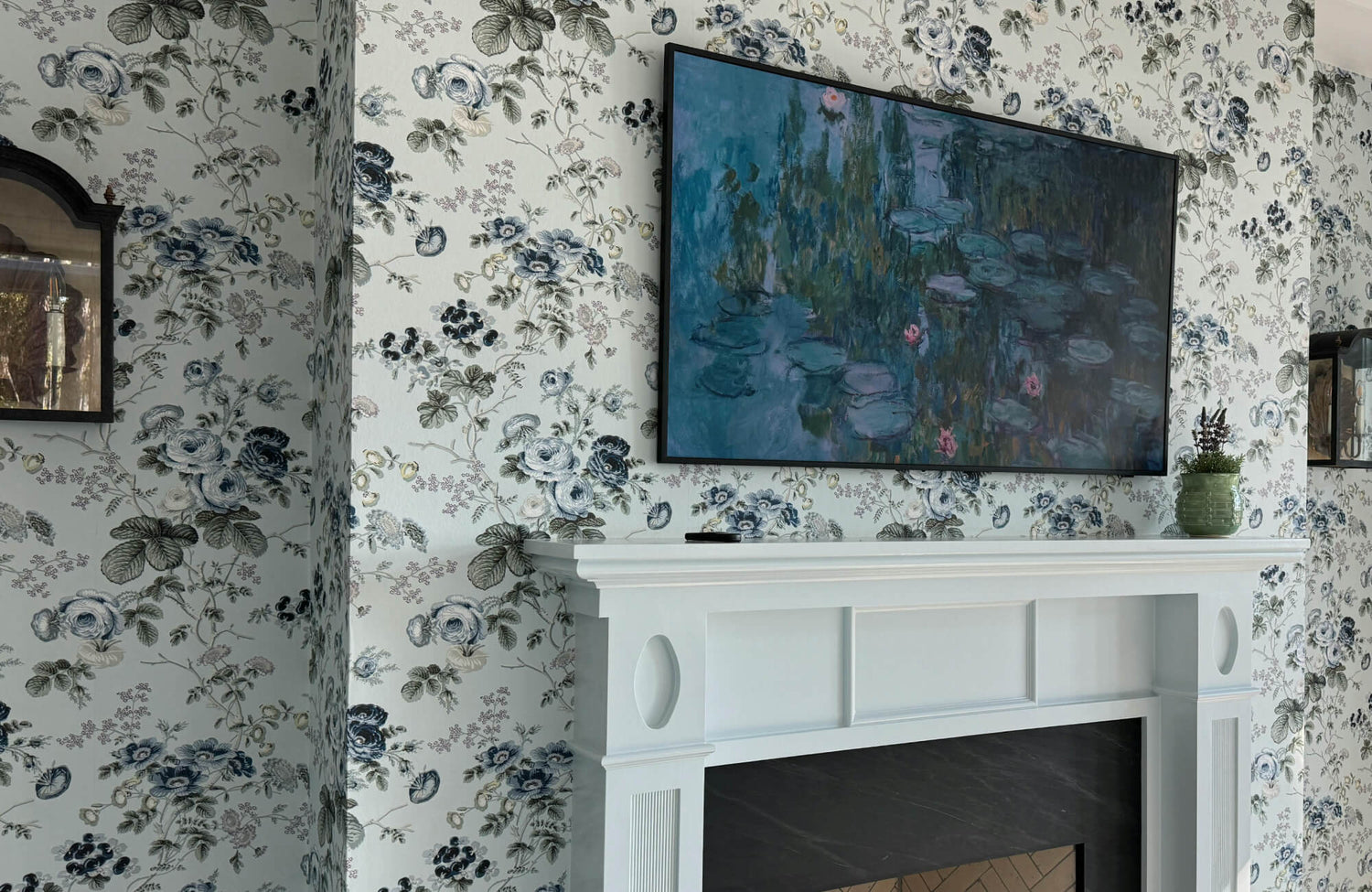
Extra-wide, full-height wall panels reduce seams and allow faster, more efficient installation using paste-the-wall techniques. Designs like Edward Martin’s Bower Wallpaper in Taupe I, 52" x 132", as displayed in the photo above, illustrate how this format can streamline installation while maintaining a refined visual finish across larger surfaces. Digitally printed on lightly textured DreamScape Terralon, this non-woven wallcovering offers an extra-wide, full-height panel that minimizes visible seams and supports faster application. Similar performance and scale can also be seen in our Plateau Wallpaper in Olive Night II, 52" x 132", another design that takes advantage of full-height panels to create seamless, immersive wall coverage.
Because these wallcoverings are engineered for demanding environments, they are often rated for commercial interiors and even full bathrooms where humidity resistance is required. When installed properly, non-woven wallcoverings can maintain structural integrity and design clarity for 15 years or longer, making them a durable alternative to peel and stick wallpaper.
Decorative Interior Wall Paint Finishes
Paint is one of the most widely accepted alternatives to peel and stick wallpaper for interior walls. Modern architectural coatings offer a broad spectrum of finishes including eggshell, satin, semi-gloss, and matte paint textures. In addition to solid colors, decorative techniques such as limewash, color washing, and textured paint finishes can introduce visual depth similar to wallpaper patterns. High-quality acrylic latex paints also provide excellent durability, washability, and resistance to fading. Because paint bonds directly to primed drywall, it forms a stable and long-lasting wall finish. For homeowners seeking simplicity and durability, decorative paint remains a versatile wall design alternative to removable wallpaper.
Wall Panels and Decorative Wall Cladding
Architectural wall panels offer another sophisticated alternative to peel and stick wallpaper for accent walls. Materials such as wood veneer panels, PVC wall boards, and MDF decorative slat systems create dimensional texture that wallpaper cannot replicate. Many panel systems feature interlocking tongue-and-groove or click-lock installation mechanisms, ensuring secure structural attachment. These materials provide enhanced durability while also offering acoustic and insulation benefits. Because panels are mechanically fastened rather than adhered, they are less susceptible to environmental conditions like humidity. As a result, decorative wall cladding provides a high-end architectural wall finish alternative to removable wallpaper.
Lasting Beauty and Performance of Peel and Stick Wallpaper
Peel and stick wallpaper demonstrates that convenience and durability can coexist within thoughtfully engineered interior materials. When manufactured with high-quality vinyl or fabric substrates and advanced pressure-sensitive adhesive technology, it can maintain secure adhesion and visual appeal for approximately 5–15 years in well-maintained interiors. Smooth wall preparation, controlled indoor climates, and careful installation further support the long lifespan of removable peel and stick wallpaper in residential interiors. With the right materials and installation practices, peel and stick wallpaper remains a durable, design-forward wall covering that balances practicality with lasting decorative impact.
For those exploring elevated wallcovering solutions, Edward Martin’s design services can help refine your vision with thoughtfully curated wallpaper selections and expert guidance. If you’re ready to transform your walls, contact us to begin designing a space that reflects your style with lasting impact!