The farmhouse table has become a defining element in American homes, admired for its warmth, craftsmanship, and ability to bring people together. Yet its very versatility can become a challenge. Because a farmhouse table is often large, centrally placed, and visually substantial, styling it poorly can quickly tip the balance from welcoming to overcrowded. Many homeowners find themselves asking how to decorate this foundational piece without masking its beauty or overwhelming the room.
This guide explores how to style a farmhouse table in a way that feels refined, functional, and timeless. By focusing on negative space, curated centerpieces, purposeful decor, and streamlined surroundings, you can achieve a look that feels layered without ever appearing cluttered.

Mastering the Art of Negative Space and Textiles
Negative space is one of the most powerful and misunderstood tools in interior styling. In the context of a farmhouse table, it refers to allowing the surface to breathe so the table itself remains the focal point. Textiles, when used selectively, can enhance this effect rather than compete with it.
Letting the Natural Wood Grain Take Center Stage
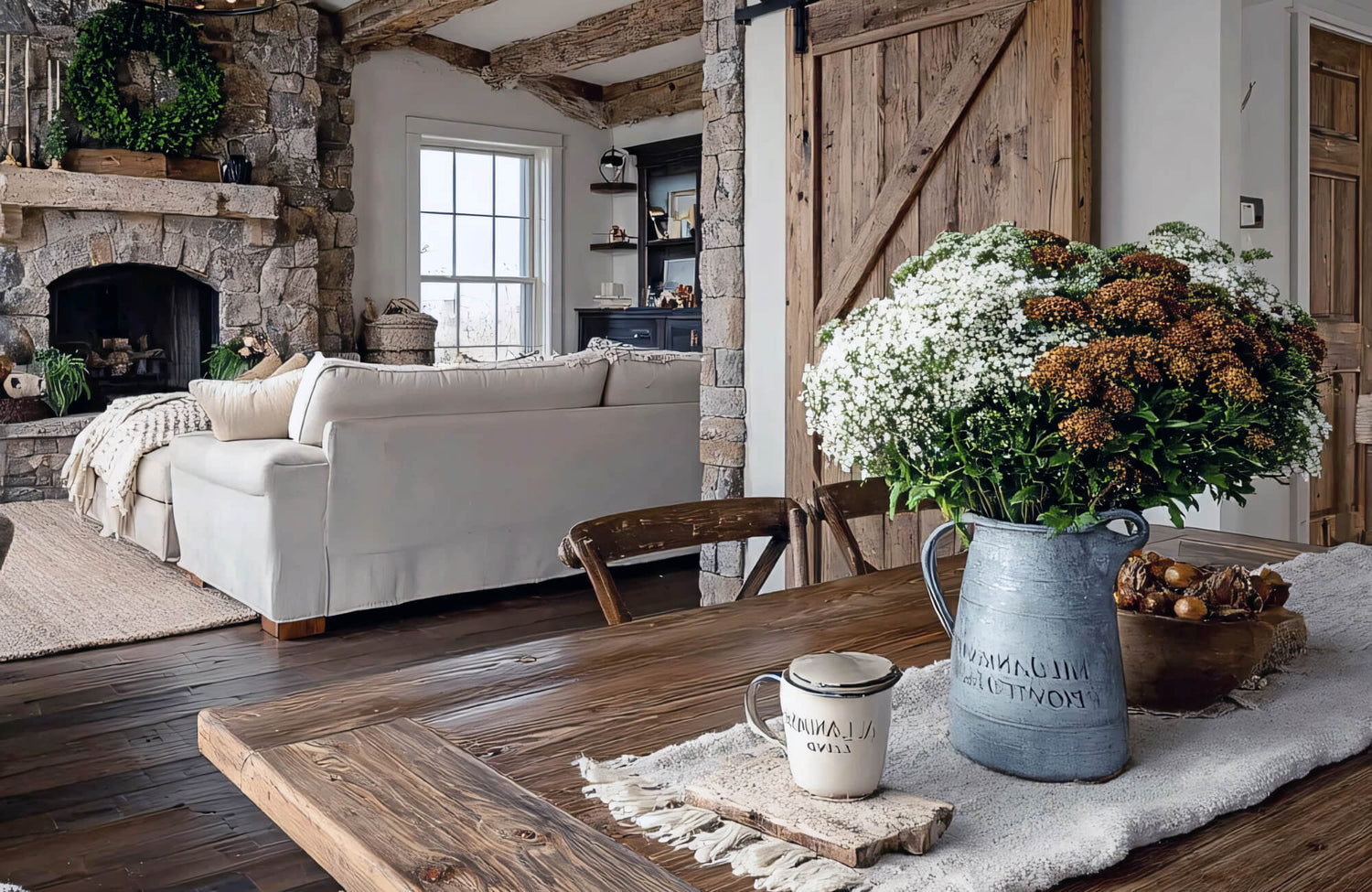
A farmhouse table is often chosen for its character-rich wood, visible grain, and handcrafted feel. Covering too much of that surface undermines the very reason the piece feels special. Allowing generous expanses of bare wood to remain visible emphasizes quality, authenticity, and craftsmanship, as seen with Edward Martin’s Bastien Walnut Dining Table, 120" x 42" in the image above. The eye needs places to rest, and uninterrupted wood grain provides exactly that.
This approach also creates visual calm. Instead of constantly shifting your gaze between multiple decorative elements, the natural variations in the wood become the subtle point of interest. Knots, planks, and patina tell a story over time, giving the table depth without adding objects. This restraint makes the room feel intentional rather than styled for display alone.
Choosing the Right Runner Length and Material
When a textile is introduced, a table runner is often the most effective option. The key is proportion. A runner should feel like a gentle accent rather than a dominant layer. Ideally, it should extend beyond the center of the table without hanging too far over the edges, maintaining a balanced silhouette.
Material selection matters just as much as length. Natural fibers such as linen, cotton, or subtly woven wool complement the organic quality of a farmhouse table. These materials add softness and texture without excessive pattern or sheen. Muted tones, warm neutrals, or soft stripes work well because they support the wood rather than compete with it.
A runner should frame a centerpiece, not replace one. When chosen thoughtfully, it grounds decorative elements while preserving negative space around them, creating a composed and inviting surface.
Avoiding the Tablecloth Trap for Daily Use
While tablecloths have their place for formal occasions or large gatherings, they often work against everyday farmhouse styling. A full tablecloth conceals the table’s defining features and introduces visual bulk. For daily use, this can make the space feel heavier and less relaxed.
A farmhouse aesthetic thrives on authenticity and ease. Leaving the table uncovered reinforces that philosophy. It signals that the table is meant to be used, enjoyed, and lived with. If protection is needed, placemats or a runner provide coverage without sacrificing character. This balance keeps the table functional while preserving its visual integrity.

Curating Centerpieces Using Scale Instead of Quantity
One of the most common causes of cluttered farmhouse tables is the instinct to fill space. A long table can feel like it demands multiple objects, but restraint creates far more impact. The secret lies in scale rather than accumulation.
The Rule of One Large Statement Piece
A single substantial centerpiece often feels more intentional than several smaller items. Whether it is a sculptural vase, a large ceramic bowl, or an oversized vessel, one well-chosen piece establishes a clear focal point, much like the pairing of Edward Martin’s Corentin Walnut Round Dining Table in Matte, 60" with the Hearthline Wall Art in the image above. It communicates confidence and prevents the eye from jumping between competing elements.
Scale should be proportional to the table’s size. A farmhouse table can handle weight visually, so undersized decor tends to look lost. Choosing a piece with presence anchors the table without overwhelming it. This approach also leaves surrounding space open, reinforcing a sense of order and calm.
Using Dough Bowls and Trays to Corral Items
When multiple elements are desired, containment becomes essential. A wooden dough bowl or a simple tray creates boundaries that prevent decor from feeling scattered. Instead of individual objects floating across the surface, everything feels intentional and grouped.
The beauty of this method is flexibility. A bowl can hold seasonal accents, fruit, or everyday items while still reading as one cohesive element. The container itself becomes part of the design, adding texture and history without increasing visual noise. This technique supports both aesthetics and function, which is central to farmhouse style.
Incorporating Tall Branches for Vertical Interest
Vertical elements add drama without requiring additional surface coverage. A tall arrangement of branches or stems draws the eye upward, creating visual interest while preserving horizontal space. This is particularly effective on long tables where a low, spread-out centerpiece might feel insufficient or cluttered.
Natural branches, dried stems, or seasonal greenery align beautifully with the farmhouse ethos. They feel organic, slightly imperfect, and grounded. Because the footprint remains small, the table stays usable and open, striking a balance between impact and restraint.

Selecting Functional Decor That Earns Its Place
A farmhouse table should never feel like a museum display. Items placed on it should have a reason to exist beyond decoration. Functional decor not only reduces clutter but also reinforces the table’s role as a gathering place.
Styling with Stoneware and Serving Pitchers
Stoneware bowls, ceramic pitchers, and handmade serving pieces offer beauty and utility in equal measure. Their weight, texture, and muted finishes complement the rustic nature of a farmhouse table. When displayed, they feel purposeful rather than ornamental.
A serving pitcher filled with water, branches, or even left empty can anchor the table while remaining ready for use. Similarly, a large stoneware bowl can hold fruit or simply stand on its own as a sculptural object. These pieces blur the line between decor and necessity, which keeps the table feeling honest and uncluttered.
The Warmth of Practical Candlelight
Candles introduce warmth and atmosphere, but moderation is key. A single pair of substantial candleholders or one low-profile candle creates intimacy without crowding the table, allowing pieces like Edward Martin’s Dominic 95" Dining Table in Dark Mango, shown in the image above, to retain their strong visual presence. The soft glow enhances the wood tones and invites connection, especially in dining spaces.
Choosing sturdy materials such as iron, wood, or ceramic helps candles feel grounded rather than delicate. This reinforces the farmhouse aesthetic while ensuring the table remains approachable and functional. Candlelight should enhance the mood, not dominate the surface.
Rotating Seasonal Elements to Keep it Fresh
Clutter often accumulates when decor is added without removing existing pieces. A better approach is rotation. Seasonal elements can refresh the table without increasing volume. A simple change, such as swapping greenery for autumn branches or spring florals, keeps the styling relevant and intentional.
This practice encourages editing. By limiting yourself to a consistent number of objects, the table remains visually calm. Seasonal shifts feel meaningful rather than excessive, and the table continues to reflect the rhythm of everyday life.

Streamlining the Surroundings to Reduce Visual Noise
A farmhouse table does not exist in isolation. The elements around it strongly influence whether it feels cluttered or composed. Simplifying these surroundings enhances the table’s presence and allows styling choices to shine.
Choosing Chairs with Clean Silhouettes
Chairs are one of the most overlooked contributors to visual clutter. Ornate backs, heavy upholstery, or mismatched styles can overwhelm the table. Chairs with clean lines and simple profiles support a cohesive look and keep the focus on the table itself.
Wood tones that complement rather than exactly match the table add depth without distraction. When chairs feel intentional and understated, the entire dining area reads as balanced and harmonious.
Anchoring with a Low Pattern Rug
A rug can define the dining area and ground the table, but pattern and scale must be considered carefully. Low-contrast patterns and subtle textures work best, providing interest without competing with the table, as demonstrated by Edward Martin’s Alice 84" Oval Dining Table in Light Oak paired with the McGowan Rug in Moss / Sand in the image above. A rug that is too busy introduces unnecessary visual noise, making the table feel cluttered by association.
Natural fibers or muted designs reinforce the farmhouse aesthetic and create continuity within the space. The rug should frame the table quietly, allowing it to remain the star of the room.
Simplifying the Lighting Fixture Above
Overhead lighting acts as a visual extension of the table. An overly ornate chandelier can overwhelm the setting, while a streamlined fixture reinforces simplicity. Lighting with clean lines, warm finishes, and balanced proportions complements the table rather than competing with it.
The goal is cohesion. When the fixture feels connected to the table’s scale and style, the entire space feels intentional. This harmony reduces the need for excessive tabletop decor because the room already feels complete.
Simplicity is the Ultimate Sophistication
Styling a farmhouse table without clutter is less about decoration and more about discipline. It requires trusting the beauty of the table itself and understanding that restraint often communicates confidence and quality. For those navigating these choices, Edward Martin’s design consultation offers expert guidance tailored to your space, helping you make confident decisions around furniture, rugs, or tile selections that feel cohesive and intentional.
And when questions arise or you need clarity on specific products or styling details, you can always contact Edward Martin for personalized support. In the end, the most successful styling decisions are the ones that allow the table to do what it was always meant to do: bring people together in a space that feels warm, intentional, and effortlessly timeless.