Remodeling a dining area for everyday use means rethinking the space as an active part of daily life rather than a room reserved for special occasions. From quick breakfasts and remote work to family dinners and relaxed evenings, the dining area often carries more responsibility than any other room. For that reason, a successful remodel begins by prioritizing comfort, flow, and adaptability alongside visual appeal.

Assessing Daily Use and Optimizing Dining Flow
An effective dining remodel begins with an honest look at how the space is used on a daily basis, rather than how it appears on special occasions. By paying attention to who uses the dining area, how often it is occupied, and when it sees the most activity, you can make design decisions that support real routines instead of idealized scenarios. This approach helps avoid overbuilding for infrequent events and instead prioritizes comfort, flexibility, and ease of movement during everyday meals.
As daily habits are defined, the layout must support smooth circulation and intuitive movement. A well-planned dining area allows you to sit, stand, and move around the table comfortably without constant adjustments, even in smaller spaces. Proper clearances, appropriately scaled furniture, and thoughtful placement also prevent bottlenecks and make daily use feel natural rather than restrictive.
Finally, a successful dining space balances everyday function with the ability to adapt to occasional gatherings. Furniture choices, lighting, and storage should support multitasking while maintaining a calm, organized atmosphere. Whether the dining area connects to an open-concept layout or a more enclosed room, planning for expandable tables and shifting needs ensures the space remains efficient, welcoming, and easy to live with throughout the week.

Choosing Tile That Supports Everyday Dining Use
Tile plays a foundational role in how well a dining area performs on a daily basis, especially in spaces that see frequent movement, spills, and shifting furniture. Because the dining area often connects directly to the kitchen or living spaces, tile choices should prioritize durability, ease of maintenance, and visual continuity. When selected thoughtfully, tile supports everyday routines while reinforcing the overall comfort and cohesion of the room.
Durability, Safety, and Everyday Comfort
Dining area flooring must withstand constant movement, dropped utensils, and frequent cleaning without showing premature wear. Porcelain tile is especially well-suited for everyday use because of its density, moisture resistance, and durability. Wood look porcelain options, such as our Preston 8x48 Matte Porcelain Tile in Pine, shown in the image above, reflect this balance particularly well, offering the visual warmth of natural wood in an earthy brown tone while delivering the strength and longevity of porcelain. Matte finishes also help disguise scuffs and smudges, while stain- and scratch-resistant surfaces keep the space looking composed with minimal effort. Tiles like this do not require sealing and tolerate common household cleaners, simplifying maintenance and allowing the dining area to reset quickly after meals.
Safety and comfort are equally essential in spaces where chairs are regularly moved and people gather throughout the day. Tiles with appropriate slip resistance reduce the risk of accidents while maintaining a refined appearance. Although tile is a firm surface, comfort can be enhanced through thoughtful additions like area rugs, cushioned chair glides, or nearby textiles that also help absorb sound. Together, these considerations create a dining area that feels secure, comfortable, and well-suited for everyday living.
Size, Layout, and Visual Flow
Tile size and layout directly influence how the dining area feels and functions. Large format tiles such as our black and white Leona 24x24 Checkerboard Matte Porcelain Tile in Calacatta and Nero Marquina can make the space feel more open and reduce grout lines, which simplifies cleaning. Layout choices should also support circulation and align with surrounding rooms, creating a seamless transition rather than a visual break.
Orientation matters just as much as size. Running tile parallel to the longest wall or in alignment with adjacent spaces helps guide movement and creates a sense of continuity. Thoughtful layout planning ensures the dining area feels connected rather than isolated, supporting both daily use and the overall flow of the space.
To better visualize these decisions before installation, using our augmented reality (AR) tool can be especially helpful. By previewing different tile sizes, orientations, and layouts directly within your own dining area, you can see how proportions and patterns interact with furniture and room dimensions. This added clarity makes it easier to choose a layout that feels balanced, functional, and well-suited for everyday living.
Coordinating Tile With Furniture and Finishes
The right tile selection ties together furniture, wall treatments, and lighting, reinforcing a cohesive design language. Neutral tones and subtle textures provide flexibility, allowing furniture and decor to evolve over time without clashing with the floor. By choosing tile that works as a quiet, durable backdrop, the dining area remains adaptable, stylish, and well-suited for everyday living.
Consistency across finishes also helps the space feel intentional rather than pieced together. When tile complements wood tones, upholstery, and metal accents, the dining area feels visually grounded. This coordination allows the room to function effortlessly while still expressing a clear, cohesive design identity.

Choosing Furniture That Supports Everyday Comfort
Dining furniture has to work harder than almost any other piece because it is used consistently throughout the day. Beyond looking cohesive, the table and seating must support posture, movement, and long periods of use without causing fatigue.
Selecting the Right Table Size and Shape
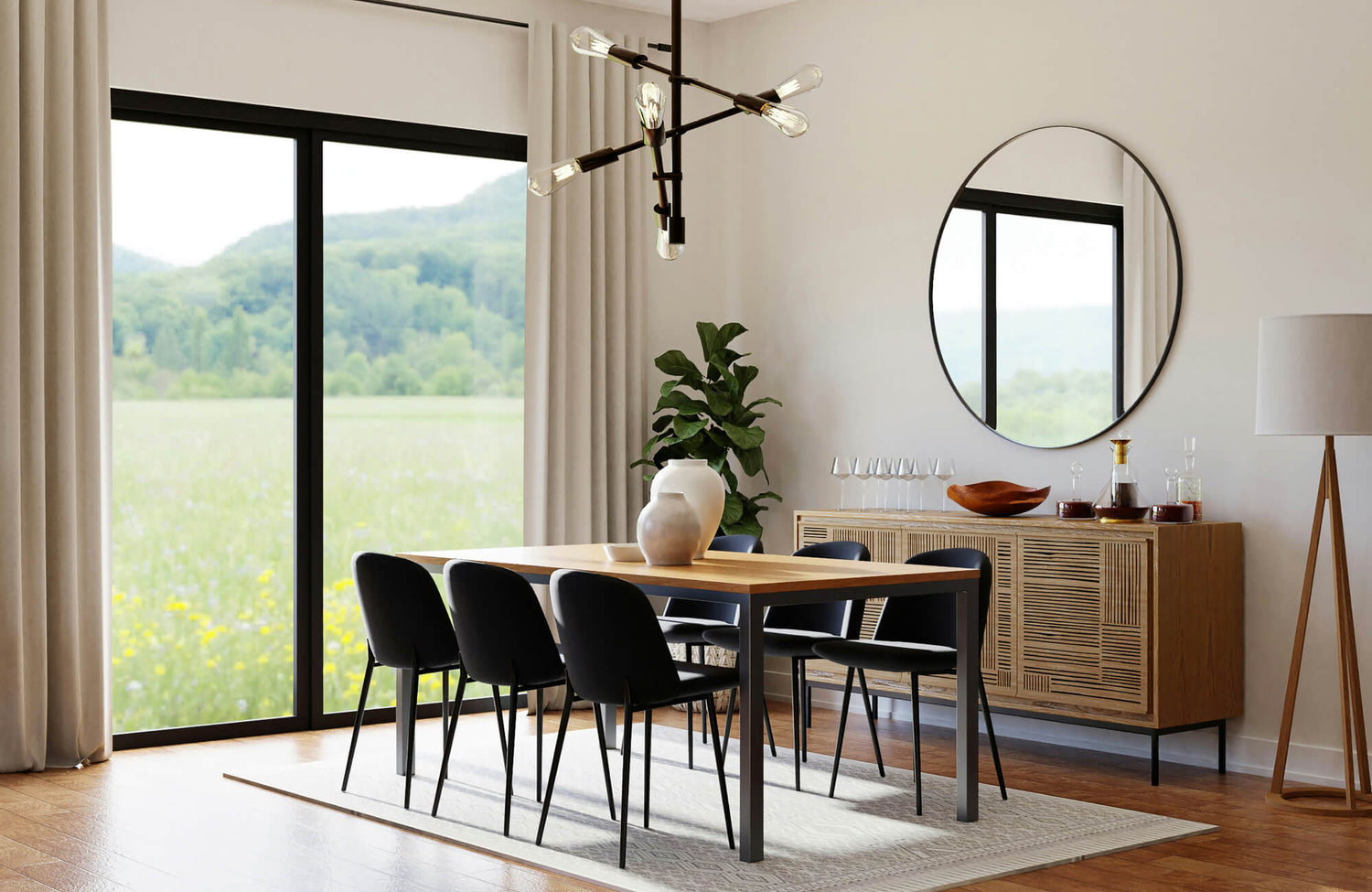
The shape of your dining table sets the tone for how the room functions on a daily basis. Rectangular tables are well-suited for long or narrow rooms because they mirror the proportions of the space and provide ample surface area for meals, laptops, or shared activities. A design like our Dominic 95″ Dining Table in Dark Mango, seen in the photo above, exemplifies this versatility, anchoring the room visually while accommodating multiple place settings without feeling overcrowded. In contrast, round and oval tables soften the layout and encourage better flow, which is especially helpful in square or smaller rooms where sharp corners can interrupt movement.
Size is just as important as shape, and choosing the right dimensions prevents the space from feeling cramped. A reliable way to gauge this is by allowing roughly thirty-six inches of clearance around all sides of the table so chairs can be pulled out comfortably. When the table fits the room with space to spare, daily meals feel relaxed, and moving around the dining area becomes effortless rather than restrictive.
Chair Comfort and Ergonomic Considerations
Dining chairs often get less attention than tables, yet they play a major role in everyday comfort. Because chairs may be used for working, studying, or lingering conversations, they should support the body beyond short meal times. Standard proportions, such as an eighteen-inch seat height paired with a thirty-inch table, help maintain proper posture and prevent strain during extended use. Well-designed options like our Shaffer Dining Chair in Tan Leather, shown in the same picture above, reflect these ergonomic principles while introducing warmth and durability through a leather seat that ages gracefully with use.
Seat depth and back support also influence how comfortable the chair feels over time. A depth that supports the thighs without pressing behind the knees allows you to sit comfortably without shifting. Structured seating with light cushioning, such as our Meuller Lounge Chair in Brown, also featured in the image above, strikes a balance between comfort and practicality, offering supportive form and easy-care materials suited for everyday living.
Incorporating Benches and Mixed Seating
Benches can be a highly functional addition to a dining area, particularly in households with children or limited space. A backless bench can slide neatly under the table when not in use, instantly improving circulation and keeping walkways clear. This flexibility makes benches especially useful for everyday meals when space efficiency matters most.
Mixing benches with chairs can also add visual interest, provided there is a sense of cohesion. Keeping finishes, tones, or overall silhouettes aligned prevents the space from feeling disjointed. When seating styles work together rather than compete, the dining area feels intentional and comfortable while still accommodating different needs throughout the day.

Lighting Strategies for Daily Dining Use
Lighting shapes how your dining area feels and functions from morning through evening. Because the table often serves multiple roles, the lighting needs to adapt just as easily. A layered approach that combines focused illumination, ambient glow, and natural light ensures the space remains practical for daily tasks while still feeling warm and inviting.
Task Lighting Over the Dining Table
Task lighting is the foundation of a well-lit dining area, as it provides the clarity needed for meals, work, and shared activities. A pendant or chandelier positioned about thirty to thirty-six inches above the tabletop creates a balanced relationship between light and surface, keeping the table well illuminated without overwhelming the room. Sculptural fixtures like our Clement Chandelier in Aged Brass, featured above, work especially well over rectangular tables, offering ample illumination while serving as a refined focal point that visually centers the dining space. For longer tables, linear fixtures or a pair of pendants also help distribute light evenly, preventing dark zones at either end.
The quality of light matters as much as placement. Warm color temperatures in the 2700K to 3000K range create an inviting atmosphere that feels comfortable throughout the day. Choosing diffused shades or frosted bulbs also reduces glare, making the light easier on the eyes. When selected thoughtfully, the fixture becomes both a functional element and a visual anchor that defines the dining zone.
Ambient Lighting for Everyday Flexibility
Although task lighting focuses on the table, ambient lighting supports the room as a whole. This secondary layer softens shadows and prevents harsh contrasts, allowing the dining area to feel comfortable no matter the time of day. Incorporating dimmers also gives you control over intensity, making it easy to transition from bright daytime use to a more relaxed evening setting.
To further enhance this ambient layer, indirect lighting such as wall-mounted fixtures plays a valuable role in creating depth and warmth. Refined sconces like our Aleece 25″ LED Wall Vanity Light in Vintage Brass Alabaster, seen in the same photo above, gently wash the walls with a warm glow, complementing overhead lighting without competing for attention. By blending these softer sources with your primary fixture, the dining area remains flexible, welcoming, and visually balanced during everyday use.
Natural Light and Window Treatments
Natural light brings energy and openness to a dining space, but it needs to be managed thoughtfully. Direct sunlight can create glare, heat buildup, or discomfort during meals and screen-based tasks. Adjustable window treatments allow you to filter light while maintaining privacy, making the room usable throughout the day.
Sheer fabrics also offer a gentle diffusion that preserves brightness without harshness, while layered treatments give you the option to create a more intimate mood in the evening. By prioritizing flexibility in light control, you ensure the dining area responds naturally to changing light conditions and daily routines.

Functional Elegance with Sideboards and Mirrors
Sideboards serve as both functional storage and a visual anchor in the dining area, offering a convenient place to store serving pieces, linens, and tableware while keeping the main dining surface uncluttered. Positioned along a wall or beneath a mirror, a well-proportioned sideboard helps balance the room and reinforces the overall layout. Materials and finishes that echo the dining table or chairs also create cohesion, while contrasting textures can add subtle depth without overwhelming the space.
In addition to storage, mirrors complement sideboards by enhancing light and creating a greater sense of openness, especially in dining rooms with limited natural light. When placed thoughtfully, a mirror reflects chandeliers, sconces, or window views, amplifying brightness and adding visual interest. Beyond their decorative value, mirrors also help the dining area feel more expansive and refined, making the space equally suited for everyday meals and more formal gatherings.
Bringing these elements together, a well-chosen mirror and sideboard pairing can serve as a refined focal point within the dining area. As displayed in the picture above, our Esmeralda Wide Mirror in Polished Brass enhances the space with its softly arched profile and warm metallic finish, reflecting light to visually expand the room while echoing the glow of nearby fixtures. Grounding the composition below, our Leonardo Sideboard in Brown offers generous storage within a sculptural wood form, balancing visual weight with everyday practicality. Together, they reinforce the idea of functional elegance, where thoughtful design supports daily use while elevating the overall atmosphere of the dining space.

Personalizing the Space Without Sacrificing Function
Personal details are what transform a dining area from a purely functional room into a space that feels lived in and welcoming. However, because the dining area is used daily, personalization needs to support how the room works rather than interfere with it. When finishes, textures, and decorative elements are chosen with intention, you can express your style while keeping the space easy to use and maintain.
Wall Treatments and Artwork Placement
Wall decor plays a major role in setting the tone of the dining area, but placement and scale are critical. Artwork should feel connected to the table, which means hanging pieces at a height that makes sense when you are seated. One well-scaled focal piece often creates a calmer and more refined impression than multiple smaller pieces that compete for attention and visually crowd the space. Durability should also guide material choices, especially in busy dining areas. Walls near chairs are prone to scuffs and contact, so finishes that can handle regular cleaning are essential.
Building on this approach, sculptural wall art can introduce texture and dimension without overwhelming the dining area. A piece like our Dusk Fold Wall Art works particularly well as a singular focal point, using subtle relief and tonal variation to add visual interest while maintaining a calm, curated feel. As seen above, its dimensional form creates depth even in neutral settings, allowing the wall to feel intentional rather than purely decorative. When paired with balanced lighting and thoughtful spacing, this type of artwork enhances the dining experience by grounding the room visually and reinforcing a sense of quiet sophistication.
Textiles, Rugs, and Acoustics
Textiles bring warmth and comfort to a dining area while also improving acoustics. A properly sized rug, such as the weave of smoky grays and rich, varying tones of beige of our Davies Rug in Ash / Sand, anchors the table and helps absorb sound, making conversations more pleasant during everyday meals. Extending the rug far enough beyond the table also ensures chairs remain stable and easy to move without catching on the edges.
Performance fabrics are especially valuable in dining spaces where spills are inevitable. Materials such as polypropylene rugs, which resist staining and fading at the fiber level, allow you to enjoy softness and color without worrying about maintenance. Washable or wipeable textiles further support daily use, letting the space feel comfortable without becoming fragile.
Seasonal Flexibility and Future Changes
Personalization works best when the core elements of the dining area are designed to last. Keeping foundational pieces neutral allows you to update the look over time without replacing major furniture. This approach makes it easy to refresh the room as your tastes or needs evolve.
Smaller, adaptable elements also provide the flexibility to change the atmosphere with minimal effort. Swapping accessories, adjusting lighting, or updating textiles can shift the mood seasonally while preserving the room’s functionality. When the space is designed to evolve, personalization becomes an ongoing process rather than a permanent commitment.
Creating A Dining Area That Works Every Day
A dining area that truly works for everyday use is the result of intentional, layered decisions rather than a single design choice. When you plan around daily habits, allow for easy movement, and select furniture, lighting, and materials built for regular use, the space naturally becomes more comfortable and versatile. At the same time, thoughtful personalization ensures the room feels warm and reflective of your style without sacrificing practicality. By aligning function with design from the start, you create a dining area that adapts effortlessly to changing routines and remains a welcoming, reliable gathering place for years to come.
If you’re navigating these decisions and want guidance that brings everything together, working with experienced designers can make the process far more intuitive. Our design services offer personalized support to help you coordinate layouts, materials, and finishes in a way that reflects how you actually live, ensuring your dining area is both beautifully considered and truly functional for everyday use.