A bathroom mirror is more than a simple surface that reflects your image. It has the power to shape the style, comfort, and function of the entire space. The right mirror can also make a small bathroom feel larger, enhance lighting where you need it most, and tie together design elements with balance and elegance.
As you think about choosing your mirror, it helps to look beyond the glass. Proportion, materials, finishes, lighting, and placement all influence how the mirror performs day after day. By exploring these factors, you’ll not only find a mirror that fits your routine but also one that elevates the personality of your bathroom.

Sizing for Balance and Proportion
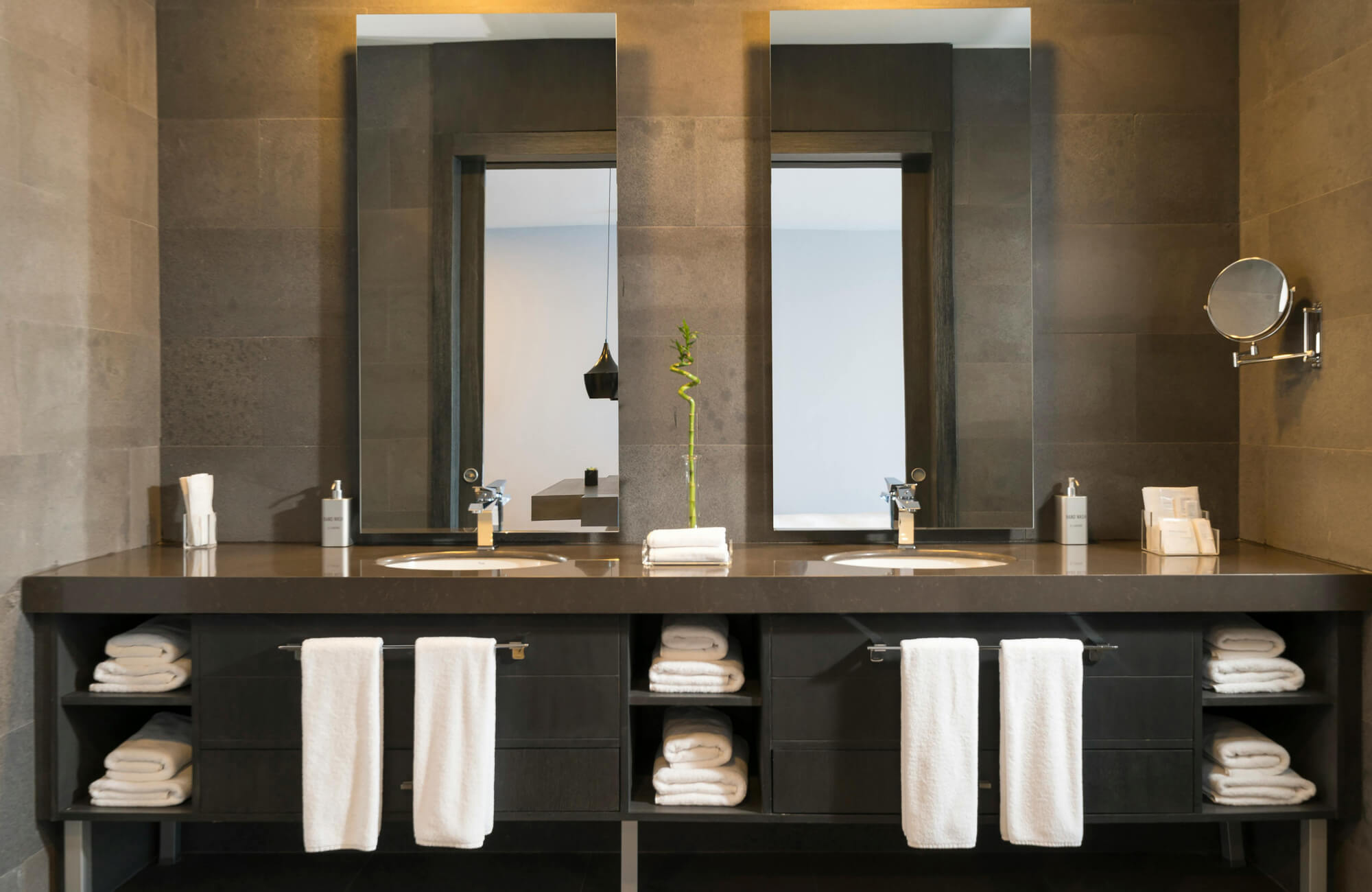
The size of your bathroom mirror should echo the footprint of your vanity while maintaining harmony with the wall and nearby fixtures. A mirror that is too small can look insignificant, while one that is too large may overwhelm the vanity and upset the balance of the room. Leaving 2 to 6 inches of negative space on either side also provides breathing room, giving the mirror a framed effect that feels intentional rather than crowded. This principle becomes especially valuable with double vanities, where you can either span the entire width with one large mirror to unify the space or opt for two smaller mirrors to create symmetry and a sense of individuality. Both choices work when spacing and proportion feel deliberate.
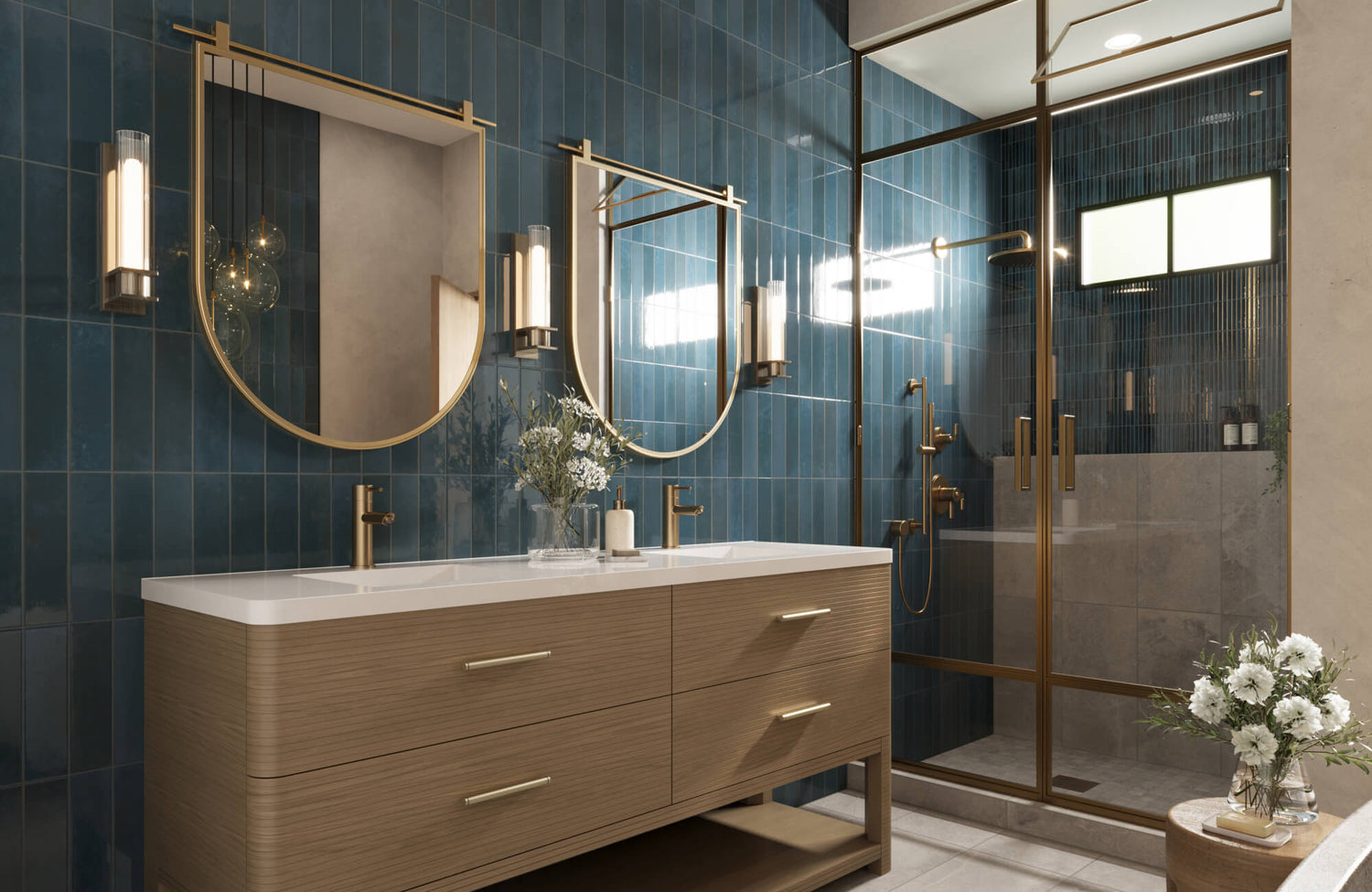
One option that works beautifully in this context is our Clancy Small Mirror in Antique Brass. As seen in the image above, its warm gold finish introduces a touch of understated elegance that complements metallic fixtures while providing a timeless accent. Its scale also allows it to pair naturally with both single and double vanities, maintaining visual balance without overwhelming the wall space.
Height is just as important as width in achieving comfort and visual flow. Placing the center of the mirror 60 to 66 inches from the floor aligns it with most eye levels, ensuring the reflection feels natural for everyday use. At the same time, leaving a small gap above the faucet provides clearance while preventing the top edge from clashing with ceilings or lighting. In bathrooms used by people of varying heights, a taller mirror is a practical solution that accommodates everyone while enhancing the room’s vertical presence. By combining thoughtful width, spacing, and placement, your mirror becomes a functional centerpiece that blends seamlessly into the rhythm of the bathroom.

Styling for Impact and Atmosphere
A bathroom mirror contributes heavily to the tone of the room. Because it usually sits at eye level, it often becomes the focal point of the space. Whether you are drawn to modern minimalism, classic charm, or something bold and sculptural, the mirror’s style should reinforce the overall design language you want to create.
Shape and Orientation
The shape and orientation of a mirror can transform the way a bathroom feels. Rectangular mirrors are among the most versatile, offering flexibility depending on how you hang them. A vertical orientation naturally elongates the wall, making ceilings seem higher and the space feel taller. In contrast, a horizontal placement emphasizes width and helps visually open narrow bathrooms, which can be especially effective in guest powder rooms.
Round and oval mirrors bring a softer touch. By breaking up straight lines, they add a layer of contrast that feels inviting and approachable. Depending on the finish or surrounding décor, these shapes can also read as sleek and contemporary or nod to vintage styles with a nostalgic edge. For those who want a bolder statement, arched silhouettes or asymmetrical cuts push the mirror into sculptural territory, drawing the eye and turning an everyday fixture into a design centerpiece. By thinking beyond simple reflection, you can use shape and orientation as tools to manipulate scale and atmosphere.
Framed vs Frameless
The presence or absence of a frame plays a crucial role in styling. A framed mirror immediately introduces texture and depth. Black metal framing, for instance, lends an industrial sharpness that contrasts beautifully with lighter tile or stone. Natural wood frames warm up the bathroom, complementing vanities or cabinetry with organic tones, while brass or gold finishes add a touch of elegance and heritage. Frames can also act as a bridge, tying together hardware, lighting, and other accents into a cohesive whole.
For an example of this kind of impact, our Shirley Large Mirror in Antique Brass Iron, featured in the photo above, shows how a strong frame can anchor the space while still feeling elevated. The warm gold finish ties seamlessly into surrounding fixtures, giving the bathroom a cohesive yet luxurious tone. Its larger size also makes it especially suited for double vanities, where presence and proportion are key.
Frameless designs, on the other hand, speak to simplicity. With polished edges and clean lines, they almost disappear into the wall, letting surrounding materials take center stage. This makes them particularly effective in smaller bathrooms, where maintaining a sense of openness is key. They can also emphasize architectural details, allowing tilework or wall finishes to shine without visual interruption. Choosing between framed and frameless isn’t just a style preference; it’s a decision about how you want the mirror to interact with the room’s textures, finishes, and mood.

Harmonizing Mirror and Lighting
Mirror lighting plays a vital role in both grooming comfort and the overall atmosphere of your bathroom. Integrated options, such as backlit mirrors, create a soft halo that feels serene and spa-like, ideal for setting a relaxing mood. However, while this ambient glow enhances aesthetics, it often falls short for detailed tasks like shaving or applying makeup. To bridge the gap between mood and function, some mirrors incorporate vertical light bars along the frame. These provide illumination directly at face level, mimicking natural daylight and eliminating unflattering shadows.
If you prefer external fixtures, pairing mirrors with sconces or pendants can deliver equally effective results. Sconces installed at eye level on either side of the mirror cast even light across your face, preventing the harsh downward shadows often caused by overhead sources. Pendants, meanwhile, can frame a mirror with sculptural beauty, but their placement and scale must be carefully adjusted to avoid obstructing the reflection. When coordinated thoughtfully, these fixtures not only add functional brightness but also enrich the visual balance of the vanity area. Ultimately, harmonizing mirrors and lighting is about layering solutions that offer clarity where you need it most while enhancing the room’s style and cohesion.
An excellent example of this pairing in practice is our Tristan Square Mirror in Polished Brass, displayed in the picture above. Its crisp square profile introduces geometric clarity, while the bright gold finish links effortlessly with lighting fixtures in the same tone. Together, the combination strengthens symmetry around the vanity, ensuring the mirror doesn’t just reflect light but actively participates in shaping the atmosphere.

Selecting Durable, Moisture-Resistant Materials
Bathrooms are high-humidity zones where steam, splashes, and condensation are constant. This makes durability one of the most important considerations when choosing a mirror. The wrong materials can warp, rust, or discolor over time, diminishing both appearance and functionality. By opting for water-resistant options, you not only protect your investment but also ensure your mirror remains crisp and flawless for years to come.
Frame Material
The frame is often the first element to show signs of wear in a bathroom, so selecting the right material is essential. Metal frames in stainless steel, aluminum, or powder-coated finishes naturally resist corrosion, making them ideal for damp conditions. If you prefer the warmth of wood, make sure it has a sealed finish or marine-grade varnish designed to handle humidity. These protective treatments keep wood from swelling or cracking when exposed to moisture.
Frameless mirrors require attention, too. Even without a frame, the backing needs to be sealed to protect the reflective layer from damage. Without this safeguard, moisture can creep in and cause blackened edges, a problem commonly known as “mirror rot.” Ensuring proper sealing prevents deterioration and maintains the mirror’s pristine look over time.
For those who want durability without sacrificing character, an option like our Clancy Small Arch Mirror in Antiqued Iron blends resilience with design appeal. Its deep charcoal gray finish offers a strong, architectural edge while resisting the effects of humidity. The arched shape further softens the industrial tone of the metal, creating a balanced piece that performs well in moisture-prone settings while adding visual depth to the bathroom.
Finishes
Although durability is key, the right finish also shapes the personality of the bathroom. Instead of thinking only in terms of matching hardware, mirrors can be chosen to introduce a refined layer of contrast. A standout example is our Fitz Mirror in Antique Silver. As shown in the image above, its silver finish brings a cooler tone that complements natural wood vanities and blue-toned tile, offering a subtle counterbalance to warmer metals like brass or gold. In spaces where humidity is high, this type of finish not only resists wear but enhances the visual rhythm of the room as well.
If you prefer a layered design, mixing finishes can be effective as long as it’s intentional. Choose one dominant tone to ground the space, then introduce a secondary finish as an accent. A warm brass frame, for example, can contrast beautifully against cooler chrome hardware, adding depth and visual interest without feeling mismatched.
Glass Quality and Edge Detailing
Beyond the frame, the quality of the glass itself plays a major role in performance. High-quality, low-iron glass minimizes distortion, giving you a true reflection with accurate color and clarity. This becomes especially important for grooming tasks, where precision matters.
Edge treatments also contribute to both function and style. Beveled edges add a subtle sense of craftsmanship, catching light in a way that enhances depth and detail. For a more minimal aesthetic, polished edges offer a clean, uninterrupted line that lets the mirror’s form stand on its own. By prioritizing superior glass and thoughtful detailing, you elevate both the durability and elegance of your bathroom mirror.

Placement and Visual Context
Where and how you position your mirror directly shapes the balance and usability of the bathroom. The wall behind it acts as more than just a backdrop; it influences how the mirror is perceived and how it contributes to the room’s character. On a tiled feature wall, for instance, a frameless mirror allows the texture and pattern to remain visible, letting the surface itself become part of the design. Conversely, on a plain painted wall, a framed mirror can introduce definition and weight, serving as an anchor that adds depth and personality. Whether subtle or bold, the mirror should be seen as part of the larger composition, enhancing the surrounding materials rather than competing with them.
In larger bathrooms, placement also involves making choices about scale and number. A single oversized mirror can stretch across a double vanity to unify the space and reflect more light, making the room feel open and expansive. Two smaller mirrors, on the other hand, establish symmetry and provide individualized zones for each user, particularly when paired with their own sconces. Whichever option you choose, proportions and alignment are crucial. Keeping the spacing deliberate and consistent ensures the mirrors interact seamlessly with both the vanity and lighting. When approached thoughtfully, placement transforms mirrors from simple fixtures into integral elements of rhythm, harmony, and flow within the bathroom.
For a design that bridges function and bold presence, our Raelynn Mantel Mirror in Iron Matte Black offers a striking solution. Its mantel-inspired silhouette creates a sense of architectural framing, while the matte black iron finish brings a refined edge that grounds lighter walls and complements darker vanities. Placed thoughtfully, like the picture shown above, it doesn’t just fill space. It also establishes a visual focal point that ties the bathroom’s proportions and finishes into a cohesive whole.
Picking Out a Bathroom Mirror
Selecting the right bathroom mirror comes down to blending practicality with design intent. When you carefully consider proportion, style, lighting, durability, and placement, the mirror becomes more than a background feature. It also transforms into a centerpiece that enhances your routines while elevating the atmosphere of the room. The best choice is one that feels natural to use, reflects light beautifully, and contributes to a cohesive, thoughtful design that you enjoy every time you step into your bathroom.
If you are ready to take the next step or need guidance in finding a mirror that matches your vision, our team is here to help. Visit our Contact Us page to connect with us directly. Whether you are working on a complete bathroom renovation or simply updating a single element, we can provide recommendations and support to ensure your selection feels tailored to both your space and your style.