A bathroom mirror is more than a reflective surface; it is a design statement that defines the character of the space. The shape of the mirror not only influences functionality for daily routines but also determines how light, proportion, and style flow together. From sleek rectangular bathroom mirrors for double vanities to graceful round mirrors for Scandinavian bathrooms, every contour carries its own aesthetic and practical advantages. Carefully chosen shapes can transform compact powder rooms into airy retreats or elevate expansive master suites with architectural harmony. By understanding how mirror design impacts both style and function, homeowners and designers can create bathrooms that feel balanced, luminous, and timelessly sophisticated.

Ergonomics and Practical Use
The shape of a mirror directly affects how comfortably it supports everyday tasks. When form and function are thoughtfully aligned, the mirror enhances daily routines rather than disrupting them.
Line of Sight and Coverage
Rectangular bathroom mirrors offer expansive vertical and horizontal visibility, which makes them ideal for precise tasks such as shaving, makeup application, and hairstyling. Their proportions align closely with the human frame, creating a natural fit that accommodates users of varying heights. On the other hand, round bathroom mirrors, such as Edward Martin’s Tristan Round Mirror in Polished Brass, as displayed in the picture above, introduce a softer aesthetic that gently diffuses reflection, creating a more balanced and flattering view for daily grooming.
This quality makes them particularly appealing for bathrooms where creating a relaxed, spa-like atmosphere is just as important as functionality. Oval mirrors share similar advantages, offering elegance and visual flow that soften the overall design. Arched mirrors, while stylish, must be mounted at the right height to ensure they do not cut off reflective zones. For this reason, designers carefully evaluate ceiling height, vanity placement, and user sightlines to achieve both ergonomic performance and stylistic harmony.
Adaptability for Multiple Users
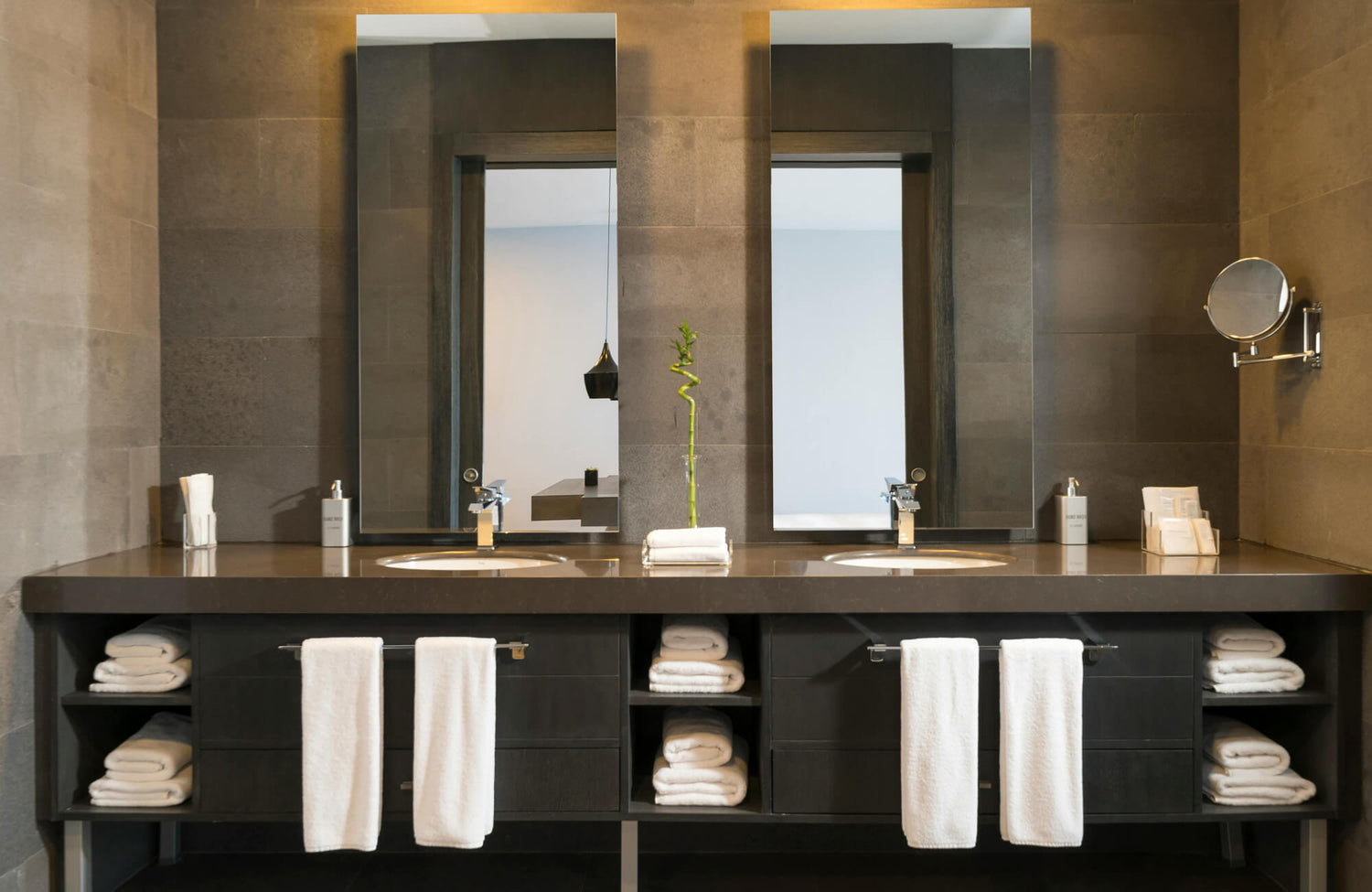
Bathrooms with double vanities present unique challenges, and the mirror shape plays a pivotal role in ensuring usability. Large rectangular bathroom mirrors, in particular, provide continuous coverage that comfortably accommodates two people at once, making them highly practical. Another effective solution is the use of twin round or pill-shaped mirrors, which give each user a dedicated reflective surface while adding symmetry to the design. Frameless rectangular mirrors are especially useful in busy households, as their uninterrupted reflection supports efficiency during peak usage times. On the other hand, more unconventional shapes, though visually intriguing, can create uneven coverage and reduce functionality in shared settings. To achieve adaptability, designers must balance the desire for style with the need for comfort and everyday convenience.

Influence on Bathroom Layout and Spatial Perception
The contour of a bathroom mirror shapes the way space is perceived, altering the sense of height, width, and overall proportion. With the right selection, mirrors can make compact bathrooms feel larger or add balance to expansive layouts.
Vertical vs. Horizontal Orientation
Tall rectangular bathroom mirrors naturally guide the eye upward, creating the impression of higher ceilings in small or narrow bathrooms. This effect is particularly valuable when space is limited, as it adds vertical dimension without structural changes. When installed horizontally, however, the same mirror emphasizes breadth, stretching the wall visually and grounding the design with stability. Vertical orientation pairs well with single vanities by accentuating height, while horizontal orientation works seamlessly across double vanities to create visual unity. In powder rooms, vertical mirrors are especially effective in enhancing proportions, making ceilings appear taller. These subtle choices in orientation highlight how mirror geometry influences spatial perception and architectural flow.
Balancing Angular and Organic Forms
Straight lines dominate most bathroom architecture, which is why the mirror shape can serve as a counterbalance. Round and oval bathroom mirrors soften harsh vanity edges and reduce visual rigidity, creating a sense of calm and flow. Their organic curves are particularly effective in compact spaces, where too many straight lines can feel overwhelming. By contrast, geometric variations such as hexagonal or asymmetrical mirrors inject energy and architectural character into minimalist bathrooms. These unconventional shapes also add sculptural intrigue, turning the mirror into both a functional tool and a design feature. Ultimately, blending angular and organic forms prevents the space from appearing either overly rigid or overly casual, ensuring a balanced aesthetic.

Compatibility with Interior Design Styles
Mirror shape carries strong stylistic associations, making it a natural extension of bathroom design. Choosing a form that complements the broader aesthetic creates cohesion and reinforces the intended mood of the space.
Modern and Minimalist Applications
Rectangular and square bathroom mirrors remain the hallmark of modern and minimalist interiors because their geometry communicates order and precision. Frameless rectangular mirrors take this a step further by eliminating distraction, creating a pure reflective surface that enhances linear tilework and floating vanities. Their strong lines also echo the clarity of industrial fixtures and architectural details, reinforcing the sharpness of the design. When scaled larger, these mirrors amplify natural light, extending the sense of openness in contemporary bathrooms. This harmony between functionality and clean geometry aligns with the modernist principle that form should follow function. For a refined example, the Tristan Square Mirror in Polished Brass, as shown in the photo above, demonstrates how minimalist form can be elevated with subtle metallic warmth, blending precision with a touch of luxury that enhances modern interiors.
Organic and Transitional Designs
Round and oval mirrors are favored in Scandinavian and Japandi bathrooms because their gentle curves soften rigid cabinetry and introduce calm simplicity. Their fluid forms provide balance in spaces dominated by linear elements, contributing to a sense of harmony. Transitional designs also often embrace arched or pill-shaped bathroom mirrors, which bridge sleek modernism with timeless sophistication. These shapes pair effortlessly with natural materials such as marble, quartz, and wood, ensuring flexibility across different finishes. Because they remain relevant across design shifts, these mirrors avoid appearing dated over time. Through their adaptability, organic and transitional shapes bring warmth and elegance that elevate bathroom interiors.
Bold and Eclectic Statements
In eclectic or industrial bathrooms, asymmetrical bathroom mirrors or bold geometric silhouettes become focal points that showcase individuality. Their sculptural presence transforms them from mere functional objects into striking design statements. When paired with raw materials like concrete, exposed brick, or reclaimed wood, their irregular contours add both texture and depth. This interplay between shape and surface creates a layered, curated look. Lighting further enhances their impact, as unconventional forms interact dramatically with sconces or pendants. In such settings, the mirror serves not only as a reflective surface but also as a defining feature of the design narrative.

Visual Balance and Proportional Harmony
Proportion is critical in bathroom design, and the mirror shape must align with vanities and wall dimensions to maintain harmony. When scaled correctly, the mirror integrates seamlessly, anchoring the entire composition.
Scale in Relation to Vanities
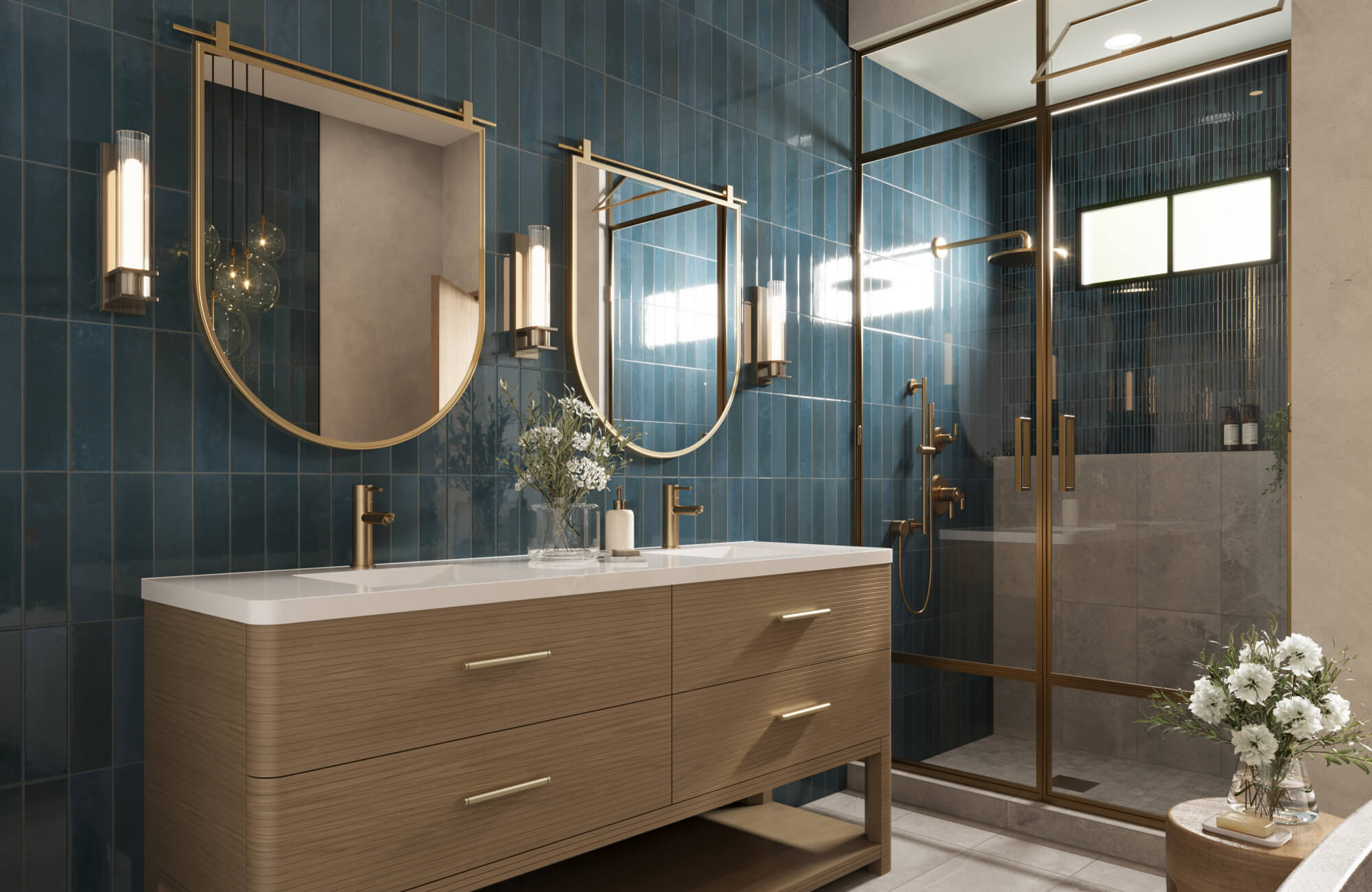
Large rectangular bathroom mirrors suit double vanities because they unify cabinetry into one continuous reflective plane. For dual sinks, designers often prefer installing two identical round or oval mirrors, which provide symmetry while softening the overall composition. This twin-mirror arrangement creates a balanced focal point that highlights both sinks while maintaining proportional harmony. A perfect example of this approach, as featured in the picture above, is the Fitz Mirror in Antique Silver, which offers timeless elegance through its refined frame and versatile scale. By pairing two of these mirrors over a shared vanity, homeowners can achieve a polished look that blends symmetry, function, and decorative sophistication. When scaled correctly, such mirrors anchor the design while ensuring the bathroom feels cohesive and intentional.
Vertical vs. Horizontal Emphasis
Orientation plays as important a role as scale in establishing balance. For instance, vertical mirrors draw the eye upward, creating the perception of taller ceilings and greater spaciousness, which is especially beneficial in powder rooms with limited dimensions. Their elongated proportions also enhance elegance without requiring additional height. Horizontal mirrors, by contrast, emphasize stability and breadth, making them ideal for expansive master bathrooms. When stretched across long vanities, they create architectural continuity and a grounded, cohesive appearance. Designers therefore use orientation strategically, selecting vertical mirrors for lift and horizontal mirrors for balance, depending on the needs of the space.

Impact on Light Reflection and Illumination
The outline of a mirror not only determines how light reflects but also how it interacts with the room’s overall lighting design. When thoughtfully chosen, a mirror shape enhances both practical brightness and atmospheric mood.
Reflection of Ambient and Task Lighting
Rectangular bathroom mirrors provide broad reflective surfaces that distribute both natural and artificial light evenly, supporting clear visibility during grooming. Their wide geometry prevents shadows, ensuring functional brightness across the vanity. Round and oval mirrors, by contrast, reflect within a narrower range, creating a softer and more intimate glow. Arched mirrors like the Raelynn Mantel Mirror in Iron Matte Black (displayed in the photo above) combine aspects of both, offering ample reflection while their curved tops guide light upward, adding elegance and enhancing vertical illumination. This quality makes them especially effective in creating an uplifting atmosphere without compromising usability. To balance ambiance with function, designers often combine these mirrors with sconces, pendants, or LED backlighting. Together, the mirror and lighting design create a layered illumination strategy tailored to both style and practicality.
Interaction with Fixtures and Frames
Frameless mirrors maximize light reflection by offering uninterrupted surfaces, while framed mirrors alter the way illumination spreads depending on material and finish. Metallic frames can amplify brightness by bouncing light, whereas matte finishes may absorb illumination, subtly shifting the mood. The shape of the mirror also dictates how lighting fixtures interact with it; sconces complement vertical mirrors differently than they do circular ones. For example, a round mirror with integrated LED backlighting creates a soft halo effect, merging modern technology with sculptural form. These nuances demonstrate that mirror selection is as much about illumination strategy as it is about style. By considering both frame and contour, designers can fine-tune how light shapes the bathroom environment.
The Enduring Influence of Mirror Shape
The silhouette of a bathroom mirror is never a trivial choice, as it quietly guides both function and style within the space. Whether it is a rectangular bathroom mirror anchoring a double vanity or an arched mirror adding architectural grace, the form sets the tone for balance and usability. By shaping light, enhancing proportion, and reinforcing design aesthetics, mirrors become integral design elements rather than mere accessories. When chosen with care, the right mirror shape transforms bathrooms into spaces that feel harmonious, functional, and enduringly beautiful.
To make these decisions seamless, Edward Martin offers expert design services that help homeowners and designers select mirrors and finishes perfectly suited to their vision. For tailored guidance and inspiration, contact us today and bring refined balance and timeless sophistication to your bathroom design!