Mirrors are more than functional surfaces, they are powerful design elements that shape light, atmosphere, and the perception of space. The right mirror can anchor a room, complement existing décor, and elevate the overall aesthetic.
Selecting one requires more than guesswork; it involves understanding your design style, balancing proportion, and choosing details like shape, frame, and finish with intention. From ornate traditional frames to sleek modern silhouettes, mirrors tell a story about your space. In this blog, we’ll explore how to pick a mirror that reflects both your home’s character and your personal style.

Understanding Your Interior Design Aesthetic
Before choosing the right mirror, it helps to have a clear sense of your overall design style. Identifying the key elements that define your aesthetic lays the groundwork for choices that feel intentional and cohesive.
Recognizing Key Elements of Popular Styles
Each design style has defining characteristics that guide how spaces are furnished and decorated. Mid-century modern emphasizes clean lines, tapered legs, and organic shapes, while traditional interiors lean on symmetry, crown molding, and rich woodwork. Industrial design often incorporates exposed brick, steel accents, and open layouts, whereas Scandinavian style prioritizes minimalism, natural light, and functional simplicity. Recognizing these markers allows you to better align your choices with a consistent aesthetic.
The Role of Materials and Finishes
Materials and finishes shape both the tactile and visual identity of a space. Natural woods, stone, and linen typically enhance rustic or organic aesthetics, while lacquer, chrome, and glass emphasize contemporary or modernist schemes. Matte finishes tend to soften a room’s atmosphere, whereas polished metals or high-gloss paints introduce energy and formality. In the example above, Edward Martin’s Clancy Small Arch Mirror in Antiqued Iron shows how a thoughtfully chosen material can reinforce style, with its iron frame lending texture, depth, and timeless character to a modern bathroom.
The Importance of Color Palette
Color is one of the most powerful tools in defining an aesthetic. Neutral palettes with layered textures suit minimalist or Scandinavian interiors, while jewel tones and gilded accents highlight Art Deco glamour. Coastal styles often feature airy blues, whites, and sandy neutrals, whereas modern eclectic interiors embrace bold contrasts and saturated hues. Beyond visual impact, color influences mood and perception of space, cool tones can create calm, while warmer palettes foster intimacy. Establishing a clear palette ensures cohesion across walls, textiles, and furnishings.

Selecting the Perfect Shape and Size
Once you understand your aesthetic, the next step is choosing a mirror shape and size that complements your space. The right proportions enhance balance, flow, and the visual impact of your design.
Sizing Up Your Space
Scale is the foundation of spatial planning. A mirror that is too small above a large mantel or a sofa that dwarfs a compact living room disrupts visual balance. Designers often use guidelines such as covering two-thirds of a wall’s width or ensuring seating leaves at least 18 inches of circulation space. Measuring both the room and adjacent furnishings helps establish proper dimensions that maintain flow and proportion. Above, Edward Martin’s Clementine Mirror in Antiqued Gold Leaf illustrates how a carefully scaled piece can anchor a vanity while bringing elegance and presence to the design.
The Impact of Shape on Style
Shape directly communicates design intent. Rectangular and square forms evoke structure, symmetry, and formality, making them ideal for contemporary or traditional interiors. Circular and oval shapes soften a room, breaking up rigid architectural lines while promoting a sense of continuity. More unconventional silhouettes, such as arches or asymmetrical forms, introduce dynamism and can act as focal points. Choosing a shape that complements existing lines reinforces cohesion across the space.
The Role of Proportions
Proportions determine how size and shape interact within the larger environment. A tall, narrow mirror elongates walls and enhances verticality, while a wide, panoramic option expands perceived width. Designers often employ the golden ratio or the rule of thirds to achieve pleasing visual relationships between objects and architectural features. Properly scaled proportions not only enhance aesthetics but also ensure the space feels balanced, intentional, and comfortable to inhabit.

Choosing a Frame That Speaks to Your Style
With size and shape decided, attention naturally shifts to the frame. This detail can highlight your chosen style, adding character through material, finish, and craftsmanship.
Classic and Contemporary Frame Materials
Frame materials convey distinct stylistic cues. Wood remains a timeless option, with stained oak or mahogany suiting traditional interiors, while bleached ash or walnut complements Scandinavian and mid-century modern schemes. Metal frames, such as brushed brass, blackened steel, or polished chrome, lean toward contemporary or industrial aesthetics. Newer composite and resin frames offer durability and creative flexibility, often used in transitional or eclectic spaces. The choice of material establishes the overall tone and durability of the frame.
Details That Make the Difference
Beyond material, design details significantly influence a frame’s impact. Ornate carvings, beading, and gilt finishes add historical character and luxury, often aligning with classical or French provincial interiors. Sleek, mitered edges or slim profiles emphasize modern minimalism. Even subtle elements, such as patina, joinery style, or layered finishes, can define whether the frame feels refined, rustic, or avant-garde. Attention to these details ensures the frame supports, not competes with, the overall design narrative.
Frameless and Minimalist Options
For spaces where simplicity is paramount, frameless or ultra-thin frames offer a refined solution. Beveled glass edges create visual depth without the need for ornamentation, while polished or rounded corners soften hard architectural lines. These minimalist options work well in contemporary, spa-inspired, or compact interiors, where clutter-free surfaces enhance spatial clarity. Seen here, Edward Martin’s Fitz Mirror in Antique Silver captures the appeal of a frameless look, its slim metallic edging delivering understated elegance without interrupting the seamless, modern aesthetic.

Strategic Placement and Functionality
Of course, even the perfect frame won’t shine without thoughtful placement. Where and how you hang a mirror affects light, space, and usability, turning it into a true design asset.
Enhancing Natural Light and Space
Mirrors amplify both daylight and artificial illumination, making rooms feel brighter and more expansive. Placing a mirror opposite a window captures natural light and distributes it across the interior, a technique often used in narrow hallways or small living rooms to counteract spatial constraints. Large wall-mounted mirrors also create the illusion of depth, visually extending square footage without altering the physical footprint. Featured in the space above, Edward Martin’s Raelynn Mantel Mirror in Iron Matte Black balances bold form with refined lines, boosting brightness while adding architectural presence.
Creating a Focal Point
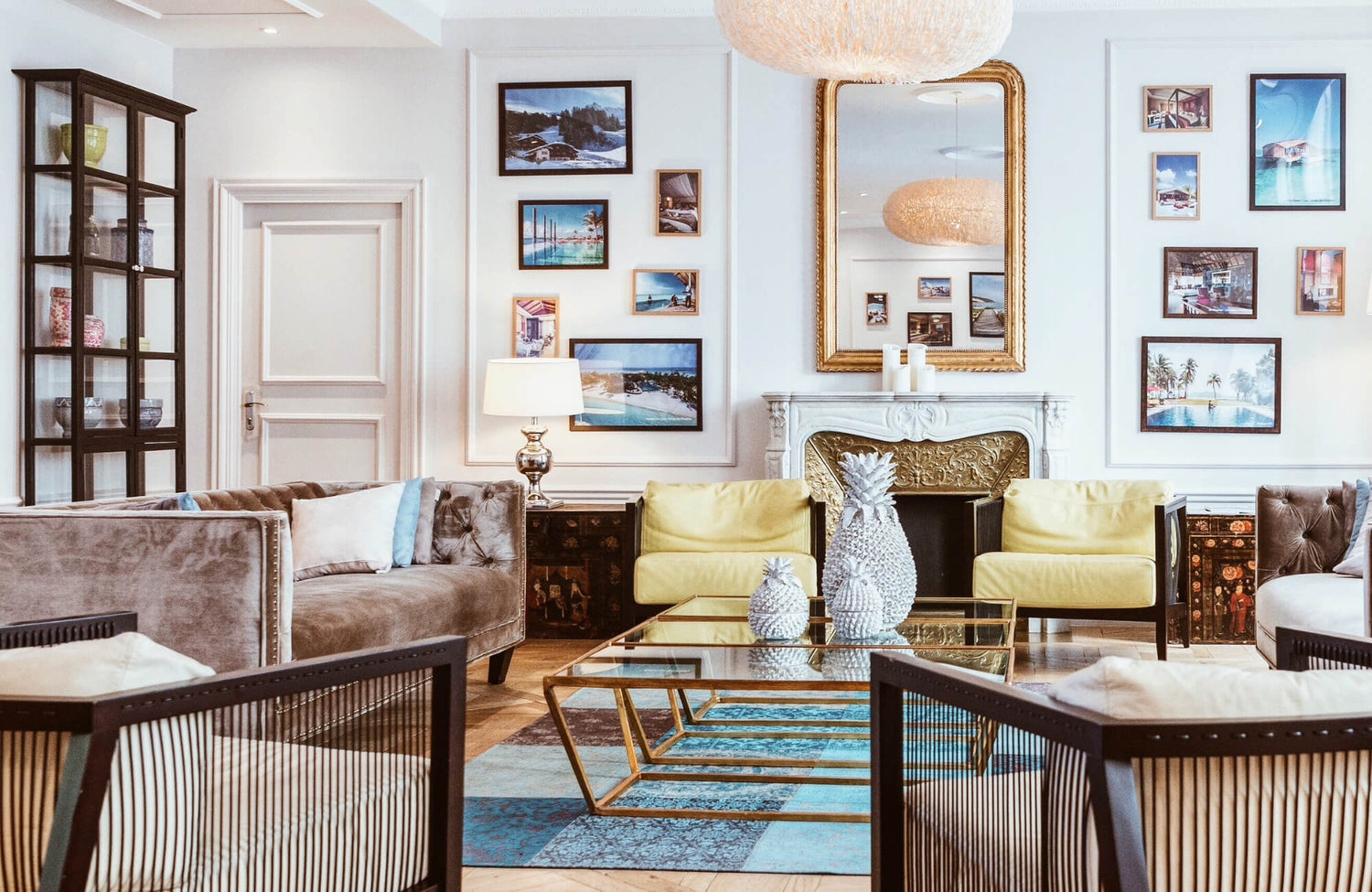
Well-placed mirrors can anchor a room by drawing attention to architectural features or curated vignettes. An oversized round mirror above a fireplace accentuates symmetry, while a grid-style mirror adds structure and visual rhythm to modern spaces. Designers often align mirrors with key sightlines, such as entryways or dining areas, to reinforce hierarchy and balance in the overall composition. When scaled appropriately, a mirror transitions from background accessory to intentional statement piece.
Functional Mirrors for Everyday Living
Beyond aesthetics, mirrors fulfill critical day-to-day needs. Full-length mirrors in bedrooms and dressing areas support outfit coordination, while vanity mirrors with integrated lighting ensure accuracy for grooming tasks. In entryways, strategically placed mirrors allow quick checks before leaving the house while contributing to an open, welcoming atmosphere. Advances in design now include smart mirrors with built-in LED lighting or anti-fog coatings, merging functionality with cutting-edge convenience.

How to Mix and Match Mirrors with Confidence
Finally, once you’ve mastered the basics, you can get creative. Mixing different mirrors allows you to layer styles and shapes with confidence, adding depth and personality to your home.
Creating a Cohesive Gallery Wall
A mirror gallery wall relies on balance and repetition to avoid looking chaotic. Designers often mix shapes, round, rectangular, and oval, while unifying the collection through a consistent frame finish, such as matte black metal or distressed wood. Spacing is equally critical: maintaining even sightlines or a consistent gap between pieces ensures the arrangement reads as intentional rather than random. This technique works especially well in entryways, stairwells, or dining areas where layered reflections add depth.
Blending Styles Without Conflict
Contrasting styles can coexist if linked by shared elements. For example, pairing an ornate gilded mirror with a sleek, modern frameless design creates tension and interest, but cohesion is maintained through a common palette or proportional balance. Mixing rustic wood frames with polished metallics works when both are anchored by complementary furnishings or architectural details. In this design, Edward Martin’s Tristan Square Mirror in Polished Brass demonstrates how a metallic finish can connect traditional and contemporary influences, uniting diverse materials through subtle, cohesive detailing.
The Rule of Three and Other Decorator Secrets
Professional designers often employ the "rule of three," grouping mirrors in odd numbers to create a natural sense of rhythm and movement. Varying sizes within these groupings adds hierarchy while preventing monotony. Other strategies include aligning mirrors with architectural lines, like molding or windows, for visual continuity, or staggering heights to guide the eye through a room. By applying these principles, homeowners can confidently mix mirrors in ways that feel deliberate, polished, and design-forward.
Finding the Right Mirror is a Reflection of Your Home
The journey to finding the perfect mirror is a thoughtful process that culminates in a piece that truly belongs. By beginning with a clear understanding of your home’s aesthetic, you can make informed decisions about shape, size, and frame. Edward Martin’s design consultation service offers expert guidance tailored to your project, helping you choose mirrors, and complementary pieces like tile, rugs, or furniture, with confidence. For personalized recommendations or product assistance, simply contact Edward Martin. The right mirror is both a reflection of your décor and a testament to your curated taste.