A spa-like bathroom is no longer a luxury reserved for boutique hotels or private retreats. For homeowners around the world who value thoughtful design and enduring materials, the bathroom has become a personal sanctuary—one that restores calm through texture, light, and proportion. Among the most transformative design choices in this space is the pairing of Moroccan tiles with the right vanity. When done well, this combination delivers both visual richness and a sense of ritualistic calm, turning everyday routines into moments of quiet indulgence.
Moroccan tiles, known for their artisanal character and depth of surface, bring an emotional warmth that contrasts beautifully with the clean functionality of modern vanities. The key lies not in matching for the sake of uniformity, but in creating a balanced dialogue between handcrafted tile surfaces and carefully selected vanity finishes. This guide explores how to thoughtfully pair Moroccan tiles with vanities to achieve a cohesive, spa-like bathroom renovation that feels timeless, grounded, and effortlessly luxurious.

Matching The Tile Texture To The Vanity Finish
Texture is the silent language of a spa-inspired bathroom. Before color or layout is considered, the tactile relationship between Moroccan tiles and vanity finishes sets the emotional tone of the space. The interplay between reflective and absorbent surfaces, smooth and tactile finishes, determines whether the room feels restorative or visually restless.
Pairing Glossy Zellige With Natural Wood
Glossy zellige tiles are celebrated for their irregular surfaces and luminous glaze, each tile reflecting light slightly differently. When paired with a natural wood vanity, this variation becomes an asset rather than a distraction. The organic grain of wood absorbs visual energy, allowing the reflective quality of the tiles to shimmer without overwhelming the room.
In spa-like bathroom renovations, lighter woods such as oak or ash enhance the tranquil quality of glossy Moroccan tiles, especially in neutral or mineral tones. Deeper woods like walnut introduce a sense of warmth and intimacy, making the space feel more cocooned. The key is restraint. A vanity with clean lines and minimal ornamentation ensures that the handcrafted nature of the zellige remains the focal point, while the wood grounds the composition in natural calm.
Balancing Matte Cement Tiles With Sleek Painted Vanities
Matte Moroccan cement tiles bring a sense of permanence and architectural weight to a bathroom. Their soft, powdery finish absorbs light, creating a muted backdrop that feels inherently calming. To prevent the space from feeling too heavy, these tiles pair best with sleek painted vanities that introduce a subtle contrast in texture, much like Edward Martin’s Isabel 2.5x12 Matte Porcelain Tile in Sand paired with the Paxton 48" Single Vanity in Carbon Oak with 3 cm White Zeus Quartz Top, as shown in the image above.
A painted vanity in a soft neutral or desaturated hue creates a visual lift against the density of cement tiles. The smooth finish of lacquered or satin-painted cabinetry reflects just enough light to balance the matte surface of the tiles. This pairing works particularly well in contemporary spa bathrooms, where the goal is understated sophistication rather than rustic charm. The result is a composed environment that feels intentional and serene.
The Role Of Countertops As The Visual Bridge
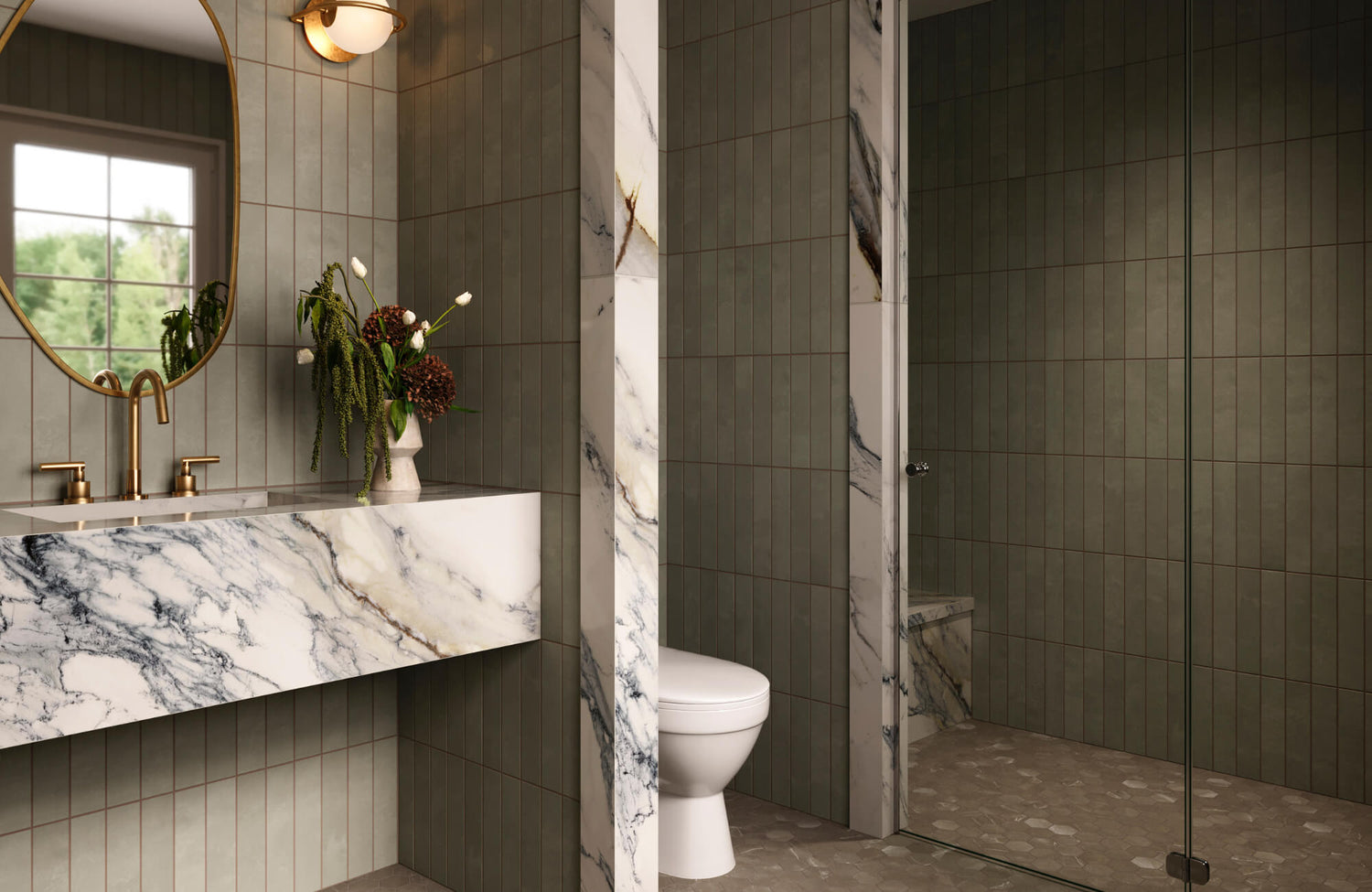
Countertops act as an understated yet vital component in harmonizing Moroccan tiles with vanities. Acting as a visual bridge, the countertop mediates between the vertical presence of tiles and the horizontal mass of the vanity. Materials such as honed marble, limestone, or quartz with subtle veining introduce continuity without competing for attention.
In spa-inspired spaces, matte or honed finishes are preferable to high-polish surfaces, as they echo the tactile quality of Moroccan tiles while maintaining a refined appearance. The countertop’s tone should sit comfortably between the tile and vanity finishes, ensuring a seamless transition that feels calm and cohesive rather than segmented.

Curating A Color Palette That Induces Calm
Color has a profound psychological impact, particularly in spaces designed for relaxation. Moroccan tiles offer a vast spectrum of hues, from soft chalky whites to deep mineral blues, making thoughtful color curation essential when pairing them with vanities.
The Monochromatic Look For Seamless Serenity
A monochromatic palette is one of the most effective ways to achieve a spa-like atmosphere. When Moroccan tiles and vanities share a closely related color family, the result is a visually uninterrupted space that encourages rest and reflection. Subtle variations in tone and texture prevent the room from feeling flat while maintaining a cohesive aesthetic.
For example, ivory or warm white tiles paired with a matching vanity create a luminous, airy bathroom that feels expansive and tranquil. The artisanal surface of Moroccan tiles adds depth, ensuring that the monochromatic approach remains visually engaging. This strategy is particularly effective in smaller bathrooms, where continuity enhances the perception of space.
Using Earth Tones To Ground The Space
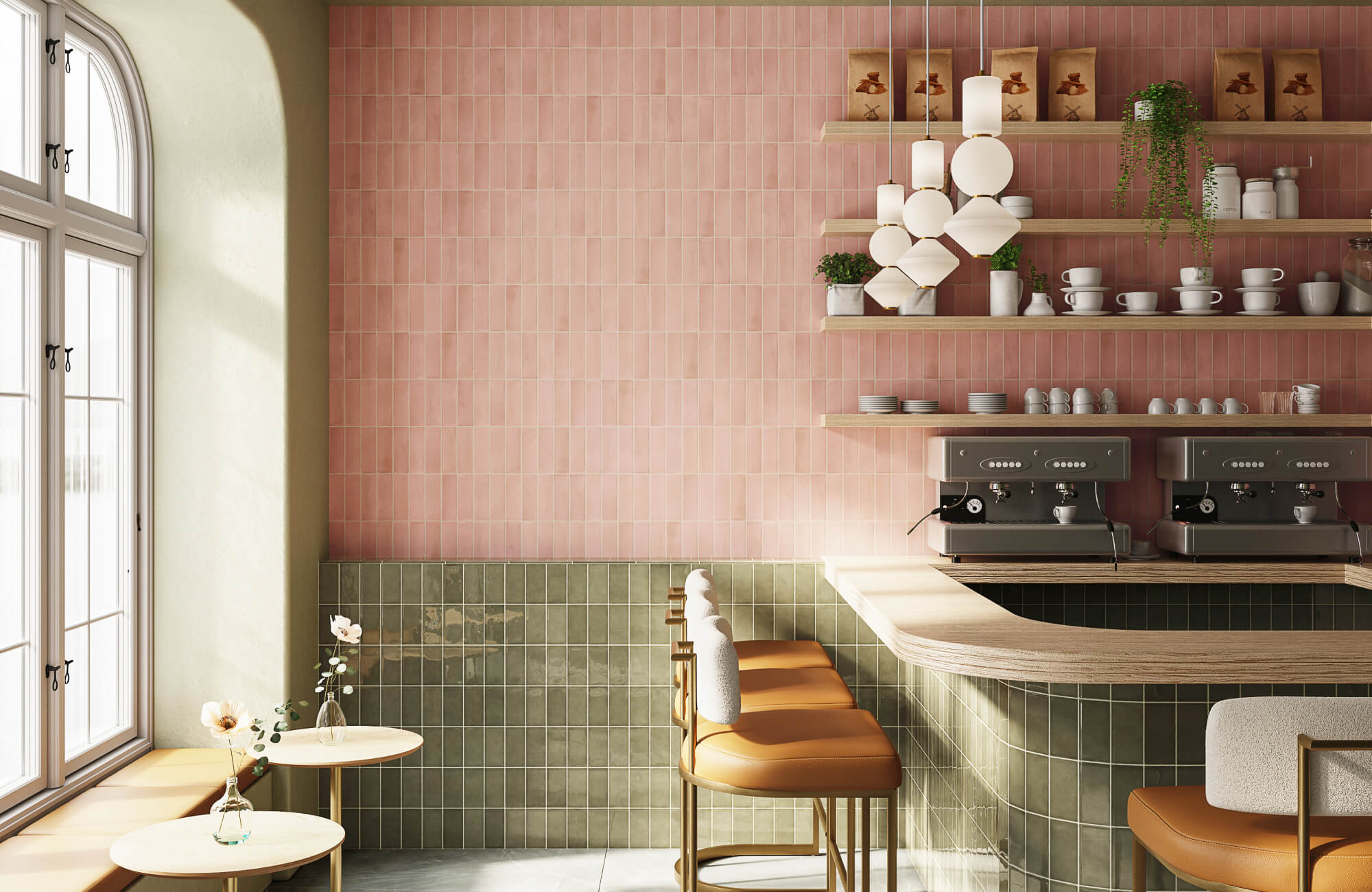
Earth tones draw inspiration from nature, making them a natural fit for spa-like bathroom renovations. Moroccan tiles in shades of sand, clay, olive, or soft terracotta introduce warmth without visual noise. When paired with vanities in complementary tones, these colors create an enveloping environment that feels grounded and restorative, as seen with Edward Martin’s Olivia 4x16 Glossy Ceramic Tile in Pearl alongside the Sasha 72" Double Vanity in Carbon Oak with 3 cm White Zeus Quartz Top in the image above.
A stone-toned tile paired with a taupe or warm gray vanity evokes the calm of a desert retreat or natural hot spring. The subtlety of earth tones allows the texture of the tiles to shine, reinforcing the handcrafted quality that defines Moroccan design. This palette works beautifully for those seeking a bathroom that feels both luxurious and deeply connected to nature.
Creating Contrast Without Chaos
Contrast, when handled with intention, can elevate a spa-inspired bathroom rather than disrupt it. The key is to limit contrast to one primary relationship, such as dark tiles paired with a lighter vanity or vice versa. Moroccan tiles in deep indigo or charcoal can feel dramatic yet soothing when balanced with a pale, understated vanity finish.
This controlled contrast creates visual interest while maintaining a sense of calm. The surrounding elements, including walls, countertops, and accessories, should remain neutral to support the primary pairing. In doing so, the bathroom feels curated rather than cluttered, allowing contrast to enhance rather than overpower the spa-like ambiance.

Strategic Placement To Maximize The Spa Effect
Where Moroccan tiles are placed in relation to the vanity is just as important as how they are styled. Strategic placement guides the eye, defines zones, and reinforces the sense of ritual associated with spa environments.
The Floor To Ceiling Statement Wall
A floor-to-ceiling Moroccan tile wall behind the vanity creates a powerful focal point that anchors the entire bathroom. This approach mimics the immersive environments of luxury spas, where materials envelop the senses. The vanity, when kept visually simple, becomes a sculptural element set against a richly textured backdrop.
This placement works especially well with neutral or softly colored tiles, as the full-height application emphasizes texture without overwhelming the space. The continuity from floor to ceiling elongates the room, enhancing the feeling of openness and calm. For a truly refined effect, grout lines should be subtle, allowing the tile surface to read as a unified plane.
Zoning The Vanity With A Tile Rug
Using Moroccan tiles to create a defined zone beneath or around the vanity introduces a sense of intention and spatial hierarchy. Often referred to as a tile rug, this technique frames the vanity area, distinguishing it from the rest of the bathroom without the need for physical partitions.
This approach is particularly effective in larger bathrooms, where zoning helps maintain intimacy. The vanity becomes a destination rather than just a functional fixture. When paired with a complementary vanity finish, the tile rug reinforces the spa-like quality of the space, encouraging slow, mindful use.
The Subtle Art Of The Backsplash Strip
For those who prefer restraint, a Moroccan tile backsplash strip offers a refined way to introduce artisanal character without visual excess. Extending just above the vanity, this placement highlights the craftsmanship of the tiles while keeping the overall composition clean and modern, as illustrated by Edward Martin’s Mariel 1x12 Glossy Porcelain Tile in Fog paired with the Paxton 48" Single Vanity in Pebble Oak with 3 cm White Zeus Quartz Top in the image above.
A backsplash strip works well in bathrooms where serenity is achieved through minimalism. The vanity remains the primary focus, with the tiles providing texture and depth rather than dominance. This subtle approach proves that spa-like design does not require grand gestures, only thoughtful ones.

Accessorizing The Pairing For A Luxury Finish
Accessories complete the story between Moroccan tiles and vanities. In spa-inspired bathrooms, every detail should feel deliberate, enhancing the sensory experience rather than competing for attention.
Selecting Hardware That Complements The Tile
Hardware acts as jewelry for the vanity, and its finish should resonate with the tone of the Moroccan tiles. Warm metals such as brushed brass or aged bronze pair beautifully with earthy or neutral tiles, reinforcing a sense of warmth and timelessness. Cooler finishes like brushed nickel or matte chrome complement tiles in gray or blue hues, maintaining a clean and calming aesthetic.
The scale and shape of hardware should remain understated, allowing the tile-vanity pairing to take center stage. In a spa-like environment, subtlety conveys luxury more effectively than ornamentation.
Lighting Choices To Enhance Tile Reflection
Lighting is key to bringing out the beauty of Moroccan tiles. Soft, diffused lighting enhances their surface variation, creating gentle shadows that add depth without harsh contrast. When placed near the vanity, lighting should flatter both the tiles and the user, reinforcing the bathroom’s role as a restorative space, as seen with Edward Martin’s Natasha 2x6 Glossy Porcelain Tile in Ice, complemented by the Posey Wall Sconce in Aged Brass and Aida Pendant in Aged Brass in the image above.
Warm lighting temperatures enhance the natural tones of both tiles and vanities, while concealed or indirect lighting adds a sense of quiet sophistication. The goal is to create a glow that feels calming rather than theatrical, echoing the ambiance of a high-end spa.
Integrating Organic Elements To Soften The Look
Organic elements such as wood accents, stone accessories, or natural textiles help soften the visual relationship between Moroccan tiles and vanities. These additions reinforce the connection to nature that defines spa-like design, ensuring the bathroom feels lived-in rather than staged.
A simple wooden stool, a stone tray, or woven textiles introduce tactile warmth that complements the artisanal quality of Moroccan tiles. When integrated thoughtfully, these elements enhance the overall harmony of the space, making it feel welcoming and deeply personal.
Creating Your Personal Sanctuary
Designing a spa-like bathroom with Moroccan tiles and vanities is ultimately about intention. Every choice, from texture and color to placement and lighting, contributes to the emotional experience of the space. By thoughtfully pairing handcrafted tiles with vanities that respect their character, you create a bathroom that transcends function and becomes a daily retreat. Tools like Edward Martin’s Augmented Reality (AR) Visualization Tool allow you to see how tile selections will look within your own bathroom before committing, helping ensure each decision feels confident and considered.
The beauty of Moroccan tiles lies in their ability to tell a story through surface and light. When paired with the right vanity, they transform the bathroom into a sanctuary of calm, balance, and quiet luxury. After narrowing your design visually, ordering tile samples offers a final layer of reassurance, allowing you to experience texture, tone, and finish firsthand. In a world that moves quickly, this carefully curated space offers a moment of pause—a place where craftsmanship, comfort, and serenity come together in perfect harmony.