Coordinating vanity lighting with mirrors in a master bathroom requires a careful understanding of geometry, proportion, and illumination strategy. The goal is to create a setting where light flatters the face, enhances functionality for daily grooming, and reinforces the overall design language of the room.
When the relationship between mirrors and fixtures is intentional, the entire vanity area becomes both visually appealing and effortlessly practical. A master bathroom relies on this balance, and thoughtful lighting design ensures the space feels polished, inviting, and attuned to real-world use.

Mastering the Geometry of Placement and Spacing
Creating a flawless vanity setup begins with understanding how distance, height, and proportion influence both the look and functionality of your lighting. Establishing this geometric foundation ensures every decision that follows is rooted in balance and intention.
The Golden Rule for Sconce Spacing
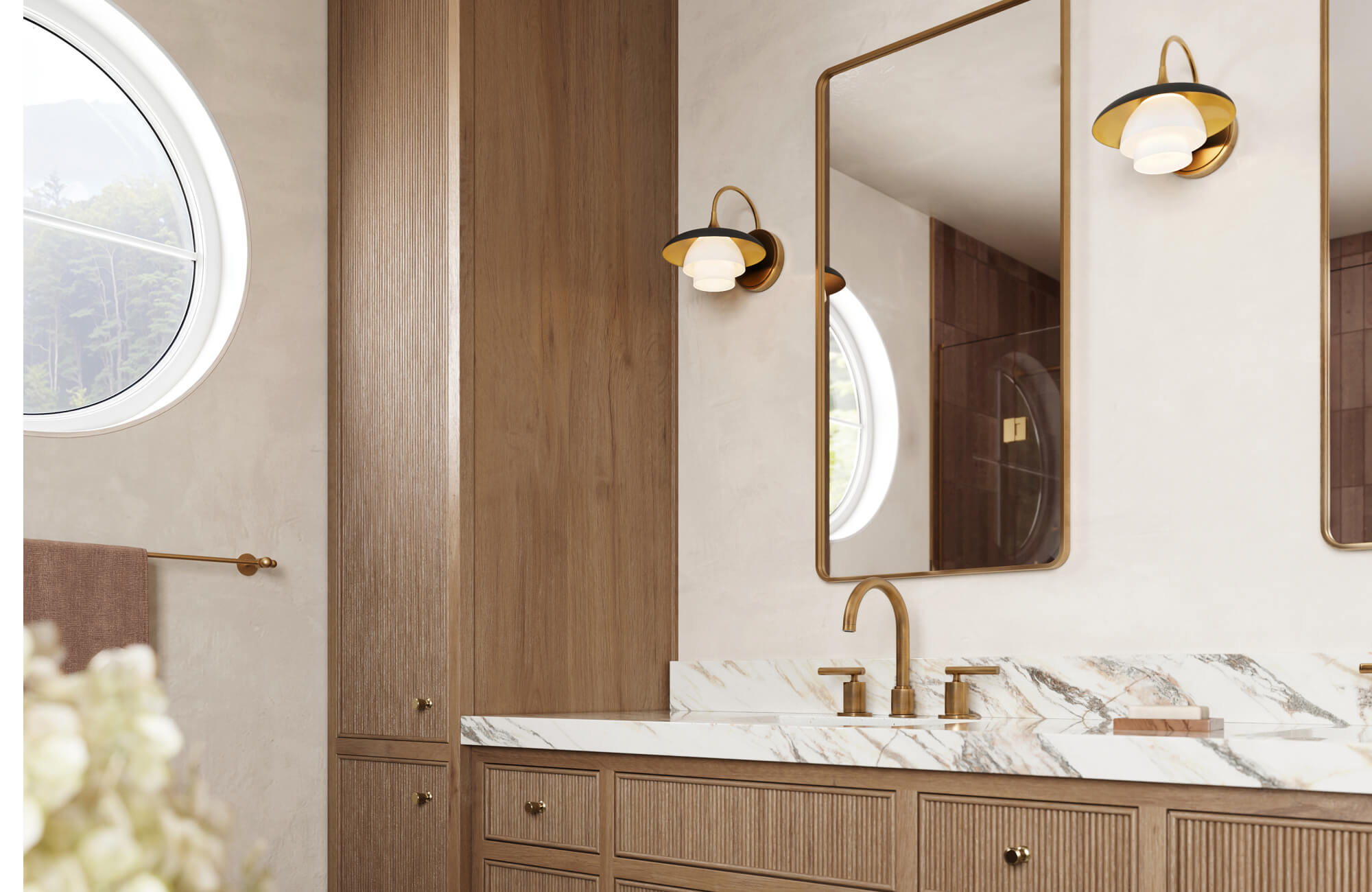
The most reliable guideline for side-mounted sconces is to keep them close to eye level so the face is lit evenly from both sides. When fixtures sit too high, shadows form beneath the brow bone and chin, and when they sit too low, the light can feel overly direct or unflattering. The distance between sconces should complement the width of the mirror without overwhelming it, creating a frame of illumination that pulls attention to the reflection rather than the hardware.
In the image above, the pairing of Edward Martin’s Abigail 72" Double Vanity in Light Natural Oak with 3 cm White Zeus Quartz Top with the Raquel Wall Sconce in Aged Brass shows how this approach creates a balanced visual field, reminding us that treating the sconces as integral design partners helps avoid spacing that weakens cross illumination and reduces their effectiveness.
Positioning Overhead Lights for Optimal Clearance
Overhead lighting often supports rather than replaces side lighting, but its placement still requires finesse. A fixture that sits too close to the mirror can create glare and distort the reflection, while one positioned too far from the vanity loses its utility entirely. The ideal zone allows the light to cast downward with enough distance to diffuse across the mirror’s surface. This clearance maintains clarity and ensures the upper portion of the face receives gentle illumination. When overhead fixtures coexist with sconces, each contributes differently, with the ceiling light adding general brightness and the side lights shaping detail and dimension.
Balancing Mirror Width with Fixture Length
A mirror’s width should determine the scale of the fixture it partners with. A narrow mirror paired with an oversized light can appear top-heavy, while a wide mirror looks unfinished with a fixture that feels undersized. Achieving harmony means selecting lighting that echoes the proportion of the mirror without matching it exactly. The fixture should feel intentional, creating a sense of equilibrium where neither element dominates the composition. The interplay of length and width establishes the foundation on which the rest of the vanity design sits, grounding the eye from the moment you enter the bathroom.

Achieving Shadow Free Illumination for Daily Tasks
Once the placement is set, the next step is refining how the light interacts with your reflection. Thoughtfully engineered illumination eliminates shadows, enhances clarity, and supports the everyday grooming tasks that make a master bathroom truly work.
Why Cross Illumination Is the Gold Standard
Cross illumination is achieved when light comes from multiple sources that meet the face from both sides. This approach eliminates deep shadows and provides a more accurate reflection, making tasks like shaving or applying makeup far more reliable.
As seen in the image above, the combination of Edward Martin’s Bridgette 60" Double Vanity in Bright White with 3 cm White Zeus Quartz Top with the Posey Wall Sconce in Aged Brass, supported by the gentle downlight of the Aida Pendant in Aged Brass, illustrates how relying solely on overhead lighting can flatten features and obscure detail. When light pools from symmetrical angles, the reflection appears even and lifelike, and the mirror becomes a tool that supports, rather than distorts, natural appearance.
Selecting the Right Bulb Temperature for Reflection
The temperature of the bulb influences how skin tone and color appear within the mirror. A temperature that falls too warm can skew colors toward yellow or amber, while lighting that leans too cool may produce a harsh, clinical appearance. The most natural and flattering range sits in the zone where the lighting replicates daylight without drifting into starkness. This temperature reveals texture and tone accurately, enhancing both comfort and visibility. A cohesive lighting temperature throughout the bathroom also prevents inconsistencies, ensuring the vanity remains aligned with the room’s overall ambiance.
The Importance of Dimmers for Mood and Function
Dimmers transform a vanity from a task-oriented setup to a relaxing retreat whenever needed. Morning routines may call for bright illumination, while evenings often benefit from softer, more ambient levels of light. The flexibility of dimmers ensures the space adapts throughout the day, adjusting to both energy levels and functionality. They also offer aesthetic advantages, allowing the lighting to complement the finishes, textures, and design details of the mirror and fixtures without overpowering them. A dimmable system makes the room feel intentional and responsive, elevating the master bathroom into a true sanctuary.

Pairing Fixture Shapes with Mirror Silhouettes
With the lighting performance dialed in, attention naturally shifts to how the fixtures and mirror visually relate to each other. Coordinating shapes and silhouettes brings cohesion to the space, ensuring the vanity feels curated rather than pieced together.
Contrasting Curves with Linear Lines
Curved mirrors introduce softness and movement, which can be beautifully balanced by linear sconces or bar lights. The contrast prevents the design from feeling overly rounded or ornate, creating a tension that feels modern and intentional. In the image above, Edward Martin’s Elodie 60" Double Vanity in Light Natural Oak with 3 cm White Zeus Quartz Top sits beneath a gently arched mirror, while the refined lines of the Enola Wall Sconce In Aged Brass soften the transition between shapes, proving how the right fixture can ground a design without overpowering it. This interplay between curves and lines adds depth to the vanity composition, guiding the eye in a way that feels sophisticated and complete.
Creating Cohesion with Repeated Details
When design elements echo one another, the vanity area gains a subtle sense of order and harmony. This repetition might occur through shared finishes, complementary shapes, or understated material cues. A fixture with the same metal finish as the mirror frame can unify the two pieces without appearing overly matched, while repeating a geometric motif can reinforce the bathroom’s design narrative. These details help integrate the lighting with the mirror, ensuring that both appear as part of a cohesive vision rather than separate decisions.
Balancing Visual Weight Between Glass and Metal
The relationship between the reflective surface of the mirror and the solid presence of the lighting fixture should feel proportional. Heavy, sculptural fixtures paired with delicate mirrors can overwhelm the space, while extremely light fixtures may fade beside a bold framed mirror. Balancing the weight of the materials ensures that neither element overpowers the other, establishing a comfortable equilibrium. This consideration becomes even more important in bathrooms with strong architectural features, where every visual component contributes to the spatial rhythm of the room.

Navigating Layouts for Specific Vanity Configurations
After understanding how aesthetics and illumination work in harmony, the final layer is adapting those principles to the unique layout of your bathroom. Each configuration presents its own challenges, and tailoring solutions to the space ensures the design remains both beautiful and practical.
The Three Sconce Solution for Double Vanities
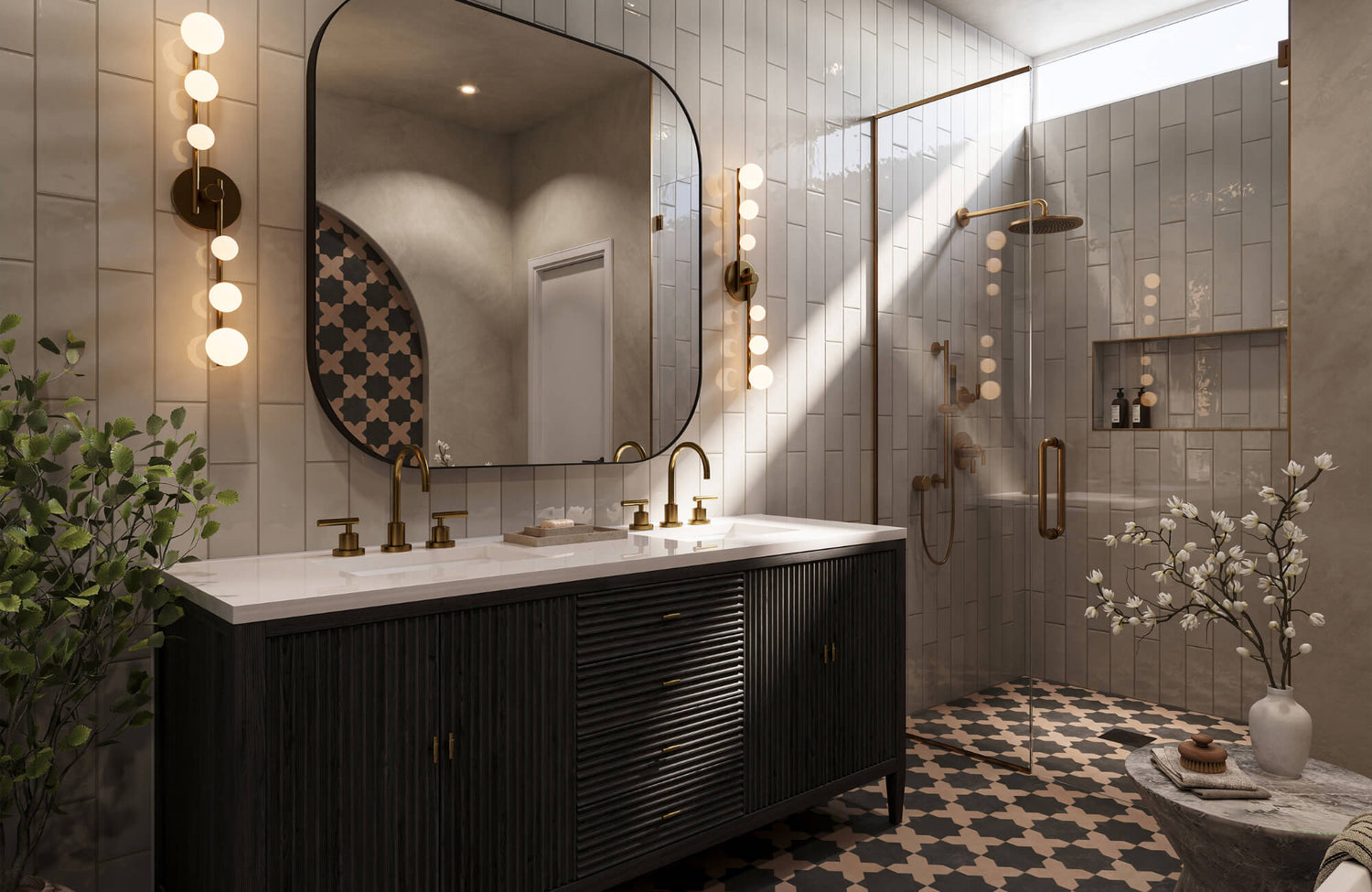
Double vanities benefit from lighting setups that give each sink its own dedicated illumination. Using three sconces, with one between the mirrors and one on each outer side, ensures both users receive balanced, accurate lighting. In the example shown above, Edward Martin’s Rosalie 72" Double Vanity in Amber Birch with 3 cm White Zeus Quartz Top works seamlessly with the Dorian Wall Sconce in Aged Brass, demonstrating how this arrangement prevents the dimming effect that occurs when a single overhead fixture attempts to illuminate two stations simultaneously. It also creates a visual rhythm across the vanity wall, reinforcing symmetry and giving the entire span a polished, well-designed feel.
Handling Large Wall to Wall Mirrors
Large mirrors that stretch across the width of the vanity offer a sense of expansiveness, but they require careful lighting integration. In this scenario, fixtures often mount directly onto the mirror’s surface or hang slightly forward on specialty backplates, a choice that Edward Martin’s design consultation service can help refine with personalized guidance tailored to your layout. This approach allows the light to meet the face at the correct angle without sacrificing the mirror’s seamless appearance. The reflection multiplies the fixture’s glow, creating a soft, diffused radiance throughout the space, and if you need support with coordinating finishes or selecting complementary pieces, you can always contact us for expert assistance. With large mirrors, the strategy is to let the reflective plane amplify the lighting rather than disrupt it.
Using Pendants as a Modern Sconce Alternative
Pendants introduce a vertical line that can be especially useful when wall space is limited or when the design calls for a more contemporary aesthetic. Suspended lighting creates a sleek, architectural effect, framing the mirror while delivering targeted illumination. The height of the pendant must be carefully adjusted so the light meets the face without causing glare or obstruction. When chosen thoughtfully, pendants can achieve the same flattering illumination as sconces while adding a sculptural touch to the vanity area.
The Formula for a Flawless Reflection
Coordinating vanity lighting with mirrors in a master bathroom comes down to an artful balance of proportion, clarity, and intention. When fixtures are placed with precision, when illumination supports both practicality and comfort, and when shapes and finishes work together in harmony, the vanity becomes a space that elevates daily routines.
A flawless reflection is not merely the product of bright lights or stylish hardware; it is the result of thoughtful design choices that blend beauty with purpose. By understanding these guiding principles, homeowners can transform their master bathrooms into spaces that feel both timeless and perfectly attuned to the way they live.