Choosing the right bathroom wall lighting transforms the room from a simple utility space into a refined environment where clarity and comfort coexist. As light moves across mirrors, finishes, and architectural lines, the right fixture enhances both the precision of daily grooming and the atmosphere of the space itself. Well-considered illumination also elevates the bathroom’s visual balance, shaping how depth, color, and spatial rhythm are perceived throughout the room. By understanding how performance, safety, design, and LED technology work together, you can select lighting that feels intentional and beautifully integrated. Ultimately, choosing the right wall light becomes an opportunity to create a bathroom that functions flawlessly while expressing a personalized sense of style.

Assess Functional Lighting Needs and Performance Criteria
Understanding functional performance allows bathroom wall lighting to support both clarity and comfort in daily routines. By examining brightness, color accuracy, and beam behavior together, you create a foundation for lighting that feels balanced, intentional, and visually dependable.
Lumen Output and Layered Illumination Strategy
Selecting the right lumen output begins with evaluating how the vanity interacts with the surrounding architecture, as this defines the lighting intensity required for clarity. A range of 75–150 lumens per linear foot often achieves the ideal balance between brightness and comfort, giving the user a clear reflection without overwhelming glare. Once lumen levels are established, layering wall lights with overhead ceiling fixtures also helps fill shadow zones that a single fixture cannot address alone.
This integration allows the room to transition smoothly from focused task lighting in the morning to softer ambient lighting at night. Because consistent lumen maintenance is necessary for long-term reliability, high-quality LED modules ensure the brightness remains stable over years of use. In essence, a layered strategy creates both visual depth and practical illumination across the bathroom.
Color Rendering Index (CRI) for Grooming Accuracy
A high CRI 90+ becomes essential when bathrooms serve as grooming spaces where accurate color perception matters. With elevated CRI levels, skin tones, hair colors, and makeup shades appear true to life, reducing the guesswork that poor lighting often introduces. Modern LEDs support this accuracy by maintaining stable spectral output, which prevents shifting hues as the fixture ages. When paired with diffusers that distribute light cleanly, the combination produces a lighting environment that resembles natural daylight. This harmony between LED quality and optical diffusion also creates a consistent visual experience from every angle around the mirror. Ultimately, better color fidelity leads to more precise grooming and a noticeably improved daily routine.
Beam Spread and Glare Control
Controlling beam spread begins with understanding how light moves across facial contours and shadow-prone areas, especially in narrow or deeply colored spaces. A broad 180°–270° distribution helps envelop the face with even illumination, preventing the harsh contrast that directional lighting can create. Textured diffusers, particularly ribbed or fluted glass, also soften light as it passes through, creating a gentle, controlled glow that enhances visibility without overwhelming the surrounding surfaces.
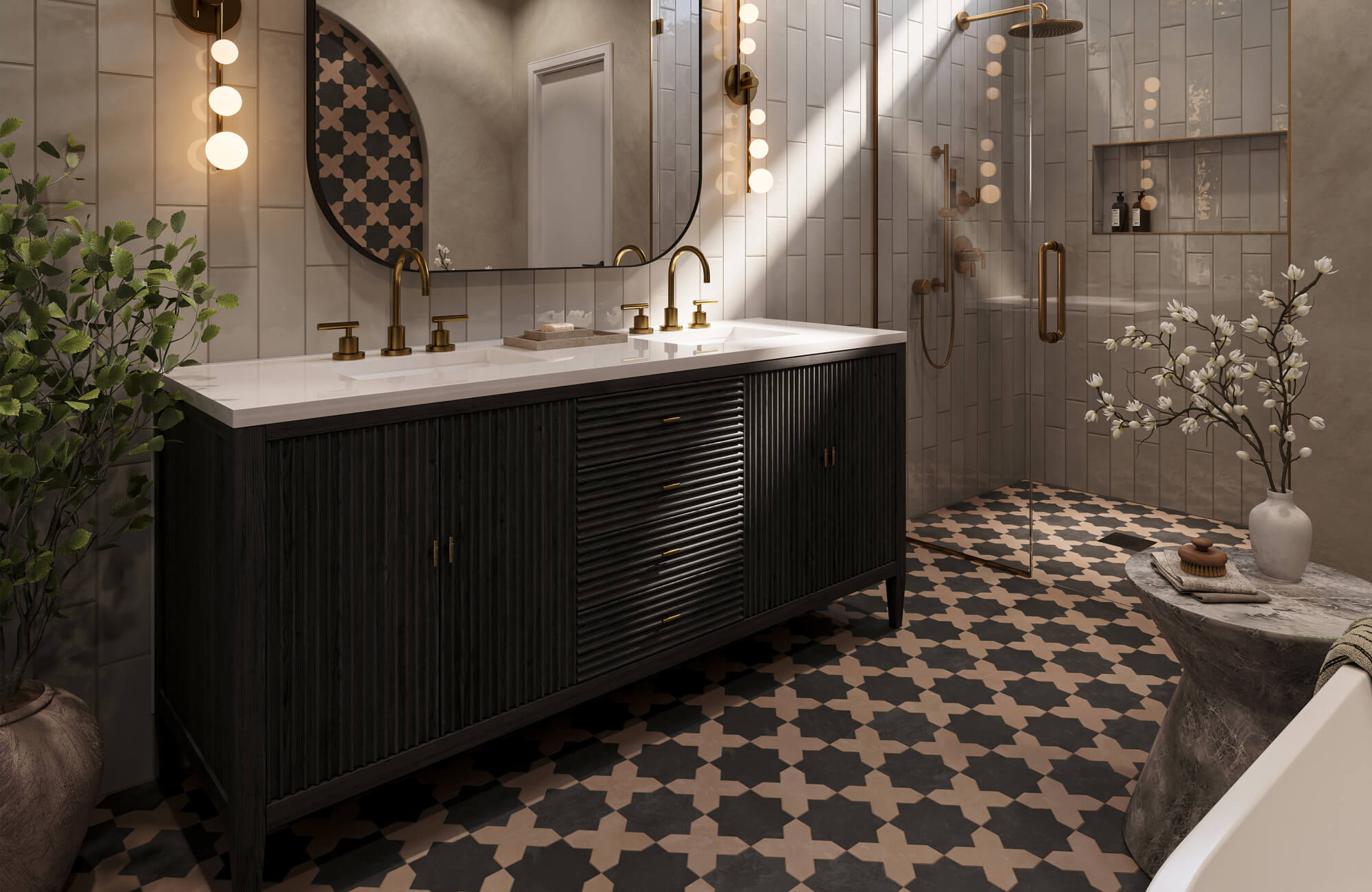
This effect is beautifully demonstrated by Edward Martin’s Ezekiel Wall Sconce in Vintage Brass, whose stacked ribbed glass forms disperse light with a refined softness that minimizes glare even against darker tile backdrops. Its elongated silhouette ensures that illumination travels vertically in a balanced, uninterrupted line, preventing concentrated hotspots around the mirror. As a result, the lighting feels both visually comfortable and architecturally integrated, reinforcing a clear and flattering reflection across the vanity.

Apply Safety Standards and Moisture-Zone Classifications
Bathroom environments demand fixtures engineered to withstand humidity, steam, and direct exposure to water. By aligning your selection with safety regulations and moisture-zone requirements, you ensure long-term durability and consistent electrical performance.
IP Ratings for Steam-Heavy and Splash-Prone Areas
Choosing the correct Ingress Protection (IP) rating begins with identifying how much moisture a specific wall location encounters throughout the day. For instance, areas near the vanity may only require IP44, which protects against splashes, while zones near showers or tubs benefit from IP65 resistance to direct spray. These distinctions matter because prolonged exposure without adequate protection increases the risk of short circuits or internal corrosion. When matched with appropriate materials, such as sealed gaskets or moisture-resistant housings, the fixture becomes better equipped to endure fluctuating humidity levels. This compatibility also ensures that long-term performance remains stable, even during repeated steam cycles from hot showers. As a result, the bathroom benefits from lighting that is both safe and structurally resilient.
NEC Compliance and GFCI Integration
Electrical safety gains a stronger footing when fixtures adhere to the National Electrical Code (NEC), which defines how lighting should operate near water. These guidelines specify placement distances, circuit protections, and overall installation standards to reduce potential hazards. Although wall lights do not typically require GFCI connections, nearby outlets almost always do, creating a safer electrical ecosystem around the vanity. Coordinating these elements also ensures that fixtures and circuits work in harmony, preventing accidental faults during high-moisture conditions. Electricians often reference NEC tables to confirm compliance, especially in complex bathroom layouts. Through this collaborative approach, the lighting system becomes safer, more reliable, and suitable for long-term use.
Corrosion-Resistant Materials and Protective Coatings
Moisture accelerates oxidation, making corrosion-resistant materials essential for bathroom wall lights. For example, stainless steel, solid brass, and powder-coated aluminum offer superior defense against constant humidity, pairing durability with refined aesthetics. To reinforce this protection, manufacturers apply clear lacquer or anti-tarnish coatings that shield surfaces from mineral deposits and chemical exposure. These protective layers also reduce maintenance demands, making the fixtures easier to clean and care for over time. The result is a lighting installation that maintains both structural integrity and visual appeal in demanding environments. When all these elements work together, the fixture preserves its finish and functionality for years.

Optimize Placement, Mounting Height, and Spatial Alignment
Thoughtful placement determines how effectively bathroom wall lights illuminate the face while maintaining visual harmony with surrounding elements. When mounting height and alignment work together, the result is a lighting arrangement that feels intuitive and architecturally balanced.
Mounting Heights for Ergonomic Lighting
Establishing a mounting height of 65–70 inches aligns the light with the average eye level, ensuring even illumination across the face. This placement minimizes shadows that form under the eyes and chin, creating a clearer reflection for grooming. When households include users of varying heights, slight adjustments allow the light to remain inclusive and functional. Maintaining consistent height relative to the mirror edge also reinforces visual order across the vanity. This alignment becomes especially noticeable in bathrooms with symmetrical layouts, where even small misplacements disrupt the design flow. By refining the height with intention, the lighting becomes both practical and aesthetically coherent.
Vertical Sconces vs. Horizontal Vanity Bars
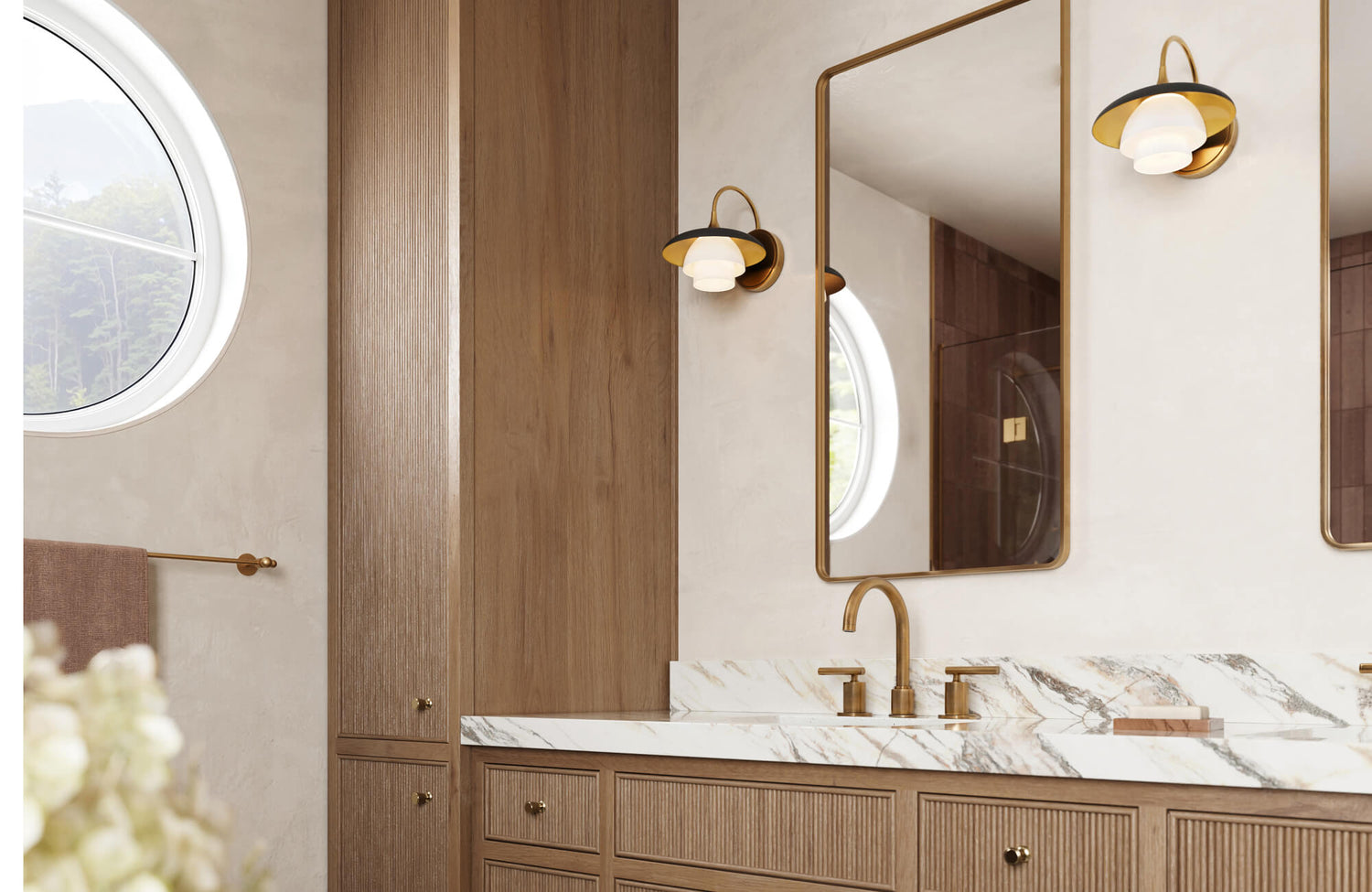
Vertical sconces positioned on either side of the mirror create a naturally balanced illumination pattern that contours the face evenly, a quality beautifully demonstrated by the Rycroft Wall Sconce in Aged Brass. As featured in the picture above, its elongated column silhouette and mid-fixture brass detailing introduce a refined visual rhythm, complementing the warm wood cabinetry and brushed metallic accents throughout the space. By placing vertical sconces 28–36 inches apart, the lighting envelope remains consistent across the mirror, minimizing facial shadows while reinforcing a sense of symmetry.
Horizontal vanity bars, by contrast, cast a broader, more expansive wash of illumination that better suits extra-wide or double vanities. The decision between vertical and horizontal formats ultimately depends on mirror scale, architectural proportion, and the desired lighting style.
Mirror Geometry and Symmetrical Alignmen
Mirror shape influences how light is perceived, making alignment a key part of the overall design strategy. Round and oval mirrors, for instance, often work best with side sconces that frame the curvature without overpowering it. Rectangular mirrors, by contrast, pair well with both vertical and horizontal fixtures, depending on the room’s proportions. Consistent spacing also ensures that light spreads evenly across the glass surface, preventing visual gaps or concentrated hot spots. This symmetry reinforces a sense of order that benefits both large and compact bathrooms. With careful alignment, the mirror and lighting function as a unified visual composition.

Choose Fixtures Based on Style, Material Integrity, and Design Continuity
A cohesive bathroom design emerges when fixture styles harmonize with surrounding finishes and architectural elements. By combining aesthetic considerations with durable materials, you ensure the lighting remains both beautiful and resilient.
Finish Selection for High-Humidity Durability
Selecting finishes for bathroom wall lights begins with understanding how humidity interacts with metal surfaces. Brushed nickel, matte black, chrome, and satin brass are particularly resistant to moisture when paired with high-quality protective coatings. These finishes retain their clarity even under repeated steam exposure from showers and baths. In addition, coordinating fixture finishes with faucets, hardware, and mirror frames creates a unified palette that strengthens the overall aesthetic. This visual consistency adds a sense of intentionality to the room’s design. Over time, durable finishes not only preserve appearance but also simplify maintenance.
Diffuser Materials and Light Transmission Quality
Diffuser materials influence how light behaves as it moves across the vanity. Opal glass, for instance, produces a soft, soothing glow that enhances relaxation-focused lighting schemes. Ribbed or fluted glass, on the other hand, introduces gentle refraction, adding visual depth while maintaining adequate brightness. Acrylic diffusers, particularly those engineered with UV-stable polymers, also offer excellent durability for busy bathrooms. When these materials are paired with optimized LEDs, the result is a clean, evenly distributed light pattern. This harmony ensures the lighting feels intentional, functional, and aligned with the room’s overall mood.
Style Compatibility With Bathroom Architecture
Fixture style directly shapes the bathroom’s visual language, guiding the room toward contemporary, transitional, or vintage-inspired expressions. Linear LED vanity bars, in particular, complement modern spaces through their clean geometry and understated refinement, while globe or opaline sconces introduce timeless curvature that softens rigid architectural lines. In more tailored or classic interiors, prismatic or fluted shades add artisanal texture, allowing the light to interact with wall paneling and millwork more dimensionally.
A great example, as shown in the photo above, is our Madison 12" Socket Wall/Vanity Light in Brushed Gold/Clear Ribbed Glass, whose vertically ribbed glass refracts light in a way that enriches the depth of richly colored tile and sculptural mirrors. Its brushed gold finish echoes warm metallic accents within the room, creating a cohesive dialogue between lighting, hardware, and decorative styling. When fixtures like this Madison vanity light are thoughtfully aligned with architectural details, the result is a lighting composition that feels intentional, elevated, and harmoniously integrated.

Evaluate LED Technology, Dimming Systems, and Energy Efficiency
Modern LED innovations deliver consistent illumination, reduced energy use, and long-term stability in moisture-rich environments. By examining LED quality, dimming compatibility, and color temperature options, you can tailor the lighting to both functional and atmospheric needs.
LED Lifespan, Heat Dissipation, and Driver Quality
Premium LEDs often exceed 50,000 hours of use, making them ideal for bathrooms where lights are frequently cycled on and off. With effective thermal management, internal temperatures stay stable, preserving color accuracy and lumen output over time. Heat-sink materials such as aluminum also help dissipate heat efficiently without adding bulk to the fixture. High-quality drivers further enhance performance by reducing flicker and maintaining consistent light levels. Together, these components ensure the fixture works reliably even with daily humidity fluctuations. This synergy makes LED systems both long-lasting and suited to the unique conditions of bathroom environments.
Dimming Compatibility and Mood Control
Incorporating dimmable LED bathroom wall lights allows the space to shift seamlessly between functional and relaxing atmospheres. At the same time, compatible TRIAC or ELV dimmers ensure smooth brightness transitions without flicker or buzzing. This dynamic control also supports high-intensity task lighting during morning routines and softer illumination during evening wind-down periods. Soft-start features add further refinement by preventing abrupt changes that can feel harsh in low-light settings. Because the bathroom often serves multiple purposes, adjustable lighting enhances its versatility. Ultimately, dimmable LEDs offer a tailored lighting experience that adapts fluidly to different needs.
Correlated Color Temperature (CCT) Selection
Selecting the right CCT range shapes the room’s mood and influences how reflections appear in the mirror. For example, warm 2700K–3000K temperatures create a calming, spa-like atmosphere ideal for evening routines. Cooler 3500K–4000K tones, on the other hand, provide clearer visibility for grooming tasks by approximating neutral daylight. Tunable CCT fixtures also allow users to shift between these ranges as needed, offering flexibility across the day. Maintaining consistent CCT across all fixtures prevents visual imbalance caused by mixed lighting temperatures. This thoughtful calibration enhances both usability and overall design harmony.
Bringing Lighting, Design, and Performance Together
Selecting the right bathroom wall light becomes a transformative design decision that influences clarity, comfort, and overall ambiance. When technical performance meets thoughtful placement and durable materials, the bathroom evolves into a space that feels elevated and effortlessly functional. High-quality LEDs, refined finishes, and carefully chosen diffusers also ensure the lighting performs beautifully across daily routines. As each element works together, the room gains a sense of cohesion that supports both practicality and personalized style. Ultimately, well-planned bathroom lighting brings harmony to the entire space, creating an environment that feels refined, enduring, and intuitively designed.
To support this level of refinement, Edward Martin offers personalized design services that help you navigate fixture selection with confidence and clarity, ensuring every detail aligns with your vision. If you’re ready to elevate your home with thoughtfully curated lighting, we invite you to contact us and begin shaping a space that feels beautifully tailored and timeless!