
)
)
)
)
)
)
)
)
How Do You Choose The Right 24 Inch Bathroom Vanity?
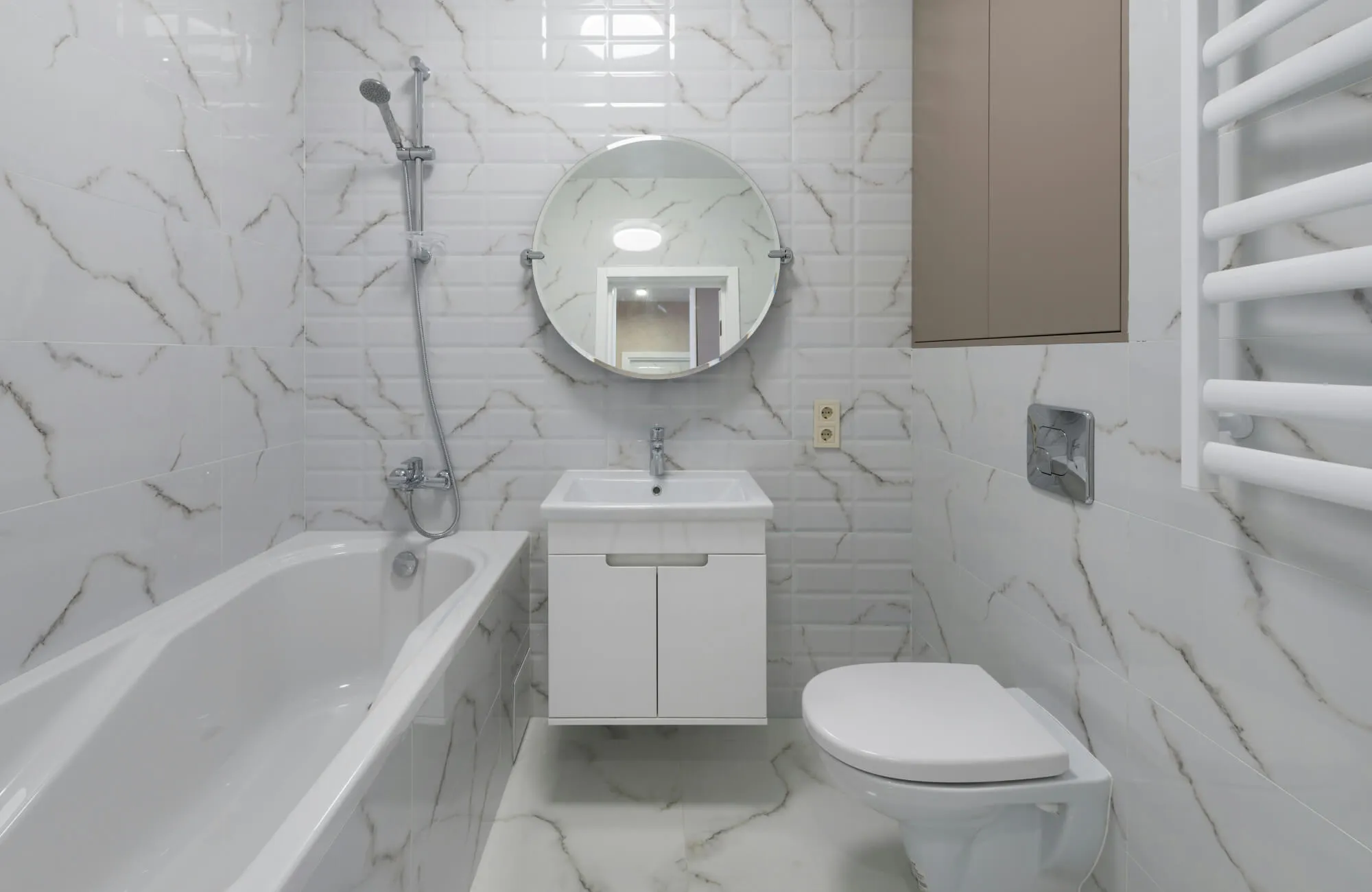
Choosing a 24-inch bathroom vanity can feel deceptively challenging, especially when every inch of space matters. Although the size is compact, the impact of the right choice reaches far beyond aesthetics. When selected with intention, a small vanity can improve daily comfort, enhance movement, and make a tight bathroom feel noticeably more open and organized.
Rather than focusing on size alone, the key lies in understanding how layout, storage, and finishes work together. By thinking holistically about how the vanity fits into your routine and the room itself, you can transform a limited footprint into a space that feels balanced, efficient, and thoughtfully designed. This article breaks down each consideration to help you make a confident, well-informed decision.
Space Constraints and Bathroom Layout
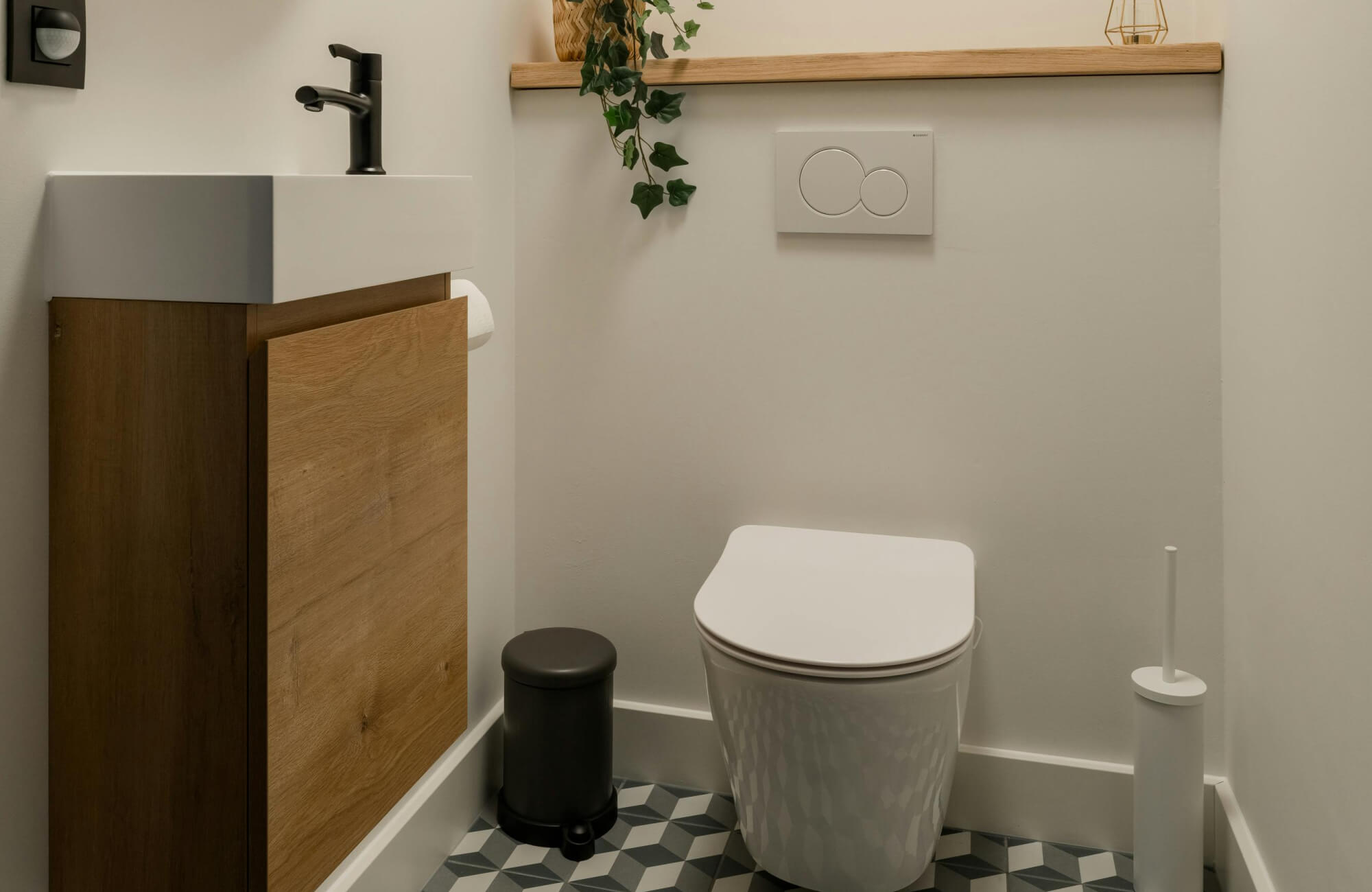
In a small space, careful planning of clearances, movement paths, and fixture placement determines whether the room feels usable or restrictive. When you allow enough space to move comfortably, open drawers fully, and stand at the sink without obstruction, the bathroom begins to feel intentional and efficient instead of cramped. Even subtle adjustments to placement can significantly improve how naturally you move through the space from entry to exit.
At the same time, the choice between wall-mounted and floor-standing vanities shapes both the visual and functional balance of the room. Floating designs emphasize openness by revealing more floor area, which helps the bathroom feel larger and more breathable, while floor-standing options offer familiarity and often simpler installation. Ultimately, when you consider how the vanity supports usage flow, visibility, and daily routines, the layout works in harmony with the room’s limitations. By prioritizing spatial relationships over isolated features, you also create a bathroom that feels comfortable, practical, and visually well-proportioned.
Choosing Sink Type and Countertop Depth
In a 24-inch vanity, the sink and countertop determine how comfortable and practical the setup feels day to day. Because space is limited, the right combination helps you maintain usability without sacrificing visual balance.
Vessel Sink Options
Choosing the right vessel sink style can significantly affect both usability and visual balance, especially in a small bathroom. Understanding how each option interacts with counter space, storage, and daily routines helps ensure your vanity works as well as it looks.
Integrated
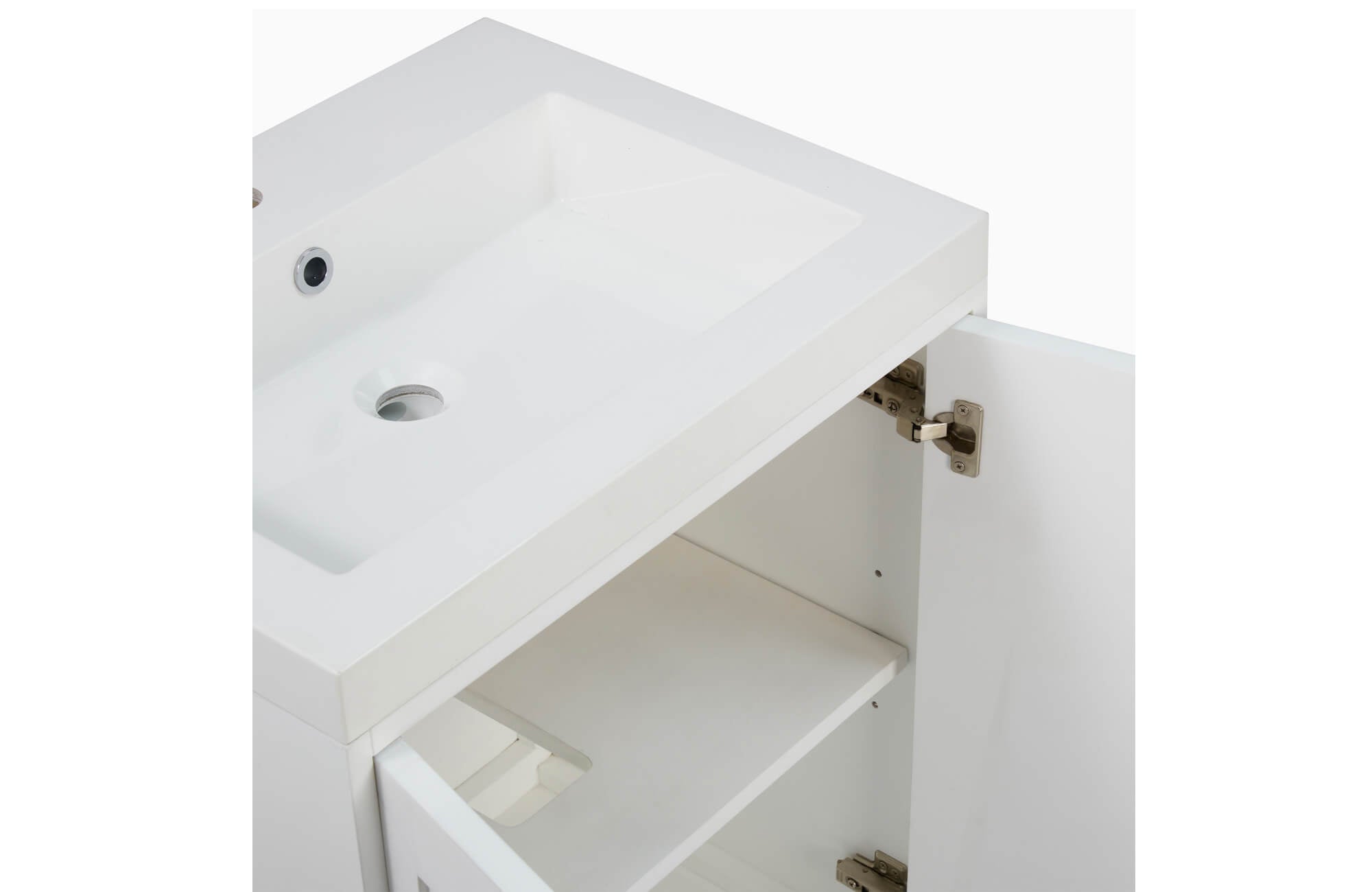
Integrated sinks are often the most efficient choice for a small bathroom because they simplify both form and function. With the basin molded directly into the countertop, you gain a seamless surface that is easy to clean and resistant to moisture buildup. This design also preserves as much usable counter space as possible, which is especially valuable when every inch counts.
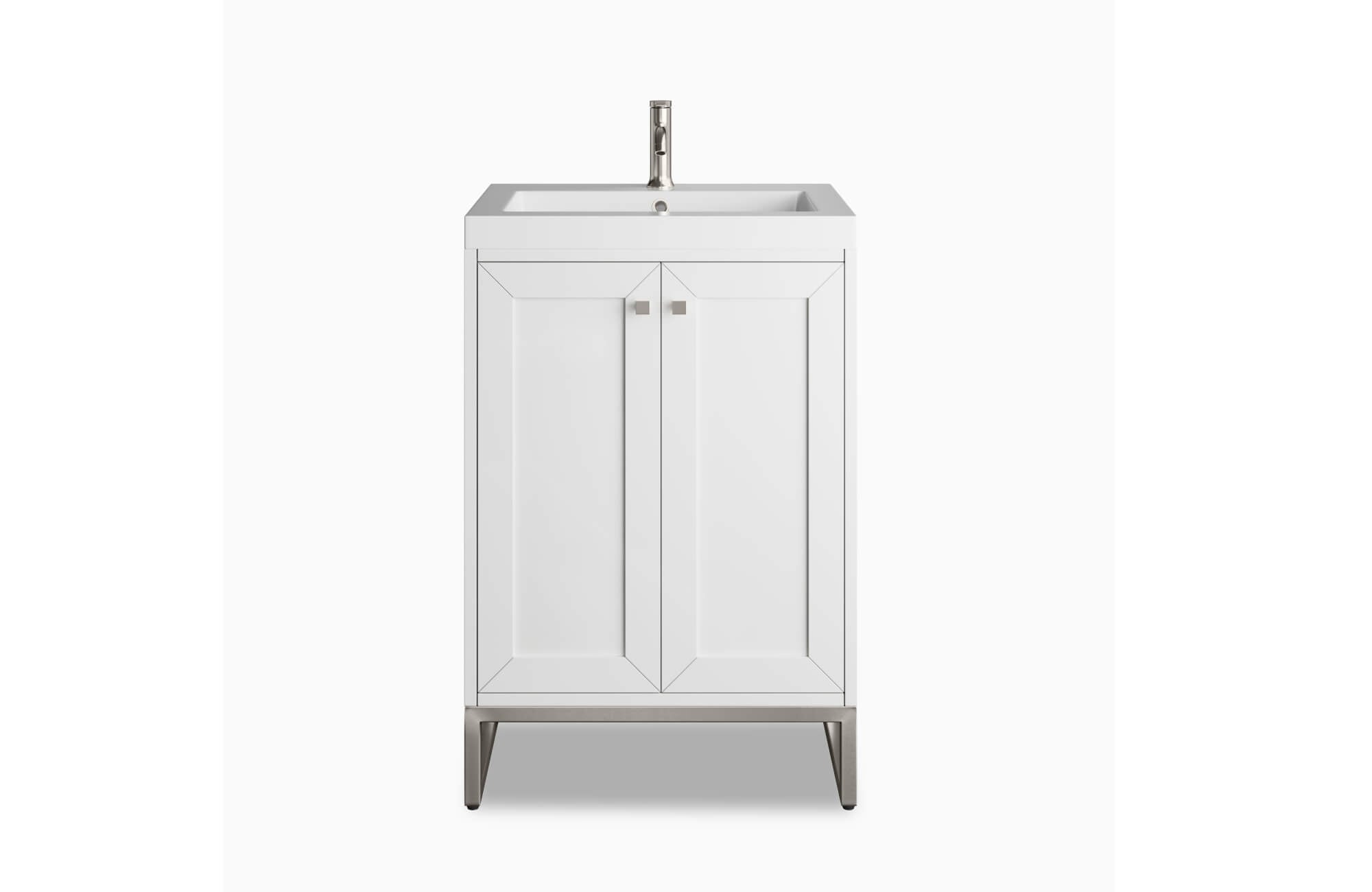
A good example of this approach is our Jensen 24" Single Vanity in Glossy White & Brushed Nickel with White Glossy Composite Stone Top, shown in the image above. The integrated sink and countertop create a single, uninterrupted plane, helping the vanity feel streamlined rather than bulky. This type of integrated design supports both daily practicality and a balanced, modern aesthetic, making it especially well-suited for compact spaces.
Undermount
Undermount sinks offer a similarly streamlined look, but they introduce a few trade-offs. Since the sink is mounted beneath a separate countertop, you may lose some internal cabinet or drawer space to accommodate the basin and plumbing. Although this option still works well in a 24-inch vanity, it requires careful planning if storage is already limited.
Vessel
Vessel sinks, although visually distinctive, tend to be less practical in tight spaces. They sit on top of the counter, reducing usable surface area and often requiring a higher faucet and deeper countertop. For a small bathroom that sees frequent use, this can feel restrictive, making vessel sinks better suited to powder rooms where visual impact matters more than daily efficiency.
Managing Depth for Comfort and Movement
Countertop depth plays a major role in how easily you can move around the vanity. Standard depths hover around 21 inches, which can feel bulky in narrow bathrooms. Choosing a reduced-depth vanity, typically between 15 and 18 inches, can immediately improve circulation and make the room feel more open.
Shallower vanities often work best when paired with thoughtfully designed sinks. Semi-recessed or compact basins extend slightly beyond the cabinet front, preserving a comfortable bowl size without increasing overall depth. This approach allows you to maintain everyday functionality while reducing how much space the vanity occupies.
Even a small reduction in depth can have a noticeable impact. With more clearance, doors swing more freely, and you feel less confined when standing at the sink. When depth is managed intentionally, the vanity supports movement rather than limiting it, which is essential in a small bathroom.
Selecting the Right Storage Configuration
When you’re working with a small vanity, storage choices need to be deliberate rather than abundant. Because width and depth are limited, how storage is arranged inside the vanity often matters more than how much storage you technically have.
Drawer-Based Versus Cabinet Storage
Drawers tend to work exceptionally well in compact vanities because they pull everything into view the moment you open them. Instead of reaching into dark cabinet corners, you can access toiletries, grooming tools, and everyday items quickly, which makes daily routines feel smoother and more efficient. U-shaped drawers that wrap around plumbing are especially valuable, as they reclaim space that would otherwise go unused beneath the sink.
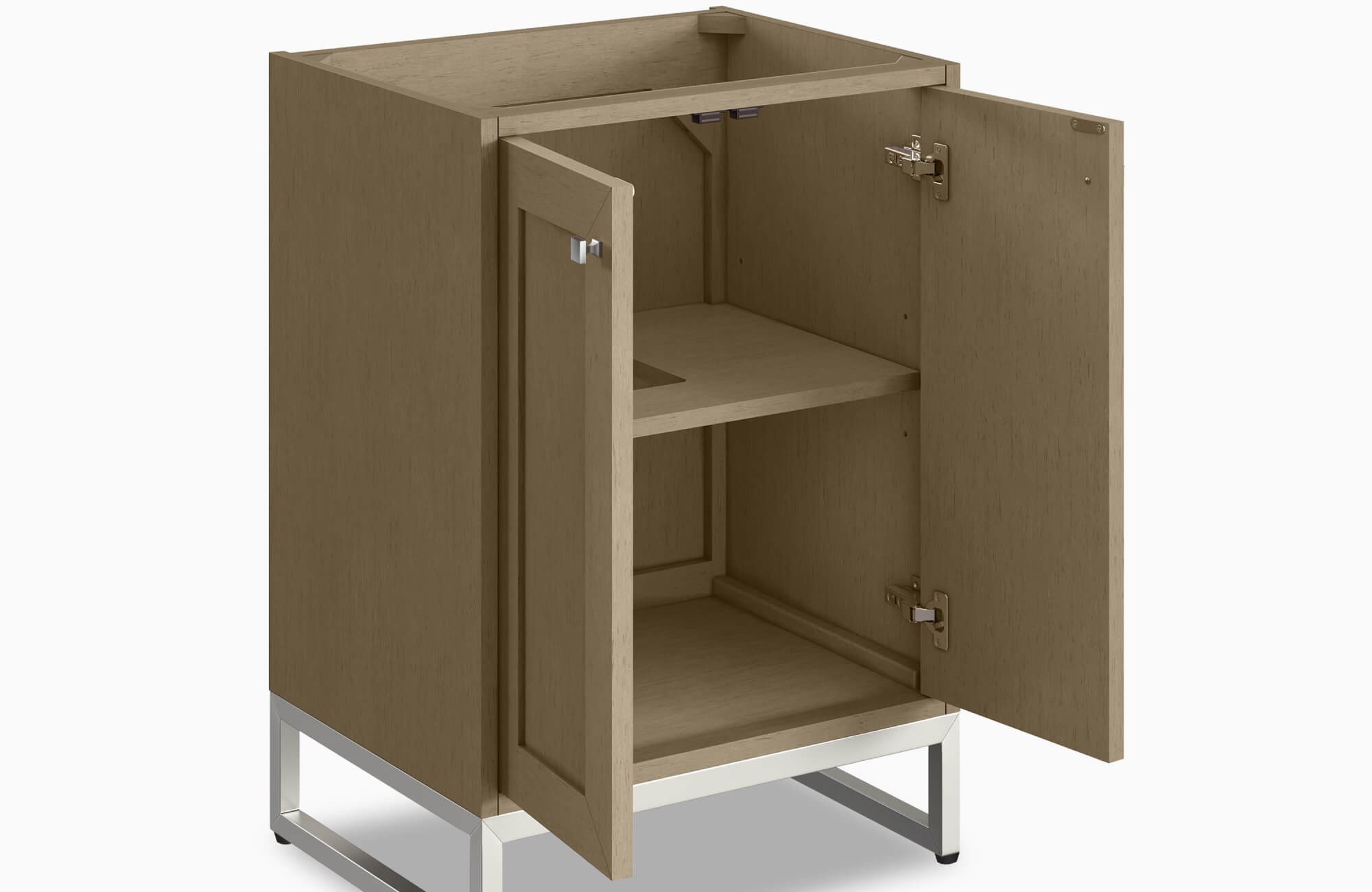
In comparison, cabinet storage still plays an important role when vertical clearance is needed for taller items such as cleaning supplies or stacked towels. The photo above highlights this advantage clearly, showing a thoughtfully designed cabinet interior with a shelf that maximizes usable vertical space without feeling cramped. This piece is our Jensen 24" Single Vanity in Walnut Whisper & Brushed Nickel with White Glossy Composite Stone Top, which uses a clean cabinet layout to accommodate taller items while maintaining easy access. Finished in brown, the cabinet feels substantial yet refined, making it well-suited for small bathrooms that need practical storage without visual heaviness.
Open Shelving and Minimal Storage Options
Open shelving offers a different advantage by visually lightening the vanity, which can make a small bathroom feel more spacious. When shelves are exposed, the vanity appears less bulky, creating a sense of openness that’s especially helpful in tight layouts. This approach works best when you’re comfortable keeping only a few carefully chosen items on display.
To avoid a cluttered look, open shelving is most effective when paired with additional storage elsewhere in the bathroom. Recessed medicine cabinets or wall-mounted units can quietly handle everyday necessities, allowing the vanity itself to remain streamlined. With this balance, you can enjoy an airy, modern feel while still meeting your practical storage needs without overwhelming the space.
Style and Finish Choices That Visually Expand Space
Beyond physical dimensions, the way a vanity looks has a powerful effect on how spacious your bathroom feels. By making smart choices with color, finish, and detailing, you can help a compact vanity blend seamlessly into the room rather than visually crowd it.
Light Colors and Reflective Surfaces
Light-colored finishes naturally reflect more light, which helps soften shadows and reduce visual heaviness. When you choose whites, pale grays, or cool-toned neutrals, the vanity appears to recede rather than stand out, making the room feel more open and breathable. This subtle visual trick is especially effective in bathrooms with limited natural light.
Taking this a step further, glossy or lacquered finishes amplify brightness by bouncing light into areas that are often shadowed, such as beneath the sink or along tight corners. As a result, the vanity feels lighter and less grounded, which helps prevent the cramped sensation that can develop in smaller spaces.
Hardware Scale and Visual Simplicity
Hardware may seem like a small detail, but it plays a significant role in how your vanity is perceived. Oversized or highly decorative pulls tend to draw attention, unintentionally emphasizing the vanity’s compact proportions. In contrast, slim profiles or integrated hardware keep the design understated and visually calm.
For a more cohesive look, coordinating hardware finishes with your faucet and mirror helps everything flow together. When the finishes align, the eye moves smoothly across the space instead of stopping at individual elements. This visual continuity makes the vanity feel like a natural extension of the bathroom rather than a separate, space-consuming feature.
Budget, Durability, and Long-Term Value
The price of a vanity is only one part of its overall value. In a small bathroom, where moisture and daily use are concentrated, choosing materials and construction that last can make a noticeable difference over time.
Materials and Construction Quality
When durability is a priority, solid wood vanities stand out for their long-term performance, especially when properly sealed against moisture. Over the years, they tend to maintain their structural integrity and appearance, even with frequent use. Furniture-grade plywood also offers a strong middle ground, as it handles humidity more consistently than many solid woods while still delivering dependable strength. Engineered materials like MDF have also become a popular choice because of their smooth, uniform composition and cost-effective reliability. When properly sealed and finished, MDF resists warping and provides an excellent surface for painted or detailed designs, making it well-suited for controlled bathroom environments with adequate ventilation.
Cost Versus Performance in Small Vanities
In a small vanity, cost and performance are closely linked because the materials and hardware are subjected to frequent use in a compact, moisture-heavy environment. Although entry-level 24-inch vanities may appear similar at first glance, modest upgrades in construction quality, hardware, and finishes often have a significant impact on durability and daily comfort. Features such as soft-close drawers, sturdier joinery, and moisture-resistant coatings help reduce wear over time and improve the overall user experience.
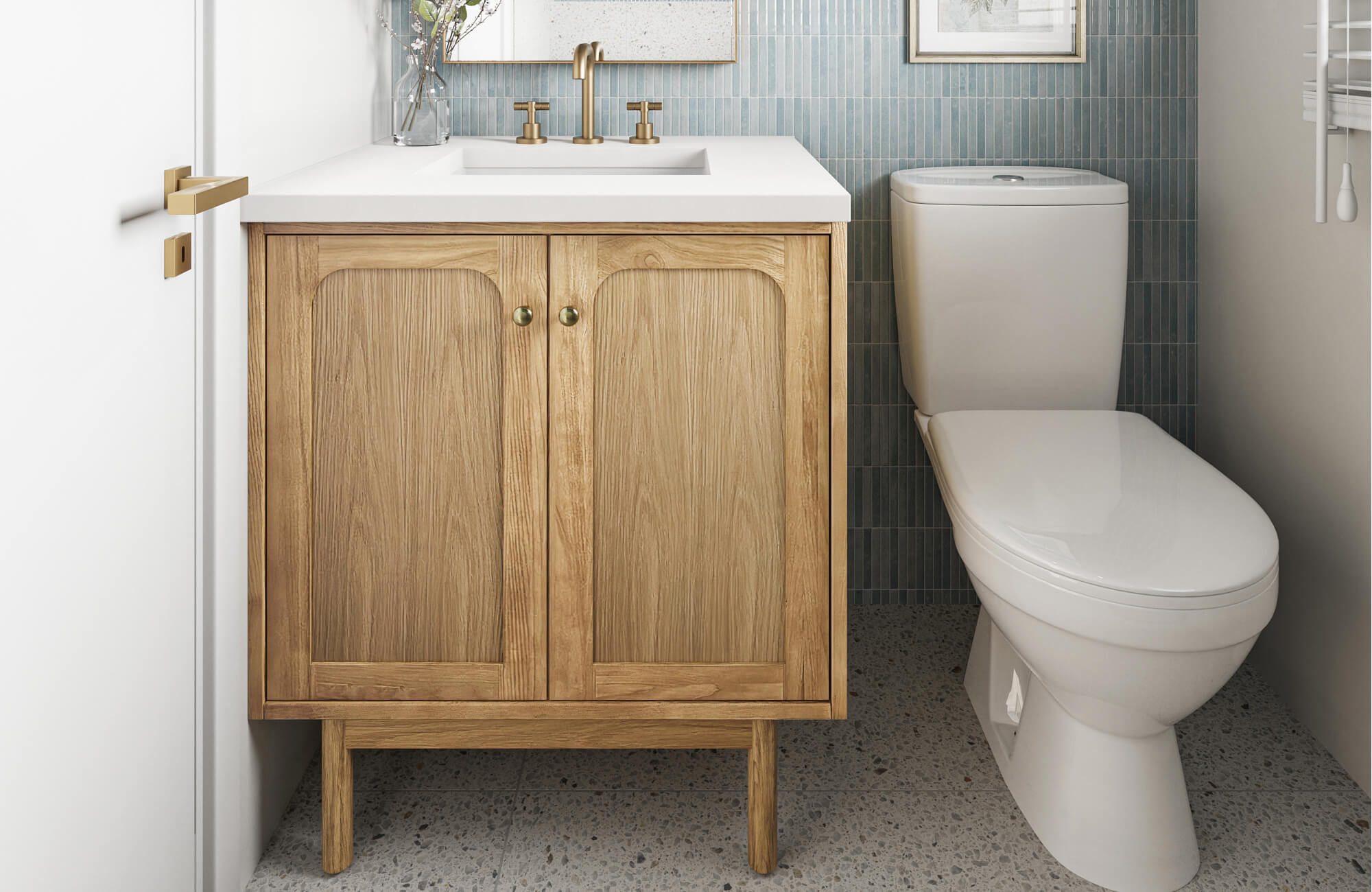
This value-focused mindset also applies when stepping up slightly in size. For bathrooms that can accommodate a wider footprint, our Abigail 30" Single Vanity in Light Natural Oak with 3 cm White Zeus Quartz Top, featured above, illustrates how thoughtful construction can deliver strong long-term performance without a dramatic increase in cost. Built to withstand daily use, it pairs durable cabinetry with a quartz countertop that resists staining and wear, helping the vanity maintain both function and appearance over time.
Designing a Small Bathroom That Feels Bigger and Works Smarter
Choosing the right 24-inch bathroom vanity for a small bathroom is less about compromising and more about prioritizing what truly matters. By evaluating layout, sink type, depth, storage configuration, finishes, and material quality together, you can select a vanity that fits comfortably while supporting daily routines with ease. When each decision is made with intention, a 24-inch vanity becomes a smart, space-conscious solution that enhances functionality, improves flow, and helps a small bathroom feel thoughtfully designed, efficient, and surprisingly spacious.
If you’d like help applying these considerations to your own space, our team is here to guide you through the process. By reaching out through our contact page, you can get personalized advice to help you choose a 24-inch vanity that fits your layout, style, and everyday needs with confidence.
Follow us on Instagram
@EDWARD.MARTIN
)
)
)
)
)
)
)
)
)
)
)
)
)
)
)
)