Balancing the ambience in a dining space is a central part of any successful renovation, going far beyond simply selecting attractive furniture or a pleasing color scheme. During a renovation, each decision—from layout changes to material selection—shapes how light, scale, texture, and finishes interact to influence how the room feels from the moment you step inside. When these elements are carefully considered together, the dining area becomes a space that invites conversation, encourages lingering, and transitions effortlessly from everyday meals to special occasions.

Using Tiles to Set the Foundation
Tiles form the permanent base of a dining space, shaping how the room feels both visually and physically. Because they influence light, acoustics, and movement, the right tile choices help you establish balance while setting a lasting tone for the entire space. To help you decide with confidence, viewing your selected tiles in your own space through our augmented reality (AR) tool allows you to better understand scale, color, and how each option interacts with your existing surroundings.
Wall Tiles and Visual Rhythm
Wall tiles add structure and visual rhythm without demanding attention, making them an effective alternative to paint or wallpaper. When you choose vertically oriented layouts, such as stacked or elongated tile patterns, the eye naturally travels upward, which helps the dining area feel taller and more refined. This subtle lift is especially effective in rooms where ceiling height plays a role in overall ambience.
Beyond layout, texture becomes a defining element. Handcrafted look tiles like our Colby 2x10 Glossy Porcelain Subway Tile in Smoke, seen in the image above, introduce a gentle dark grayish-brown variation that softens the space and allows light to shift subtly across the surface throughout the day. These nuanced changes prevent walls from feeling flat or static, creating a backdrop that feels lived-in rather than overly polished. Color and finish then build on this sense of depth, influencing how the wall interacts with surrounding elements. When tones remain neutral, and finishes are thoughtfully chosen, wall tiles provide a balanced backdrop that supports statement pieces such as a solid wood dining table or sculptural chairs, allowing them to stand out without visual competition.
Floor Tiles and Spatial Flow
Floor tiles play a critical role in defining the dining area, particularly in open layouts where boundaries are not marked by walls. Large format tiles minimize visual interruptions by reducing grout lines, which helps the floor read as one continuous surface. This sense of continuity makes the space feel more open while maintaining a grounded, cohesive look. Finish and tone also shape how the room is experienced. Matte floor tiles absorb excess light and soften sound, reducing echoes that can make dining areas feel cold or loud. This quality naturally encourages a more relaxed, intimate atmosphere where conversation flows easily.
Moreover, choosing slightly deeper tones for the floor adds visual weight that anchors the room. A wood look option like our Jameson 8x48 Matte Porcelain Tile in Umber, shown in the same space above, delivers this grounding effect while introducing the warmth and linear flow of natural planks. When paired with lighter walls, its rich brown tone creates contrast that stabilizes the layout and helps furniture feel intentionally placed. Together, scale, texture, and a matte finish ensure the floor supports both comfort and visual harmony, reinforcing the dining space as a welcoming place to gather.

Balancing Atmosphere Through Lighting
Lighting shapes how you experience the dining space from morning through evening, influencing mood, comfort, and visual balance. By layering different light sources, you can transition seamlessly between practical brightness and a warm, inviting glow that suits both everyday meals and special gatherings.
Overhead Lighting and Focal Balance
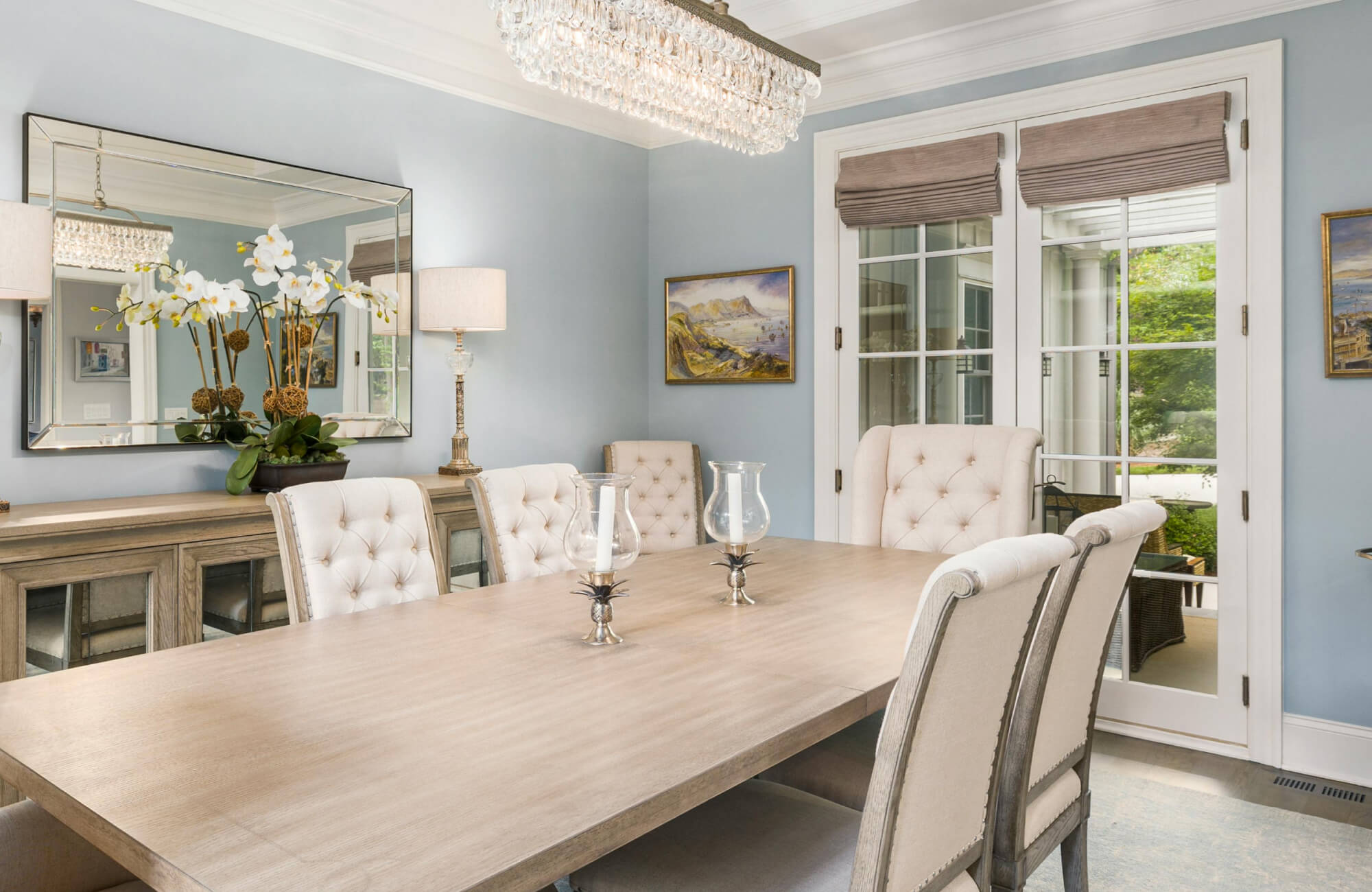
The overhead fixture serves as the visual anchor of the dining area, establishing where attention naturally settles. A statement piece like our Kylie Lantern in Vintage Gold Leaf adds sculptural presence while casting a warm, inviting glow over the table. As displayed in the picture above, when you choose a chandelier or pendant that is proportionate to the dining table, typically scaled to about half to two-thirds of its width, the space immediately feels intentional and composed, ensuring the light enhances the table rather than overpowering it or fading into the background.
Equally important is how the fixture is positioned. Suspending it so the bottom sits about 30 to 36 inches above the tabletop provides ample illumination while keeping sightlines open and comfortable. This height allows light to spread evenly across the surface without glare, which is essential for both dining and conversation. In rooms with higher ceilings, adjusting the drop length also maintains proper proportion and prevents the fixture from feeling disconnected from the table below. Centering the light directly over the table, rather than the room itself, further defines the dining zone. This approach is especially effective in open layouts, where lighting helps visually separate the dining area without the need for walls.
Ambient and Accent Lighting Control
Although overhead lighting establishes focus, ambient and accent lighting give the dining space depth and softness. Adding wall sconces like our Kara Wall Sconce In Aged Brass, seen in the same photo above, or indirect lighting along architectural features helps reduce harsh contrasts and creates a more relaxed, enveloping atmosphere. These secondary light sources prevent the room from feeling flat once the main fixture is turned on.
Control also plays a key role in achieving balance. Dimmers allow you to adjust light levels throughout the day, shifting from bright and energizing to low and intimate as needed. For a natural transition, warm dim LED bulbs are especially effective, as they gradually move from crisp white light to a soft amber tone that feels welcoming in the evening.
Additionally, placement plays an equally important role in how ambient and accent lighting perform. Sconces installed around eye level, for instance, gently illuminate vertical surfaces, which flatter both the people at the table and the materials in the room. When thoughtful placement works in harmony with layered lighting and dimming control, the dining space feels evenly lit, calm, and inviting—supporting conversation and comfort without ever feeling too stark or too subdued.

Grounding the Space With Rugs
A rug brings softness and warmth into the dining area while helping anchor the table and chairs as a single, cohesive zone. Especially in open or minimally divided spaces, the right rug defines where dining begins and ends, creating comfort both visually and underfoot.
Scale and Proportion Under the Table
Rug size plays a major role in how balanced the dining area feels, setting the foundation for both comfort and visual cohesion. When the rug extends at least 24 inches beyond the table on all sides, chairs remain fully supported even when pulled out, preventing awkward edges and keeping the dining set visually connected. This generous sizing also helps the space feel intentional rather than constrained.
Beyond overall dimensions, proportion determines how naturally the rug fits within the room. A rug that is too small can make the table feel isolated, while one that is properly scaled reinforces the dining area as a clear focal point. In tighter spaces, choosing the largest rug that comfortably fits the room often creates a more unified and spacious impression without overwhelming the layout. Shape further refines this sense of balance. Rectangular rugs naturally echo the lines of long dining tables, while round or square rugs enhance the symmetry of circular tables.
Texture and Pattern for Mood Control
Texture plays a key role in both the function and atmosphere of a dining space. Low-pile rugs strike an ideal balance by providing comfort underfoot while still allowing chairs to slide easily, making them well-suited for everyday use. Flatweaves and natural fiber options, such as sisal, further support durability without feeling bulky, helping the dining area remain practical and visually light.
Pattern then adds a subtle layer of personality and mood. A rug like our Hutchinson Rug in Burgundy / Denim, featured above, introduces warm beige and golden yellow colors and a softly layered pattern that grounds the dining area without overwhelming it. Its tonal variation adds warmth beneath the table while helping disguise everyday crumbs or minor spills, making it well-suited for active dining spaces. When texture and pattern work together this way, the rug does more than sit beneath the table. It also softens acoustics, connects surrounding materials, and reinforces an ambience that feels inviting, grounded, and thoughtfully finished.

Choosing the Right Dining Table
The dining table anchors both the look and the rhythm of the space, acting as a visual focal point and a daily gathering surface. When its scale, shape, and material are thoughtfully chosen, the table enhances comfort and flow while reinforcing the overall ambience of the room.
Table Shape and Spatial Harmony
The shape of your dining table should work in harmony with the room’s proportions and how you move through the space. In rooms that are square or shared with other functions, round tables such as our Alice 60" Dining Table in Natural naturally soften the layout and encourage conversation by keeping everyone within equal reach. When paired with a pedestal base, they also reduce visual clutter below, helping the room feel lighter and more open.
Rectangular tables, by contrast, introduce structure and formality, making them well-suited for longer or more linear rooms where clear definition is needed. For those seeking a softer presence without sacrificing surface area, oval tables offer a balanced alternative by easing sharp corners and improving circulation. When the table’s geometry aligns with the room’s footprint, furniture placement also feels natural, movement remains comfortable, and the dining area feels intentional rather than isolated within the space.
Material Weight and Visual Temperature
Material choice strongly influences whether a dining space feels grounded or airy. A blend of solid oak and oak veneer wood, like our Rebecca 86" to 120" Dining Table in Greige, seen above, adds warmth and visual weight that anchors rooms with high ceilings or abundant natural light. Its substantial pedestal base provides stability while maintaining an elegant profile, and the sand beige finish balances warmth with a lightened tone that prevents the table from feeling too heavy. This sense of substance also helps counterbalance lighter elements elsewhere in the room, creating a dining space that feels cozy, composed, and visually intentional.
In contrast, lighter materials such as glass or acrylic reduce visual mass, allowing the space to feel more open and less crowded, which is especially beneficial in smaller dining areas. Stone tabletops also introduce a refined, luxurious presence but require thoughtful pairing with lighter chairs, neutral walls, or subtle flooring. By balancing material weight with contrasting elements, the table feels substantial without overpowering the overall design.

Creating Comfort With Dining Chairs
Dining chairs shape how the space feels both visually and physically, since they are the elements you interact with most during every meal. When their scale, form, and materials are thoughtfully chosen, chairs support comfort while reinforcing the room’s overall balance and rhythm.
Chair Silhouettes and Visual Flow
The silhouette of a dining chair strongly influences how open or dense the dining area appears. Slim profiles and open-back designs allow light to pass through, helping the space feel breathable and uncluttered. This approach works especially well when the dining table has visual weight or when the room features bold flooring, as lighter chair forms prevent the space from feeling crowded.
More substantial chairs also introduce a different kind of presence. Upholstered or high-back styles add softness and a sense of occasion, making them ideal for anchoring the ends of a rectangular table. When used intentionally and with consistent seat heights and back proportions, these chairs create visual calm, allowing lighting and architectural features to remain the primary focal points rather than competing elements.
Material Mix and Tactile Balance
Material choices shape both comfort and atmosphere in a dining space. Combining wood with metal introduces contrast, balancing warmth with a refined, modern edge, while echoing these finishes in lighting or hardware helps the room feel cohesive without appearing overly coordinated.
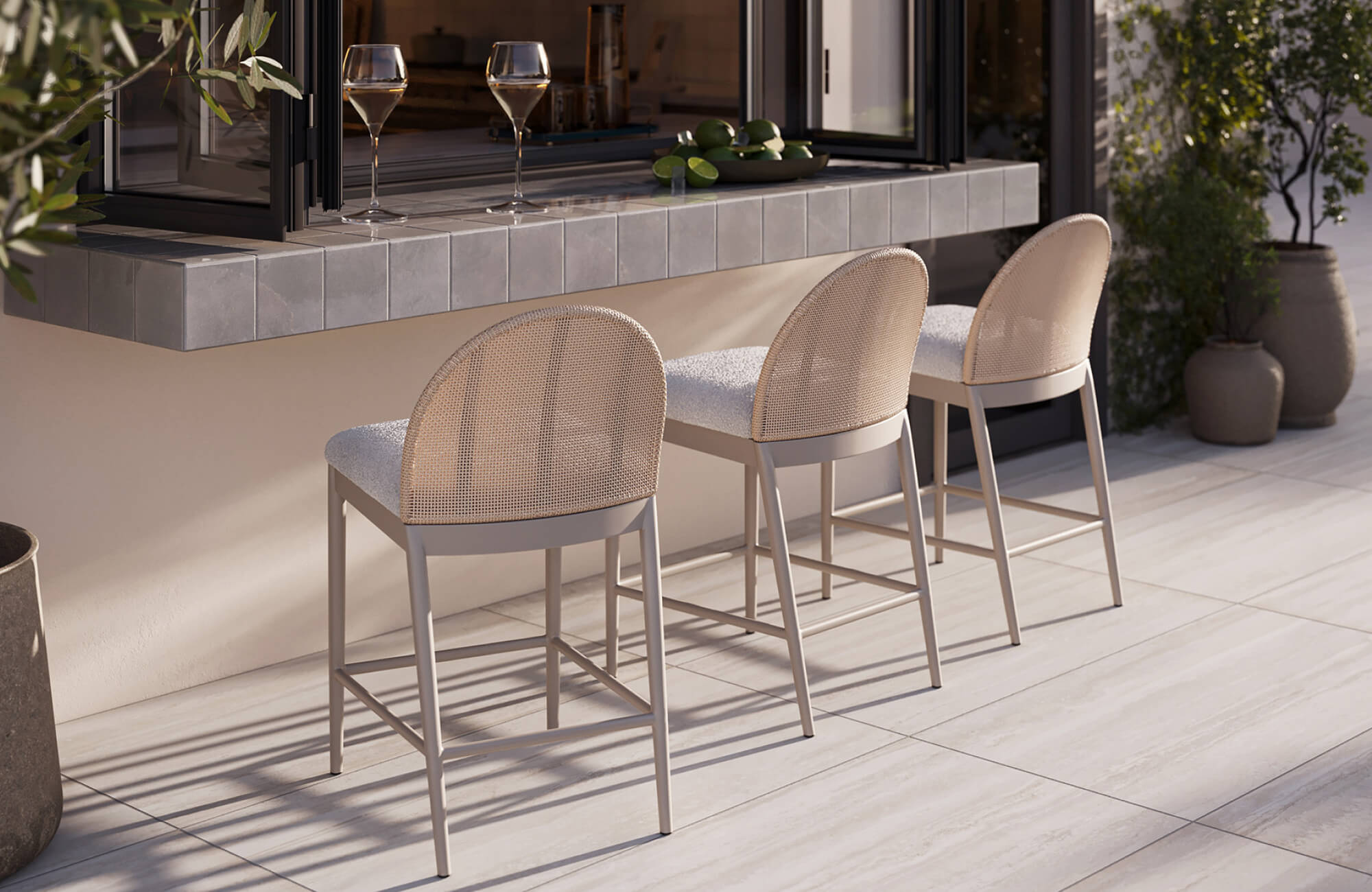
Upholstered seating also plays an important role in enhancing comfort and visual softness. Our Clark Outdoor Dining Chairs in Louis Cream, Set of 2, featured above, combine a structured frame with plush, light-toned upholstery that adds warmth without overwhelming the space. Their cushioned seats encourage lingering at the table, while the contrast between the creamy fabric and darker base creates a balanced, modern look. When paired with other natural textures and finishes in the room, chairs like these reinforce a dining area that feels inviting, refined, and thoughtfully composed.

Supporting the Dining Space With Sideboards
Sideboards play a quiet but important role in balancing the ambience of a dining space by adding function, visual weight, and compositional support beyond the table and chairs. Positioned along a wall or beneath artwork, they help ground the room while providing practical storage for serveware, linens, and everyday essentials. When thoughtfully scaled and finished, a sideboard also reinforces the dining area’s rhythm, contributing to a space that feels organized, intentional, and comfortable without competing with the main gathering zone.
Our Brooke Sideboard in Rustic Oak, shown in the photo above, aligns naturally with this role by adding warmth, texture, and understated presence to the dining space. Its softly grained wood finish introduces visual depth that helps ground the room, while the clean, sculpted lines keep the silhouette calm and composed. Positioned along a wall, the sideboard supports both function and flow by offering discreet storage for dining essentials without drawing attention away from the table.
Designing a Dining Space That Feels Cohesive and Intentional
Balancing the ambience in a dining space for a perfect renovation is achieved by thoughtfully coordinating structure, comfort, and atmosphere rather than focusing on individual elements in isolation. When foundational choices like tiles and wall finishes set a calm visual base, lighting establishes mood, rugs define the dining zone, and furniture is scaled and styled to suit the room, the space begins to feel naturally harmonious. By aligning materials, proportions, and finishes with how the room is used day to day, a dining area can also feel both functional and inviting, resulting in a renovation that supports effortless gatherings, visual balance, and a warm sense of cohesion.
To support this level of coordination throughout a renovation, working with a professional design team can bring clarity and confidence to every decision. Our design services help translate your vision into a cohesive plan by considering layout, materials, finishes, and scale as a unified whole, ensuring each choice complements the next. With expert guidance, the process becomes more streamlined, allowing you to achieve a dining space that feels intentional, balanced, and thoughtfully tailored to how you live and gather.