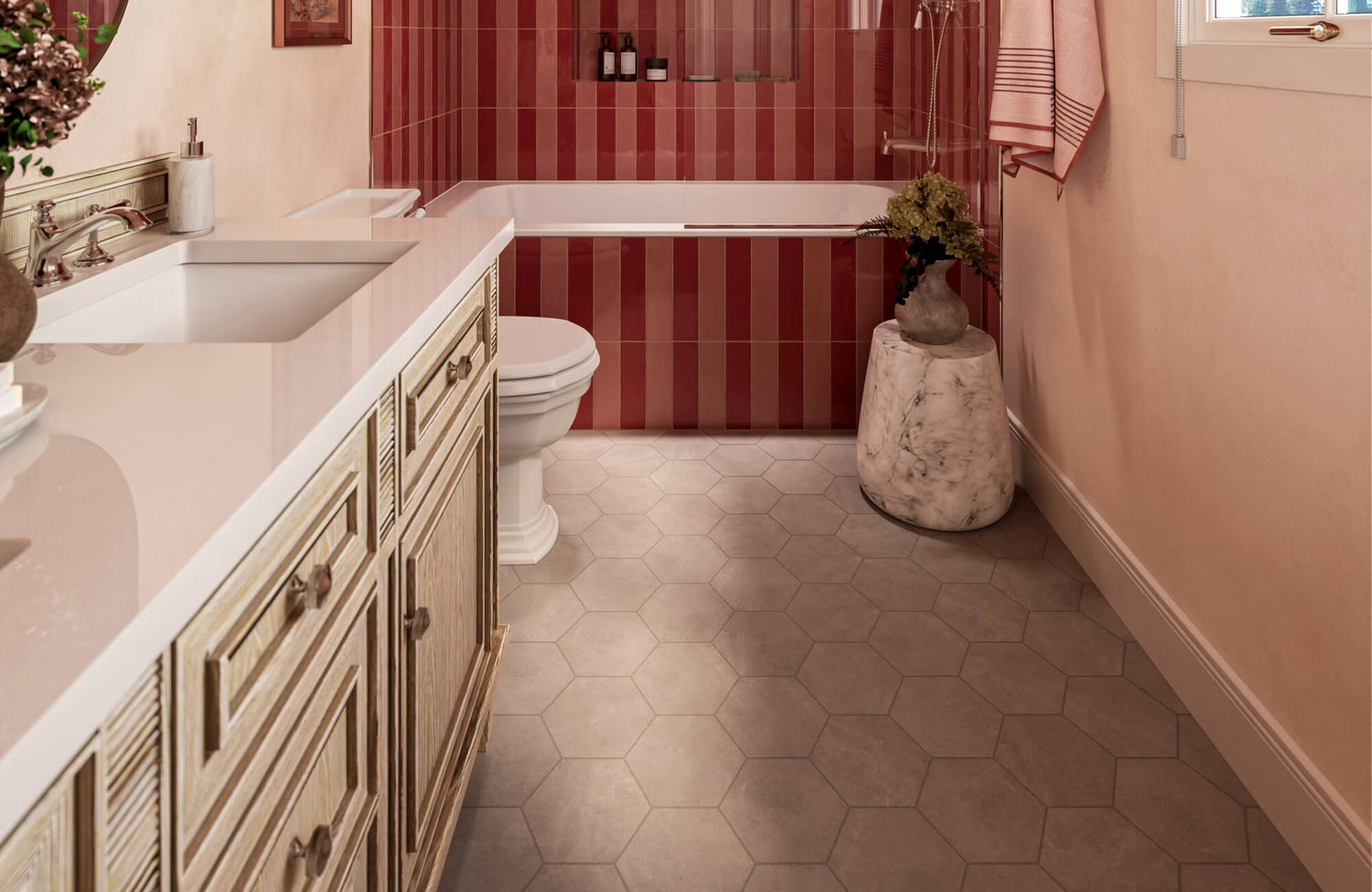
Hexagon floor tile is one of those design choices that can quietly define a minimalist bathroom or completely overwhelm it if handled poorly. The shape brings structure and rhythm to the floor, but how it’s paired with lighting, fixtures, and finishes ultimately determines whether the space feels calm or cluttered. In this blog, we’ll walk through how to use hexagon bathroom floor tile thoughtfully, from layout and finishes to lighting, vanities, rugs, and mirrors, so the final result feels composed, practical, and easy to live with.

Why Hexagon Floor Tile Works So Well in Minimalist Bathrooms
Hexagon floor tile fits naturally into minimalist bathrooms because it brings structure without asking to be the center of attention. The shape adds definition to the floor while still letting the rest of the space feel open and relaxed. Below, we’ll walk through how geometry, repetition, and scale help hexagon tile support a clean, minimalist look without making the room feel busy.
Geometry That Adds Detail Without Feeling Busy
Hexagon tile introduces detail through shape rather than contrast, which keeps the floor visually calm. The pattern is noticeable, but it doesn’t interrupt how your eye moves through the room. Instead of drawing attention to itself, the geometry works quietly in the background. For example, in a bathroom with simple walls and streamlined fixtures, the floor adds just enough variation to avoid feeling flat. Because the shape repeats evenly, nothing feels scattered or chaotic. The space stays composed, even with texture underfoot.
Repetition and Order in Minimalist Design
Repetition is one of the main tools that makes minimalist spaces feel settled, and hexagon tile naturally supports that sense of order. Each tile connects cleanly to the next, creating a steady rhythm across the floor. That consistency helps the bathroom feel grounded and easy on the eyes. Rather than introducing contrast or decoration, the pattern reinforces structure. Over time, this predictability becomes part of what makes the space feel comfortable. The floor quietly supports the overall layout instead of competing with it.
How Small Shapes Support Calm, Structured Spaces
Smaller hexagon tiles spread visual detail evenly, which helps keep minimalist bathrooms from feeling heavy or crowded. Instead of one large surface dominating the room, the floor feels lighter and more balanced. This is especially helpful in smaller bathrooms, where oversized elements can feel overwhelming. Smaller shapes add texture without making the space feel tight. They also pair well with simple vanities and clean-lined fixtures. The result feels orderly and intentional without feeling rigid.
When Hexagon Tile Feels Minimal vs Overdone
Hexagon tile works best when it’s allowed to play a supporting role in the room. It can start to feel overdone when it’s paired with too many strong design elements at once. For instance, bold patterns elsewhere in the bathroom can make the floor feel visually loud by comparison. Scale matters here as well, because larger hex tiles can read more graphic and dominant. When the surroundings finish, stay simple, the shape feels balanced and calm. Keeping the focus on restraint helps the tile blend naturally into the space.
A great example of this balance is our Juliet 7x8 Hexagon Matte Porcelain Tile in Olive above, which keeps the floor grounded while still feeling visually rich. Its clay-inspired mix of sage, deep green, and sunwashed brown tones shifts subtly from tile to tile, so the surface feels lived-in rather than graphic or repetitive. The matte, mineral-like finish, paired with a delicate, randomized sheen on select pieces, adds quiet depth that supports a minimalist bathroom without pushing the floor into statement territory.

Choosing the Right Hexagon Tile Color and Finish for a Minimalist Look
Once the shape is right, color and finish are what truly set the tone of a minimalist bathroom. These choices quietly shape how calm, cohesive, or visually busy the space feels once everything comes together. Here, we’ll go over how subtle shifts in tone, surface finish, and grout color influence the overall simplicity of a hexagon tile floor.
Neutral Color Palettes That Keep the Space Grounded
Neutral tones are a natural fit for minimalist bathrooms because they create a steady visual base without pulling attention away from the overall layout. Soft whites, warm beiges, light grays, and muted stone tones help the floor feel integrated rather than highlighted. These colors allow other elements, like clean-lined vanities or simple wall finishes, to sit comfortably alongside the tile. Because neutrals don’t compete with one another, the space feels more cohesive as a whole. For instance, a warm neutral floor can subtly balance cooler wall tones without feeling intentional or styled.
Our Juliet 7x8 Hexagon Matte Porcelain Tile in Rust above is a good example of how warmer neutrals can still feel restrained in a minimalist bathroom. Its terracotta and clay-red tones shift subtly from tile to tile, which keeps the floor from feeling flat while avoiding sharp contrast. The matte, mineral-like surface, paired with a delicate, randomized sheen on select pieces, adds warmth and depth that feels natural rather than styled, helping the space stay grounded and calm.
Matte vs Satin Finishes in Minimalist Bathrooms
Finish plays a big role in how noticeable the tile feels underfoot. Matte hexagon tiles tend to absorb light, which helps reduce visual contrast and keeps the floor feeling understated. Satin finishes reflect a bit more light, adding softness without becoming shiny or distracting. Both can work in minimalist bathrooms, depending on how quiet you want the surface to feel. Matte finishes often lean more relaxed and grounded, while satin can feel slightly more refined. The key is choosing a finish that supports the calm mood of the space rather than drawing attention to texture.
Using Tone-on-Tone Tile for Visual Continuity
Tone-on-tone tile uses small variations within the same color family to add depth without breaking visual flow. This approach keeps the floor from feeling flat while still maintaining a minimalist look. Because the shifts are subtle, your eye reads the surface as one continuous plane rather than a pattern. This works especially well in bathrooms where you want the floor to blend seamlessly with walls or fixtures. For example, slightly varied off-white hex tiles can add dimension without introducing contrast. It’s a quiet way to add interest while keeping the space visually steady.
How Grout Color Affects the Overall Simplicity
Grout color can either reinforce minimalism or disrupt it, depending on how it’s chosen. Matching grout closely to the tile color helps the pattern recede, making the floor feel smoother and less graphic. This keeps attention on the space as a whole rather than on individual tile shapes. High-contrast grout, on the other hand, outlines every hexagon and can quickly feel busy. In minimalist bathrooms, softer grout choices usually support a calmer result. Keeping grout understated helps the tile feel integrated rather than emphasized.

Using Hexagon Floor Tile to Define Space Without Visual Clutter
Hexagon floor tile can quietly organize a bathroom without relying on obvious visual dividers. When it’s placed with intention, it helps guide how the space is used while still keeping everything feeling open and cohesive. Below, we’ll go over how hexagon flooring can define zones and transitions in a way that feels subtle, practical, and aligned with minimalist design.
Subtle Zoning for Showers and Wet Areas
Hexagon tile is especially effective in wet areas because the shape naturally signals a functional shift without needing a hard boundary. Instead of introducing a new material or a bold contrast, the same tile can be used to quietly mark where the shower begins. This keeps the bathroom from feeling visually chopped up. Because the geometry stays consistent, the zoning feels calm and intentional rather than decorative. For instance, extending the floor tile slightly into the shower area can guide use without drawing attention to itself. In minimalist bathrooms, this kind of understated separation tends to feel more natural and easier to live with.
Continuous Flooring for Open, Seamless Layouts
Using a hexagon tile continuously across the bathroom floor helps maintain a strong sense of visual flow. Without material changes breaking things up, the eye moves easily through the space, which can make the room feel more open. This is especially helpful in smaller bathrooms, where visual interruptions often make layouts feel tighter than they are. Continuous flooring also supports a cleaner overall look, since fewer transitions mean fewer visual cues competing for attention. For example, running the same tile beneath the vanity and toward the shower keeps the layout feeling unified. The result is a bathroom that feels calmer and more cohesive from wall to wall.
When to Stop Tile at the Floor vs Carry It Into the Shower
Whether the hexagon tile should stop at the floor or continue into the shower depends on how much separation you want between zones. Keeping the tile on the floor only creates a gentle boundary that still feels defined. Carrying it into the shower softens that division and can make the bathroom feel more open overall. Both approaches work well in minimalist spaces, as long as the choice feels deliberate. For instance, extending the tile upward works best when the color and finish remain consistent. What matters most is avoiding sudden shifts that pull attention away from the overall calm of the space.
Avoiding Over-Definition in Small Bathrooms
In smaller bathrooms, too much definition can quickly overwhelm the layout. Multiple tile patterns or sharp transitions often make the room feel busier than necessary. Since the hexagon tile already brings visual rhythm, it doesn’t need extra emphasis to stand out. Keeping the layout simple allows the shape to do its job without competing with other elements. For example, using one tile size and layout across the floor prevents visual clutter from building up. Restraint here helps the bathroom feel balanced, open, and easier to use every day.

How Lighting Enhances Hexagon Bathroom Floor Tile
Lighting plays a quiet but powerful role in how hexagon floor tile reads throughout the day. The same tile can feel softer, sharper, or more structured depending on where light comes from and how it’s diffused.
Natural Light and How It Softens Geometric Floors
Natural light has a way of easing the edges of geometric floor patterns, including hexagon tile. When daylight enters through a window or skylight, it spreads more evenly across the floor, helping the pattern feel calmer and less pronounced. This is especially noticeable in bathrooms where light washes across the tile rather than hitting it directly. As the day progresses, shifting sunlight can subtly change how the shapes appear without making the floor feel busy. In minimalist spaces, this natural variation adds depth without adding visual weight. The tile remains present, but it doesn’t demand attention.
Warm vs Cool Lighting and Tile Appearance
Artificial lighting temperature plays a big role in how the hexagon tile is perceived once natural light fades. Warm lighting, often used in wall sconces or ceiling-mounted fixtures, tends to soften contrast and make the floor feel more relaxed. Cooler lighting, commonly found in recessed ceiling lights or integrated LED fixtures, can sharpen the geometry and make patterns feel more defined. Neither option is wrong, but the effect is noticeably different. For example, warm-toned sconces near the vanity can balance cooler overhead lighting, preventing the floor from feeling too stark. Mixing light temperatures thoughtfully helps maintain visual comfort throughout the space.
Preventing Harsh Shadows on Patterned Flooring
Harsh shadows can exaggerate geometric patterns in ways that feel distracting, especially on smaller hexagon tiles. This often happens when lighting comes from a single, direct source like a strong overhead fixture. To avoid this, bathrooms benefit from layered lighting that spreads illumination more evenly. Recessed ceiling lights paired with softer wall-mounted fixtures help reduce sharp contrast on the floor. This approach keeps the pattern legible without making it feel overly graphic. In minimalist bathrooms, softer shadow transitions help the flooring stay supportive rather than visually dominant.
Using Lighting to Highlight Texture Without Distraction
Lighting can enhance the surface texture of hexagon tile without pulling focus away from the overall design. Fixtures with diffused light, such as frosted-glass sconces or concealed LED strips, allow texture to register subtly rather than dramatically. This is especially effective with matte or lightly textured tile finishes. Instead of spotlighting the floor, the light grazes it gently, revealing depth only when you’re moving through the space. For instance, low-glare ceiling fixtures can illuminate the room evenly while still letting the tile’s surface feel dimensional. When lighting is handled this way, the floor adds character without becoming a visual interruption.

Pairing Minimalist Vanities With Hexagon Floor Tile
In a minimalist bathroom, the vanity and floor are always in conversation, whether you intend them to be or not. Hexagon tile introduces subtle structure at ground level, which means the vanity above it needs to feel intentional rather than dominant.
Floating Vanities for Visual Lightness
Floating vanities are a natural match for hexagon floor tile because they allow more of the floor to remain visible. By lifting the vanity off the ground, the tile pattern can flow uninterrupted, which helps the room feel lighter and more open. This is especially helpful in smaller bathrooms where too many grounded elements can make the space feel compressed. Floating designs also reduce visual weight, allowing the geometry of the floor to read as part of the overall composition rather than a bold focal point. The gap beneath the vanity creates breathing room, which supports a calm, minimalist layout.
Choosing Vanity Finishes That Don’t Compete With the Floor
When a hexagon tile is already introducing a pattern, vanity finishes work best when they stay quiet and grounded. Smooth wood tones, soft matte finishes, or solid neutral surfaces tend to complement geometric flooring without drawing focus away from it. Highly veined stone, bold colors, or glossy finishes can pull attention upward and disrupt the visual rhythm created by the floor. For instance, a simple oak or painted vanity allows the tile to do its job without needing to fight for balance. This doesn’t mean the vanity has to feel plain, but it should feel restrained. In minimalist bathrooms, cohesion often comes from contrast control rather than decoration.
Balancing Storage Needs With Minimalist Proportions
Storage is important, but in a minimalist bathroom, how it’s handled matters just as much as how much you have. Oversized vanities with deep drawers or bulky cabinets can overpower hexagon flooring, making the pattern feel secondary or cramped. A more streamlined vanity with thoughtfully sized storage keeps the floor visually present while still supporting daily routines. For example, shallower drawers or a narrower profile can meet functional needs without adding visual bulk. This balance helps the room feel efficient rather than crowded. When storage stays proportional, the tile pattern remains readable and calm.
How Vanity Scale Affects Patterned Flooring
The vanity scale directly influences how the hexagon tile is perceived once the room is in use. A vanity that spans too wide or sits too low can visually compress the floor, causing the pattern to feel busy or cut off. On the other hand, a well-scaled vanity allows the tile to frame the space rather than compete with it. This is especially noticeable in bathrooms where the vanity sits opposite the entry, drawing the eye across the floor first. Keeping the vanity proportional to the room helps the geometry feel intentional instead of overwhelming. When scale is handled carefully, the floor and vanity feel like parts of the same design language.
This is where a tile like our Reagan 5x6 Matte Porcelain Hexagon Tile in Dove above really shows its strength. The medium hexagon size and softened matte finish keep the pattern legible even when a vanity takes up visual space above it. When the vanity is scaled correctly, the Dove tone reads as a continuous, grounded surface rather than a fragmented backdrop. The result feels balanced, with the floor supporting the vanity instead of competing with it, which is exactly what you want in a minimalist bathroom.

Rugs That Complement Hexagon Tile Without Competing
Hexagon floor tile already brings structure and rhythm to a minimalist bathroom, so any rug added on top needs to feel intentional rather than decorative. The right rug should soften the floor visually and physically, while still respecting the geometry underneath.
Texture-First Rugs for Minimalist Bathrooms
When pairing rugs with hexagon tile, material choice matters more than pattern. Natural fibers like cotton, low-pile wool, and linen blends introduce softness without adding visual complexity. These materials sit flatter against the floor, which helps the hexagon pattern remain readable around them. Wool works especially well because it adds warmth while still feeling structured and clean. Cotton rugs, on the other hand, feel lighter and more casual, which suits pared-back bathrooms. Avoid thick synthetic piles, as they tend to overpower the floor and clash with the tile’s geometry.
Proper Rug Placement Over Geometric Flooring
Rugs feel most successful when their placement aligns with function rather than decoration. Materials like woven cotton or wool runners work well in front of vanities because they absorb moisture without visually breaking up the floor. Keeping the rug confined to a single zone allows the hexagon tile to remain continuous elsewhere. This helps the room feel intentional rather than layered for the sake of comfort. For example, placing a slim wool rug directly under the sink keeps the surrounding tile exposed and balanced. Clean edges and straightforward placement are key to maintaining visual clarity.
Neutral Rug Colors That Calm Busy Surfaces
Color and material work together to soften patterned flooring. Rugs made from undyed wool, natural cotton, or jute blends often come in muted tones that naturally complement minimalist spaces. These materials carry subtle tonal variation, which adds depth without competing with the floor pattern. Soft whites, warm beige, or pale gray help settle the eye when paired with repeating hexagon shapes. Heavily dyed or high-contrast rugs tend to fight the tile visually. In minimalist bathrooms, materials that feel natural usually support a calmer overall effect.
When to Skip a Rug Altogether
There are cases where the best rug choice is no rug at all. Matte porcelain hexagon tiles often provide enough grip and comfort underfoot, especially in bathrooms designed with simplicity in mind. In wet rooms or compact layouts, introducing additional materials can interrupt the clean flow of the floor. Skipping a rug allows the hexagon pattern to read clearly from wall to wall. This approach also reduces visual layering, which aligns well with minimalist principles. When the tile already carries texture and warmth, restraint often works best.

Mirrors That Balance Geometry and Simplicity
Hexagon floor tile brings a strong sense of structure to a minimalist bathroom, which makes the mirror choice more important than it might seem. The right mirror can soften sharp angles, restore visual balance, and keep the space from feeling too rigid.
Round Mirrors to Soften Angular Floor Patterns
Round mirrors, such as our Tristan Round Mirror in Polished Brass above, are often a natural match for hexagon tile because they introduce contrast without competing for attention. The curved outline helps offset the sharp lines of the floor, creating a gentler visual rhythm. This balance becomes especially noticeable in smaller bathrooms, where too many angles can feel overwhelming. A simple round mirror also draws the eye upward, helping the floor pattern feel grounded rather than dominant. When paired with minimalist vanities, round mirrors keep the overall composition relaxed and intentional. They work best when the rest of the room remains restrained in finish and detail.
Rectangular Mirrors for Clean, Architectural Lines
Rectangular mirrors lean into the structure, which can work well when the rest of the bathroom is carefully edited. Their straight edges echo the geometry of a hexagon tile, reinforcing a sense of order rather than softening it. This approach feels most successful in bathrooms with strong architectural lines, such as floating vanities or linear wall tile. Keeping the mirror profile slim prevents the space from feeling heavy or overdesigned. Rectangular mirrors also provide generous reflection, which helps balance busy flooring visually. The key is pairing them with simple finishes so the geometry feels deliberate, not crowded.
Frame Materials That Support Minimalist Styling
Frame material plays a quiet but important role in how a mirror reads against patterned flooring. Thin metal frames in finishes like brushed brass, matte black, or soft nickel add definition without drawing too much attention. Wood frames can also work, especially in lighter tones, as they introduce warmth without breaking the minimalist feel. Heavily detailed or ornate frames tend to compete with the hexagon tile rather than complement it. In minimalist bathrooms, the frame should feel supportive, not decorative. Choosing materials that echo other subtle finishes in the room helps everything feel connected.
Mirror Size and Placement for Visual Breathing Room
Mirror scale affects how open or compressed a bathroom feels, especially when paired with geometric flooring. Oversized mirrors can help calm a patterned floor by reflecting light and expanding the visual field. However, placement matters just as much as size, since mirrors pushed too close to walls or fixtures can feel crowded. Centering the mirror over the vanity and allowing clear space around it gives the design room to breathe. This spacing helps the eye move comfortably between the floor, vanity, and wall. In minimalist bathrooms, a bit of negative space often does more than additional design elements.

Keeping the Overall Bathroom Calm and Cohesive
Once the hexagon floor tile is in place, the success of a minimalist bathroom comes down to how everything works together rather than any single element standing out. Tile, fixtures, lighting, and accessories should feel connected and intentional, not layered on top of one another.
Limiting Materials to Maintain Visual Restraint
Minimalist bathrooms tend to feel calmer when the material palette is intentionally narrow. Using too many finishes, textures, or surface types can quickly pull attention in different directions, especially when geometric tile is involved. Limiting materials helps the hexagon floor read as part of a larger system rather than a focal point competing for attention. For instance, repeating one or two finishes across fixtures, hardware, and lighting creates a sense of quiet consistency. This approach also makes the room feel easier to understand at a glance. Restraint, in this case, helps everything feel more deliberate and composed.
Coordinating Fixtures With Tile Geometry
Fixtures play a subtle role in reinforcing or softening the geometry of the hexagon tile. Clean-lined faucets, simple shower hardware, and minimal profiles tend to work best because they echo structure without adding complexity. When fixture shapes feel too ornate or overly sculptural, they can clash with the precision of the floor pattern. Keeping silhouettes straightforward allows the tile to exist comfortably within the space. Coordination doesn’t mean matching exactly, but rather choosing forms that feel compatible. This balance keeps the bathroom feeling cohesive instead of visually busy.
Using Negative Space as a Design Element
Negative space is one of the most effective tools in a minimalist bathroom, especially when patterned flooring is involved. Open wall areas, uncluttered vanity tops, and clear floor zones give the eye places to rest. This breathing room helps the hexagon tile feel intentional rather than overwhelming. It also allows other elements, like mirrors or lighting, to stand on their own without crowding the space. For example, leaving space around fixtures makes each piece feel more considered. In many cases, what you leave out matters just as much as what you include.
Knowing When the Space Is “Done”
A minimalist bathroom often reaches completion sooner than expected, which can make it tempting to keep adding details. However, once the space feels balanced and functional, additional accessories usually disrupt that calm. Signs that the room is finished include clear circulation, visual balance, and a sense that nothing feels forced. If new additions don’t clearly improve function or comfort, they’re often unnecessary. Trusting restraint is part of the minimalist mindset. Knowing when to stop is what ultimately allows the design to feel complete and cohesive.
Pulling the Minimalist Bathroom Together With Intention
Using hexagon bathroom floor tile in a minimalist makeover is less about making a statement and more about supporting how the space feels and functions every day. When the shape, scale, lighting, and surrounding elements are handled with restraint, the tile adds quiet structure without overwhelming the room. Thoughtful choices around vanities, rugs, mirrors, and finishes allow the geometry to settle naturally into the background. In the end, the most successful minimalist bathrooms are the ones where everything feels intentional, calm, and easy to live with.
If you’re unsure how a hexagon tile fits into your own bathroom plans, a second perspective can help clarify the right direction. Our design consultation service walks through layout, materials, lighting, and fixture choices together, so the floor works in harmony with the rest of the space. It’s a chance to fine-tune decisions before committing and avoid details that feel out of place later. That guidance often makes the difference between a bathroom that simply looks minimal and one that truly feels balanced.