Mosaic floor tile often shows up as a finishing detail, but in many renovations, it plays a much bigger role than people expect. The placement of mosaic tile can influence how a space handles wear, guides movement, and connects visually with furniture, lighting, and fixtures. In this blog, we’ll walk through where mosaic floor tile works best in a modern home renovation, from entryways and bathrooms to kitchens, dining areas, and open-plan spaces, so each decision feels intentional and well-balanced.

Entry Zones Where Renovations Prioritize First Impressions and Wear
Entryways work harder than almost any other part of the home, which is why renovation decisions here need to balance durability with visual impact. This is often the first finished space people see, and it sets expectations for everything that follows.
Why Mosaic Tile Works Well in High-Wear Entry Renovations
Mosaic floor tile performs well in entry renovations because its smaller format distributes wear more evenly across the surface. Instead of stress concentrating on a few large tiles, the pattern absorbs movement gradually over time. This makes it especially practical for spaces that see constant walking, shoes, and outdoor debris. At the same time, the visual rhythm of mosaic tile adds definition without needing bold colors or finishes. That balance allows the entry to feel intentional rather than overly decorative. Because of this, mosaic flooring often holds up better both functionally and visually as the home settles into daily use.
Using Lighting to Control Pattern Visibility at the Front Door
Lighting has a major influence on how mosaic patterns read the moment you step inside. Overhead fixtures can either flatten the pattern or bring out subtle contrast depending on their placement and warmth. For instance, softer, diffused lighting tends to calm busy layouts, while direct light can emphasize grout lines and texture. This matters most in entry zones where first impressions are formed quickly. Thoughtful lighting also prevents the floor from becoming visually overwhelming, especially in smaller foyers. When planned early in the renovation, lighting helps mosaic tile feel composed rather than chaotic.
How Mirrors Expand Small, Patterned Entry Floors
Mirrors are one of the most effective tools for balancing mosaic tile in compact entry renovations. When placed opposite or adjacent to the floor pattern, they visually extend the space and reduce any sense of density. This works especially well when the mirror reflects light downward, softening contrast across the tile. In narrower entries, mirrors help keep the focus moving rather than stopping at the floor. They also support daily function, which matters in a space used constantly. Paired thoughtfully, mirrors allow mosaic tile to feel lighter and more breathable.
Planning Sideboards and Storage Without Overcrowding the Tile
Storage pieces like sideboards or console tables need careful planning when mosaic tile is involved. Bulky furniture can interrupt the pattern and make the floor feel fragmented. Instead, slimmer profiles or raised bases allow more of the tile to remain visible. This keeps the entry feeling open while still providing practical storage. It also helps the mosaic pattern read as part of the architecture, not something hidden underneath furniture. During renovation, planning these pieces early prevents last-minute compromises that cover too much of the floor.
When Rugs Belong in the Renovation Plan vs Added Later
Rugs can either support or compete with mosaic tile, depending on when and how they’re introduced. During renovation, it’s helpful to decide whether a rug is meant to protect high-impact zones or simply soften the space visually. In many cases, leaving the mosaic exposed at first allows the pattern to establish itself. Rugs can then be added later, once natural pathways through the room are clear. This approach avoids covering the most intentional parts of the floor too soon. When rugs are planned with restraint, they complement the renovation instead of diluting it.

Bathrooms Designed Around Wet Zones and Daily Routines
Bathroom renovations tend to succeed or fail based on how well they handle everyday routines, especially in wet zones. Mosaic floor tile plays a practical role here, supporting drainage, grip, and layout while still contributing to the overall look. Below, we’ll break down how mosaics work alongside vanities, mirrors, and lighting without making the space feel visually crowded.
Mosaic Tile for Sloped Floors and Shower Transitions
Mosaic tile is especially effective in bathrooms where floors need subtle slopes for proper drainage. Because the smaller pieces flex more easily with pitch changes, they allow water to move naturally toward drains without awkward cuts. This makes transitions between dry areas and showers feel smoother and more intentional. From a renovation standpoint, mosaics also reduce the risk of pooling, which matters in daily use. Visually, the pattern helps disguise gentle slopes that might look uneven with larger tiles. The result is a floor that works hard without drawing attention to its technical demands.
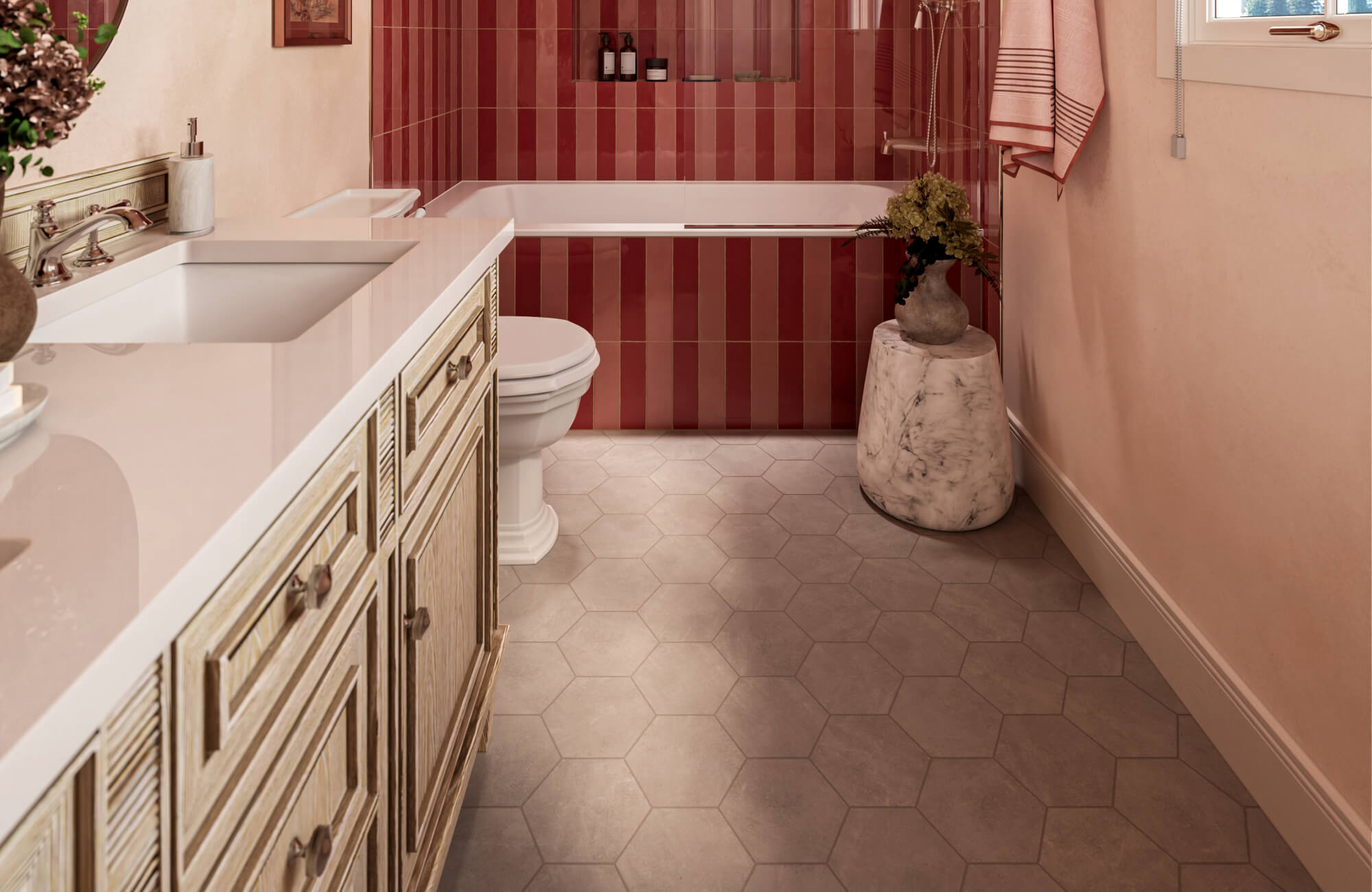
This is where a tile like our Aniston 2x2 Matte Porcelain Hexagon Mosaic Tile in Calacatta Top above feels especially well-suited. Its smaller hexagon format follows floor pitch naturally, while the matte surface helps manage glare and grip in wet zones. The soft veining adds visual movement without calling attention to the slope itself, which keeps shower transitions feeling refined and quietly resolved rather than technical.
How Vanity Size and Mounting Affect Floor Pattern Visibility
The way a vanity is sized and mounted directly affects how much of the mosaic floor remains visible. Floating vanities tend to expose more flooring, allowing the pattern to breathe and feel lighter overall. In contrast, freestanding vanities can interrupt the pattern if they’re oversized or poorly positioned. This doesn’t mean one option is better, but it does mean scale matters. During renovation, aligning vanity proportions with tile layout prevents the floor from feeling chopped up. A well-matched vanity lets the mosaic read as part of the room, not a background detail.
Mirror Placement That Prevents Visual Overload
Mirrors play a key role in balancing mosaic floors, especially in bathrooms where patterns already add visual movement. When mirrors are centered and sized appropriately, they help redirect focus upward rather than letting the eye linger too long on the floor. This is particularly helpful in smaller bathrooms where mosaics could otherwise feel dense. Framing also matters, as simple frames tend to keep the look calm. Placing mirrors to reflect light instead of tile detail further softens the effect. The right mirror placement keeps the space feeling composed, not busy.
Lighting Layouts That Keep Small Tile From Feeling Busy
Lighting can either calm or exaggerate the look of mosaic flooring. Even layered lighting tends to smooth out contrast, helping the tile feel cohesive rather than fragmented. Harsh or overly directional lighting, on the other hand, can emphasize grout lines and make the pattern feel louder than intended. In bathroom renovations, placing lights to wash the space rather than spotlight the floor usually works best. Wall lighting and ceiling fixtures should support visibility without competing with the tile. When lighting is planned with restraint, mosaic floors feel grounded and intentional.
When Mosaic Flooring Works Better Than Large-Format Tile
There are situations where mosaic flooring simply performs better than large-format tile in a bathroom renovation. Wet areas, compact layouts, and spaces with multiple transitions benefit from the flexibility mosaics offer. Large tiles can struggle in these conditions, often requiring more cuts and creating visual breaks. Mosaics adapt more naturally to drains, corners, and changes in level. They also provide added grip, which matters in everyday routines. Choosing mosaic tile in these cases is less about style and more about designing for how the bathroom is actually used.

Kitchen Floors That Balance Grip, Movement, and Cabinetry
Kitchen renovations put more demands on flooring than almost any other space in the home. Between constant movement, shifting light, and fixed elements like islands and cabinetry, mosaic tile often plays a quiet but important role. Here, we’ll walk through how mosaics support active kitchen layouts while staying visually aligned with stools, cabinets, and lighting zones.
Why Mosaic Tile Is Chosen During Full Kitchen Floor Tear-Outs
Mosaic tile is frequently chosen during full kitchen renovations because it adapts well to complex layouts and heavy daily use. When old floors are removed, uneven subfloors, transitions, and structural adjustments often come to light. Smaller tile formats handle these conditions more gracefully than large tiles, especially where the floor meets islands or built-ins. Mosaics also provide added grip, which matters in kitchens where spills and quick movement are part of everyday life. From a planning standpoint, they reduce awkward cuts around fixed elements. This makes them a practical choice when the goal is long-term performance rather than a purely visual upgrade.
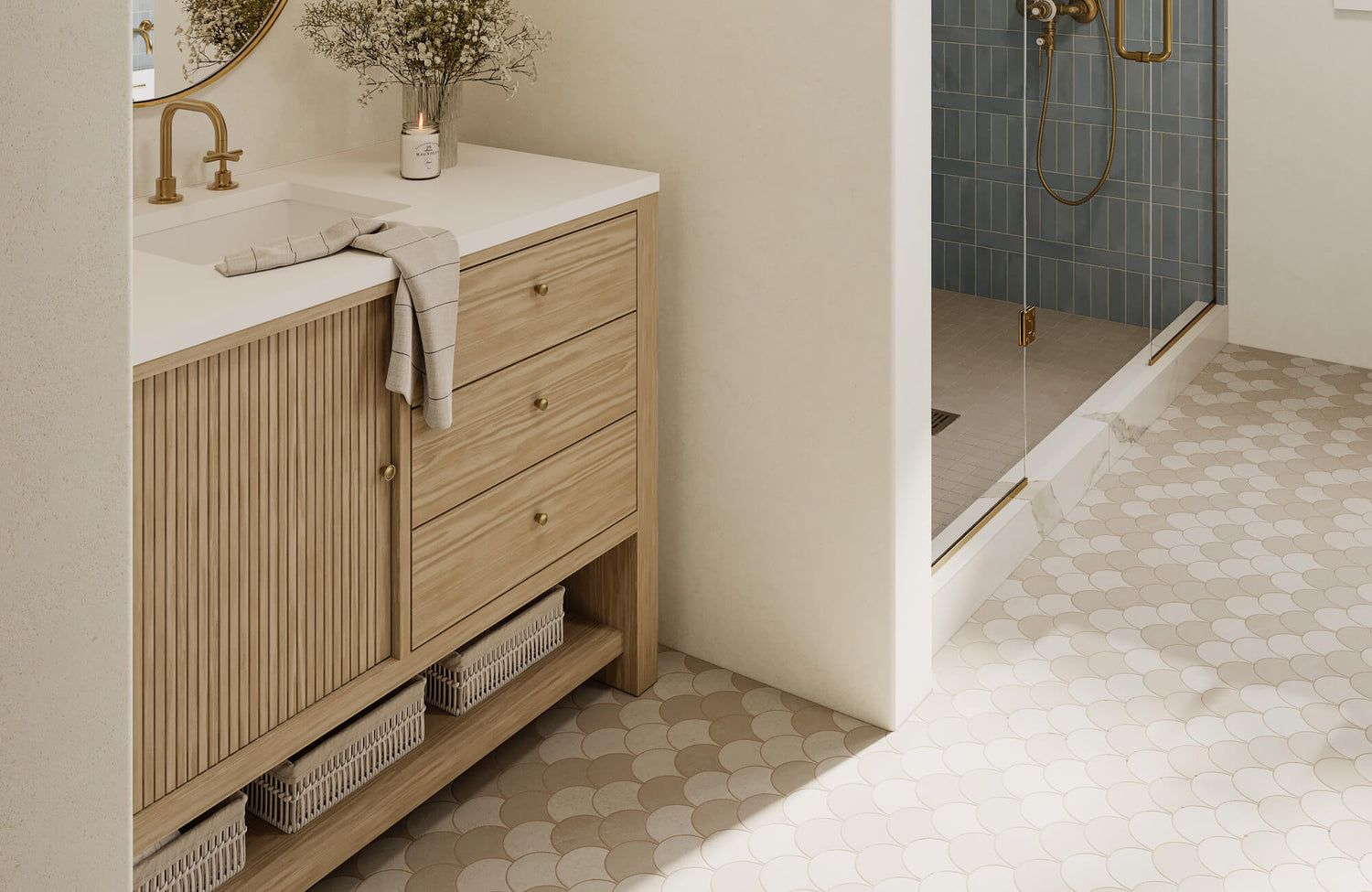
A tile like our Shea 12.5x15 Matte Porcelain Leaf Mosaic Tile in Cool Blend above fits naturally into this kind of renovation because its organic geometry adapts easily to irregular layouts without feeling rigid. The matte surface helps manage glare and grip in work-heavy zones, while the soft blend of gray tones keeps the floor visually steady alongside cabinetry and islands. Together, those qualities make it feel like a considered foundation rather than a decorative layer added at the end.
Coordinating Island Seating & Stool Spacing With Patterned Floors
Island seating introduces repeated movement, sliding stools, and frequent foot placement in the same zones. Mosaic floors handle this activity well, but spacing still needs to be planned carefully so the pattern doesn’t feel interrupted. Stool placement should align with tile layout whenever possible, especially in renovations where the island footprint is fixed. When stools are too tightly spaced, the floor can feel visually crowded beneath them. Allowing breathing room between seats helps the pattern read more evenly. This coordination keeps the seating area feeling intentional rather than layered on top of the floor.
Using Lighting Zones to Separate Prep Areas From Seating
Lighting plays a major role in how mosaic floors read across different kitchen zones. Brighter, task-focused lighting over prep areas tends to sharpen tile detail, while softer lighting near seating helps calm the pattern. In renovations, separating these lighting zones prevents the entire floor from feeling visually intense at once. Pendant lights over islands, for instance, can define seating without drawing attention downward. Meanwhile, recessed or under-cabinet lighting supports work areas without spotlighting the floor. This layered approach lets the mosaic support function without dominating the space.
How Cabinet Toe-Kicks and Base Lines Affect Tile Layout
Cabinetry creates long, uninterrupted lines that strongly influence how mosaic tile is perceived. Toe-kicks, in particular, sit right at eye level when looking across the floor, making alignment especially noticeable. During renovation, planning tile layout to land cleanly at these edges helps the floor feel settled and precise. Misaligned patterns can make even high-quality tile feel chaotic once cabinets are installed. Mosaic formats allow for subtle adjustments that larger tiles don’t. When base lines and tile patterns work together, the kitchen feels more cohesive and visually grounded.
When Mosaic Tile Outperforms Larger Tiles in Kitchens
In kitchens with islands, tight clearances, or multiple work zones, mosaic tile often outperforms larger formats. Large tiles can struggle with frequent direction changes, leading to excessive cuts or uneven joints. Mosaics adapt more easily to corners, transitions, and appliance zones without drawing attention to those shifts. They also maintain a consistent grip across the floor, which matters in areas with frequent spills. Over time, this flexibility supports both safety and visual continuity. In renovation scenarios where the kitchen layout is complex, mosaics offer reliability that larger tiles sometimes can’t match.

Dining Spaces Where Flooring Replaces the Role of Rugs
In dining renovations, mosaic flooring is sometimes chosen to fully replace rugs rather than work beneath them. This approach shifts more visual and functional responsibility onto the floor, especially under tables and chairs. In here, we’ll look at how mosaic tile performs in dining spaces when it becomes the primary surface guiding comfort, movement, and balance.
Mosaic Flooring as a Rug Alternative in Dining Renovations
Using mosaic tile instead of a rug creates a more permanent, low-maintenance foundation for dining areas. In renovation settings, this is especially appealing for households that want easier cleanup without sacrificing visual interest. Mosaic flooring defines the dining zone through pattern rather than texture, which keeps the space feeling intentional. Because it isn’t concealed by fabric, the tile becomes part of the room’s structure rather than an accessory. This works well when the renovation aims for longevity over seasonal updates.
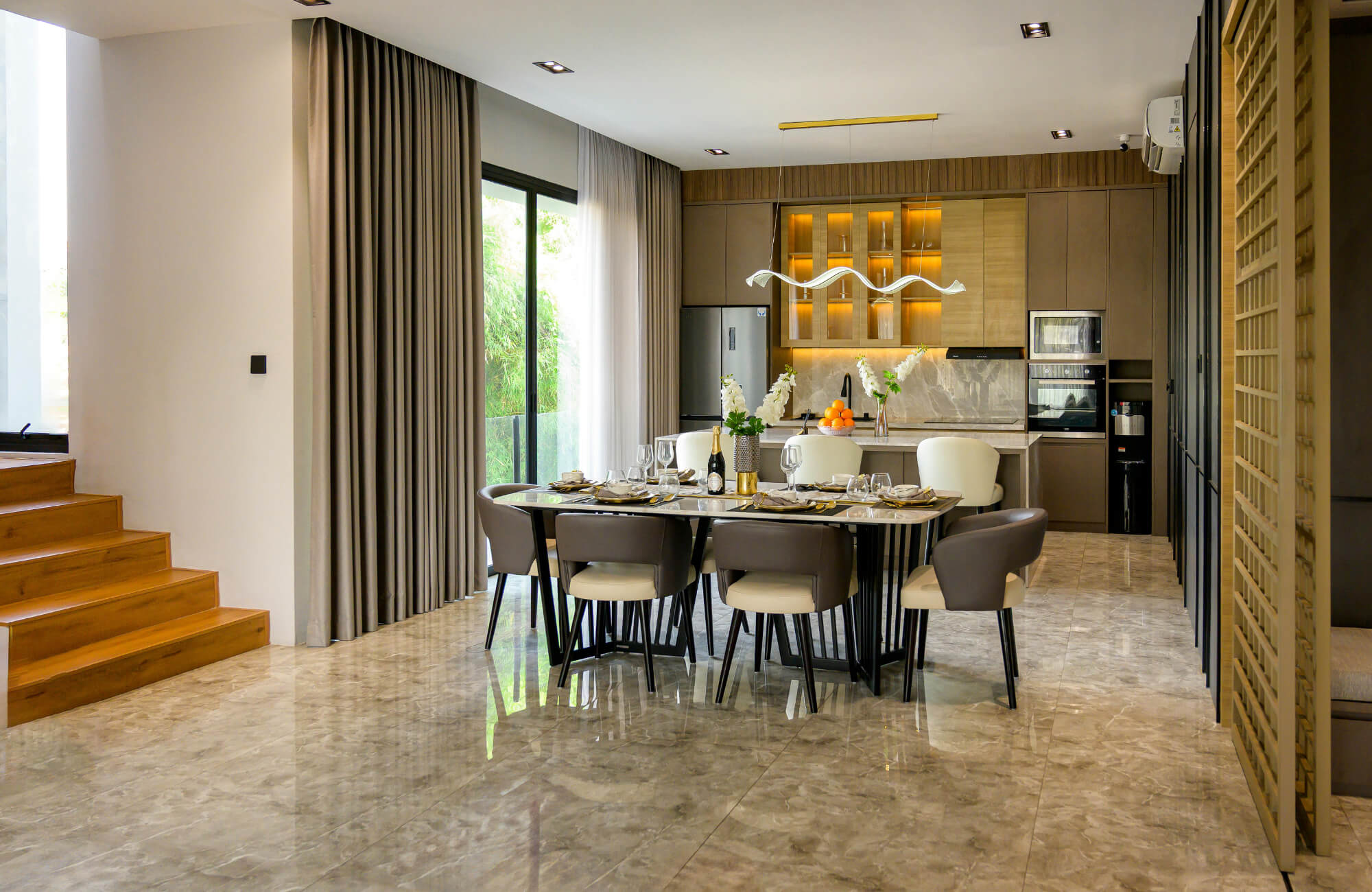
Instead of relying on fabric to define the dining area, a mosaic like our Chantel 12x15 Matte Porcelain Herringbone Mosaic Tile in Dolomite above gives the floor its own quiet authority. The interlocking herringbone pattern introduces movement in a controlled way, while soft marble-inspired striations keep the surface from feeling flat or rigid. Paired with a matte finish that limits glare under overhead lighting, the tile creates a grounded, long-lasting foundation that comfortably replaces the role of a rug without adding visual weight.
How Dining Table Scale Impacts Pattern Readability
The size of the dining table plays a major role in how mosaic flooring is perceived. Large tables tend to anchor the space, allowing the pattern to read more subtly around the edges. Smaller tables, on the other hand, expose more of the floor, which makes tile repetition more noticeable. During renovation, it helps to consider how much of the mosaic will remain visible once furniture is in place. Table shape also matters, as round or oval tables reveal patterns differently than rectangular ones. Matching the table scale to the floor pattern keeps the dining area visually steady.
Chair Movement, Scraping, and Long-Term Wear Considerations
Dining chairs introduce constant motion that directly affects how mosaic floors age over time. Scraping and sliding are unavoidable, especially in busy households or shared dining spaces. Mosaic tile holds up well to this kind of wear, but grout quality and installation play a big role in long-term performance. Renovation planning should account for chair movement paths so high-contact areas don’t become visually uneven. Felt pads and thoughtful spacing help protect both tile and grout. Over time, these small considerations make a noticeable difference in how the floor holds up.
Lighting Placement That Keeps Dining Floors Calm
Lighting strongly influences whether mosaic flooring feels balanced or visually busy in a dining space. Overhead fixtures positioned directly above the table help anchor attention upward, which naturally softens how much the floor stands out. In renovation layouts, avoiding excessive downlighting aimed at the floor helps prevent glare or harsh contrast. Warmer light temperatures often make mosaic patterns feel more settled and cohesive. When lighting is layered thoughtfully, the floor supports the room rather than competing with it. This balance is especially important when no rug is present to visually quiet the space.
When Mosaic Tile Works Best in Dining Nooks vs Open Rooms
Mosaic flooring behaves differently in enclosed dining nooks compared to open-plan rooms. In nooks, the contained layout allows the pattern to feel intentional and controlled, even in smaller formats. Open dining areas expose more floor surface, which makes scale and repetition more noticeable. Renovations in open rooms often benefit from subtler mosaic patterns that don’t overwhelm adjacent spaces. In contrast, nooks can handle more definition because visual boundaries already exist. Understanding how enclosed or open the dining area is helps determine whether mosaic tile will feel grounded or overly prominent.

Living Areas and Open-Plan Renovations
In open-plan renovations, flooring often has to do more than just look good. Mosaic tile can help organize living areas, dining zones, and walkways without breaking the space up with walls or heavy dividers. Below, we’ll walk through how mosaic flooring can quietly define zones while still working naturally with rugs, sideboards, lighting, and the surrounding layout.
Using Mosaic Tile to Separate Zones Without Walls
In open living areas, mosaic floor tile is often used to suggest boundaries rather than enforce them. Instead of putting up partitions, the change in pattern underfoot helps signal where one area transitions into another. For example, a mosaic section beneath a seating area can subtly distinguish it from an adjacent dining space or walkway. This keeps the layout feeling open while still giving each zone its own identity. It also makes movement feel more intuitive because the floor gently guides where people gather or pass through. When done well, the tile defines space without calling attention to itself.
A tile like our Leona 3x3 Matte Porcelain Hexagon Mosaic Tile in Nero Marquina above works especially well in open-plan living areas because its compact hexagon format creates definition without hard visual breaks. The deep black base and fine white veining give the floor enough presence to quietly mark zones, while the matte finish keeps reflections subdued across larger, shared spaces. Rather than acting as a focal point, the pattern settles into the background and helps guide how the room is used. This makes it easier to separate seating, circulation, and adjacent dining areas without relying on walls or rugs to do the work.
Planning Clean Transitions Between Mosaic and Other Flooring
Because open-plan renovations usually involve more than one flooring material, transitions need to feel intentional. Mosaic tile tends to work best when it meets other surfaces in a clean, straightforward way rather than with decorative borders or abrupt changes. Straight transition lines often feel calmer and more architectural. In many cases, aligning the transition with furniture placement helps it feel natural. For instance, placing a sofa or console right at the edge of the mosaic zone can visually anchor the change. Thoughtful transitions help the floor feel like part of the overall plan, not an afterthought.
Layering Rugs Without Hiding the Tile Pattern
Rugs can still play an important role in living areas with mosaic floors, but they work best when used with restraint. Instead of covering the tile wall to wall, rugs can sit within seating zones and leave parts of the mosaic visible around the perimeter. This allows the flooring to remain part of the design story rather than disappearing beneath soft layers. Low-pile rugs are often a better choice because they don’t compete with the floor visually. Neutral tones and simple textures also help calm the space. The goal is to soften the room without erasing the pattern beneath.
Anchoring Patterned Floors With Sideboards or Media Units
Mosaic floors often benefit from being balanced with furniture that has a bit of visual weight. Sideboards, media units, or low consoles help ground the space and give the eye a place to rest. When these pieces align with the mosaic zone, they reinforce the purpose of that area within the open layout. For example, a media unit placed along a tiled section can clearly define a living zone without additional decor. Simple silhouettes usually work best because they don’t compete with the floor. This balance keeps the room feeling composed rather than visually busy.
Lighting Strategies That Unify Multiple Open Zones
Lighting plays a major role in how mosaic tile feels across an open-plan space. Rather than spotlighting the floor, layered lighting helps create a sense of continuity between zones. Overhead fixtures can define seating and dining areas, while softer ambient lighting smooths the transitions between them. Floor lamps or wall lighting can also reduce contrast, which keeps the tile from feeling too bold. Consistent light temperature across the space matters as well, because mixed tones can exaggerate patterns unintentionally. When lighting is planned as a whole, mosaic flooring supports the layout instead of standing out on its own.

Knowing When Mosaic Floor Tile Strengthens a Renovation—and When It Doesn’t
Mosaic floor tile can be a powerful renovation choice, but it works best when it clearly supports how a space will be used over time. Not every room or layout benefits from added pattern, especially once furniture, lighting, and daily movement are factored in.
Renovation Scenarios Where Mosaic Tile Adds Clarity
Mosaic tile tends to work best in renovations where defining zones or movement paths is important. Entryways, wet areas, and secondary gathering spaces often benefit from a more articulated floor surface because it helps guide how the space is used. In these scenarios, mosaic tile provides structure without relying on walls or visual barriers. It can also help smaller areas feel intentional rather than leftover or transitional. When the pattern aligns with the function of the space, it feels purposeful instead of decorative. That clarity is what makes mosaic tile feel like a renovation decision, not just a design choice.
When Simpler Flooring Creates a Stronger Result
There are times when a renovation benefits from restraint rather than detail. In large, open spaces or rooms with substantial furniture and bold fixtures, simpler flooring often allows everything else to breathe. Mosaic tile in these areas can sometimes compete with furniture outlines, lighting layouts, or circulation paths. A quieter floor surface lets the architecture and layout take the lead. This doesn’t mean mosaic tile is wrong, but it does mean it isn’t always necessary. Knowing when to step back helps prevent the renovation from feeling visually overworked.
Avoiding Pattern Fatigue Across Multiple Rooms
Using mosaic tile in several rooms can quickly lead to visual fatigue if the renovation isn’t carefully paced. Patterns that feel engaging in one space may feel repetitive when repeated too often throughout the home. This is especially noticeable when rooms connect visually, such as open bathrooms, hallways, or adjacent living areas. Limiting mosaic tile to specific zones helps maintain contrast and keeps each space feeling distinct. For instance, pairing mosaic flooring in wet areas with simpler surfaces elsewhere creates balance. Thoughtful distribution keeps the renovation from feeling busy over time.
Sequencing Tile Decisions With Furniture and Fixture Planning
Mosaic tile decisions work best when they’re made alongside furniture and fixture planning, not before or after. Flooring affects how vanities, stools, tables, and lighting visually land in a space. If those elements aren’t accounted for early, the tile may end up partially hidden or visually fragmented. Planning these pieces together ensures the pattern supports the layout rather than fighting it. It also helps clarify where mosaic tile will actually be seen and appreciated. Sequencing decisions properly turns the floor into a foundation, not an afterthought.
Making Mosaic Tile Feel Intentional, Not Decorative
The difference between mosaic tile that strengthens a renovation and tile that feels purely decorative often comes down to intent. When the pattern reinforces function, movement, or zoning, it reads as purposeful. When it’s added without considering how the space operates, it can feel unnecessary. Keeping scale, placement, and frequency in check helps the tile feel grounded. It should support the renovation story rather than distract from it. When mosaic tile feels integrated, it becomes part of how the home works, not just how it looks.
Bringing Mosaic Floor Tile Into a Renovation With Confidence
Mosaic floor tile works best in modern renovations when it’s treated as part of the planning process, not a finishing touch. As you’ve seen across entries, bathrooms, kitchens, dining areas, and open layouts, its real strength comes from how well it supports movement, wear, and zoning over time. When coordinated thoughtfully with furniture, lighting, and everyday routines, mosaic tile adds clarity and structure rather than visual noise. The most successful renovations use it with intention, letting function guide where the pattern belongs.
If you’re unsure how mosaic floor tile fits into your renovation plans, a design consultation can help clarify the next steps. It’s a chance to walk through your layout, furniture placement, lighting, and material choices together. Seeing everything in context often makes decisions feel less overwhelming and more intentional. Schedule a design consultation to make sure each choice supports how your space will be used long term.