A well-designed kitchen begins at the surface level, where tile choices quietly shape how the space looks, feels, and performs over time. From the subtle interaction between light and texture to the way flooring carries movement into dining areas, every tile decision contributes to the overall experience of the room. Selecting kitchen tiles is not simply a decorative exercise, but also a careful balance of durability, proportion, and material intelligence. When finishes, formats, and layouts are thoughtfully aligned, the kitchen becomes both visually cohesive and highly functional. This article explores how to choose the right tiles for a kitchen renovation by blending technical performance with timeless design sensibility.

Define Kitchen Functionality and Spatial Demands
Successful kitchen tile selection begins with a clear understanding of how the space functions as both a work environment and a gathering area. When spatial demands are carefully evaluated, tile choices naturally support durability, comfort, and visual continuity across connected zones.
Floor Load, Movement Patterns, and Wear Resistance
Kitchen floors endure a continuous cycle of movement, impact, and load as occupants circulate between cooking, prep, and dining areas throughout the day. Because this movement is rarely linear, tiles must withstand multidirectional wear without showing premature surface degradation. Porcelain tiles rated PEI IV or V are designed for precisely this level of abrasion resistance, making them well-suited for busy kitchen environments. Their dense composition also reduces the likelihood of edge chipping in areas where circulation patterns converge, such as near islands or dining tables. In open-concept layouts, where kitchen flooring often extends seamlessly into dining spaces, consistent wear performance becomes even more critical. When rectified edges are introduced, the result is a stable, visually level surface that supports both comfort and long-term structural integrity.
Integration with Dining Tables and Chairs
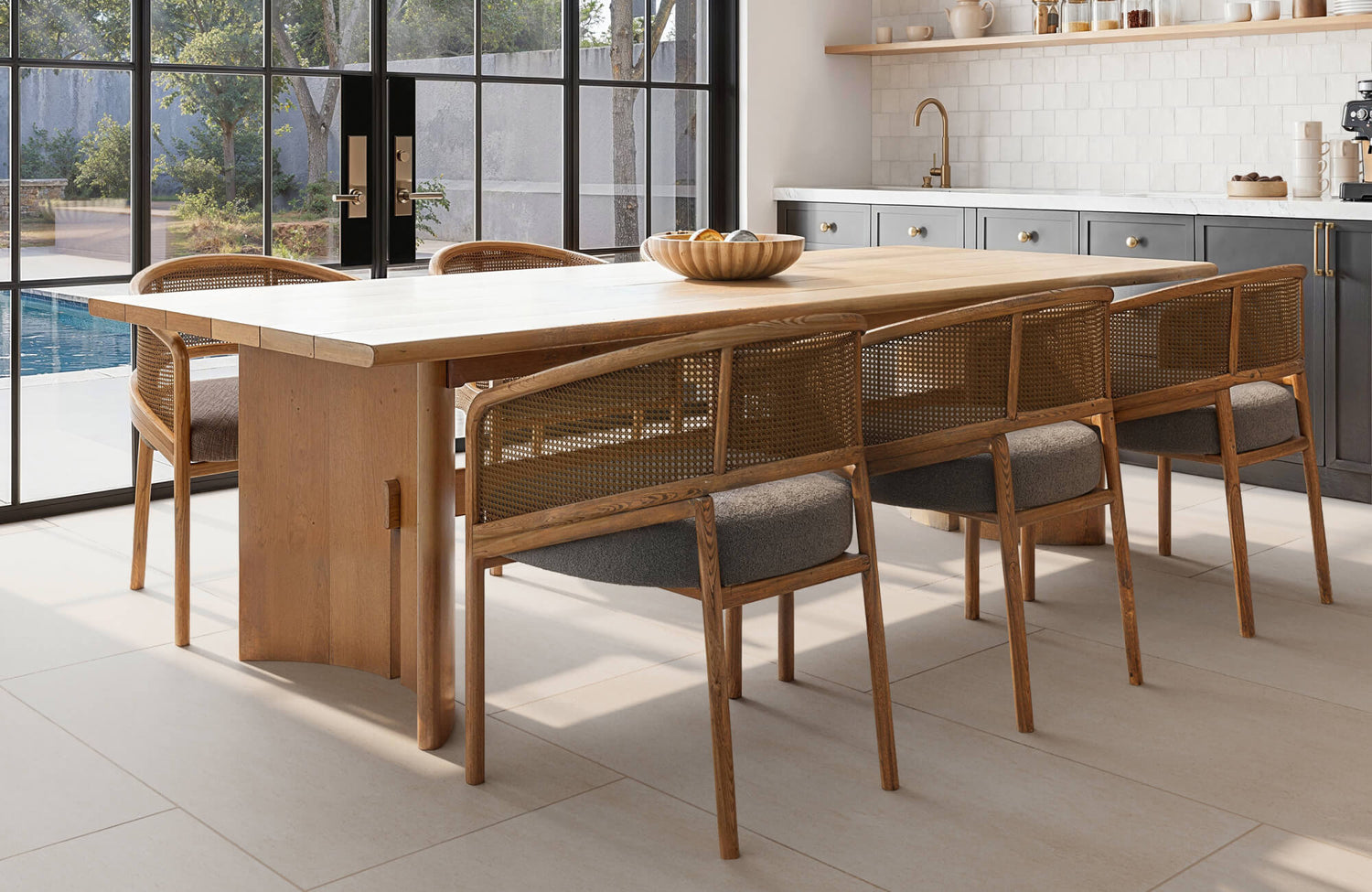
Dining furniture places repeated pressure on kitchen flooring, making material compatibility essential for both visual balance and long-term performance. In the picture displayed above, Edward Martin’s Leona 24x24 Checkerboard Matte Porcelain Tile in Marfil and Amani Grey establishes a durable foundation while introducing a refined geometric rhythm that visually anchors the dining zone. Its large-format checkerboard pattern also distributes visual weight evenly beneath seating, preventing the area from feeling cluttered despite frequent chair movement. Paired with this surface, the Kenzie Counter Stool in Napa Cognac introduces warmth through its leather upholstery, creating a soft contrast against the tile’s cool stone-inspired tones. The matte porcelain finish minimizes visible scuffing from stool legs while maintaining slip resistance and surface integrity. Together, the tile and seating work in quiet harmony, reinforcing a cohesive dining experience that feels both grounded and intentionally designed.
Moisture, Heat, and Spill Zones
Kitchens are inherently exposed to moisture, heat, and spills, especially around sinks, cooktops, and dishwashers, where daily activity is concentrated. In these zones, tile performance depends heavily on low water absorption and thermal stability. Porcelain tiles with absorption rates below 0.5% effectively prevent moisture from migrating into the substrate, reducing the risk of long-term structural damage. Heat resistance further protects tiles from thermal shock caused by hot cookware or fluctuating temperatures near cooking appliances. Glazed surfaces also add a layer of defense by resisting staining from oils, sauces, and acidic foods. Together, these properties ensure the kitchen remains hygienic, durable, and visually intact under constant use.

Select Tile Materials Based on Performance and Longevity
Tile material selection determines not only how a kitchen looks on installation day, but also how it performs years into daily use. By prioritizing materials engineered for kitchen-specific conditions, homeowners can achieve lasting durability without excessive maintenance.
Porcelain vs. Ceramic for Kitchen Applications
Porcelain tiles are manufactured at higher temperatures and greater pressure than ceramic tiles, resulting in a denser structure that performs exceptionally well in active kitchen environments. This enhanced density makes porcelain especially suitable for areas exposed to heat, moisture, and frequent cleaning, including backsplashes, islands, and stair-adjacent walls. With options such as the Natasha 2x6 Matte Porcelain Tile in Army, material strength is paired with a refined matte finish that softens light while maintaining durability. Its elongated format also introduces a subtle vertical rhythm that complements modern cabinetry and architectural lines, as shown in the photo above, where tile extends across backsplashes and stair risers. Ceramic tiles, while effective for decorative wall use, lack the same low porosity and resistance to daily wear. As a result, porcelain remains the preferred choice when performance, longevity, and cohesive design are equally important.
Natural Stone and Engineered Alternatives
Natural stone tiles bring organic variation and depth, yet their beauty often comes with higher maintenance requirements. Materials such as marble and limestone are naturally porous and require sealing to protect against staining and etching from acidic substances. In active kitchens, these vulnerabilities can become more pronounced over time. Stone look porcelain tiles also provide a practical alternative by replicating natural veining and texture without the associated upkeep. These engineered surfaces offer uniform coloration and enhanced chemical resistance, making them better suited for food preparation areas. As a result, homeowners achieve the desired aesthetic while maintaining reliable performance.
Maintenance Cycles and Lifecycle Costs
Maintenance considerations play a significant role in determining the long-term value of kitchen tile materials. Glazed porcelain surfaces, for instance, resist grease, food acids, and cleaning agents, allowing routine maintenance to remain simple and efficient. This ease of care also reduces the need for specialized products or professional services over time. In contrast, natural stone requires periodic sealing and careful cleaning to preserve its appearance. These recurring requirements can increase long-term ownership costs. When evaluated over the full lifecycle, low-maintenance tiles consistently deliver better value and durability.
To further support confident material selection, Edward Martin’s Augmented Reality (AR) tool allows you to visualize tile choices directly within your own kitchen environment. By previewing scale, color interaction, and finish under real lighting conditions, the tool helps bridge the gap between showroom samples and real-world applications. As a result, material performance and aesthetic intent align more seamlessly, ensuring selections feel intentional before installation even begins.

Balance Finish, Texture, and Light Interaction
Tile finishes influence how light moves through the kitchen, shaping both safety and visual comfort. When surface texture and reflectivity are carefully balanced, the space feels cohesive, functional, and inviting throughout the day.
Slip Resistance and Surface Safety
Kitchen floors must provide reliable traction in an environment where spills and splashes are unavoidable. With this, slip resistance becomes especially important in high-use areas where water or grease may be present. Industry standards also recommend a DCOF rating of 0.42 or higher to ensure safe footing in interior wet areas. Matte and satin finishes naturally achieve this balance without appearing overly textured or industrial. Subtle surface variation further enhances grip while remaining easy to clean during daily maintenance. This careful balance supports safety without sacrificing aesthetic refinement.
Lighting Reflection and Visual Depth
Tile reflectivity plays a significant role in how artificial lighting performs within the kitchen. For example, glossy backsplash tiles reflect under-cabinet lighting back onto work surfaces, improving visibility and reducing shadows during food preparation. This reflective quality also adds depth, making smaller kitchens feel more expansive. On floors, however, excessive gloss can create glare under recessed or pendant lighting. Satin finishes offer a more controlled diffusion of light, softening reflections while maintaining brightness. When finishes are selected thoughtfully, lighting feels intentional rather than harsh.
Coordination with Artificial and Natural Light
Lighting conditions play a defining role in how tile color and texture are perceived, making coordination between flooring and fixtures essential in well-designed kitchens. A warm, elongated floor tile such as our Jameson 8x48 Matte Porcelain Tile in Camel, as shown in the photo above, responds beautifully to shifting daylight, with its matte surface gently absorbing light to reduce glare while enhancing tonal depth. As sunlight moves across the space, the tile’s linear format also subtly emphasizes proportion, reinforcing a sense of openness and visual calm. When evening lighting takes over, fixtures like the Hailey 48" 4 Lights Linear Pendant in Aged Gold and Opal Matte Glass introduce a soft, diffused glow that complements the tile’s warm undertones without overpowering them. Accents such as the Lumira 18" LED Pendant in Vintage Brass with Glossy Opal further enrich the lighting layer, adding focused illumination and refined contrast. Together, the flooring and lighting work in concert to create a balanced atmosphere where surfaces feel cohesive, luminous, and thoughtfully composed throughout the day.

Optimize Tile Size, Layout, and Backsplash Design
Tile size and layout establish rhythm, proportion, and visual flow within the kitchen. When these elements are coordinated effectively, they enhance both daily usability and long-term design cohesion.
Large Format Tiles and Installation Precision
Large format tiles create a streamlined appearance by minimizing grout joints across kitchen floors. This reduction not only simplifies cleaning but also reinforces a sense of visual continuity. However, these tiles demand precise installation to prevent lippage and alignment issues. Moreover, substrate flatness must meet ANSI A108 tolerances to ensure proper adhesion and long-term stability. Professional installation becomes particularly important in open-plan kitchens, where imperfections are more visible. When executed correctly, large-format tiles deliver a refined and modern aesthetic.
Backsplash Height, Coverage, and Function
Backsplashes serve both protective and aesthetic roles within the kitchen. Extending tile from the countertop to upper cabinets shields walls from heat, moisture, and grease while simplifying maintenance. Full-height backsplashes behind ranges further enhance durability and hygiene. In addition, glazed porcelain tiles resist staining and are easy to wipe clean after cooking. Visual continuity between countertop and backsplash materials also strengthens overall design cohesion. This approach elevates the backsplash from a secondary feature to an integral design element.
Grout Type, Width, and Color Strategy
Grout selection subtly influences how tile installations perform and appear over time. Epoxy grout, for instance, offers superior resistance to stains, moisture, and chemicals commonly encountered in kitchens. On the other hand, narrow grout joints reduce visual interruption and limit areas where dirt can accumulate. Similarly, color-matched grout allows tile surfaces to read as continuous and expansive. In contrast, contrasting grout highlights pattern and layout geometry for a more graphic effect. Selecting the appropriate grout strategy ensures durability while reinforcing design intent.

Align Tile Choices with Overall Kitchen and Dining Aesthetics
Kitchen tiles play a central role in visually connecting cooking and dining areas into a cohesive whole. When materials and finishes align across spaces, the result feels intentional, balanced, and enduring.
Cohesive Transitions Across Open-Concept Spaces
In open-concept layouts, kitchen tiles play a critical role in guiding the eye smoothly from one zone to the next without visual interruption. When tile tone and finish are carefully selected, the flooring establishes continuity that allows cooking, dining, and living areas to feel intentionally connected. Warm or cool undertones also influence how adjacent materials relate, shaping the overall spatial harmony. Moreover, extending the same tile across multiple areas prevents abrupt breaks that can fragment the layout. This uninterrupted flow enhances the perceived scale of the space while maintaining a sense of order and coherence. Through thoughtful material alignment, open interiors achieve balance, cohesion, and long-term design clarity.
Style Consistency and Timeless Appeal
Timeless kitchen design is often achieved through a careful layering of materials that feel grounded, balanced, and resistant to fleeting trends. In the photo displayed above,, Edward Martin’s Jameson 8x48 Matte Porcelain Tile in Umber establishes a warm, wood-inspired foundation that brings depth and continuity across the floor while maintaining the durability of porcelain. Its elongated format also elongates the room, reinforcing a calm, architectural rhythm that supports long-term visual appeal. Paired with this foundation, the Savannah Counter Stool in Cream introduces softness through its upholstered form, offering a light counterpoint that prevents the palette from feeling overly heavy. On vertical surfaces, the Juliet 2.5x10 Matte Porcelain Tile in Pearl adds refined texture and gentle tonal variation, creating a backsplash that feels classic yet contemporary. Overhead, our Odessa Semi Flush in Aged Brass ties the composition together, its warm metallic finish echoing surrounding tones and ensuring the overall design remains cohesive, elegant, and enduring.
Long-Term Value and Market Relevance
High-quality tile selection sends a clear signal of durability and thoughtful design, qualities that resonate strongly with prospective buyers. As lifestyles increasingly prioritize ease of care, low-maintenance materials have become a key indicator of value in modern homes. Precision installation also enhances this perception by reflecting craftsmanship and attention to detail. Buyers often interpret cohesive flooring and backsplash design as evidence of a well-executed renovation rather than a cosmetic update. Durable tile surfaces further reduce the likelihood of needing replacement or repair in the near term. In this way, strategic tile choices protect both everyday comfort and long-term investment value.
Designing with Confidence and Longevity
A successful kitchen renovation is defined by choices that perform beautifully while aging gracefully over time. When tiles are selected with attention to material quality, finish, and spatial integration, the kitchen becomes both resilient and visually cohesive. Thoughtful coordination between flooring, backsplash, lighting, and dining elements ensures the space feels intentional rather than pieced together. Durable, low-maintenance kitchen tiles also contribute to long-term value, supporting both daily living and future resale appeal. By approaching tile selection as a balance of technical precision and refined design, homeowners can create kitchens that are both functional and elegant, and remain enduring.
To further refine the renovation process, Edward Martin’s design services offer expert guidance in aligning tile selections with layout, lighting, and material performance considerations. This personalized support helps ensure each decision enhances both visual cohesion and long-term durability, resulting in a kitchen that feels thoughtfully composed and enduring!