A bathroom renovation is your opportunity to transform an everyday space into something beautiful, functional, and lasting. Yet with countless materials, styles, and technical details to consider, the process can quickly feel overwhelming. By approaching each decision with clarity and intention, you can create a room that not only looks stunning but also enhances how you move through your daily routine.
As you explore tile options, compare vanity styles, and select the perfect fixtures, each choice shapes the atmosphere and performance of the final space. This article walks you step-by-step through the essential considerations, helping you move confidently from inspiration to installation. With the right approach, your bathroom becomes more than a renovation project; it becomes a space where design and function work together effortlessly.

Understanding Your Bathroom Layout and Spatial Constraints
A successful bathroom renovation begins with a thorough understanding of the room’s physical structure, as the layout, plumbing, and mechanical systems determine what is truly achievable. When you take the time to study how the walls, floors, and existing infrastructure work together, you gain clarity on which design ideas will enhance the space and which ones may lead to complications. This awareness not only helps you avoid costly reconfigurations but also allows you to make confident, purposeful choices as you move forward with selecting materials, fixtures, and finishes.
As you continue evaluating your bathroom, it becomes equally important to consider how circulation patterns influence usability and long-term comfort. Beyond simply fitting fixtures into the space, you want to ensure that proper clearances around toilets, vanities, and shower entries prevent the room from feeling cramped and allow each area to function without strain. Additionally, thoughtful planning of door swings and fixture depths keeps movement fluid, especially in tight layouts where even a few inches can make a noticeable difference.
Furthermore, it helps to think about how storage placement, such as cabinetry, hampers, or shelving, integrates into your daily routines so that frequently used items remain within easy reach rather than disrupting pathways. As you refine these details, designing with future accessibility in mind becomes equally valuable. Features like wider pathways or reinforced walls for potential grab bars also ensure your bathroom remains practical and comfortable, not only today but for many years to come.

Defining Your Bathroom Design Identity
Creating a clear design identity is one of the most effective ways to ensure your bathroom feels cohesive, intentional, and visually engaging. When you understand the mood and character you want the space to express, every decision from tile patterns to metal finishes becomes far simpler and more intuitive. Instead of getting overwhelmed by endless product options, you begin filtering selections through a consistent creative lens. This clarity not only prevents mismatched purchases but also allows the final space to feel harmonious, as though every detail was chosen with purpose.
To shape this identity, you start by studying the themes that resonate with you most, whether they lean calming, modern, bold, or nature-inspired. As you refine these preferences, you focus on the materials that will anchor the room and the accents that will bring depth without overwhelming the design. Defining a primary surface and supporting elements also establishes a visual hierarchy that keeps the space balanced. Equally important is your understanding of color temperature and how light interacts with your palette. When the undertones of your materials align with the lighting conditions in the room, the entire design feels unified morning to night. By approaching your bathroom with a clear visual framework, you create a space that not only reflects your style but also functions beautifully for everyday life.
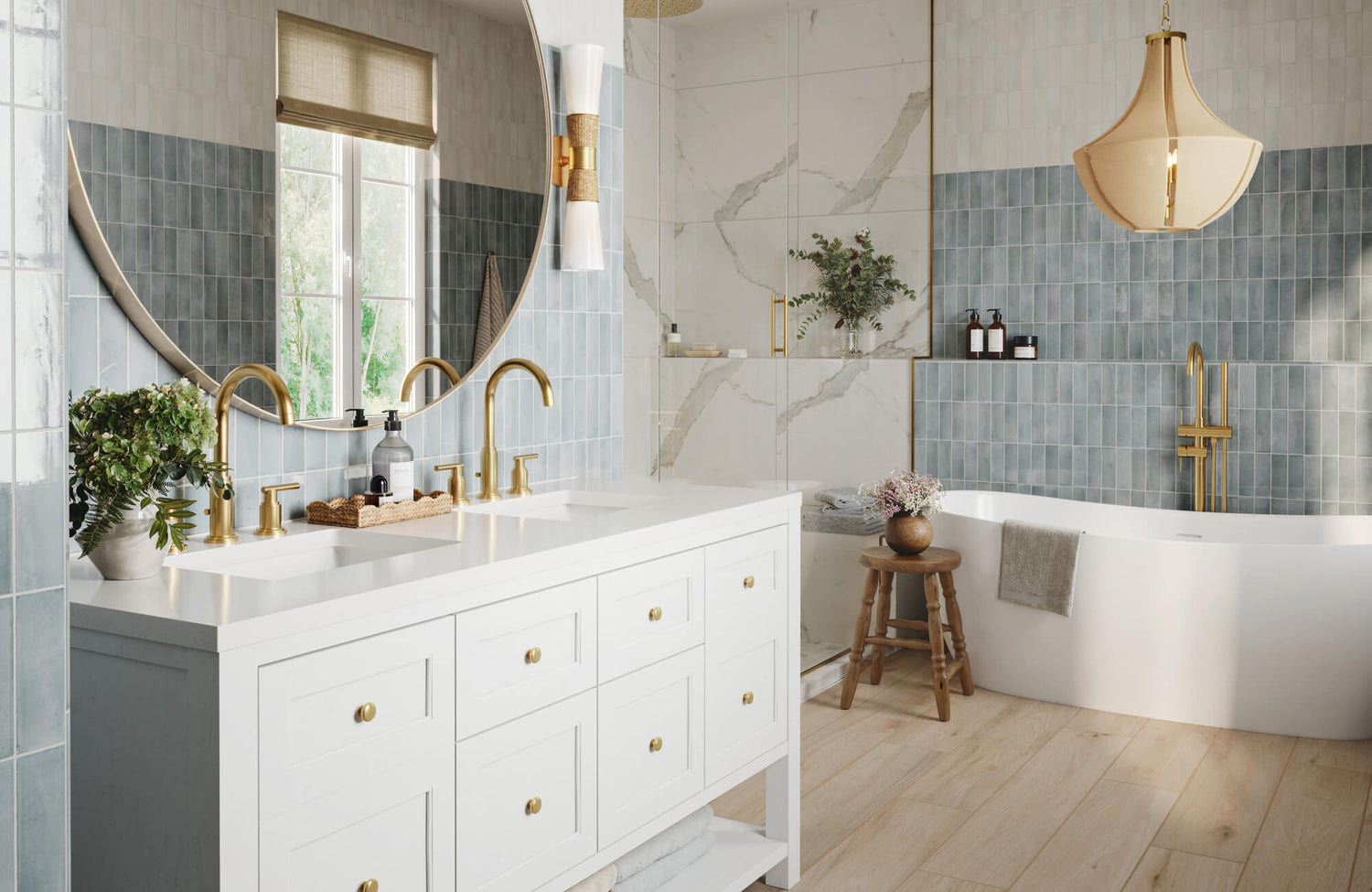
To help you visualize how a cohesive design identity comes together, consider the bathroom image shown above. The shifting light gray tones of our Wesley 12x24 Matte Porcelain Tile in Chalk create an airy foundation that allows other design elements to stand out without competing for attention. In contrast, the deep, saturated blue of our Makenna 3x11 Glossy Porcelain Tile in Indigo introduces richness and vertical movement, giving the walls a striking yet calming presence. The warm wood tones of our Paxton 72" Double Vanity in Pebble Oak with 3 cm White Zeus Quartz Top help balance the cool tiles, bringing softness and natural texture into the room. Further enhancing the overall atmosphere, our Walsh 7-Light Chandelier in Clear Glass Burnished Brass adds sculptural elegance overhead, complementing the warm brass finishes throughout the design. Paired with the warm glow of our Hennessy Wall Sconce in Aged Brass, the lighting establishes a cohesive ambiance that feels both modern and inviting. Finally, the gently curved Clancy Small Arch Mirror in Antique Brass ties the metallic accents together, reinforcing the room’s modern, minimalist aesthetic. Together, these selections show how a thoughtful combination of materials, textures, and lighting creates harmony and visual balance from every angle.

Selecting Tiles Based on Performance and Application
The durability and safety of your bathroom depend on choosing tiles that perform well in specific conditions. Although aesthetics drive your initial vision, the right surface materials must also withstand moisture, daily wear, and long-term use to maintain their beauty.
Choosing the Right Tile Material for Each Surface
Selecting the right tile material is essential because each one behaves differently under moisture, constant use, and daily wear. By understanding the strengths and limitations of common tile types, you can match each material to the surface where it will perform best and enhance your overall design.
Porcelain
Porcelain remains one of the most reliable choices for bathroom environments because of its dense and non-porous structure. Its composition allows it to handle constant exposure to moisture, making it ideal for floors, shower walls, and wet rooms where durability and low absorption are essential.
Ceramic
Ceramic shines as an excellent option for vertical applications, because of its lighter weight and smooth, non-porous surface glaze. It is easier to cut and comes in a wide range of colors, textures, and finishes, making it perfect for feature walls, backsplashes, and decorative accents.
Natural Stone
If you prefer natural stone for its organic variation and luxurious appearance, you will need to plan for additional maintenance. Stone tiles require sealing to protect them from staining, etching, and moisture penetration, and they may need resealing over time, depending on the type.
Glass
Glass tiles offer a sleek, modern aesthetic with brilliant color depth and reflective qualities that brighten any bathroom surface. They work beautifully as accent strips, shower niches, and decorative walls where light can enhance their luminosity. However, they scratch easily, and fingerprints or water spots can be more visible, requiring more frequent cleaning. They may also be slippery when wet, so they are typically not recommended for floor applications.
After exploring the different materials, it is equally important to consider safety and performance, especially in areas exposed to frequent moisture. You should also confirm that any tile intended for the shower floor or busy areas meets a DCOF rating of at least 0.42. This ensures the tile offers adequate slip resistance, an essential factor in a room where water is constantly present.
Sizing Tiles Strategically for Room Dimensions
Tile size has an incredible impact on how your bathroom feels the moment you walk in. Large format tiles, for example, minimize grout lines and give the illusion of a more open, expansive space. A polished option like our Leona 12x24 Polished Porcelain Tile in Calacatta works beautifully for this purpose, offering a clean, seamless backdrop with a white base and soft gray veining that elevates a modern or transitional design. As seen in the photo, using a refined marble look tile on shower walls creates a sophisticated visual sweep that makes the room appear taller and more spacious.
In areas where drainage matters, such as shower pans or curbless showers, mosaic tiles become essential. Their small size allows the installer to achieve the proper slope and maintain safe footing without compromising the waterproofing layer. Beyond functional needs, mosaics also offer opportunities for design accents in niches or backsplashes, adding texture and personality without overpowering the space. When you tailor tile size to both the structural and visual needs of your bathroom, the result feels balanced and thoughtfully curated.
Coordinating Grout Color
Grout plays a far more influential role in your bathroom’s appearance than most people realize, because it affects both the visual rhythm of the tile layout and the overall mood of the space. When you choose a grout color that closely matches your tile, the surface appears smoother and more seamless, which works beautifully in minimalist or contemporary designs. In contrast, selecting a grout color that intentionally contrasts with your tile creates definition, highlights the pattern, and turns the grid into a striking design element. The right choice depends on whether you want your tile to blend softly into the room or stand out as a focal point.
Beyond color, grout maintenance and performance should guide your selection as well. Cementitious grouts typically require sealing to prevent staining and discoloration, especially in wet areas like showers or around vanities. If you prefer a more low-maintenance option, epoxy and urethane grouts offer superior stain resistance and retain their color over time, although they come at a higher upfront cost. Regardless of the type, choosing grout thoughtfully ensures your installation remains durable, clean, and visually cohesive.

Choosing a Vanity That Balances Storage, Style, and Function
A well-chosen vanity anchors your bathroom both visually and functionally. When you consider how size, installation style, and material performance work together, you create a piece that supports your routine while elevating the entire room.
Determining Ideal Vanity Size, Height, and Configuration
The configuration of your vanity should respond to your bathroom’s unique layout and the way you move through the space. Freestanding vanities adapt well to uneven walls or floors and offer generous storage, making them practical for busy households. Floating vanities, meanwhile, contribute to a sense of openness and create a light, contemporary feel by exposing more floor area. A design like our Royce 72" Double Vanity in Chestnut with 3 cm White Zeus Quartz Top, featured in the picture above, demonstrates how a wall-mounted style can combine visual elegance with functional spaciousness. Although floating vanities require strong wall reinforcement during installation, the payoff is a modern, streamlined look that enhances the architectural character of the room.
When choosing height, aim for a comfortable working level that supports everyday tasks. Standard adult-friendly vanities sit around thirty-six inches, providing an ergonomic surface for handwashing and grooming, while shorter options might better serve children or those with limited mobility. Regardless of which configuration you choose, ensure the space in front of the vanity allows for natural movement and that doors or drawers can open fully.
Comparing Materials and Finishes for Long-Term Durability
Bathrooms demand materials that withstand moisture, humidity, and repeated use, so the construction of your vanity matters. Furniture-grade plywood offers dependable resistance to swelling and warping, making it one of the most reliable core materials for long-term performance. MDF can be cost-effective, but only when properly sealed, as any exposed edges make it vulnerable to water infiltration. Thermofoil and laminate finishes also offer affordability and a wide range of aesthetics, but they must be carefully wrapped and sealed to prevent peeling in humid environments.
If you prefer the richness and authenticity of solid wood, choose varieties known for stability and pair them with protective finishes that defend against moisture changes. Hardware also plays a role, since soft-close drawers and sturdy hinges prolong the life of the vanity and enhance your experience each time you use it. A well-finished surface should resist scratches, staining, and everyday wear, ensuring your vanity looks polished even years after installation.
Choosing the Right Mirror to Complement Your Vanity
The mirror you choose plays a crucial role in both the visual balance and functionality of your vanity area. It anchors the wall space above the countertop and shapes how open or intimate the bathroom feels. A round option like our Esmeralda Round Mirror in Iron Matte Black, featured in the same image above, shows how selecting the right shape and size can instantly create a harmonious focal point above the vanity. When the mirror closely matches the width of the vanity or is slightly narrower, it supports a well-proportioned composition that feels intentional and cohesive within the overall bathroom design.
In addition to size, consider the mirror’s style and features. Framed mirrors introduce warmth or definition, depending on the finish, while frameless designs create a clean and airy look that suits contemporary spaces. You might also explore mirrors with integrated lighting or built-in defoggers if you want enhanced functionality without adding visual clutter. Regardless of the style, choosing a mirror that reflects your design identity and supports your daily routine ensures that your vanity area feels intentional, polished, and highly functional.
Choosing Countertop Materials and Sink Integration
Your countertop choice influences not only the look of your vanity but also its resilience. Engineered quartz continues to be a leading option because of its non-porous surface, which resists staining and requires little upkeep. Solid surface materials like Corian also provide a smooth, consistent appearance and can be repaired if scratched or damaged, making them a practical option for long-term use. Each material offers its own balance of aesthetics and durability, so your choice depends on how you prioritize maintenance and visual appeal.
The style of sink you integrate into the countertop also affects performance and workflow, so it helps to consider how each option influences both function and aesthetics. For example, undermount sinks showcase the countertop’s edges and keep the visual profile clean, although the underside seam must be properly sealed to prevent moisture issues. In contrast, integrated sinks eliminate seams altogether, creating a streamlined, easy-to-clean surface that supports excellent hygiene. If you want a more dramatic look, vessel sinks introduce a sculptural element that becomes an instant focal point; however, they reduce usable counter space and require extra cleaning around the base. When you choose a sink style that aligns with your countertop material and daily habits, your vanity not only looks cohesive but also performs beautifully in everyday use.

Selecting Fixtures That Align With Safety and Design
Lighting fixtures do more than brighten the room—they shape the atmosphere, influence how materials appear, and support everyday tasks. When chosen thoughtfully, they reinforce your design vision while meeting the safety requirements essential in moisture-prone environments.
Choosing Lighting Types That Support Layered Illumination
A layered lighting plan enhances both function and ambiance, transforming how your bathroom works throughout the day.
Task Lighting
Task lighting is especially important because it allows you to groom with clarity and accuracy. By placing sconces at eye level, for instance, you ensure even illumination across your face, which reduces shadows and improves visibility during activities like shaving or applying makeup.
Ambient Lighting
Ambient lighting fills the room with general brightness and should ideally be dimmable so you can transition effortlessly from morning routines to relaxing evening rituals. Depending on your ceiling height and overall design style, pendants or small chandeliers can also serve as beautiful ambient fixtures, adding visual impact while evenly distributing light throughout the space.
Accent Lighting
Accent lighting adds dimension by creating depth and subtle drama. Features like toe-kick LEDs or illuminated niches help guide movement in low light and bring a soft glow to architectural details.
Selecting Fixture Styles Based on Moisture Ratings
Because bathrooms expose fixtures to varying levels of humidity, moisture ratings are essential for long-term safety and performance. Wet-rated fixtures are designed for direct water exposure and are required in shower areas, where splashing or constant moisture is unavoidable. Damp-rated fixtures, on the other hand, are suited for areas that receive humidity but not direct contact with water, such as above vanities or near ventilation sources. Choosing the correct rating ensures your lighting maintains its integrity and reduces the risk of malfunction.
Beyond moisture ratings, the durability of the fixture’s housing and finish is just as important. Corrosion-resistant materials and sealed housings protect electrical components and maintain the fixture’s appearance over time. Light color temperature also influences your bathroom’s overall vibe. Warmer 2700K tones create a calming, spa-like atmosphere, while 3000K–3500K neutral tones provide clarity and support more modern environments. Aligning these technical specifications with your design choices results in fixtures that feel thoughtful and effortless.
Coordinating Lighting Finishes and Shapes With Materials
Lighting fixtures have a significant influence on the personality of your bathroom because their finishes and shapes tie together various elements of the design. Warm metals such as brass or brushed gold complement natural wood tones and warm-toned tile, creating a cohesive, inviting palette. Matte black fixtures, by contrast, provide bold definition and work beautifully in contemporary or minimalist spaces, offering a visual anchor without overwhelming the room.
Although mixing finishes can add depth, it requires a mindful approach. Combining metals works best when you maintain consistency in sheen and repeat each finish at least once, allowing the eye to recognize the pairing as deliberate rather than accidental. Fixture shapes also contribute to harmony; curved forms soften angular tiles or cabinetry, while clean lines reinforce modern aesthetics. Thoughtful coordination allows lighting to act as both a functional necessity and an elegant design feature, elevating the entire bathroom with subtle sophistication.
In spaces like the one shown above, carefully chosen lighting fixtures demonstrate how finish and form can reinforce a unified design concept. Our Clement Semi-Flush in Aged Brass provides a warm, elegant centerpiece on the ceiling, echoing the brass detailing throughout the room and tying the vertical and horizontal planes together. Meanwhile, our Sable Pendant in Aged Brass / Ceramic Moss Crackle introduces a softer, handcrafted touch with its organic ceramic shade, adding visual interest without disrupting the established palette. Together, these fixtures show how coordinating both metal finish and fixture shape can enhance the room’s balance, bringing warmth, rhythm, and sophistication to the overall design.

Planning Ahead to Avoid Installation Pitfalls
Proper planning is one of the most effective ways to ensure your renovation progresses smoothly from start to finish. Many installation issues arise not from poor design decisions but from small technical mismatches that surface only when construction is underway. By verifying dimensions, compatibility, and material requirements early, you create a solid foundation that keeps your contractor on track and prevents costly delays. This preparation also allows every component, whether it’s a faucet, a vanity, or a tile transition, to work together exactly as intended, eliminating last-minute scrambling or rework.
Equally important is maintaining clear communication and anticipating installation demands unique to each material. When you organize product sheets, manuals, and delivery dates in one place, your contractor can plan efficiently and avoid unnecessary scheduling gaps. At the same time, understanding special requirements such as reinforcing walls for floating vanities helps you prepare the space correctly before any finishes are installed.
To further prevent installation mishaps, you can take advantage of digital tools that allow you to visualize materials in your space before committing to them. Our augmented reality (AR) tool lets you preview tile styles, colors, and patterns directly on your floors or walls using your phone. This extra step helps you confirm scale, tone, and overall compatibility with surrounding elements, reducing the risk of choosing a tile that looks different once installed. And for even greater confidence in your choices, requesting tile samples allows you to see and feel the materials in person, ensuring that your selections are deliberate and aligned with the final vision you want to achieve.
Creating A Cohesive And Functional Bathroom
Bringing your bathroom renovation together successfully begins with understanding your space, defining your design identity, and choosing materials that work both aesthetically and practically. When you align layout, tile performance, vanity construction, lighting design, and installation planning, every element supports the next, resulting in a room that feels unified, durable, and perfectly suited to your lifestyle. By balancing creativity with thoughtful preparation, you can confidently create a bathroom that not only reflects your vision but also offers comfort, efficiency, and long-lasting beauty every day.
To make the process even more seamless, our design services can help you refine your ideas and translate them into a cohesive plan. Whether you need assistance choosing tile combinations, selecting a vanity finish, or coordinating fixtures that complement your overall style, having expert guidance ensures every detail works in harmony. With personalized recommendations and curated material options, you can bring your vision to life with clarity and confidence, creating a bathroom that feels beautifully executed from concept to completion.