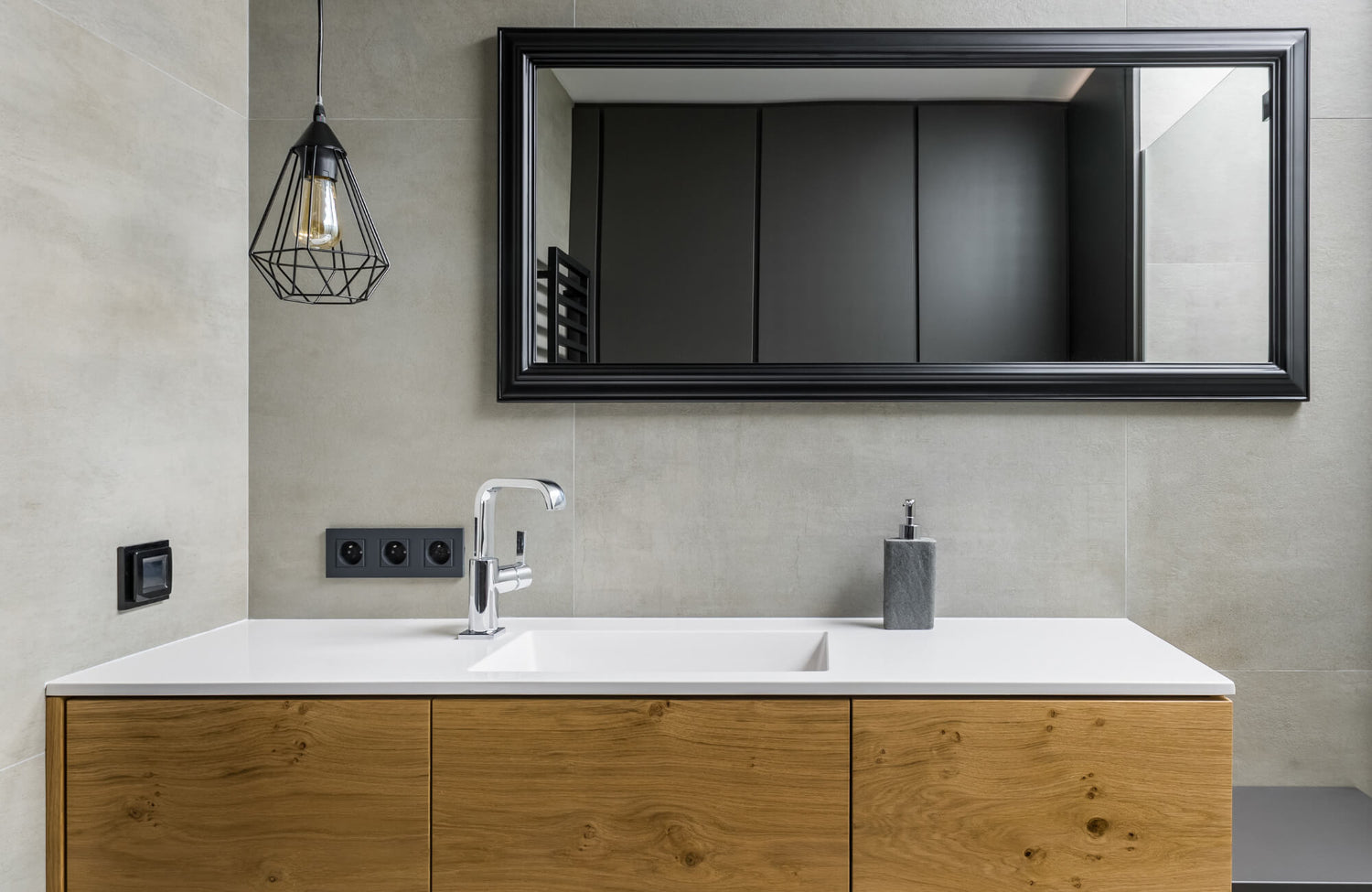
In today’s bathroom designs, mixing metal finishes has moved from a daring choice to a refined design strategy embraced by homeowners and designers across the country. Matte black vanity lights in particular have become a favorite anchor because they offer visual clarity, timeless contrast, and a level of versatility that accommodates both cool and warm metals.
With that in mind, this article explores exactly why matte black blends well with mixed metals, how to pair it with both cool and warm finishes, and the design principles that make the combination feel cohesive rather than chaotic. The goal is not only to confirm that you can mix black vanity lights with chrome or gold faucets, but to help you do so with purpose, confidence, and a designer’s eye for balance.

Why Matte Black Is The Ultimate Neutral Anchor
Before you can confidently mix metals in a bathroom, it helps to understand why matte black stands apart from the rest. This finish acts more like a grounding color than a competing metal, giving it a versatility that sets the foundation for intentional design. By recognizing black as the anchor, every other finish becomes easier to pair with purpose.
Treating Black as a Color Not a Metal
The biggest misconception about black fixtures is that they belong to the same category as chrome, brass, or nickel. In reality, black operates differently. It behaves less like a metal and more like a deep, grounding color, which is why fixtures like Edward Martin’s Tyson Wall Sconce in Old Bronze, shown in the image above, introduce structure without competing for attention. Instead, pieces like this create outlines and add visual depth without becoming overly dominant, working as stabilizing elements that support or offset any faucet finish you choose.
Homeowners often underestimate how adaptable black is. Unlike the undertones that influence metals such as brass or nickel, black has no warmth or coolness that needs to be matched. It sits comfortably next to every finish, almost the way black picture frames complement artwork regardless of the palette. By redefining black as a color element, you begin to understand why it pairs effortlessly with both chromatic cool tones and glowing warm metals.
Moving Past the Builder Grade Look
Standard builder grade bathrooms often rely on matching chrome fixtures from wall to wall, creating a space that feels predictable rather than personalized. Introducing matte black vanity lights or sconces disrupts that sameness in the best way. The contrast alone brings energy into the room, giving your lighting a more bespoke presence instead of fading into the background.
The shift from matching to mixing is one of the easiest upgrades a homeowner can make. By choosing black lights, you create a focal point that immediately elevates the space beyond builder grade basics. The goal isn’t to discard everything chrome simply because it feels generic. Instead, you use black strategically to rework the hierarchy of the room, ensuring light fixtures become intentional design statements rather than afterthoughts.
Creating Essential Contrast and Depth
Contrast is one of the core principles of compelling interior design. Without it, a room feels flat. Matte black introduces dimension by breaking up the monotony of reflective metal surfaces. When homeowners pair black vanity lights with chrome or gold faucets, the black component becomes the grounding element that allows the shinier finish to stand out more effectively.
This contrast is especially important in bathrooms dominated by white or light-toned tile. Black cuts through the brightness and gives the eye a place to rest. It works like eyeliner for the room: subtle but transformative, defining features and adding crispness to the overall composition. Rather than competing with faucets or hardware, black heightens their impact.

The Cool Mix Pairing Black Lights with Chrome or Nickel
Once black is established as your visual anchor, it opens the door to striking contrasts, starting with cool-toned metals like chrome and nickel. These reflective finishes bring a crisp, modern edge that plays beautifully against the matte depth of black. The result is a cool, contemporary pairing that feels architectural and balanced.
Achieving a Modern Industrial Aesthetic
When matte black vanity lights meet chrome or polished nickel faucets, the effect is inherently modern. The pairing feels intentional and architectural, reminiscent of the blend of metalwork seen in renovated lofts, boutique hotels, and contemporary urban homes. Black introduces the structural note while chrome or nickel brings a sleek, luminous layer that feels polished and current.
This combination also supports a minimalist aesthetic without appearing cold. Black’s tactile finish prevents the room from feeling too slick, giving the cooler metals something warm and velvety to play against. The result is an industrial-inspired look softened for residential comfort, striking the ideal balance between urban edge and everyday livability.
How to Balance the Shine Factor
Chrome and polished nickel are highly reflective, which means they naturally attract attention. When paired with matte black vanity lights, the reflection is tempered because the black finish absorbs light rather than reflecting it. This creates a push-pull dynamic that feels sophisticated rather than chaotic.
To maintain harmony, consider how much shine you introduce elsewhere. For example, a highly glossy mirror paired with polished nickel faucets and black lighting might tip the balance toward excessive reflection, while a matte or satin mirror frame anchors the composition. The key is ensuring that the chrome doesn’t overwhelm the cabinetry, wall color, or lighting. Matte black provides the perfect counterbalance because it visually absorbs any excess brightness.
The Importance of White Space
Designers often talk about white space as a breathing area for the eye, a buffer that prevents a room from feeling overcrowded. In bathrooms where chrome or nickel faucets share the stage with black vanity lights, white space becomes even more important. The balanced spacing seen around Edward Martin’s Ryder Wall Sconce in Old Bronze in the image above shows how a neutral backdrop helps the dark fixture and bright faucet coexist without visual clutter.
White walls, pale tile, or light-toned countertops create the space these competing elements need to shine without clashing. Black lights become bold punctuation marks, while chrome faucets remain crisp and reflective. Together, they achieve a balanced composition that feels modern, refined, and well-paced.

The Warm Mix Pairing Black Lights with Gold or Brass
After exploring the cool side of the spectrum, black also proves equally compatible with warm-toned metals like gold and brass. These finishes introduce a richness and glow that soften the boldness of black while elevating the entire palette. Together, they create a luxurious, inviting mix that feels both current and timeless.
Creating a Look of Luxury and Warmth
When matte black vanity lights are paired with gold or brass faucets, the result is one of instant luxury. Black provides the depth and grounding needed to keep warm metals from feeling overly ornate, while gold adds richness and glow that elevates the entire space. The warm, refined glow of Edward Martin’s Dorian Wall Sconce in Aged Brass, seen in the image above, demonstrates how this pairing bridges modern contrast with classic elegance.
Gold and brass naturally command attention, and black allows them to do so without overwhelming the overall palette. The matte finish of the lights prevents the warm metals from becoming too shiny or theatrical. Together, they create a bathroom that feels curated, inviting, and undeniably elegant.
Navigating the Many Shades of Gold
Not all gold or brass finishes are created equal. Some are bright and yellow-toned, others lean toward champagne or muted bronze. The beauty of matte black is that it complements all of them. Because black has no undertone, it doesn’t clash with variations in warmth the way other metals might. Instead, it stabilizes the space and gives the gold finish a more intentional presence.
If your faucets lean bright and polished, black lights will tone down the intensity, making the gold feel chic rather than glossy. If your faucets lean more antique or brushed, black will highlight the depth of the patina. This flexibility is one of the core reasons designers consider black such a dependable anchor when mixing metals.
Using Two Tone Fixtures as a Bridge
Two-tone fixtures have become increasingly popular because they provide a smooth transition between finishes. Vanity lights that incorporate both black and gold elements, or faucets that blend black with brushed brass, act as visual bridges that make mixed-metal design effortless. Even when your black vanity lights remain purely matte black, using nearby elements, such as cabinet hardware, towel bars, or mirror frames, with a blended finish softens the contrast and ties the whole palette together.
These bridging elements prevent abrupt transitions between metals, creating a layered look that feels thoughtfully composed. They also give homeowners more flexibility in future updates, allowing them to refresh one area without replacing entire sets of fixtures.

The Golden Rules of Execution Do Not Do It Randomly
With both cool and warm pairings in play, the final step is bringing them together with intention. Mixed metals only succeed when guided by thoughtful repetition, balance, and cohesion. These execution rules ensure that your black lights and chosen finishes don’t feel accidental but instead look curated and designer-driven.
The Rule of Repetition and Threes
Mixed-metal design works best when finishes repeat with intention. A bathroom should never look like a collection of disconnected fixtures. Instead, each metal should appear at least twice, ideally three times, in different parts of the room. When you pair black vanity lights with chrome or gold faucets, repeating each finish creates harmony and rhythm.
Black might appear in the lighting, mirror frame, and hardware, while gold or chrome appears in the faucet, shower fixtures, and cabinet pulls. This repetition gives the room a sense of order and cohesion even when the metals contrast dramatically. Without this principle, mixed finishes risk looking accidental rather than curated.
Choosing a Dominant Metal and an Accent
Every successful mixed-metal bathroom has one dominant finish that defines the aesthetic and one accent metal that adds interest. Black vanity lights often function as the accent, offering contrast against a dominant metal like chrome or gold. In some spaces, the subtle depth of Edward Martin’s Perkins Wall Sconce in Old Bronze, featured in the image above, helps establish black as either the grounding primary finish or a refined secondary note.
Determining the hierarchy prevents a design from feeling scattered. When black is used sparingly, it becomes striking. When used more extensively, it becomes a grounding force that makes the secondary metal feel like a jewel-like highlight. Either approach works, as long as you choose your dominant metal purposefully rather than leaving the balance to chance.
Bridging the Gap with Mirrors and Accessories
Mirrors and accessories play an essential role in making mixed metals feel cohesive. A mirror with a black frame supports black vanity lights, while a mirror with a gold detail reinforces warm-toned faucets. Decorative elements such as soap dispensers, vases, artwork, or even the trim on a towel can help bridge the gap between finishes, and this is often where an Edward Martin design consultation can offer valuable, personalized guidance tailored to your project.
These elements are especially useful because they are easy to change over time. If you decide to switch from chrome faucets to brass in the future, adjusting accessories ensures that your black lighting remains just as relevant, and you can always contact Edward Martin for help with product questions or thoughtful recommendations on tile, rugs, or even furniture selections. Accessories act as the quiet mediators of the room, tying metals together subtly but effectively.
Yes You Can and You Should
Mixing black vanity lights with chrome or gold faucets is not just possible, it is one of the most compelling ways to elevate a bathroom. Black’s versatility, neutrality, and grounding presence make it the perfect anchor for both cool and warm metals. Whether you prefer the sleek clarity of chrome, the luminous richness of gold, or a combination of both, black acts as the stabilizing thread that brings everything together.
So not only can you mix black vanity lights with chrome or gold faucets, you absolutely should. The result is a bathroom that combines modern sophistication with timeless appeal, grounded in contrast, elevated by diversity, and unmistakably designed for the homeowner who values style, quality, and distinction.