A powder room may be small, but it holds enormous design potential. Because guests often visit this space more than any other bathroom, the vanity becomes a focal point that can elevate your overall style. Choosing the right one means blending function, aesthetics, and smart planning so the room feels polished rather than cramped.
As you explore your options, you’ll find that the perfect vanity is less about following trends and more about understanding what your specific space needs. From measurements and flow to materials and lighting, every detail contributes to creating a powder room that feels intentional, welcoming, and beautifully cohesive.

Understanding Your Space Requirements
Understanding your space requirements is the crucial first step in choosing a powder room vanity that truly works. Rather than focusing solely on finishes or style, you first need a clear grasp of how the room is shaped, how people move through it, and which wall naturally draws attention. By looking beyond simple width and depth measurements, you gain a more accurate picture of what the room can accommodate. Considering door swing clearance, hallway access, plumbing placement, and even ceiling height also allows you to anticipate installation challenges and select a vanity that fits both visually and physically. With this broader perspective, you avoid last-minute surprises and create a foundation for a smoother design process.
As you move deeper into the planning phase, understanding circulation and visual balance becomes equally important. Evaluating usage patterns helps you maintain a comfortable flow, ensuring the vanity doesn’t turn the room into a tight or awkward space. Likewise, identifying the room’s focal wall allows you to place the vanity where it makes the strongest visual impact without overwhelming the room. Leaving adequate breathing space around the vanity, choosing the right proportions, and aligning the design with the room’s natural sightlines all contribute to a more harmonious layout. Ultimately, by taking a holistic look at measurements, movement, and visual hierarchy, you ensure your powder room vanity enhances both function and style with intention.

Choosing a Functional Configuration
Powder rooms have different needs from full bathrooms, and that difference should guide how you choose a vanity. Since the space is used mainly for handwashing and quick visits, you can focus more on visual presence and room flow rather than built-in storage or oversized fixtures.
Determining Whether Storage is Actually Needed
Because powder rooms aren’t typically used for daily grooming or toiletry storage, you may not need a full cabinet at all. If you want the room to feel open and airy, a pedestal sink or an open console vanity can create an elegant, sculptural look while maximizing floor visibility. These options make the room appear larger, which is particularly helpful in tight or narrow layouts.
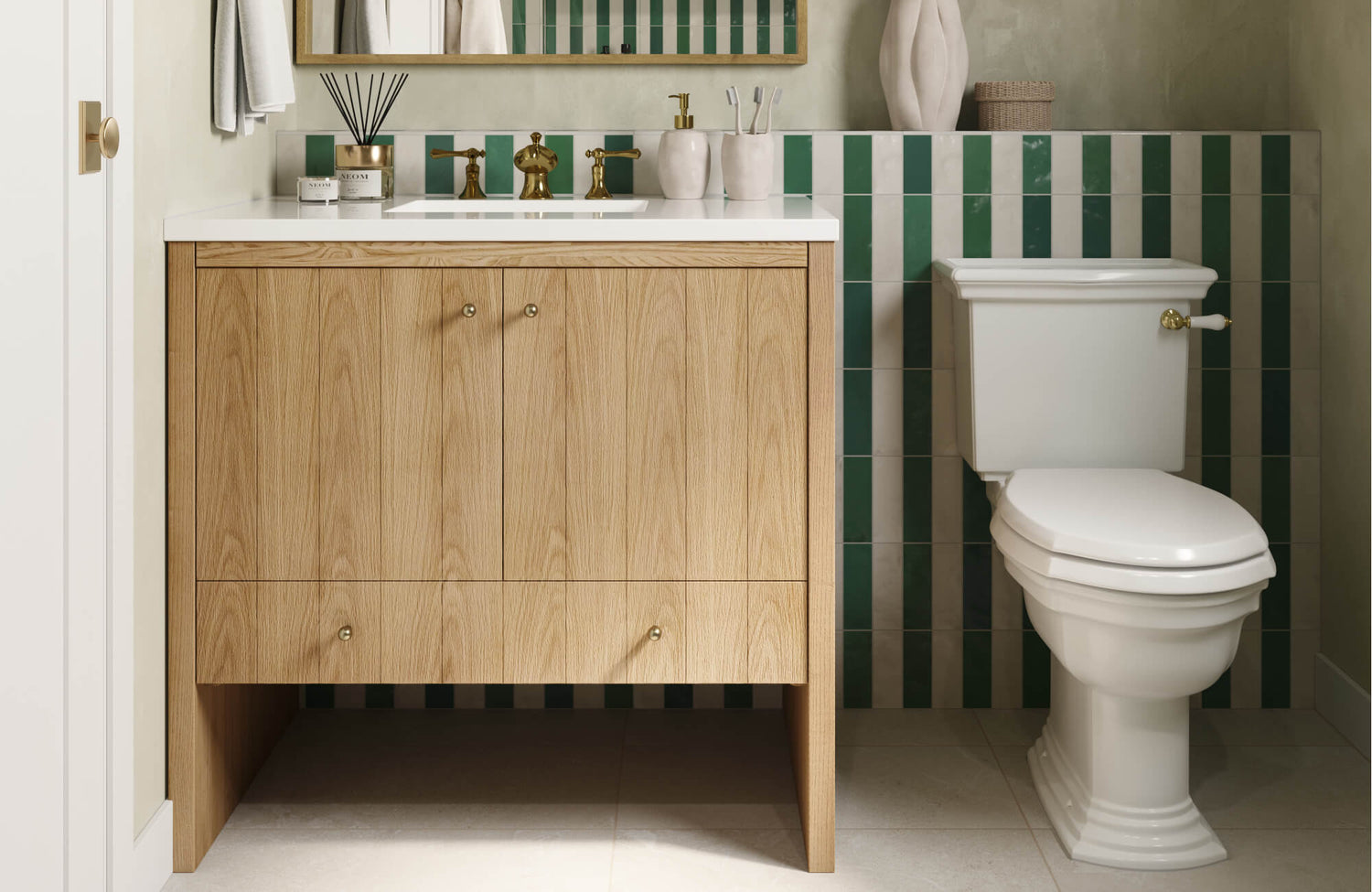
However, you might still prefer to store extra hand towels, soap refills, or small essentials out of sight. In that case, a compact cabinet-style vanity can offer just enough storage without overwhelming the room. The vanity shown in the image above is a perfect example. Our Colton 48" Single Vanity in Sable with 3 cm White Zeus Quartz Top, a warm medium brown finish, provides concealed storage while still maintaining a streamlined presence. Its proportions and clean lines also make it an ideal fit for powder rooms that need function without sacrificing style.
Weighing Integrated Sink Tops versus Separate Components
Choosing between an integrated sink top and a separate countertop-and-basin setup shapes both the vanity’s appearance and ease of maintenance. An integrated top, where the sink and counter are formed as a single piece, creates a sleek, seamless surface that’s extremely easy to clean. Because there are no exposed seams around the sink, water and soap residue have fewer places to collect, making upkeep quick and stress-free.
Still, separate components offer advantages that may better align with your design goals. With a standalone countertop and sink, you have the freedom to select from a wider range of materials, shapes, and textures, which enhances customization and elevates the room’s style. Additionally, if one component becomes damaged or you want to refresh the look later, you can replace the sink or the counter without redoing the entire vanity. This flexibility can be particularly appealing when you value long-term adaptability.
Considering Plumbing Placement Flexibility
Plumbing placement often determines how easily certain vanity styles can be installed. If your plumbing is floor-fed, a wall-mounted vanity may require rerouting the pipes so they feed through the wall instead. That change can significantly increase installation cost and time, so it’s important to evaluate whether the aesthetic upgrade is truly worth the investment. Wall-mounted styles do offer a modern, floating appearance, but only pursue this option if it aligns with both your budget and overall design plan.
When your plumbing rough-ins are already positioned for a floor-standing vanity, sticking with that configuration can simplify installation and reduce expenses. Freestanding cabinets often provide more flexibility in accommodating existing pipe locations, and they can be installed with minimal disruption. As you compare options, weigh the cost of altering plumbing against the visual and functional benefits you hope to achieve, ensuring that your final choice supports both practicality and style.

Selecting a Style That Matches Architectural Character
Your powder room vanity should feel like a natural extension of your space’s overall design language. When the style aligns with the architecture around it, the space feels intentional, connected, and visually harmonious.
Identifying the Dominant Architectural Cues
To choose a vanity that fits seamlessly into your space, start by paying close attention to the architectural details you already live with every day. Look at the baseboards, door casings, and window trim to understand whether your space leans traditional, modern, or somewhere in between. These elements often reveal the space’s true stylistic direction more clearly than décor or furniture. For example, ornate moldings or beveled casings signal a more classic aesthetic, while crisp, unembellished lines suggest a contemporary or minimalist lean.
Once you understand these cues, you can select a vanity that speaks the same design language. A perfect example is seen in the photo above, featuring our Bridgette 36" Single Vanity in Light Natural Oak with 3 cm White Zeus Quartz Top, a soft, sun-washed wood tone that blends effortlessly into rooms with warm minimalism or casual traditional styling. Its subtle shaker detailing and open lower shelf also echo classic craftsmanship while keeping the design light and approachable.
Ensuring Design Continuity from Adjacent Rooms
A powder room rarely stands alone. It’s usually connected to a hallway, entryway, or living area. Because of this, it helps to borrow subtle visual elements from those surrounding rooms. This approach doesn’t require matching every detail; instead, aim for thoughtfully repeated cues such as finish metals, color accents, or material tones. This kind of quiet continuity helps the transition between spaces feel fluid and intentional.
If your adjacent rooms feature warm brass accents, for example, you can incorporate similar warmth in your vanity hardware or mirror frame. Likewise, if the surrounding areas lean toward cool neutrals, a vanity in a complementary shade helps maintain visual flow. A piece like our Sasha 48" Single Vanity in Carbon Oak with 3 cm White Zeus Quartz Top, which showcases a black wood tone, works especially well in spaces where darker millwork or muted modern palettes define the surrounding rooms. These connections also don’t need to be obvious; they simply need to create a sense of harmony so the powder room feels like part of the narrative rather than a design outlier.
Using Contrast Strategically to Enhance Visual Interest
A powder room gives you permission to take creative risks you might shy away from in larger spaces. Because it’s a self-contained room, introducing contrast can make it feel dramatic and memorable without disrupting the space’s overall palette. If the surrounding spaces are light and subtle, a vanity in charcoal, espresso, or deep navy can bring instant depth and sophistication. The small size of the room also allows these richer tones to shine without overwhelming the space.
However, contrast doesn’t always mean bold color. You can also create impact through brightness and clarity, especially in rooms that need a visual lift. A vanity like our Elodie 48" Single Vanity in Bright White with 3 cm White Zeus Quartz Top offers a crisp, refreshing counterpoint to textured walls, warm wood tones, or darker flooring, instantly drawing the eye without feeling heavy. The key is balancing the contrast with restraint. When you choose one element to take center stage, whether it’s a light vanity, a textured finish, or a distinctive shape, you allow the room to feel dynamic yet controlled. This careful use of contrast turns your powder room into a small but striking design moment within your space.

Material Selection for Long-Term Performance
Because powder rooms deal with frequent handwashing, fluctuating moisture, and regular cleaning, the materials you choose must be both durable and visually consistent over time. When you match your material choices to how often the room is used and how well it’s ventilated, the vanity will stay looking polished long after installation.
Evaluating Moisture Resistance Based on Usage Frequency
The level of moisture exposure in your powder room plays a major role in determining which materials will hold up best. If the space is used daily by you or your guests, the vanity will inevitably experience splashes, drips, and frequent wipe-downs. In these cases, choosing finishes that repel water, such as sealed wood, laminate, or moisture-resistant paints, helps protect the cabinet’s edges and panels from swelling or peeling. Even small areas around the sink can deteriorate quickly if the finish isn’t up to the task, so durability should outweigh decorative appeal.
In contrast, if your powder room is used mainly for occasional visitors, you have more freedom to incorporate delicate materials or visually distinctive finishes. Although the room may not see the same everyday wear, it still requires protection near the sink. Any surface within splash range should be fully sealed, ensuring water doesn’t seep into seams or grain. By evaluating how often the room is actually used, you can strike the right balance between aesthetics and long-term reliability.
Comparing Engineered Materials to Natural Wood
Choosing between natural wood and engineered materials affects not only the vanity’s appearance but also its longevity.
Solid Wood
Solid wood brings warmth, richness, and timeless character, yet it reacts noticeably to humidity and temperature changes. Over time, those shifts can cause expansion, contraction, or even warping, especially in bathrooms with limited ventilation. Although solid wood can be made more resilient with proper sealing, it remains sensitive to moisture compared to engineered alternatives.
MDF
MDF provides an exceptionally smooth, uniform surface that is perfect for painted finishes, allowing for crisp, flawless color application without visible grain patterns. When properly sealed and maintained, it performs reliably in powder rooms, especially those with lower humidity levels, and offers an attractive, budget-friendly alternative to solid wood.
Plywood
High-quality furniture-grade or marine-grade plywood delivers impressive stability and moisture resistance, which makes it a dependable option in environments that experience more frequent use or occasional humidity fluctuations. With its strong, layered construction and reliable durability, plywood also offers long-term performance that pairs beautifully with a wide range of vanity styles.
Veneer
Wood veneer offers the authentic beauty of real wood while benefiting from the stability of an engineered core such as MDF or plywood. Because the veneer layer is thin, it is less prone to warping than solid wood, yet it still provides the rich grain patterns many people love. When sealed properly, veneer performs well in powder rooms, maintaining a high-end appearance without the maintenance demands of solid wood. It also allows for consistent coloration and texture across the vanity, creating a refined, cohesive look.
One standout example of this approach is our Gabriella 60" Single Vanity in Light Natural Oak with 3 cm White Zeus Quartz Top, displayed in the picture above, which pairs a light oak veneer with brushed aluminum laminate for added stability and moisture resistance. This combination delivers a refined, cohesive look while ensuring the vanity holds up well in environments with regular handwashing and daily use.
Choosing Countertops That Handle Cosmetics and Cleaning Products
Countertops face daily exposure not only to water but also to soaps, lotions, fragrances, and cleaning products. Because of this, selecting a non-porous surface helps the vanity stay clean, unstained, and attractive. Quartz is a popular choice because it resists scratches, chemicals, and moisture while offering a wide range of colors and patterns. Porcelain slabs perform similarly, with the added benefit of exceptional heat and UV resistance, making them ideal if you want something sleek and extremely low-maintenance.
Although marble may tempt you with its natural veining and luxury appeal, it requires significantly more care. Its porous structure makes it vulnerable to staining from cosmetics or acidic cleaners, meaning frequent sealing is essential. If you’re drawn to its beauty, you must be prepared for the upkeep that comes with it. For most powder rooms, especially those seeing regular use, quartz and porcelain provide the strongest combination of durability and aesthetic versatility, ensuring your vanity top remains pristine and stylish for years to come.

Optimizing Lighting and Mirror Pairings
Optimizing your lighting and mirror pairings is essential for creating a powder room that feels both functional and visually elevated. When these elements work in harmony with your vanity, they influence how bright, spacious, and inviting the room appears. The right mirror size reinforces the vanity as a focal point, ensuring the proportions feel balanced rather than competing or visually shrinking the space. Likewise, introducing layered lighting such as sconces, overhead fixtures, or integrated LEDs reduces harsh shadows and creates a smoother, more flattering illumination that enhances both practicality and ambiance. Together, these choices help the vanity area feel cohesive and thoughtfully composed.
Equally important is selecting the right color temperature and light quality to support the overall mood of the room. Warm lighting in the 2700K to 3000K range casts a soft, flattering glow that makes the space feel welcoming, while high-CRI bulbs ensure skin tones and finishes appear true to life. In contrast, cooler lighting can introduce a sterile or overly harsh atmosphere that diminishes the powder room’s charm. By combining balanced mirror proportions, strategic lighting placement, and warm, high-quality light, you create a polished environment where the vanity, mirror, and lighting work together to enhance both aesthetics and everyday functionality.
Aesthetic Value and Timeless Appeal
A thoughtfully selected powder room vanity has the power to transform the entire space, and understanding how to make that choice ensures long-lasting impact. When you combine accurate spatial planning with a functional configuration, materials that truly withstand moisture, and lighting that enhances your mirror and vanity pairing, you create a room that feels both refined and effortless. As a result, the right vanity not only fits your layout but also reflects your space’s character, supports daily use, and enriches your guests’ experience. Ultimately, choosing the right powder room vanity is about crafting a space where every inch works beautifully and every detail contributes to a timeless, curated design.
As you refine your vision and narrow down the vanity that best complements your powder room, having reliable guidance can make the process even more seamless. This is where reaching out to us can be especially valuable. Our support staff is available to answer questions, provide product information, and help you navigate options that align with your layout and design goals. With knowledgeable assistance, you can move forward with confidence, knowing every choice contributes to a powder room that feels thoughtfully designed and beautifully finished.