Selecting the right dining room set is an opportunity to shape a space that feels both inviting and effortlessly refined, where comfort and craftsmanship meet in perfect harmony. As the heart of gathering and connection, the dining area deserves furnishings that balance proportion, material integrity, and visual cohesion with the surrounding architecture. Thoughtfully chosen pieces not only elevate everyday rituals but also enhance the room’s spatial flow, lighting interplay, and overall design clarity. When these considerations come together, they create a dining room that supports elegant entertaining, enduring durability, and a timeless sense of style—fulfilling the search for the best dining room set for modern homes and long-lasting, high-quality dining furniture for everyday living.

Space Planning and Proportion
Selecting the right dining room set begins with understanding how scale and circulation shape the room’s usability and visual balance. When dimensions align naturally with walkways and architectural lines, the dining space feels purposeful, comfortable, and harmonious.
Room Measurements and Circulation Requirements
Accurate room measurements establish a functional layout by defining the space required for seating, movement, and clear walkways. To do this, maintain 36–48 inches of open clearance around the table to ensure chairs can slide back comfortably without disrupting circulation. This allowance also helps prevent the room from feeling compressed, giving the furniture space to breathe visually. As clearances become intentional, the relationship between the table, chairs, and perimeter walls feels fluid rather than constrained. These measured boundaries help larger rooms avoid appearing under-furnished by allowing for proportional scaling. When circulation and spacing align, the dining area supports both movement and interaction with ease.
Choosing the Appropriate Table Shape
The table’s silhouette influences how people navigate the room, as each shape creates a different rhythm within the overall layout. Rectangular tables, for example, support linear circulation and maximize seating along narrow or elongated footprints, creating a sense of order that aligns well with symmetrical architectural features. On the other hand, round tables reduce visual edges, encouraging more fluid movement and softer spatial transitions in compact or open-concept layouts. Square tables also reinforce balance in evenly proportioned rooms, anchoring the space with a unified, centered presence. Oval tables, meanwhile, offer a graceful middle ground by softening the linearity of long rooms without sacrificing seating capacity.
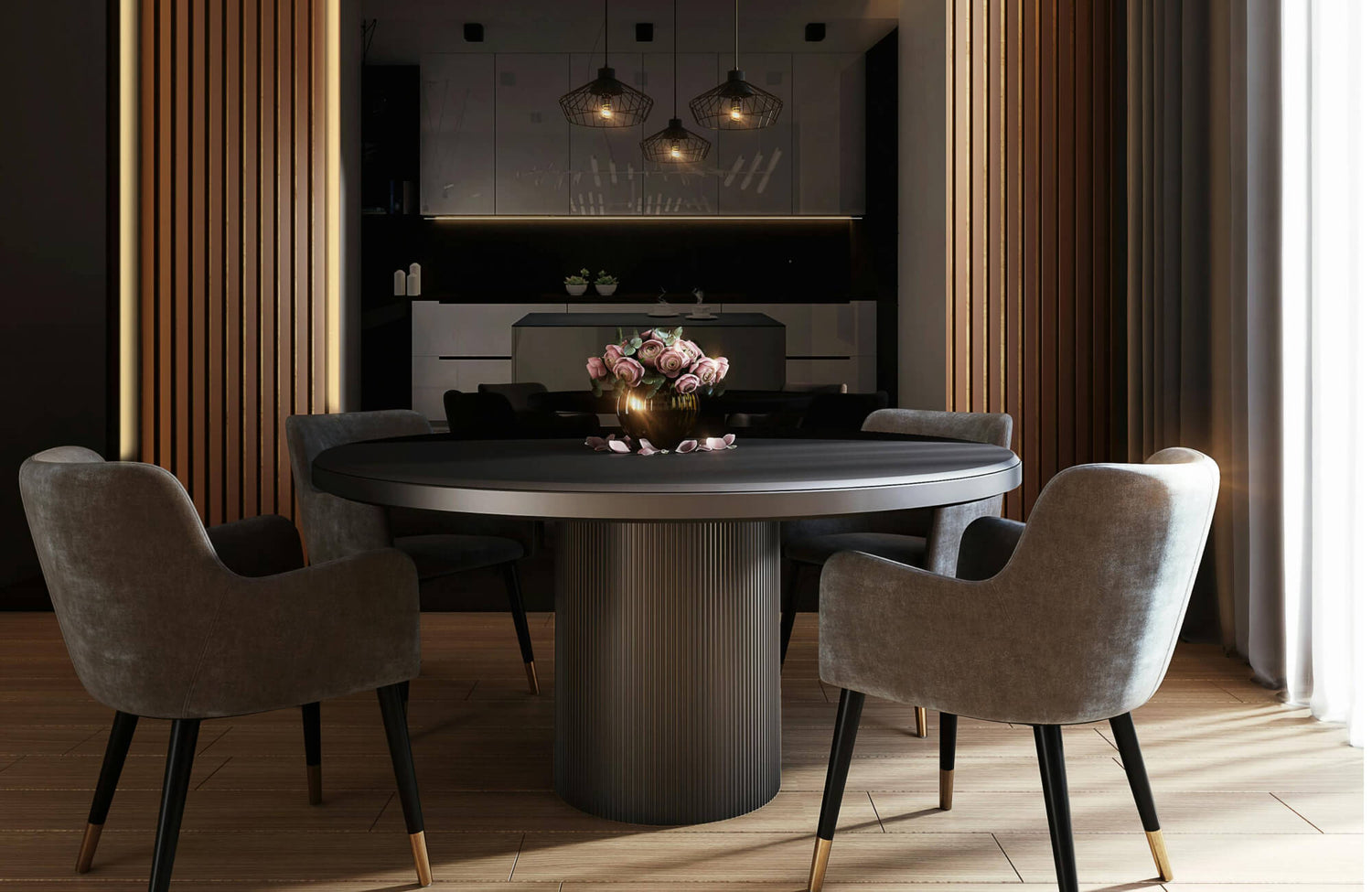
This design logic is beautifully illustrated by Edward Martin’s Rebecca 86" to 120" Dining Table in Greige, whose elongated rectangular form, substantial pedestal base, and refined finish complement the airy, symmetrical setting, as shown in the photo above—demonstrating how the right shape and extension capability can harmonize with architectural rhythm while offering flexible seating for both intimate dinners and large gatherings.
Scale, Seating Capacity, and Visual Weight
Achieving the right scale begins with balancing the table’s footprint against the room’s negative space, creating a comfortable sense of proportion. Choosing slimmer frames or pedestal bases can further refine this balance by reducing visual weight, helping smaller rooms feel more expansive. In larger settings, more substantial silhouettes help anchor the composition and prevent the space from feeling empty. Moreover, standard seating allowances of 24–26 inches per person ensure comfort while maintaining a sense of order along the table’s edge. These spacing principles also help maintain visual symmetry when accommodating different seating configurations. When scale, seating, and mass work in harmony, the dining arrangement feels intentional and architecturally grounded.

Material Performance and Construction Quality
Material selection sets the foundation for durability, aesthetic longevity, and structural reliability. When paired with robust craftsmanship, the dining set becomes a long-term investment that withstands daily use with grace.
Wood Species, Veneers, and Engineered Options
Each wood type carries distinct performance qualities that influence durability, stability, and the visual character of a dining table. For example, hardwoods such as oak and maple provide excellent density and wear resistance, making them ideal for everyday dining environments where longevity matters. Walnut, on the other hand, offers rich tonal variation while maintaining structural strength, adding a refined sense of depth to both traditional and modern interiors. Moreover, engineered substrates like HDF or multi-layered plywood cores also help prevent warping in variable climates, supporting a smooth and consistent surface over time. High-quality veneers applied over these stable cores, then deliver a premium appearance without compromising overall structural performance.
This balance of beauty and durability is clearly demonstrated in the Alice 54" Round Dining Table in Light Oak, as shown in the photo above. Its smooth pedestal base, softly grained light-oak finish, and round silhouette highlight how natural hardwoods create a warm, inviting focal point perfectly suited for breakfast nooks, intimate dining corners, and spaces where organic texture enhances the room’s comfort and charm.
Metal, Glass, and Composite Tabletops
Powder-coated steel and aluminum bases deliver structural strength while protecting the metal from corrosion and surface wear, while tempered glass tabletops introduce a light, airy aesthetic, reducing visual bulk while maintaining impact resistance. Ceramic and sintered stone surfaces also offer exceptional scratch, heat, and stain resistance, making them well-suited to high-frequency use. As an alternative, high-pressure laminates provide resilience with consistent texture and color stability. These surface innovations allow the table to maintain its finish despite daily activity and environmental stress. As material engineering evolves, dining surfaces now combine visual sophistication with impressive durability.
Joinery Methods and Frame Stability
Well-executed joinery determines whether a table maintains structural integrity through years of use. Mortise-and-tenon connections, for instance, create strong interlocking joints that minimize shifting under pressure. Corner blocks also help stabilize chair frames and reduce lateral movement that typically leads to wobbling. In addition, kiln-dried wood minimizes moisture content, reducing the likelihood of cracking or warping over time, while welded metal joints reinforce the structure with continuous seams that disperse weight evenly. When these construction methods work together, the dining set remains stable, resilient, and acoustically solid.

Ergonomics, Seating Comfort, and Chair Design
Ergonomic seating enhances comfort by ensuring posture alignment, natural movement, and uninterrupted support. When table height, chair proportions, and backrest design function cohesively, the dining experience becomes effortlessly comfortable.
Seat Height, Depth, and Human-Centric Comfort
Seat proportions subtly influence how the body aligns with the table, shaping comfort throughout the meal. For example, standard dining tables at 28–30 inches pair best with chairs measuring 18–20 inches in seat height to maintain balanced thigh clearance. Meanwhile, seat depths of 16–18 inches support the lower body without forcing the user to lean forward. These proportional relationships minimize pressure points and reduce fatigue during longer gatherings. Well-aligned seating also improves table reach, allowing guests to interact comfortably with the dining surface. When these ergonomic elements are calibrated correctly, the entire seating arrangement feels natural and supportive.
Chair Back Construction and Support Features
Backrest structure influences how effectively the spine maintains its natural curve during seating. Contoured chair backs, for instance, cradle the lumbar region, reducing strain and encouraging upright posture, while upholstered backs add softness and pressure distribution, making extended seating more comfortable. Open-back designs also introduce airflow and visual lightness while still maintaining structural support. In addition, taller backs create a sense of formality and presence, while mid-height profiles integrate seamlessly into modern, minimalist interiors. These thoughtful variations ensure the chair supports both the body and the surrounding design context.
Upholstery, Cushioning, and Performance Fabrics
High-density foam cushions retain their shape under consistent use, providing comfort without early compression. Performance fabrics such as microfiber, solution-dyed acrylic, and engineered polyesters resist staining, abrasion, and fading. These textiles maintain color integrity even under sunlight or frequent cleaning. Upholstered seats also soften acoustics, reducing echo and enhancing comfort in open-plan dining rooms. Layered padding then adds structure and resilience while preventing the fabric from stretching or sagging. When cushioning and upholstery work together, the result is seating that feels tailored, durable, and visually refined.

Style Harmony, Color Coordination, and Design Cohesion
A unified dining environment emerges when furniture choices align with the home’s architectural language and material palette. Through cohesive styling and considered transitions, the dining set becomes an integral part of the overall interior composition.
Identifying Your Home’s Architectural Style
Understanding the home’s architectural identity helps narrow furniture direction and ensures stylistic compatibility. Clean, linear silhouettes, for instance, complement contemporary spaces by reinforcing clarity and simplicity. Conversely, traditional homes benefit from ornate details such as turned legs or sculpted edges that echo classical craftsmanship, while transitional spaces blend both influences, balancing modern restraint with soft ornamentation. At the same time, Scandinavian-inspired interiors rely on pale woods and light textures that emphasize calm and simplicity. When these stylistic cues guide selection, the dining area feels naturally integrated into the home.
Coordinating Finishes, Textures, and Wood Tones
Coordinating undertones across the dining table, flooring, and cabinetry prevents visual discord and maintains continuity throughout the space. Warm woods, for example, pair harmoniously with amber or espresso tones, while cooler finishes align with gray or charcoal palettes. Layering subtle textures, such as matte surfaces with brushed grains, also adds visual depth without overwhelming the design. Moreover, mixing materials like metal accents or stone inserts introduces contrast while still supporting the room’s overall palette. With consistent finish alignment, the adjacent rooms are unified, especially in open-concept layouts. When finishes and textures are thoughtfully combined, the dining area feels visually rich and cohesive.
Visual Balance with Lighting and Table Shape
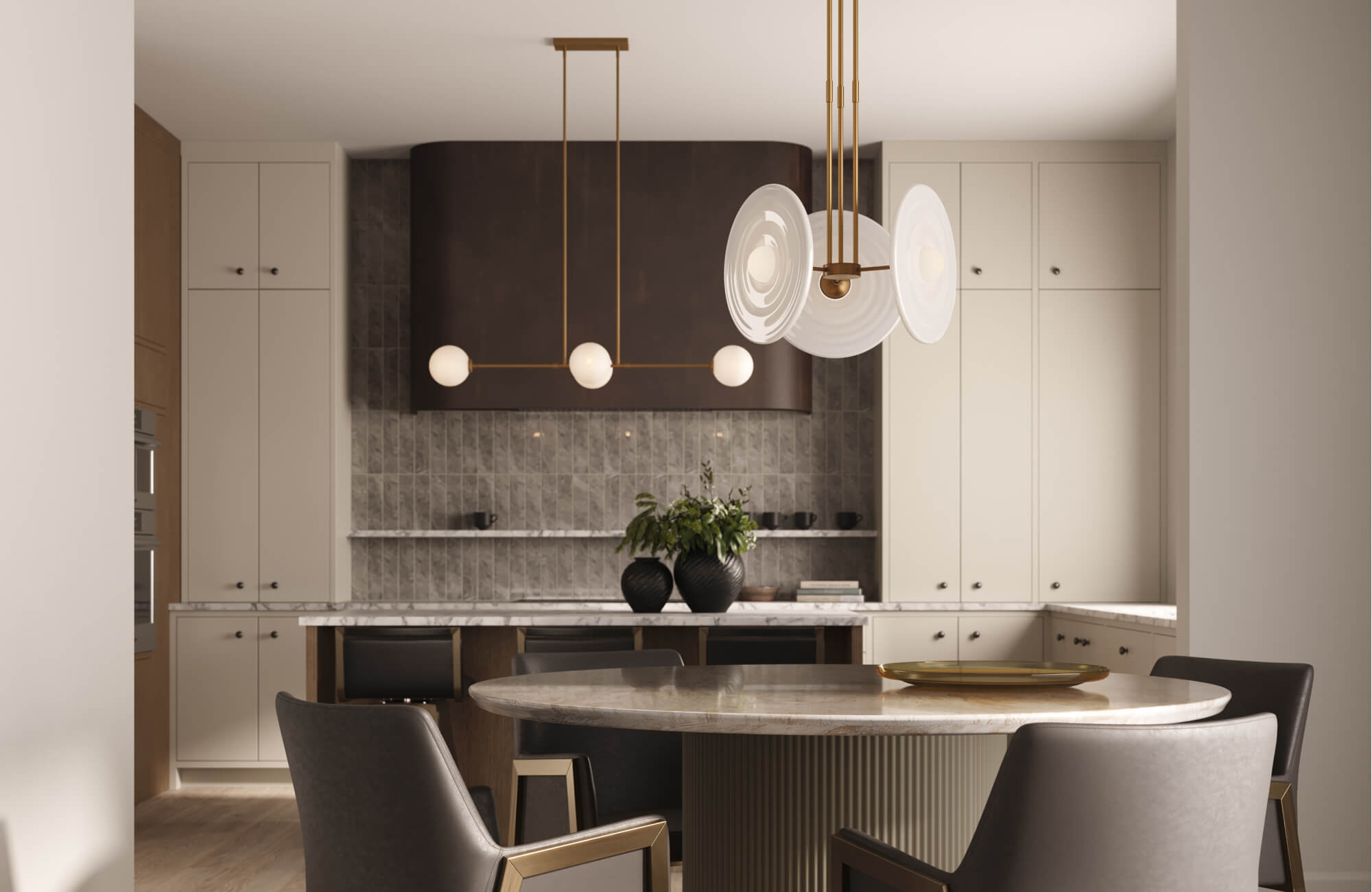
Lighting shapes how the proportions and materials of the space are perceived, guiding the eye toward key focal points while setting the overall tone. A fixture scaled appropriately to the surface below maintains balance, preventing visual heaviness and ensuring the composition feels deliberate rather than crowded. As featured in the picture above, our Odessa Semi Flush in Aged Brass achieves this beautifully through its warm metallic tone and softly diffused globes, echoing the curvature of the bar while enhancing the room’s natural radiance. Its rounded silhouette harmonizes with the clean, geometric lines of the counters and shelving, allowing the lighting to unify the vertical and horizontal planes with ease.
This sense of balance is further reinforced by the Savannah Counter Stool in Cream (shown in the photo above), whose upholstered seats, warm wooden frames, and subtle curvature mirror the bar’s architectural lines while softening the overall composition. Together, this Odessa lighting and Savannah stools create a cohesive visual rhythm—one where form, finish, and proportion work in concert to establish a polished, inviting environment with unmistakable design harmony.

Lifestyle Needs, Functionality, and Long-Term Maintenance
A dining set that aligns with lifestyle demands will perform reliably, adapt to routine use, and maintain its appearance over time. When functionality guides each decision, the room remains practical without sacrificing aesthetic intention.
Family Considerations and Daily Wear Resistance
Active households benefit from materials that withstand regular use while remaining visually appealing, with rounded corners providing both safety and a softer visual profile. Durable finishes, then, protect surfaces from heat, moisture, and accidental scratches, while reinforced frames ensure structural stability in busy environments. Wipeable surfaces further simplify maintenance, helping to preserve the dining set’s condition over time. When durability and ease of use work in harmony, the dining set supports daily living with confidence, combining practicality and aesthetic appeal.
Extendable Features and Flexible Seating Options
Extendable tables adapt easily to changing needs, offering compact functionality for everyday meals and expanded capacity for gatherings. Butterfly and sliding extensions, for instance, integrate seamlessly into the design without disrupting proportions. Benches also increase seating flexibility, especially in narrow rooms where chairs may feel overcrowded. Moreover, armchairs at the table ends add comfort and create a composed visual anchor. Variable seating arrangements, meanwhile, make the dining layout adaptable to both formal and casual settings. When flexibility is built in, the dining area adjusts effortlessly to different occasions.
Cleaning, Protection, and Surface Preservation
Proper maintenance preserves the dining set’s structural integrity and finish over time. Porous surfaces like marble benefit from sealing to prevent stains and etching, while wood tables respond best to gentle cleaners and protective pads that reduce wear. Metal and laminate tops also require minimal upkeep, making them suited to fast-paced environments. With consistent care, the effects of daily use are slowed while the furniture’s appearance is preserved. When maintenance practices match material needs, the dining set remains beautiful and reliable for years.
Timeless Dining Spaces Built for Living
A well-chosen dining room set becomes more than a collection of furniture—it evolves into a focal point that shapes the way you gather, entertain, and experience your home. By prioritizing scale, comfort, material durability, and cohesive design, the space gains a sense of purpose that supports both everyday meals and elevated hosting. When furniture choices align with architectural style and lifestyle needs, the dining room achieves a harmonious balance of function and refinement. These combined elements create a dining environment that feels enduring, inviting, and aligned with your vision for a high-quality dining room set designed for long-term enjoyment and timeless appeal.
For homeowners seeking tailored guidance, Edward Martin’s design services offer personalized expertise that brings every detail into focus, creating spaces with enduring elegance. Contact us to begin transforming your dining room with confidence!