Choosing a bathroom vanity with a mirror that matches your design style is an opportunity to transform a functional corner of your space into a meaningful expression of who you are. The right pairing does more than look attractive. It creates harmony between materials, proportions, lighting, and the room’s architectural character. As you consider each element, you begin shaping a bathroom that feels not only beautiful but also deeply aligned with your daily rhythm.

Understanding How Your Design Identity Shapes Your Vanity and Mirror Choice
Understanding your design identity is the foundation of choosing a vanity and mirror that truly reflects who you are. When you look beyond broad categories and start recognizing the specific visual qualities that consistently appeal to you, such as certain lines, textures, tones, or shapes, you begin uncovering a design language that feels personal. As these preferences become clearer, you gain confidence in selecting elements that harmonize with your vision, whether you’re drawn to the calm precision of modern minimalism or the inviting richness of traditional detailing. This awareness allows your choices to feel intentional, ensuring the vanity and mirror you select not only fit the room but also express the atmosphere you want to create.
Furthermore, as you explore inspiration, it becomes essential to rely on recurring patterns rather than isolated images. By studying multiple references, you begin noticing consistencies, perhaps a shared mirror shape, a specific type of hardware, or a repeated wood tone that reveal your authentic preferences. These patterns help you differentiate between fleeting trends and timeless features, making it easier to invest in long-lasting foundation elements while reserving trend-driven accents for areas that can be updated more easily. As a result, your bathroom design becomes both expressive and enduring, grounded in choices that feel meaningful and adaptable as your style evolves.
In the bathroom shown above, for example, the softly rounded square mirror introduces a contemporary yet welcoming feel that complements the warm brass fixtures and dark wood vanity. If this shape and mood resonate with your design identity, our Tristan Square Mirror in Rustic Black, finished in a classic deep matte black, offers the balance of modern refinement and subtle character. Choosing pieces like this, which align naturally with your visual preferences, helps ensure your bathroom feels cohesive, intentional, and truly reflective of your personal style.

Evaluating Proportion to Ensure Visual Balance Between Vanity and Mirror
Proportion shapes how your vanity and mirror work together visually, influencing whether the space feels harmonious or disjointed. When the relationship between these elements is well-balanced, the bathroom naturally feels more polished and thoughtfully arranged. By adjusting width, height, and placement, you create a layout that looks intentional and supports how you use the room.
Match Mirror Width To Vanity Function, Not Just Vanity Size
Although many bathrooms feature mirrors that match the exact width of the vanity, this approach is not always the most functional or visually pleasing. Instead, think about how you plan to use the space. A double-sink vanity, for instance, often benefits from a single expansive mirror, whether round, square, or clean-lined rectangular, because it creates a unified zone and offers both users ample reflective area without dividing the wall. Alternatively, two separate mirrors can establish individual stations, and selecting shapes such as arched mirrors for a softer look or square ones for structure can create a more personal experience when the bathroom layout supports it.
In compact powder rooms or narrow bathrooms, a different strategy becomes more effective. A tall and slim mirror, perhaps an arched vertical, an elongated rectangular, or even an asymmetrical sculptural shape, introduces verticality, subtly stretching the room and preventing the wall from feeling crowded. These shapes also provide the practicality you need for grooming while maintaining a light visual footprint. By letting function guide the choice rather than defaulting to equal widths, you create a mirror-and-vanity pairing that feels tailored to the room’s purpose.
Explore Height Relationships Between Backsplash Faucet and Mirror
The vertical placement of your mirror plays a crucial role in both comfort and aesthetics. Keeping a clear space between the faucet and the bottom of the mirror, typically six to ten inches, prevents the area from feeling cramped and leaves room for natural movement around the sink. This breathing space also keeps water splashes from constantly hitting the mirror’s edge, which helps maintain a cleaner look over time.
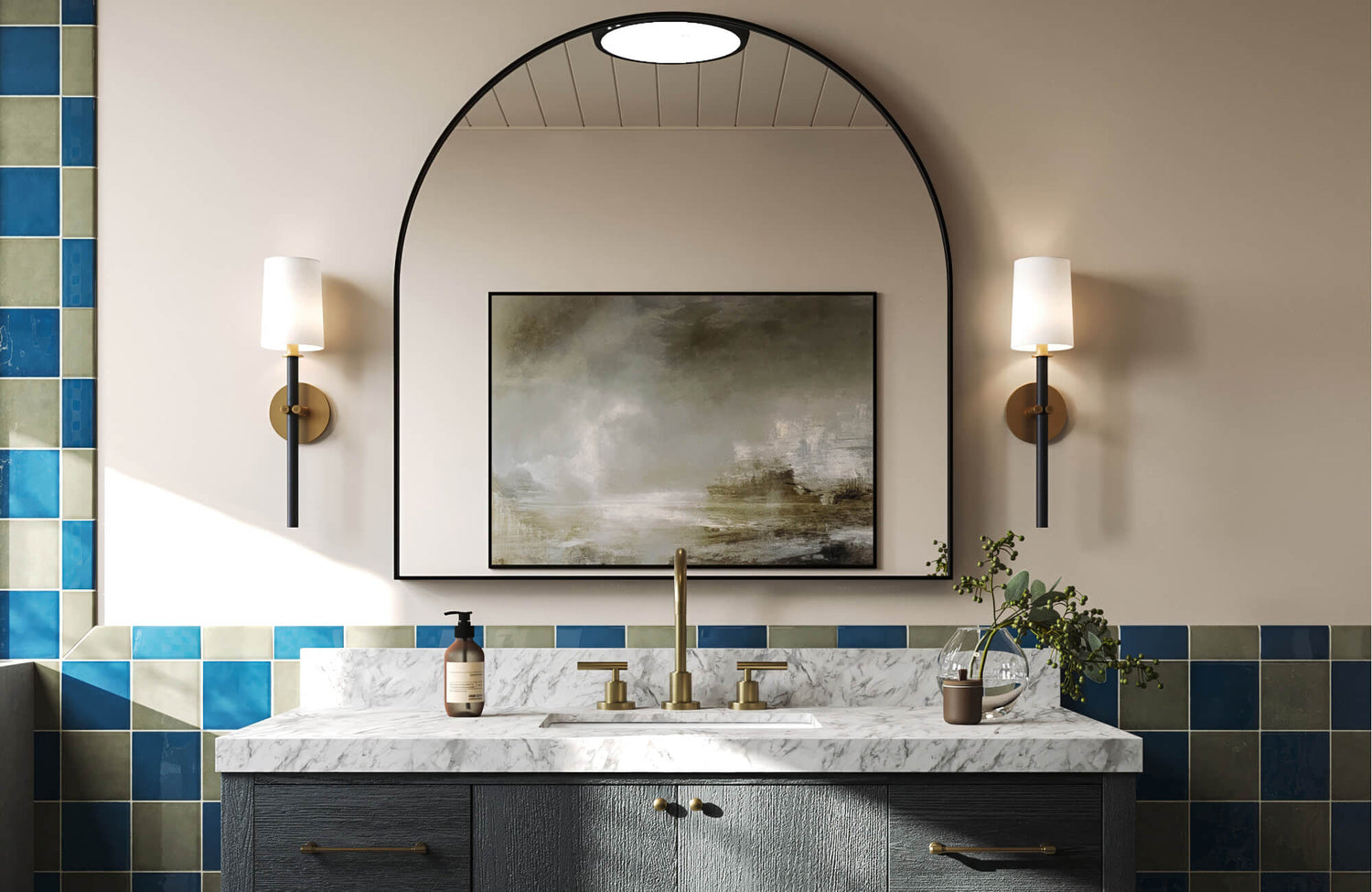
Beyond this lower spacing, think about how the height of the mirror affects the entire wall. A taller mirror elongates the room, drawing the eye upward and making the ceiling appear higher. This can be especially beneficial in smaller bathrooms where a vertical lift adds a sense of openness. In the example photo above, the arched silhouette creates a soft vertical rise that complements the compact vanity without overwhelming the wall. If you’re drawn to this clean, modern arch shape, our Esmeralda Small Mirror in Iron Matte Black offers a refined profile with a classic matte black finish. On the other hand, placing the mirror slightly lower can visually anchor the vanity and create a more grounded, intimate feel. These height relationships ensure the mirror supports both practical function and architectural balance.
Use Asymmetry Intentionally For Modern Or Eclectic Designs
If your style leans toward modern, artistic, or eclectic influences, intentional asymmetry can introduce personality and dimension to the space. An off-center mirror is a striking alternative to traditional layouts, especially when paired with thoughtfully positioned lighting or decor on the opposite side. This arrangement breaks away from predictable symmetry and adds a dynamic rhythm to the wall.
However, asymmetry still requires careful consideration to maintain cohesion. Although the mirror may sit to one side, the visual weight should remain balanced through complementary elements, such as a pendant light, a sculptural sconce, or a piece of art. When these components feel proportioned and well-distributed, the result is an expressive layout that appears intentional rather than accidental. This method gives your vanity area a curated, contemporary look that stands apart without feeling chaotic.

Choosing Materials That Reinforce Your Style While Supporting Long-Term Durability
Materials shape the overall character of your vanity and mirror while also determining how well they hold up over time. Because bathrooms are exposed to moisture, temperature changes, and daily wear, your material choices must balance aesthetic intention with practical resilience.
Select Wood Tones That Match Your Preferred Mood
Wood tone has a powerful influence on the atmosphere of your bathroom, and choosing the right one helps reinforce the mood you want to create. Warm woods such as cherry or red oak bring richness and depth, giving the space a sense of comfort and tradition. These tones work well if you appreciate classic, rustic, or farmhouse atmospheres that emphasize warmth and familiarity. Cool-toned options like grey-washed oak or ash, however, deliver a crisp and airy feel that aligns beautifully with Scandinavian, coastal, or industrial designs. Their subdued undertones allow the space to feel calm and streamlined without losing texture.
Neutral woods like maple or rift-sawn white oak sit comfortably between warm and cool, allowing you to shift your style over time without clashing with your vanity’s finish. They act as a flexible foundation, supporting both contemporary and transitional aesthetics depending on your surrounding elements. No matter which tone you choose, ensuring that the wood is properly sealed is essential. Bathrooms welcome humidity, splashes, and frequent handling, so the finish must protect the grain from swelling or staining.
Determine the Right Countertop Material for Your Lifestyle
Your countertop material works alongside your vanity to shape both the appearance and daily functionality of your bathroom, making this decision particularly important. Quartz offers a blend of strength, consistency, and low maintenance, which makes it ideal if you prefer a surface that performs well without much attention. Its uniform patterns and broad color range also make it easy to pair with various vanity finishes and mirror styles. If you’re drawn to natural beauty, marble or granite brings organic veining and depth that elevate the entire design. However, these stones require more care, so they are best suited for those who appreciate their unique character and are willing to maintain them.
For a modern, long-lasting alternative, sintered stone or porcelain slabs provide exceptional durability and refined aesthetics. These materials resist stains, scratches, heat, and UV exposure, offering the appearance of marble, concrete, or even wood with far greater resilience. Because they maintain their finish even in high-moisture environments, they are especially well-suited for bathrooms where performance is essential. By aligning your countertop choice with your lifestyle and design goals, you ensure the vanity not only looks beautiful but also supports how you use the space every day.
Use Mirror Frames to Echo or Contrast Vanity Finishes
Your mirror frame serves as a subtle yet impactful tool for tying together the overall look of your vanity area. When the frame echoes the vanity finish, the result is a cohesive and intentional appearance that supports styles ranging from traditional to contemporary. This approach works especially well when you want a polished, unified look that feels harmonious from top to bottom.
However, choosing a contrasting frame can inject depth and character, especially if you enjoy more dynamic or layered styles. In the bathroom picture above, the sculptural Raelynn Mantel Mirror in Polished Brass brings a graceful, arched shape and a warm, polished brass finish that stands out beautifully against the natural oak vanity. Its gleaming frame also adds elegance while preventing the composition from feeling too uniform, striking a balance between cohesion and visual interest. Alternatively, a darker frame can anchor a lighter vanity, while frameless or ultra-thin designs emphasize surrounding textures and architectural lines, allowing the vanity material to take center stage.

Considering Lighting and How It Interacts with Your Vanity and Mirror
Lighting plays a pivotal role in shaping both the function and ambiance of your bathroom, influencing everything from how accurately you see colors to how comfortable the space feels throughout the day. When you plan lighting alongside your vanity and mirror selections, the entire room benefits from a cohesive glow that enhances visibility while elevating the overall design. By carefully choosing the warmth or coolness of the light and understanding how different fixtures interact with reflective surfaces, you create a personalized environment that supports grooming, relaxation, and daily flow.
In addition, the type and placement of lighting have a major impact on how your vanity area performs and appears. Integrated LED mirrors, such as our Jenny 37" LED Vanity Mirror in White shown in the photo above, provide even, shadow-free illumination that simplifies grooming while introducing a clean, contemporary aesthetic. Meanwhile, thoughtfully positioned sconces can highlight the unique shape of your mirror, whether rectangular, arched, or round, ensuring both functionality and visual balance. Altogether, these lighting decisions work in harmony with your vanity’s materials and proportions, creating a polished, well-lit, and welcoming space where every element feels intentional.

Tailoring Your Vanity and Mirror to the Bathroom’s Architecture
Designing a vanity and mirror setup that complements your bathroom’s architectural features is essential for creating a space that feels cohesive and intentional. When you take cues from the room’s structural elements, whether it’s an unusual ceiling angle, a narrow footprint, or a recessed wall, you transform potential limitations into opportunities for thoughtful design. By aligning your choices with these existing conditions, your vanity area becomes a natural extension of the space rather than an unrelated addition. This approach ensures every detail, from mirror shape to cabinet proportions, contributes to a harmonious and visually grounded environment.
Furthermore, the way natural light moves through the room and how sightlines unfold from the doorway play equally important roles in shaping your vanity selection. Adapting your materials and finishes to the room’s lighting conditions also prevents glare, enhances warmth, and ensures your bathroom feels comfortable at all hours of the day. At the same time, considering what you see and what the mirror reflects when you enter the room helps you place the vanity where it can either anchor the space or subtly support it. When these architectural cues guide your decisions, your vanity and mirror become integrated elements that elevate the bathroom’s flow, rhythm, and overall aesthetic impact.
Tailoring your vanity and mirror to the bathroom’s architecture becomes even more impactful when the mirror itself echoes the lines, angles, or curves that define the space. In the space shown above, the softly irregular silhouette of our Shirley Large Mirror in Antique Brass Iron mirrors the room’s warm brass fixtures and complements the pitched ceiling and tiled accent wall. Its antique brass frame also adds a touch of refined character while subtly highlighting the geometry of the space. By selecting a mirror that responds to the architecture like this, whether through shape, scale, or finish, you create a vanity area that feels rooted in the room’s natural structure, enhancing both function and design cohesion.
Finding the Right Balance for Your Perfect Vanity and Mirror
Creating the perfect vanity and mirror pairing comes down to achieving harmony between your style preferences, functional needs, and the natural character of your bathroom. When you choose materials that express your taste, proportions that feel balanced, lighting that enhances clarity, and placements that complement the architecture, the entire space comes alive with coherence and comfort. This thoughtful blend of creativity and practicality allows your bathroom to evolve into a space that not only matches your design identity but also supports your everyday life with ease and beauty.
Once you’ve clarified the balance that defines your ideal vanity-and-mirror combination, the next step is ensuring you have the right guidance to bring that vision to life. Whether you’re exploring material options, confirming measurements, or seeking expert insight on layout and installation, our team is ready to help. Reaching out through our Contact Us page provides direct access to knowledgeable support so you can move forward with confidence, refine the details that matter most, and create a bathroom that feels perfectly tailored to you.