Many of us connect white rugs with bright, open interiors, and there is good reason for that. Their ability to reflect light, soften visual boundaries, and influence overall balance can shape the way we perceive a room’s size. Still, the effect is not automatic; it depends on how the white rug interacts with natural and artificial light, how it complements surrounding materials, and how it fits into the broader design. In this article, we’ll explore six key perspectives that reveal when a white rug can make a room feel more spacious and how you can choose one with confidence.

How White Rugs Influence Spatial Perception
White rugs are often appreciated for the way they make a room feel more open with brightness and contrast. As we look around a space, our eyes naturally respond to light and the weight of different surfaces, which means a white rug can subtly influence how spacious the room feels.
Light Reflection
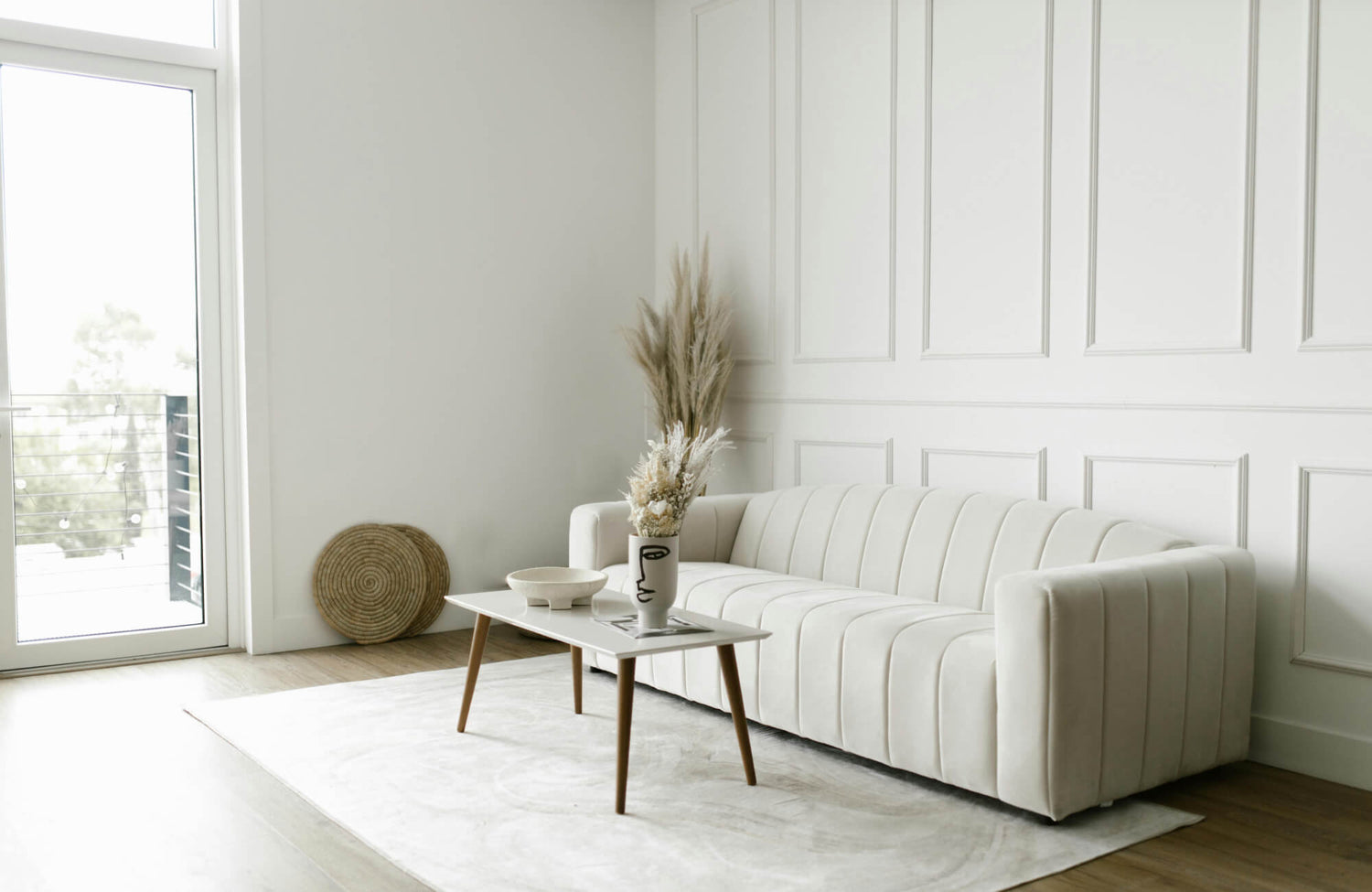
When you bring a white rug into a room, it reflects more natural and artificial light than darker options, helping the space feel brighter overall. This added reflection softens the transitions between light and shadow, which in turn makes the room feel more open. By minimizing dark areas on the floor, a white rug creates the sense of a smoother, uninterrupted surface. In the photo displayed above, Edward Martin’s Micah Wool Blend Rug in Cream / Dove demonstrates this effect beautifully; it catches the available daylight and distributes it evenly across the space. Placing a rug like this near a window or sliding door further enhances the impact, as it captures and disperses sunlight in a way that subtly expands the room’s boundaries.
Visual Weight
White flooring elements carry less visual weight than darker ones because they don’t pull the eye downward as strongly. When the floor feels lighter, the entire room tends to feel less constrained. A white rug blends naturally into pale flooring rather than creating a bold visual break, which gives the space a more fluid appearance. When the rug and flooring share a subtle color relationship, the surface becomes easier to take in at a glance, and the room’s footprint can appear noticeably larger.
Edge Definition
The way a rug’s edges appear can quietly influence how large the floor feels. A white rug with soft edges or minimal borders blurs the transition between its surface and the surrounding area, allowing the eye to move more freely. When boundaries aren’t sharply defined, the floor can appear wider and more open. Subtle textures, such as a gentle high-low pattern, reinforce this effect by creating gradual shifts rather than abrupt breaks. If you want a smaller room to feel more spacious, choosing a white rug with reduced edge definition also helps create a smoother, more expansive visual plane.

Room Layouts Where White Rugs Maximize Space
The impact of a white rug on a room’s perceived size often depends on the room’s shape and proportions. By considering the layout, you can determine where a white rug will have the strongest effect and create the most noticeable sense of openness.
Narrow Rooms
Narrow rooms respond well to white rugs because brighter flooring reduces the feeling of the walls pressing in. When a long or narrow room feels confined, a pale runner or elongated white rug can help the room feel wider. By minimizing strong color breaks on the floor, the eye travels more easily from one end of the room to the other. Placing the white rug down the center also stretches the visual path, helping the space feel less tight and more evenly proportioned.
Low-Ceiling Spaces
Rooms with lower ceilings can feel smaller because the floor tends to pull the eye downward. Introducing a white rug lightens the lower portion of the room and shifts some of that focus upward. The brighter floor creates a better balance between horizontal and vertical elements, which can make the ceiling seem slightly higher. Pairing the rug with gentle upward lighting enhances this effect, giving low-ceiling spaces a more comfortable sense of height.
Open-Concept Areas
In open layouts, it can be challenging to define distinct zones without disrupting the room’s overall flow. A white rug helps outline a seating or dining area while preserving the sense of openness. Its brightness maintains a consistent visual tone, allowing you to establish boundaries without adding weight to the space. A larger rug, such as Edward Martin’s Micah Wool Blend Rug in Natural / Cream, works especially well in this setting because it anchors the area without visually breaking up the floor. Choosing one generous rug instead of several smaller ones keeps the space cohesive while still giving each zone a clear purpose.

Design Styles That Benefit From White Rugs
Certain interior styles naturally amplify the sense of openness that a white rug brings to a room. When the room’s design language complements the rug’s brightness, the space feels more intentional, cohesive, and visually balanced.
Minimalist Spaces
Minimalist interiors rely on calm, uncluttered surfaces, which makes a white rug a strong choice for reinforcing a sense of openness. Its simple base removes visual distractions and gives the rest of the room space to breathe. A plush yet unpatterned option, such as the Quinton Wool Blend Rug in Cream, adds comfort without introducing visual noise, helping the space feel larger. This approach works well for those who prefer a pared-back environment that still feels warm and inviting.
Scandinavian Interiors
Scandinavian design centers on natural light, soft tones, and a warm, welcoming feel. A white rug complements these elements by reflecting light and creating smooth transitions throughout the room. Its brightness supports the fresh, airy quality this style is known for while still feeling grounded and comfortable. Choosing a textured wool rug adds depth and softness, enriching the space without compromising its openness.
Contemporary Homes
Contemporary spaces often feature clean lines, smooth surfaces, and purposeful contrast. A white rug fits this style naturally by creating a clean visual base that highlights materials such as glass, metal, and polished wood. Because contemporary design depends on clarity and flow, the rug helps maintain openness while supporting the room’s streamlined look. Pairing it with understated accents keeps the effect cohesive without feeling stark.

How Texture and Material Affect Perceived Space
A white rug can transform the way a room feels depending on its texture, thickness, and material. These qualities influence how the rug reflects light and how it visually settles into the space, shaping the overall sense of openness.
Low-Pile Fabrics
Low-pile white rugs sit close to the floor, creating an even surface that reflects light more consistently. This reduces shadowing and helps the room feel more open, especially in areas where you want easy movement. With the fibers lying flat, the rug looks sleek rather than bulky, which supports a more spacious feel. A low-profile option such as Edward Martin’s Everson Wool Blend Rug in Mist, with its 0.25-inch pile height, offers this smooth, streamlined look. Choosing a low-pile rug in a bright white shade creates a more continuous-looking floor, helping the room appear broader.
High-Pile or Shag Rugs
High-pile rugs offer softness and warmth, but their deeper fibers can absorb more light and tend to appear fuller visually. In a compact room, this added volume may make the space feel tighter if not chosen carefully. In larger areas, however, these rugs provide comfort without diminishing openness. If you want a cozy, tactile surface while still preserving brightness, a lightly textured white shag rug can offer a balanced solution.
Natural Fibers
Natural fibers can influence a room’s brightness in different ways. For example, wool reflects light gently while still providing warmth. Cotton, on the other hand, has a clean look that boosts brightness more directly, while jute introduces a muted tone that adds depth without strong reflection. When you choose a bright white wool rug, you combine luminance with natural softness, supporting a sense of openness. Ultimately, each material interacts differently with nearby surfaces, so the final effect depends on the balance you prefer between glow and texture.

Pairing White Rugs With Furniture and Color Schemes
A white rug’s impact on how large a room feels often depends on how it works with the surrounding furniture and color palette. When these elements complement the white rug, the space naturally feels more open and cohesive.
Light Furniture Palettes
When your furniture features light woods, soft neutrals, or pale fabrics, that brightness carries across the room and strengthens the rug’s effect. In addition, lighter furnishings help the rug blend into the overall setting rather than stand out sharply, which supports a more open feel. Slim or elevated legs made of wood or metal further contribute to this airiness by allowing more of the rug to remain visible. With this balance in place, the room feels connected and harmonious.
Contrasting Accents
While an all-light palette can feel calm and soothing, adding a few contrasting accents brings depth without diminishing the sense of space. For instance, introducing one or two darker pieces, such as side tables or select décor items, prevents the room from looking washed out. These elements can also help anchor the space while allowing the white rug to remain the main source of brightness. In turn, this approach adds dimension while still preserving an open, balanced feel.
Furniture Spacing
Furniture placement plays an equally important role in how spacious a room feels. For instance, when too many pieces sit tightly on the rug, the space can appear restricted even if the rug is bright. By leaving a few inches of visible rug around key items, you create a sense of breathing room that expands the visual footprint. As a result, this spacing allows the white rug to enhance openness while keeping the room both comfortable and functional.

Maintenance and Practical Considerations for White Rugs
The long-term appearance of a white rug plays a key role in how effectively it continues to brighten a room. Keeping the white rug clean and crisp helps maintain its ability to enhance the sense of space.
Stain Management
White rugs are more prone to visible marks, and discoloration can make a room feel smaller by disrupting its brightness. Responding to spills promptly and using the right cleaner helps the rug maintain its reflective quality. Regular rotation also helps prevent uneven wear and keeps the surface looking even over time. When the white rug stays bright, the room preserves its open, airy feel.
Material Durability
Some materials maintain their fresh appearance longer than others. For example, wool resists compression and holds its structure well, while cotton is easy to wash and refresh. Performance fibers are also durable and often simpler to maintain. A wool option, such as our Mallory Wool Pile Rug in Cream, whose premium 100% wool construction ensures lasting resilience, is a good example of how material choice influences longevity. When you select a rug that matches how you use the space, it stays bright and visually effective for a longer period.
Placement Strategies
Where you place the rug plays a meaningful role in how clean it stays. It helps to avoid areas where dirt tends to collect, or you can choose a white rug with a subtle pattern that conceals minor marks. With thoughtful placement, you can preserve the rug’s clarity and maintain the room’s sense of openness. When the white rug stays in good condition, its brightening effect lasts much longer.
Making the Most of White Rugs
White rugs can certainly help a room feel larger, but the effect depends on how they interact with the layout, furnishings, décor style, and everyday use. By understanding how light, texture, and balance influence perception, you can choose a rug that enhances openness rather than competing with it. In addition, thoughtful placement, complementary materials, and consistent care allow a white rug to provide both comfort and a stronger sense of spaciousness. Ultimately, with the right approach, you can use a white rug to brighten your home and make any room feel more inviting.
If you’d like guidance selecting the right rug for your space, feel free to contact us or explore our design services for personalized support.