Blue throw pillows may seem like small decorative details, but they can quickly change how a room feels. A soft powder blue pillow can make a sofa look lighter and more relaxed, while a deep navy or indigo pillow can add richness, structure, and sophistication. Because blue is closely associated with calm, depth, and freshness, it works well as both a quiet supporting color and a bold visual accent.
Moreover, blue throw pillows offer an easy way to refresh a space without changing major furniture, wall colors, or flooring. By choosing the right shade, texture, pattern, and placement, these accents can make living rooms feel more inviting, bedrooms feel more restful, outdoor areas feel breezier, and neutral interiors feel more layered. As a result, blue pillows become more than simple accessories; they help shape the emotional atmosphere of the entire room.

Merelle 22" x 22" Down Pillow in Navy introduces rich depth and a calming presence through its deep blue tone, while the contrasting whipstitch trim adds a tailored detail that brings subtle texture and visual interest to the design
Understanding How Blue Influences Emotional Atmosphere
Blue throw pillows influence emotional atmosphere by shaping how a room feels visually and psychologically. Depending on the shade, saturation, and surrounding materials, blue accents can create interiors that feel calmer, brighter, cozier, or more refined. Because blue naturally interacts with light and spatial perception, even small decorative additions can noticeably shift the overall mood of a space.
How Light Blue Creates Calm And Openness
Light blue throw pillows are often associated with tranquility because softer shades reduce visual intensity within a room. Pale blue, powder blue, mist blue, and sky blue tones create a gentle atmosphere that feels airy and emotionally soothing, especially in interiors designed for relaxation and comfort. These lighter hues can soften furniture silhouettes, reduce visual heaviness, and help a room feel more open.
Natural light also interacts especially well with pale blue textiles because lighter blues reflect ambient light more effectively than darker shades. This makes them useful in smaller living rooms, bedrooms, or apartments where perceived openness matters. In coastal, Scandinavian, minimalist, and contemporary interiors, light blue pillows pair beautifully with white upholstery, oak finishes, linen fabrics, and woven textures for a calm and breathable look.
Why Deep Blue Adds Sophistication And Depth
Darker blue tones introduce visual weight, contrast, and richness within a room. Shades such as navy, indigo, cobalt, and midnight blue can anchor furniture arrangements and add depth to sofas, beds, or lounge seating. Unlike lighter blues that visually recede, deep blue pillows often act as focal accents that bring definition and structure to the overall design.
These richer tones also create a more sophisticated atmosphere when paired with materials such as walnut wood, brushed brass, matte black metal, marble, or velvet. Deep blue accents work especially well in formal living rooms, moody bedrooms, libraries, and transitional interiors where intimacy and elegance are desired. To keep the space from feeling too heavy, balance darker pillows with lighter neutrals, warm metallics, or textured textiles.
Using Blue To Reduce Visual Stress In Busy Spaces
Blue throw pillows can function as visual stabilizers in interiors that feel overstimulating due to dense patterns, excessive color variation, or bulky furnishings. Cooler blue tones introduce a calming counterbalance that helps soften visual noise and create greater harmony, especially in eclectic rooms, family spaces, or open-concept layouts where many decorative elements compete for attention.
Soft or muted blue pillows can also reduce tension between unrelated materials, bold accent colors, and darker furniture pieces. Repeating blue subtly through artwork, throws, ceramics, or rugs helps create continuity without making the room feel overly matched. When used thoughtfully, blue accents can quiet a busy space while preserving warmth, texture, and personality.

Blue throw pillows introduce a bold yet calming contrast to this contemporary bedroom
Choosing Blue Throw Pillows Based On Room Function
Different rooms benefit from different shades, textures, and arrangements of blue throw pillows depending on how the space is used daily. A living room may benefit from richer and more layered blues for entertaining, while bedrooms often work best with softer tones that encourage relaxation. Selecting blue pillows according to room function helps create interiors that feel visually balanced and emotionally appropriate for everyday use.
Living Rooms
Blue throw pillows are especially effective in living rooms because they help anchor seating arrangements while making the space feel more welcoming. Cooler blue tones soften large furniture pieces and introduce contrast against neutral upholstery, while deeper shades such as navy or slate blue can define the seating area more clearly.
Layering different pillow sizes also creates a more polished arrangement. Larger pillows placed toward the back provide structure, while smaller accent pillows add dimension and rhythm. Combining solid blue fabrics with subtle stripes, geometric patterns, woven textures, or velvet accents prevents the arrangement from feeling flat while keeping the room cohesive and inviting.
Bedrooms
Muted blue throw pillows are commonly used in bedrooms because softer shades naturally support calm and relaxation. Dusty blue, mist blue, faded navy, and powder blue create a quieter visual environment without making the room feel cold or overly minimal. These tones can also soften the visual weight of larger bedroom furnishings, contributing to a more serene atmosphere.
Blue pillows pair especially well with linen bedding, upholstered headboards, warm oak finishes, ivory textiles, sand tones, camel accents, and taupe layers. Combining cool blue accents with warmer neutrals helps maintain comfort while preserving the restful qualities blue brings to the room.
Outdoor Spaces
Blue throw pillows can bring a fresh and relaxed atmosphere to outdoor seating areas by complementing greenery, stone, wood decking, and water features. Lighter coastal-inspired blues create an airy and casual mood, while deeper navy accents add stronger contrast against outdoor furniture. Because blue naturally echoes the sky and water, it often feels harmonious in exterior environments.
Durability is especially important outdoors, so performance fabrics are essential for maintaining appearance and comfort over time. Solution-dyed acrylics, UV-resistant textiles, and moisture-resistant fabrics help reduce fading and mildew buildup. Pairing blue outdoor pillows with teak furniture, woven textures, concrete surfaces, or striped fabrics can also create a relaxed resort-inspired look that feels both practical and inviting.

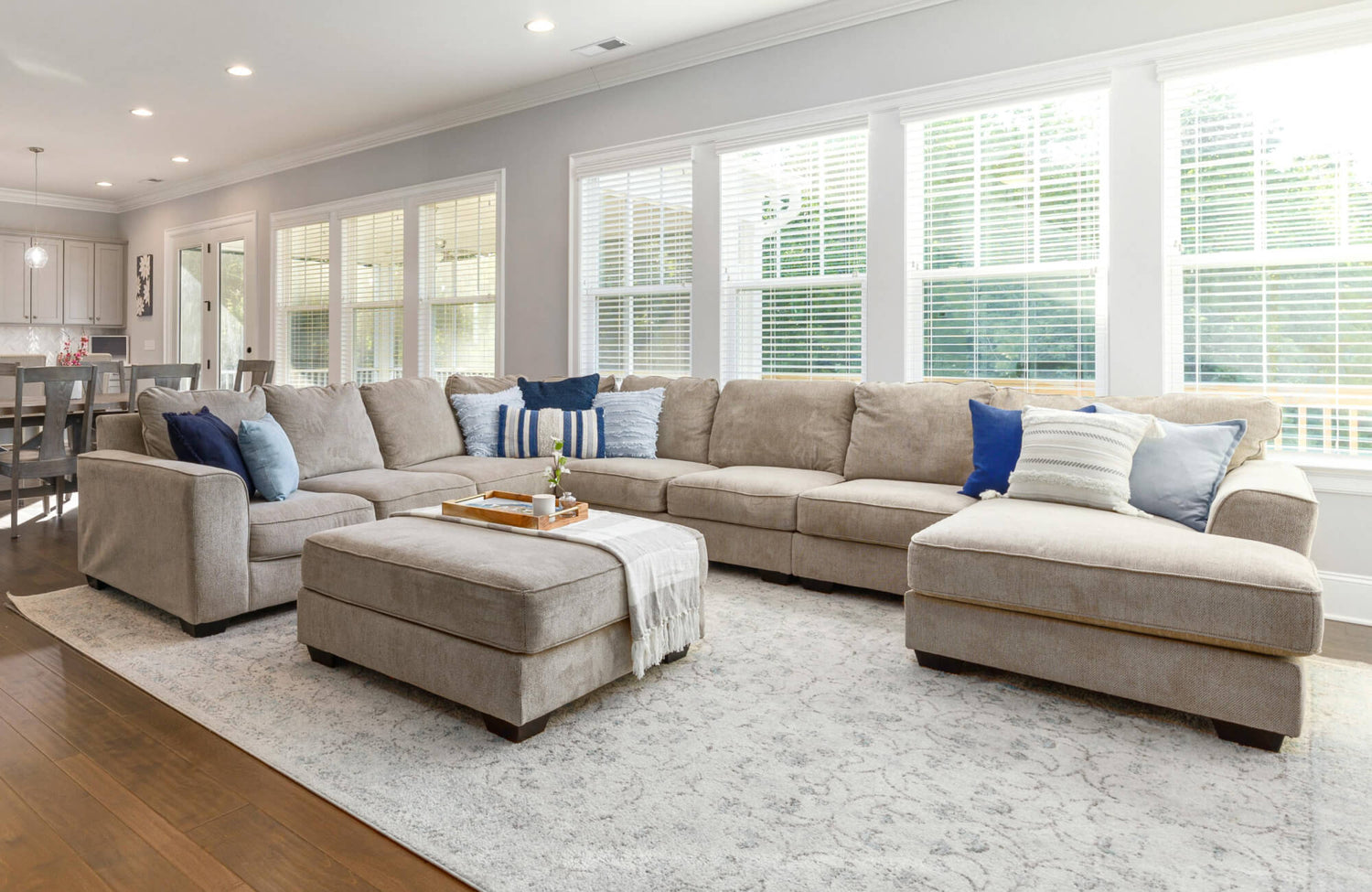
Blue throw pillows bring balance and visual depth to this modern living room
Coordinating Blue Throw Pillows With Existing Color Palettes
Blue throw pillows should be coordinated with the room’s existing palette so they feel intentional rather than visually disconnected. Because blue can shift in appearance depending on undertones, lighting, and surrounding materials, it is important to consider whether the room leans warm, cool, neutral, or colorful. In warm neutral interiors with beige, cream, camel, ivory, or wood finishes, muted blues such as dusty navy, slate blue, and faded denim can add contrast while still keeping the space calm and comfortable.
Similarly, blue works naturally in gray and monochromatic interiors because these palettes often share cooler undertones. Layering pale mist blue, slate blue, charcoal, greige, or deeper navy tones creates subtle movement without disrupting the room’s refined and cohesive atmosphere. To prevent the design from feeling flat, varied textures such as velvet, boucle, brushed cotton, chunky weaves, and embroidered fabrics can add dimension and warmth.
In addition, blue throw pillows can become more expressive when paired with carefully chosen accent colors. Earthy shades like rust, terracotta, caramel, and olive green introduce warmth and organic balance, while brass or aged metallic finishes help soften cooler blue tones. However, restraint is essential; repeating one or two supporting colors through artwork, ceramics, textiles, or patterned pillows creates a smoother visual connection and keeps the overall palette balanced.

The varying shades and textures of blue throw pillows introduce a refreshing sense of calm and contrast to this contemporary living room
Exploring Texture And Fabric Impact On Mood
Fabric texture significantly influences how blue throw pillows are perceived because surface finish changes the way light interacts with color. The same shade of blue can appear soft and casual in linen, rich and dramatic in velvet, or highly dimensional in woven textiles. As a result, texture often shapes the emotional atmosphere of a room just as strongly as color itself.
Velvet
Velvet blue throw pillows are often associated with luxury because the fabric’s dense pile intensifies color depth and creates subtle tonal shifts as light moves across the surface. Navy, sapphire, indigo, and midnight blue appear especially rich in velvet because the material absorbs and reflects light unevenly, producing a dimensional and dramatic appearance.
In formal living rooms, velvet blue pillows pair well with walnut wood, marble, brass, smoked glass, tufted upholstery, and moody lighting. The softness of velvet also adds warmth that balances cooler blue undertones. To prevent the look from becoming too heavy, especially in smaller or lighter rooms, combine velvet with matte fabrics, lighter neutrals, or natural textures.
Linen and cotton create a softer emotional effect because their natural textures diffuse color intensity and introduce a relaxed atmosphere. Blue throw pillows made from these materials often appear lighter, airier, and more approachable than those made from polished or reflective fabrics. This makes them especially effective in interiors designed around comfort, openness, and everyday livability. Light blue linen pillows pair beautifully with oak wood, woven baskets, white upholstery, jute rugs, and relaxed bedding. Cotton fabrics offer similar versatility for family rooms, reading corners, and casual bedrooms. Slight wrinkling, slubbing, and tonal variation in these fabrics add a lived-in quality that makes blue accents feel warm and inviting rather than overly formal. Combining multiple pillow textures creates greater visual depth by preventing seating arrangements from appearing flat or repetitive. Layering blue pillows in boucle, woven cotton, embroidery, fringe, ribbed fabrics, or velvet allows each surface to interact with light differently, creating dimensional contrast even when the color palette remains restrained. Texture layering also improves balance within larger furniture groupings. A velvet navy pillow paired with woven chambray and a lightly embroidered accent can feel layered without becoming cluttered. Varying pillow sizes and repeating similar textures through throws, rugs, or upholstery helps the entire room feel more connected and intentionally styled. Standing out beautifully against the neutral sofa and soft blue paneled walls, blue throw pillows bring vibrant contrast and energy to this modern living room Blue throw pillows offer a simple and flexible way to refresh interiors throughout the year without replacing major furniture or redesigning the entire room. By changing the shade, fabric, and layering style, a space can feel lighter and more open during spring and summer or warmer and more grounded during fall and winter. This makes blue pillows especially useful for keeping a room visually fresh while allowing the overall design to evolve naturally with the seasons. During warmer months, soft blues such as sky blue, powder blue, mist blue, and pale aqua can create a brighter and more breathable atmosphere. When paired with white textiles, natural oak finishes, woven materials, greenery, and lightweight linen or cotton fabrics, these shades help the room feel calm, airy, and refreshed. In contrast, darker blues such as navy, indigo, cobalt, and midnight blue work well during colder months because they add depth, richness, and a more intimate mood. Additionally, seasonal pillow rotation allows you to update a room with minimal effort or expense. For example, replacing heavy navy velvet pillows with lighter linen blues can instantly brighten a space in spring, while bringing back darker blues in velvet, wool, boucle, or chunky woven textures can create warmth and coziness in winter. Through these simple swaps, blue throw pillows become a practical decorative tool for maintaining comfort, balance, and visual interest year-round. Brielle 18'' x 18'' Down Pillow in Natural / Blue balances soft neutral tones with a rich blue border, bringing a calm yet refined accent to any space Pattern scale plays an important role in how blue throw pillows affect the mood, rhythm, and visual focus of a room. Because blue can feel serene, coastal, tailored, dramatic, or contemporary depending on the shade and surrounding palette, the size and density of pillow patterns should be chosen carefully. A balanced arrangement uses pattern to guide the eye and add movement without overwhelming upholstery, bedding, wall finishes, or nearby décor. To create cohesion, solid blue pillows can be mixed with striped, floral, geometric, or abstract designs so the arrangement includes both visual interest and restful negative space. Solid pillows help ground busier prints, while patterned pillows introduce personality and depth. In addition, keeping undertones consistent helps mixed patterns feel connected; cool blues pair best with gray, slate, or icy patterns, while warmer blues with teal, denim, or green-based undertones work well with botanical, woven, or organic motifs. The size of the pattern should also match the scale of the furniture and room. Large-scale designs such as oversized florals, broad stripes, or bold geometric repeats work well on spacious sofas, sectionals, king beds, or larger rooms because they create stronger focal points. Meanwhile, small-scale patterns such as mini checks, fine stripes, petite florals, and subtle jacquards create a quieter effect in compact spaces or on smaller accent chairs. Finally, limiting the number of patterned pillows and varying pillow sizes prevents overstyling, leaving enough visual breathing room for the arrangement to feel polished, intentional, and comfortable. Blue throw pillows change the mood of a room by adjusting its sense of calm, contrast, depth, and comfort in a simple but noticeable way. Lighter blues can make a space feel open, fresh, and peaceful, while darker blues can create a richer, cozier, and more refined atmosphere. At the same time, fabric texture, pattern scale, seasonal styling, and color coordination all influence how these accents are perceived. When chosen thoughtfully, blue throw pillows can soften busy interiors, elevate neutral palettes, refresh seasonal decor, and bring a more intentional emotional tone to the room. Ultimately, they offer one of the easiest ways to make a space feel more polished, welcoming, and visually complete without requiring a full redesign. For help choosing the right blue throw pillows for your space, our team is here to guide you through color pairing, texture selection, and styling ideas that suit your room’s overall look and feel. Whether you are refreshing a sofa, layering accents on a bed, or completing a seasonal update, you can contact us for personalized support in creating a polished and welcoming atmosphere!Linen And Cotton
Mixed Textures

Using Blue Throw Pillows To Shift Seasonal Mood

Balancing Pattern Scale And Visual Focus
Creating Lasting Atmosphere With Blue Throw Pillows