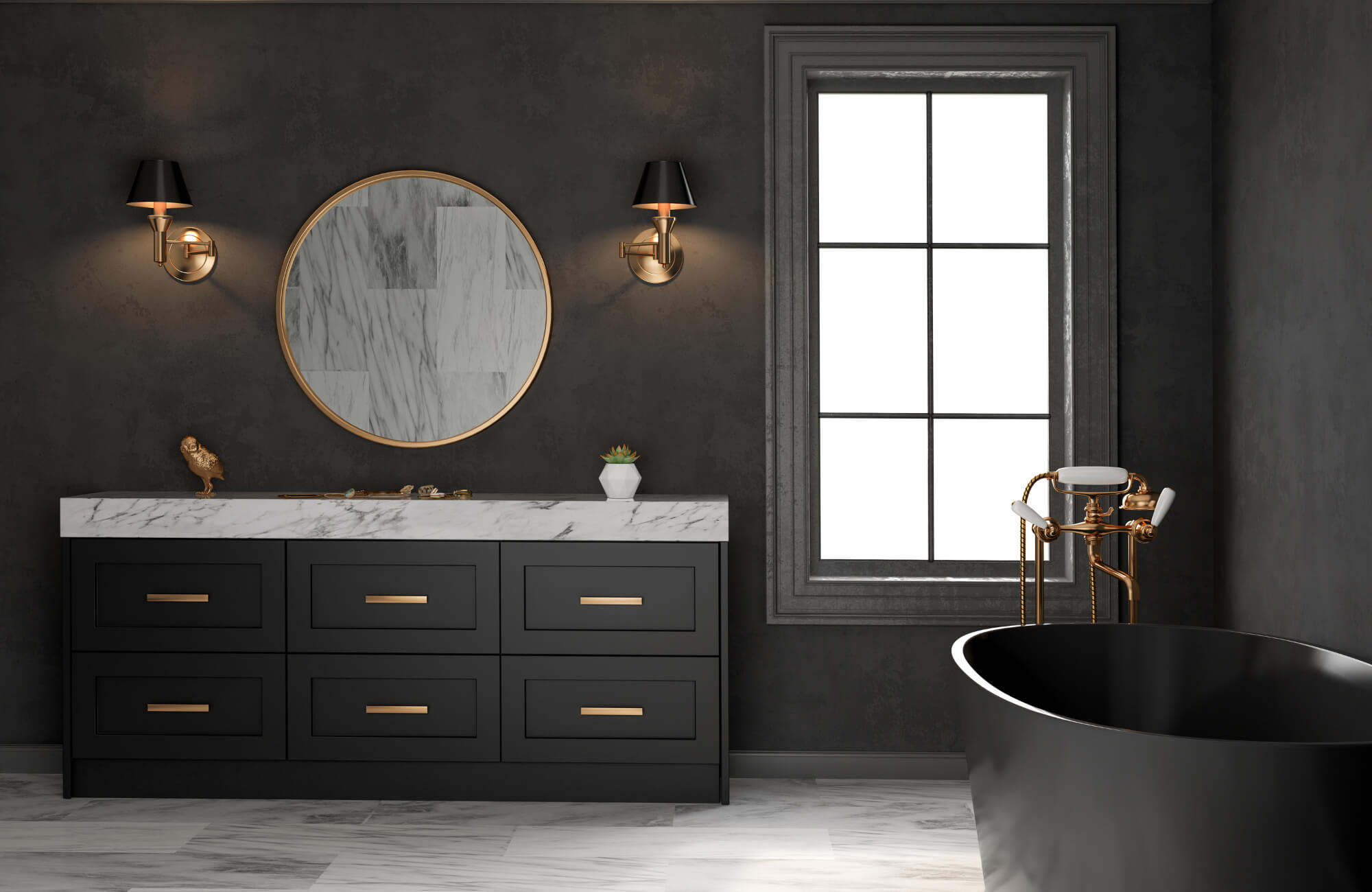
A bathroom vanity light does more than provide brightness; it further affects how clearly you see, how balanced the room feels, and how seamlessly the vanity fits into the overall design. Choosing the right size ensures the fixture gives practical light while staying in proportion with the mirror and vanity. Since scale plays such a key role, understanding how wide or tall the light should be makes all the difference in creating a space that looks polished and functions well.

The Standard Vanity Light Proportions
Before selecting a fixture, it’s useful to understand the basic sizing guidelines that designers and electricians often recommend. These rules aren’t strict, but they provide a dependable starting point to keep a light from looking too small, too large, or awkwardly positioned. Once you know the fundamentals, you can adapt them to fit your vanity, mirror, and overall bathroom layout.
Width Guidelines
A common guideline for bathroom lighting is to select a fixture that’s about 70 to 80 percent of the vanity’s width. This range generally provides even coverage across the mirror while maintaining balanced proportions. For example, a 36-inch vanity typically pairs with a light between 25 and 29 inches wide. Staying within this range helps the fixture feel appropriately scaled to the mirror and vanity, avoiding a look that’s either undersized or overwhelming.
Height Placement
Along with width, fixture height is an equally important part of standard vanity light proportions. A typical guideline is to mount the light so the bottom edge sits a few inches above the mirror, or about 75 to 80 inches from the floor. At this height, the light spreads evenly across the face while minimizing harsh shadows. The goal is to position the fixture high enough to clear the mirror but low enough to provide practical, direct illumination.
Single vs Double Sink Vanities
If you have a single sink with one wide mirror, the most straightforward option is a centered fixture sized to about 70–80 percent of the mirror’s width. For double sinks, the layout gives you more flexibility. With two separate mirrors, it’s common to use individual fixtures sized for each mirror. If the vanity has one large mirror spanning both sinks, you can either install a longer bar fixture or place two lights evenly above. Both choices provide symmetry, and the decision comes down to whether you want a continuous light source or distinct lighting for each side.

How Vanity Size Shapes Fixture Choice
The vanity itself plays the biggest role in determining fixture proportions. Choosing based on the vanity’s scale prevents the light from feeling undersized or dominating the mirror. Whether you have a compact pedestal or a wide double-sink unit, there are specific strategies to keep the fixture aligned with the vanity’s dimensions.
Small Vanities
Compact vanities work best with slim fixtures that brighten the area without overpowering it. For vanities 24 inches wide or less, narrow bar lights or vertical sconces placed on either side of the mirror are good options. They also offer even lighting while maintaining balanced proportions. Oversized bars may deliver plenty of light but often look out of place. Leaving a small margin on each side of the mirror helps the fixture feel intentional and refined.
Medium Vanities
A vanity between 30 and 48 inches offers more flexibility. At this size, you can use a horizontal bar fixture centered above the mirror or two sconces mounted at eye level on either side. Both approaches work well, but your choice depends on whether you prefer a single fixture or separate lights. Bars offer even coverage, while sconces add symmetry and reduce shadows from the sides.
In the photo displayed above, Edward Martin’s Posey Wall Sconce in Aged Brass is positioned horizontally above the Abigail 30" Single Vanity in Light Natural Oak with a 3 cm White Zeus Quartz Top, illustrating how a single centered fixture can complement a mid-size vanity while keeping the proportions balanced. Since you have enough width to support either option, the best decision often comes down to your mirror design and personal preference.
Large Vanities
Wide vanities, particularly those serving two sinks, require a more strategic approach. An extra-long light bar that spans much of the width can create strong visual balance. Alternatively, you may install two or three fixtures spaced evenly across the mirror. This ensures each sink is adequately lit and prevents dark areas in the middle. Large vanities allow more room for creativity, but maintaining consistent proportions is essential. A fixture that is too small will look lost against the broad countertop, while one that extends beyond the vanity width will feel awkward.

Balancing Fixture Size With Bathroom Layout
While the vanity sets the foundation, the room’s layout and architectural details also play a role in fixture sizing. Ceiling height, nearby wall features, and the overall scale of the room can make a fixture appear very different once installed than it does on paper. Considering these elements ensures your choice feels harmonious within the broader space.
Ceiling Height
Bathrooms with standard eight-foot ceilings typically work well with fixtures mounted 75 to 80 inches from the floor. Higher ceilings, however, change the proportions. In rooms with nine or ten-foot ceilings, a larger fixture or multiple lights may be needed to visually connect the space, as smaller ones can seem lost against the added height. Taller ceilings also benefit from layered lighting, since a single fixture placed far above eye level may not provide enough focused light for daily tasks.
Wall Space and Surroundings
The area around your vanity can affect the size of the light you choose. If cabinets or windows frame the mirror, you may have less space for a wide fixture. In this case, narrower bars or vertical sconces also work better. When the wall is more open, you can scale up without the fixture feeling cramped.
In the photo displayed above, Edward Martin’s Delilah 72" Double Vanity in Seaside Oak with a 3 cm White Zeus Quartz Top is paired with the Wilma Wall Sconce in Aged Brass placed beside each mirror. The nearby window reduces the available wall space for a longer bar light, making sconces a more fitting choice. Always measure the space above and around the mirror before finalizing a fixture, since this prevents the frustration of selecting a light that doesn’t fit once installed.
Room Size and Scale
A fixture that looks perfectly proportioned on a small sample board may feel inadequate in a large bathroom. In a large master bathroom, a narrow light bar may still feel undersized, even if it technically follows the 70–80 percent rule. To correct this, consider upsizing your fixture slightly or adding secondary lights to complement it. Conversely, in a compact powder room, a large decorative fixture can overwhelm the mirror and vanity. Keeping the overall room size in mind ensures your light looks intentional, not misplaced.

Choosing the Right Fixture Style and Shape
The fixture’s design doesn’t just contribute to appearance; it also influences how light is distributed and how the size is perceived. Different shapes interact with mirrors and walls in unique ways, so choosing the right style ensures your fixture looks proportional while delivering effective lighting.
Horizontal Bars
Horizontal bar fixtures run across the top of the mirror, spreading light evenly from side to side. They are especially effective for medium to wide vanities where one fixture needs to cover the full width. Bars may be slim or substantial, but what matters most is matching their length to the mirror so the vanity feels balanced. When sized correctly, a bar fixture also helps the entire setup look centered and finished.
Vertical Sconces
Sconces mounted on each side of the mirror create balanced light at face level. Because they sit vertically, they don’t need to follow the same width guidelines as bars. Instead, proportion comes from their height and spacing. Sconces should be tall enough to cast light evenly but narrow enough to leave comfortable margins beside the mirror. This setup often works better for makeup application or shaving since it reduces shadows more effectively than overhead bars.
Statement Fixtures
Occasionally, you may need to use a decorative or oversized fixture to make the vanity a focal point. Chandeliers, bold pendants, or large sculptural bars can all work if scaled thoughtfully. The key is ensuring the fixture still aligns with the vanity’s width and doesn’t block the mirror or create harsh shadows. Statement pieces succeed when the bathroom design supports them, such as in larger spaces with clean, simple finishes that allow the light to shine without overwhelming the room.

Light Output and Functionality Considerations
Size is not only about appearance; it also connects directly to how well the light performs. A properly sized fixture should deliver enough brightness for grooming tasks without glare or uneven shadows. Considering both light output and proportion also ensures your fixture is practical and visually appealing.
Lumens and Brightness Needs
When comparing fixtures, focus on lumens rather than wattage. A bathroom vanity typically needs between 1,500 and 3,000 lumens, depending on the room size and the amount of natural light available. Larger fixtures often hold more bulbs, making it easier to reach this range. A light that appears well-sized but doesn’t provide enough brightness can make everyday tasks frustrating. Strive to balance style with the practical need for clear, reliable visibility.
Diffusion and Shadows
The size of the fixture also affects how evenly the light spreads across the mirror. A longer bar disperses light across a wider area, while smaller fixtures may create bright spots in the center but leave the edges dim. Similarly, side sconces can reduce shadows under the chin or around the eyes because they light the face from multiple angles. Understanding how fixture size influences diffusion prevents the common problem of uneven or unflattering lighting.
Layered Lighting
In some bathrooms, the vanity light alone cannot meet all functional needs. If the fixture is appropriately sized for the mirror but still doesn’t provide enough brightness, layering becomes essential. Adding ceiling-mounted fixtures, recessed lighting, or accent wall lights can supplement illumination without relying on an oversized vanity fixture. This approach also maintains proportion while ensuring the entire bathroom is well-lit.
In the photo shown above, Edward Martin’s Mulligan 17" Flush Mount in Aged Brass works with the Sable Pendants in Aged Brass and Ceramic Moss Crackle, showing how layered lighting combines overhead and task sources. Together, these fixtures brighten the vanities, highlight the mirrors, and provide general ambient light, showing how multiple layers can create a balanced and functional space.

Practical Tips for Measuring and Installing
Knowing the rules and guidelines is one thing; applying them during installation is another. Careful measuring and attention to detail can also help you avoid costly mistakes and achieve a polished result.
Step-by-Step Measuring
Start by measuring the width of your vanity. Apply the 70–80 percent rule to determine an appropriate fixture size. Next, check the mirror’s width to ensure the fixture aligns visually. Lastly, measure the wall height from the floor to the ceiling. This helps you confirm that mounting the fixture between 75 and 80 inches will fit comfortably without conflicting with crown molding or cabinetry. Taking the time to measure before purchasing reduces the risk of last-minute adjustments.
Avoiding Common Mistakes
Many people face the same challenges: selecting a fixture that’s too narrow, mounting it too high above the mirror, or overlooking the electrical placement before ordering. These mistakes can cause the light to appear unbalanced or reduce its effectiveness. To avoid them, take time to verify your measurements and confirm the location of the junction box. It’s far easier to adjust plans in advance than to correct problems once the fixture is already installed.
Working With Professionals
While many vanity lights are straightforward to install, there are times when consulting a professional makes sense. Electricians can relocate wiring, adjust mounting heights, and ensure the fixture is secured safely. Designers can also help confirm proportions and styles that suit your bathroom. If you’re investing in a remodel, professional guidance often saves both time and frustration.
Making the Right Choice
Choosing the right vanity light size involves more than following a single rule. By considering the width of your vanity, the layout of your bathroom, the design of the fixture, and the amount of light you need, you can find a solution that works both visually and practically. When measured accurately and installed with care, the right fixture enhances not only the vanity but the entire bathroom. If you’d like personalized guidance, contact us to learn more about our lighting options or explore our design services to create a bathroom that feels both functional and tailored to your style.