Designing a bathroom with black tiles creates a space that feels modern, dramatic, and sophisticated. Yet, because dark surfaces absorb rather than reflect light, a thoughtful lighting plan is essential. Without it, the room can quickly feel dim and unwelcoming.
The right approach, however, enhances textures, adds depth, and ensures both style and function. In this guide, we’ll explore the core principles of lighting a black tile bathroom, from layered strategies and fixture selection to color quality and placement, so you can achieve a space that is luminous and inviting.

The Foundational Layered Lighting Approach
A black tile bathroom needs more than a single overhead fixture to shine, it thrives on a layered lighting plan. By combining ambient, task, and accent lighting, you create both functionality and atmosphere, setting the stage for every design decision that follows.
Ambient Lighting
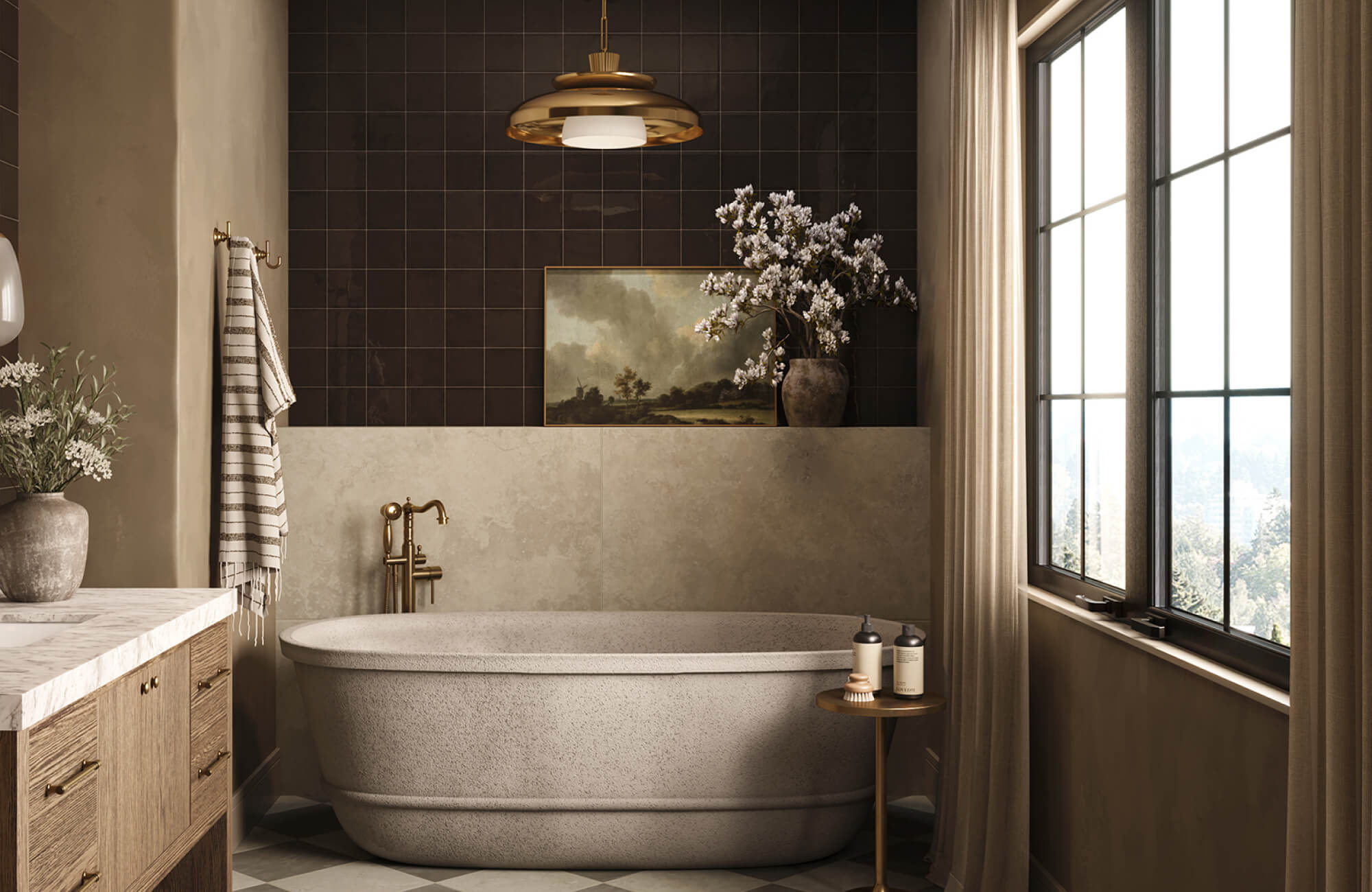
Ambient lighting establishes the base layer, providing general illumination across the entire space. In the design shown above, Edward Martin’s Carly 22" Pendant in Vintage Brass delivers both functional brightness and sculptural elegance. Selecting bulbs with a high lumen output and a color temperature between 2700K–3000K creates a warm yet balanced glow that offsets the light-absorbing nature of dark surfaces. Proper spacing and dimmable controls also ensure even coverage without harsh hotspots.
Task Lighting
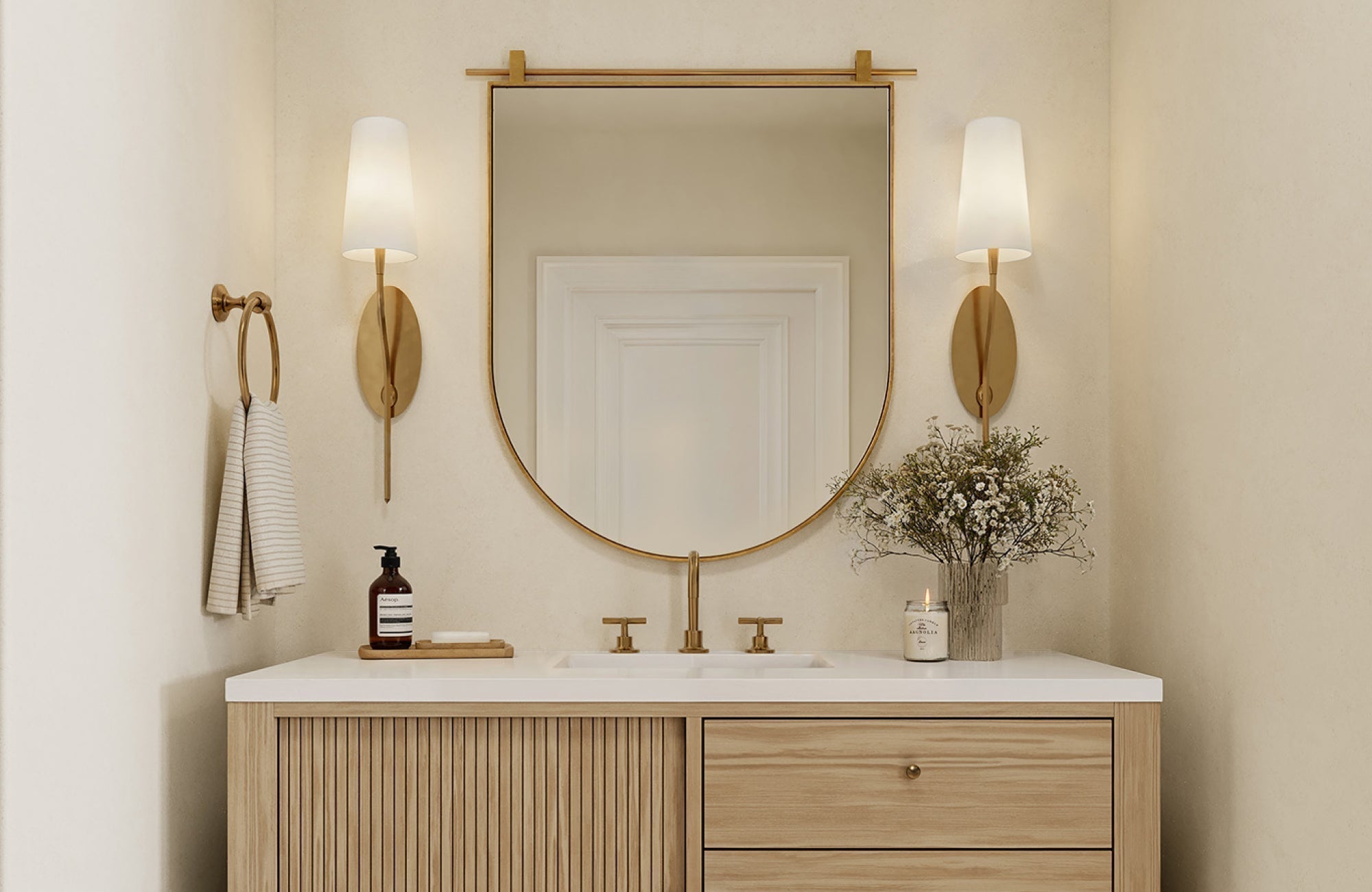
Task lighting addresses the specific needs of grooming, makeup application, and other daily rituals. Seen above flanking the vanity, Edward Martin’s Runa Wall Sconce in Aged Brass provides vertical illumination that minimizes facial shadows while introducing a refined layer of style. A color rendering index (CRI) of 90 or higher is recommended to ensure accurate skin tones and detail visibility. In moisture-prone areas, fixtures rated for damp or wet locations provide both safety and performance without sacrificing design appeal.
Accent Lighting
Accent lighting adds dimension by drawing attention to architectural or decorative elements. In black tile bathrooms, LED strip lighting beneath floating vanities, backlit mirrors, or directional spotlights aimed at textured walls create striking contrasts. Under thoughtful illumination, as featured above, Edward Martin’s Mikayla 5x5 Glossy Ceramic Tile in Espresso reveals depth, richness, and surface variation that elevate the overall design. Using narrow beam angles or concealed fixtures ensures the light highlights the feature without overwhelming the space. This final layer transforms the bathroom from purely functional to a sophisticated, design-forward retreat.

Choosing Fixtures That Complement Black Surfaces
Once the layers are established, the next step is choosing fixtures that harmonize with dark finishes while still standing out. The right sconces, recessed lights, or pendants not only serve their function but also become design elements against the bold backdrop of black tile.
Wall Sconces and Vanity Bars for Focused Illumination
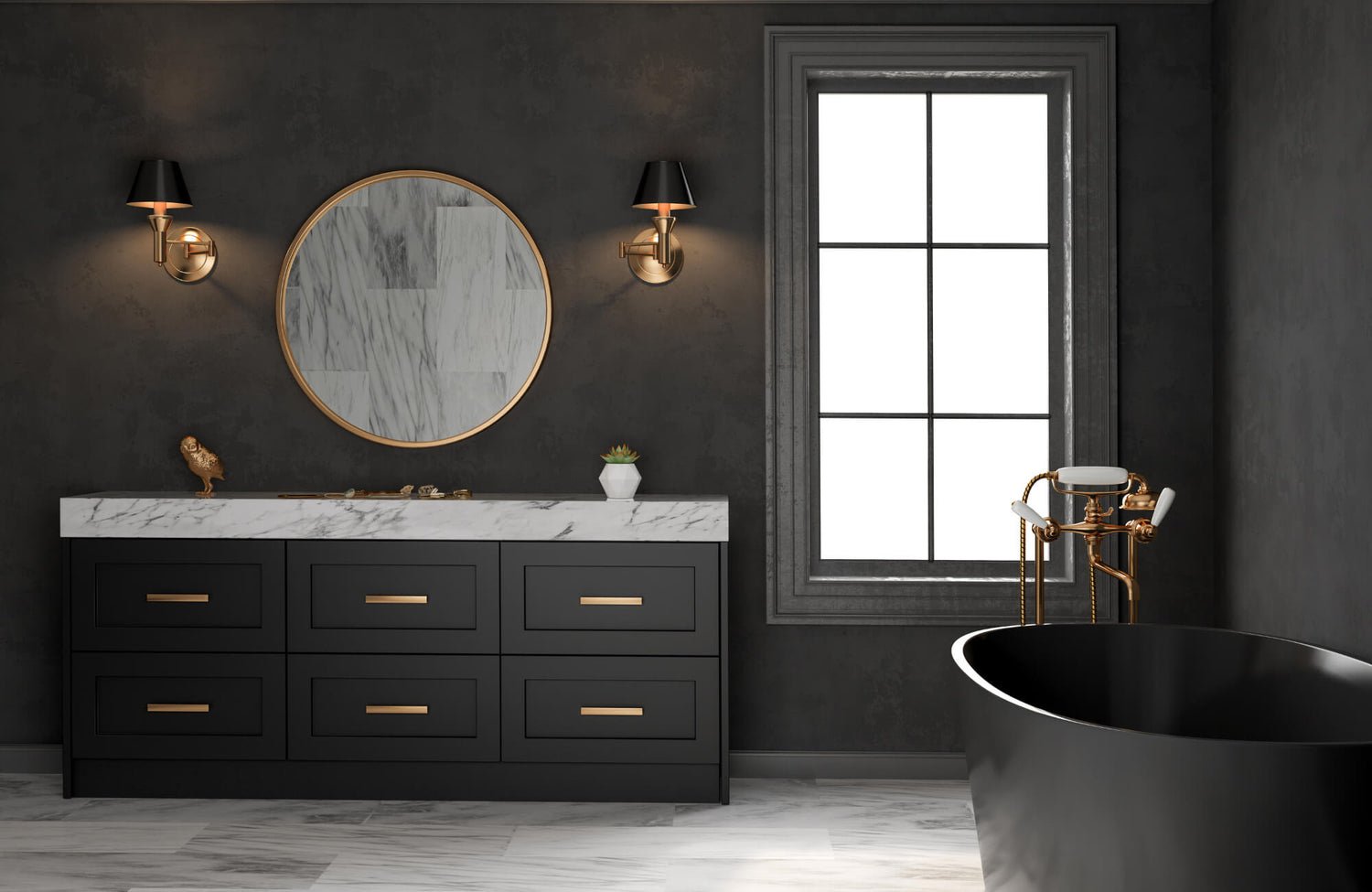
Wall-mounted fixtures positioned alongside or above mirrors provide targeted, shadow-free lighting for grooming tasks. In the example above, Edward Martin’s Winifred Wall Sconce in Old Bronze introduces balanced illumination while adding a timeless detail that contrasts beautifully with the darker wall tile. Finishes such as polished chrome, brushed nickel, or matte brass create similar contrast that prevents fixtures from blending into the background. Linear LED vanity bars offer even distribution across the face, while cylindrical sconces with frosted glass diffuse light for a softer effect. Placement at eye level ensures accurate illumination where it matters most.
Recessed and Ceiling Fixtures for a Clean Look
Recessed downlights and flush-mount ceiling fixtures establish general illumination without detracting from the tile’s bold aesthetic. As seen in the design above, Edward Martin’s Dawson 12x24 Matte Porcelain Tile in Charcoal provides a rich backdrop that works seamlessly with low-profile recessed fixtures. Opting for LEDs with wide beam angles helps wash dark surfaces evenly, avoiding overly contrasted patches. For larger bathrooms, a layered grid of recessed lights with dimming capability ensures flexibility between task-oriented brightness and ambient mood lighting.
Pendants and Statement Fixtures for Visual Impact
Pendant lights and chandeliers act as focal points that add sculptural interest against the dramatic backdrop of black tile. Clear glass, smoked glass, or metallic finishes highlight the fixture while reflecting subtle light back into the space. Oversized statement fixtures, such as geometric pendants or multi-light clusters, work especially well in high-ceiling bathrooms, where vertical scale enhances the overall composition. To maintain balance, designers often pair statement fixtures with dimmable LEDs, ensuring the piece serves both aesthetic and functional purposes.

Understanding Light Color and Quality
Of course, fixtures alone aren’t enough, the character of the light they emit is just as important. By considering color temperature and CRI, you can fine-tune how the lighting interacts with black surfaces, ensuring the bathroom feels balanced, flattering, and true to its design intent.
The Importance of Color Temperature
Color temperature, measured in Kelvins (K), determines the warmth or coolness of light. In black tile bathrooms, fixtures in the 2700K–3000K range produce a warm, inviting glow that softens the starkness of dark finishes, while 3500K–4000K lighting creates a crisper, more contemporary aesthetic. Choosing consistent color temperatures across fixtures prevents discordant lighting effects and establishes a cohesive atmosphere.
Maximizing Color Rendering Index
The Color Rendering Index (CRI) measures how accurately light reveals the true colors of objects compared to natural daylight. A CRI of 90 or higher is especially important in bathrooms, where grooming tasks demand precision. On black tile surfaces, high-CRI lighting enhances the subtle textures and tones of grout lines, stone veining, or metallic accents without washing them out. Low-CRI bulbs, by contrast, can distort colors and diminish material depth, undermining design intent.
Mixing Temperatures for Different Effects
Strategically blending color temperatures can enhance both functionality and mood. For example, cooler 4000K lighting around mirrors provides clarity for detailed tasks, while warmer 2700K ambient lighting creates relaxation in the overall space. Designers often achieve this balance using dim-to-warm LEDs, which shift color temperature as they dim, or by zoning circuits so different layers of light can be controlled independently. In black tile bathrooms, this flexibility allows homeowners to transition from bright, task-oriented illumination to a more atmospheric, spa-like glow.

Strategic Placement and Creative Techniques
With the layers, fixtures, and light quality defined, placement brings everything together. Thoughtful techniques like backlighting, shower illumination, and architectural highlighting transform a dark-tiled bathroom into a space that feels both dramatic and welcoming.
Creating a Glow with Backlighting
Backlighting introduces indirect illumination that softens shadows and enhances depth. Common applications include LED strips behind mirrors, floating vanities, or wall panels. In black tile bathrooms, backlighting reduces harsh contrast by creating a halo effect that visually separates fixtures from the dark backdrop. Choosing diffused, dimmable LEDs prevents glare while offering flexibility between task-oriented brightness and ambient mood lighting.
Illuminating the Shower Area
Shower zones often absorb more light due to enclosed layouts and reflective water surfaces. Recessed, wet-rated downlights positioned outside the direct spray zone provide even coverage without creating glare. Designers frequently integrate linear waterproof LEDs along niches, benches, or ceiling coves to emphasize texture in dark tile finishes. Ensuring fixtures have an IP65 rating or higher is essential for both safety and durability in high-moisture environments.
Highlighting Architectural Features
Accent lighting brings attention to the bathroom’s structural details, making black tile surfaces feel rich rather than monolithic. Grazing light across textured walls enhances patterns and veining, while uplighting beneath floating vanities creates the illusion of depth and weightlessness. Spotlights with narrow beam spreads can be aimed at freestanding tubs, art, or shelving, turning functional areas into focal points. This technique allows the interplay of shadow and highlight to emphasize craftsmanship and elevate the overall design narrative.
The Ultimate Guide for a Luminous Bathroom
Lighting a black tile bathroom goes far beyond a single fixture. With layered lighting, carefully chosen fixtures, and attention to color quality, you can transform dark surfaces into a luxurious, inviting sanctuary. To simplify the process, Edward Martin’s Augmented Reality (AR) Visualization Tool lets you preview tiles and lighting in your own space, while ordering a tile sample confirms the look and feel in person. Together, these tools guide confident decisions and ensure your design shines with depth, contrast, and functionality.