In a beautifully composed interior, every element participates in a quiet dialogue, where color, texture, and proportion work together to create refined visual harmony. The relationship between wall art and furniture is not merely decorative, but foundational to achieving a cohesive and professionally styled living space. Thoughtfully selected artwork can soften architectural lines, elevate upholstery palettes, and introduce depth through intentional contrast. Rather than relying on exact duplication, high-end interior design embraces balance through undertone coordination, scale precision, and material layering. Understanding how to coordinate wall art with living room furniture allows a space to feel curated, sophisticated, and effortlessly complete.

Visual Cohesion vs. Exact Matching
A refined interior composition depends on harmony through shared elements rather than identical colors or styles. When wall art and furniture relate through undertones, proportion, and design language, the space feels intentional without appearing overly coordinated.
Color Temperature and Undertone Alignment
Furniture upholstery and wood finishes often carry subtle warm, cool, or neutral undertones that quietly shape surrounding décor decisions. In a space like the bathroom photo above—where creamy vertical paneling, honey-toned wood trim, and polished brass fixtures establish a warm foundation—artwork with earthy taupe, sand, or charcoal undertones will feel inherently cohesive.
This approach also reflects advanced color temperature coordination in interior design, where undertone alignment prevents visual imbalance and tonal discord. Even seemingly monochromatic interiors benefit from analyzing the base pigments within cabinetry, wood stains, and paint finishes to maintain chromatic consistency.
A piece such as Edward Martin’s Shadow Orchard Wall Art (shown above) introduces soft shadowed tones that echo the room’s warmth while adding subtle depth and contrast against the light wall surface. When wall art resonates with these underlying tones rather than duplicating the vanity color, the palette transitions seamlessly from furnishings to vertical planes, resulting in layered harmony that feels intentional and refined.
Repetition Through Accent Integration
Cohesion often emerges through subtle repetition rather than direct duplication of dominant colors. For instance, a secondary shade within a painting can be thoughtfully echoed in accent pillows, sculptural décor, or an area rug to create a steady visual rhythm. This technique, frequently applied in how to coordinate wall art with living room furniture, also distributes color across both horizontal and vertical planes for balanced continuity. The repetition does not need to be bold, as even restrained tonal references can quietly unify the overall scheme. Because the eye naturally recognizes recurring elements, these accents create a sense of order and completeness. In turn, the artwork feels seamlessly integrated into the space rather than visually detached from the furnishings below.
Avoiding Overly Coordinated Interiors
While matching furniture and wall art may appear cohesive at first glance, excessive uniformity can diminish visual depth. Interiors built on identical tones often lack the dynamic contrast that defines sophisticated residential design. Introducing tonal variation, complementary hues, or subtle textural shifts also enhances dimensional layering and prevents monotony. Designers frequently adjust saturation levels or introduce nuanced contrast so that statement wall art above a sofa maintains presence without overpowering the arrangement. This controlled variation preserves harmony while enriching visual complexity and spatial interest. Ultimately, thoughtful differentiation elevates the room beyond predictable color coordination and supports a more curated, high-end aesthetic.

Strategic Contrast and Visual Hierarchy
Beyond cohesion, contrast establishes visual hierarchy and ensures the room feels dynamic rather than static. By manipulating scale, intensity, and compositional weight, wall art can anchor furniture while introducing refined energy.
Establishing a Focal Point Above Furniture
The wall above a sofa or console naturally operates as a primary focal zone within a well-designed living space. Introducing large-scale artwork adds vertical emphasis that visually counterbalances the horizontal mass of seating and cabinetry. Designers exploring how to choose statement wall art above a couch evaluate visual weight, compositional density, and color saturation to ensure proper hierarchy. A bold abstract canvas in a neutral room can also immediately establish dominance while guiding the eye upward in a smooth visual progression. This focal anchoring technique prevents the space from feeling bottom-heavy, especially in expansive open-concept layouts. As a result, the artwork assumes an architectural presence, functioning as an integral design element rather than a decorative afterthought.
Controlled Color Contrast
Contrast, when thoughtfully executed, enhances depth without disrupting a cohesive interior design scheme. In a richly layered space like the photo above—where deep walnut cabinetry, terracotta-toned tile, and warm brass fixtures establish a saturated backdrop—artwork can introduce tonal variation without competing for dominance. Designers also rely on complementary and analogous color theory to create visual interest while preserving equilibrium across surfaces.
A piece such as the Silent Orchard Wall Art works beautifully here, as its soft, shadowed composition offers gentle contrast against the warm architectural envelope while echoing the room’s earthy undertones. Rather than adding stark brightness, it refines the palette by introducing subtle light-and-dark interplay that enhances visual hierarchy. When calibrated carefully, this kind of controlled contrast elevates sophistication, allowing bold interiors to feel curated, dimensional, and intentionally composed.
Style Juxtaposition for Curated Depth
Blending distinct design styles can introduce curated tension that deepens a room’s aesthetic narrative. For example, minimalist Scandinavian furniture, characterized by clean lines and muted palettes, can be elevated by expressive contemporary art that adds movement and emotional resonance. The success of this pairing also often depends on consistent framing materials, aligned undertones, or proportional balance that quietly unify the contrast. These combinations illustrate advanced eclectic interior design styling techniques for living rooms, where diversity is structured rather than random. Instead of appearing mismatched, the juxtaposition feels deliberate because it respects scale and spatial rhythm. Through thoughtful integration, both furniture and artwork gain clarity, presence, and refined individuality.

Scale, Proportion, and Spatial Alignment
Proportion often determines success more than color compatibility alone. Correct sizing and alignment ensure wall art relates architecturally to furniture and the surrounding negative space.
Width-to-Furniture Ratio Standards
Artwork displayed above furniture should generally measure two-thirds to three-quarters of the furniture’s width to maintain visual equilibrium. A ninety-inch sofa, for example, pairs most effectively with a canvas ranging from sixty to seventy inches wide, ensuring proportional alignment. This ratio also preserves structural symmetry and prevents the artwork from appearing either dominant or disconnected. Designers who follow standard wall art size guidelines for living rooms consistently prioritize scale over exact color coordination. When a piece is too large, it can visually overpower seating and compress the space, whereas undersized art often feels incidental and unfinished. By maintaining balanced width, the overall composition reads as cohesive, architectural, and intentionally styled.
Optimal Height Placement
Vertical positioning significantly influences spatial flow, sightlines, and overall ergonomic viewing comfort. Industry standards recommend installing artwork so its center aligns approximately fifty-seven to sixty inches from the floor, reflecting gallery-height conventions. When placing art above furniture, maintaining six to ten inches of clearance creates a visual bridge without crowding the arrangement. This spacing also allows the wall art to feel anchored to the furniture rather than floating independently above it. In open-concept interiors, consistent height placement across adjacent walls strengthens continuity and reinforces architectural rhythm. Thoughtful installation enhances harmony and professionalism, even when the artwork introduces bold contrast in color or style.
Negative Space and Breathing Room
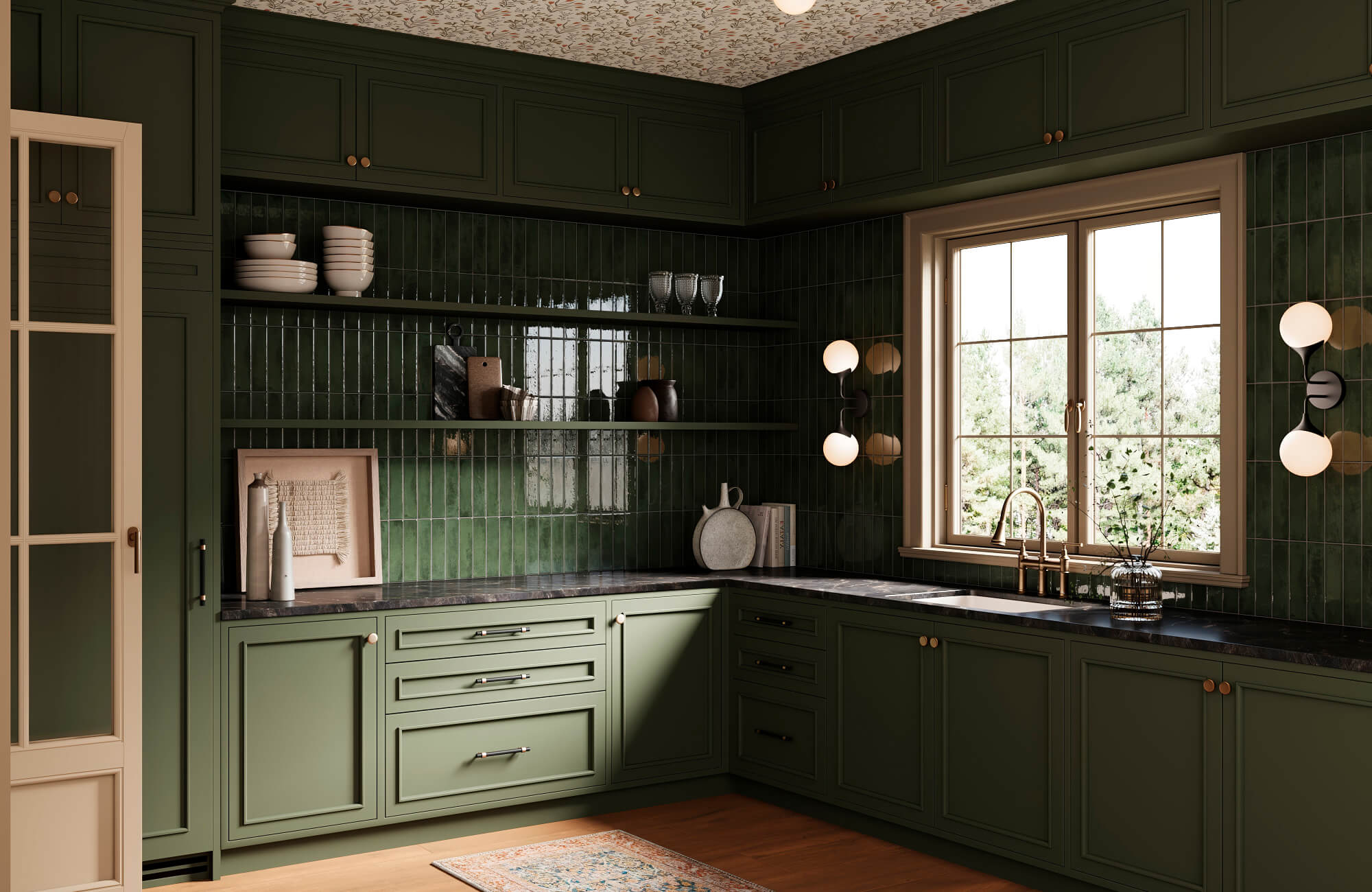
Negative space surrounding artwork plays a critical role in achieving refined visual balance, particularly in compact or highly structured interiors like this deep green kitchen. Even when art is styled casually, such as leaning against a tiled backsplash within open shelving, the surrounding margin determines whether the composition feels curated or crowded. Designers evaluating how to balance wall art in open-concept kitchens and built-in cabinetry also consider adjacent shelving lines, countertop depth, and vertical tile grids to maintain proportional clarity.
A piece such as our Meadowline Wall Art, as displayed in the picture above, works beautifully in this setting, as its structured linear composition complements the vertical tile pattern while allowing sufficient breathing room along the shelf span. Rather than filling every available surface, leaving intentional space around the artwork enhances its presence and prevents visual congestion. Through careful spacing and proportion control, the entire arrangement feels architectural, elevated, and seamlessly integrated into the cabinetry framework.

Material and Texture Coordination
Material compatibility influences whether wall art feels seamlessly integrated with furniture finishes. Through intentional texture layering and finish coordination, designers create depth that extends beyond color.
Matte and Gloss Surface Balance
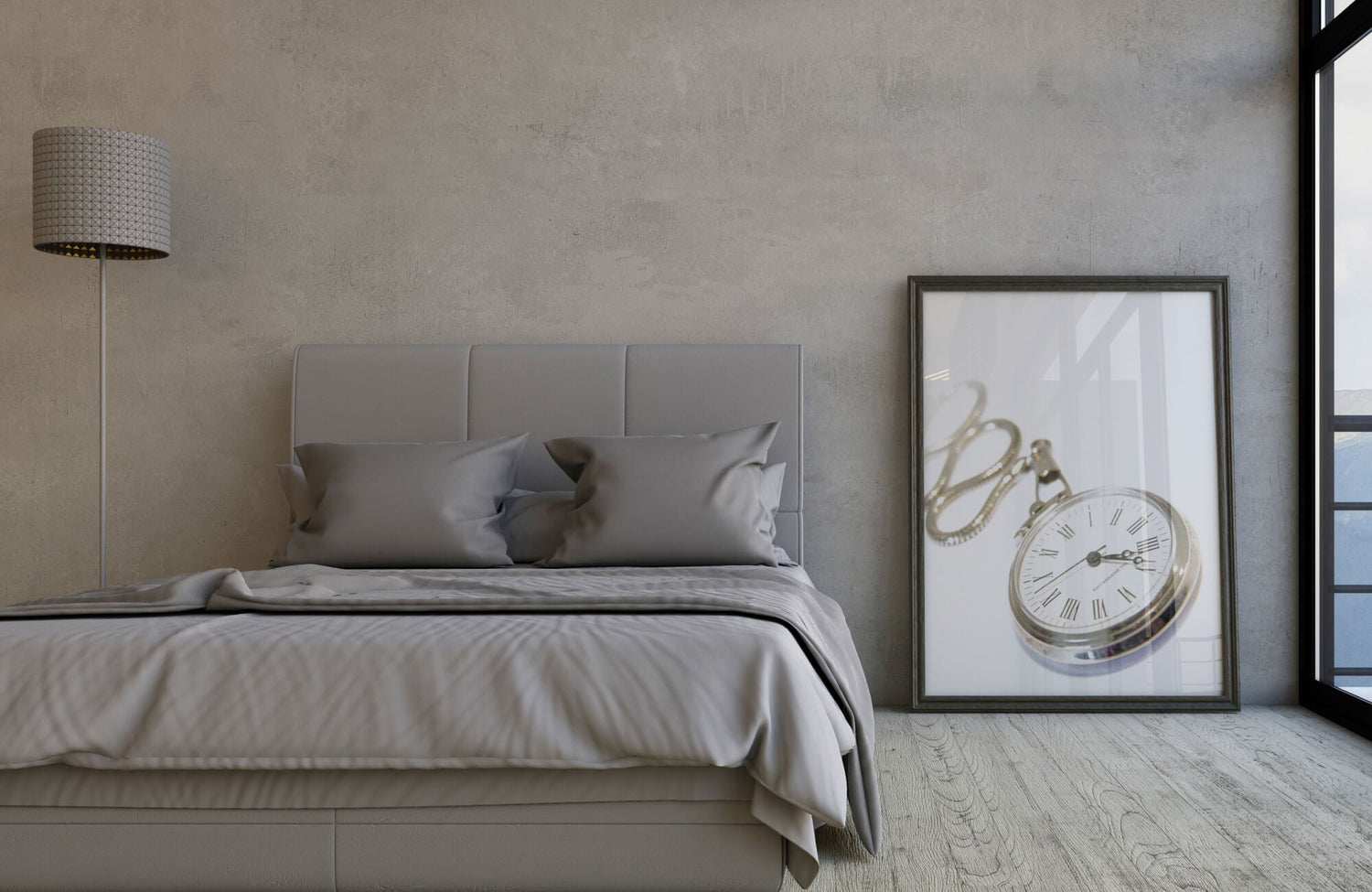
Rooms dominated by matte textures, such as linen upholstery, boucle seating, or brushed oak finishes, often benefit from artwork that introduces subtle gloss or metallic detailing. The gentle sheen of a framed print under glass or a canvas with gold leaf accents can softly catch light and add dimension without overpowering the palette. Conversely, glossy lacquered furniture or polished stone surfaces pair well with canvas or textile-based art that diffuses reflected light and tempers visual sharpness. This deliberate interplay also exemplifies sophisticated texture layering techniques in contemporary interior design. By balancing reflectivity, designers prevent the space from appearing either flat or excessively polished. The tactile contrast enriches sensory depth, allowing material harmony to support cohesion without relying on direct color replication.
Frame Finishes and Hardware Integration
Frames often serve as subtle yet powerful transitional elements between wall art and surrounding furnishings. Selecting frame finishes that echo nearby hardware, such as brushed brass light fixtures, matte black cabinet pulls, or polished chrome table bases, creates understated repetition throughout the room. This approach also reflects best practices in how to coordinate picture frames with living room furniture hardware for a unified aesthetic. Rather than matching upholstery tones, the continuity of metal or wood finishes establishes visual rhythm across multiple surfaces. Because hardware elements naturally recur in lighting, cabinetry, and furniture bases, aligned framing strengthens overall integration. As a result, the artwork feels intentionally anchored within the design framework instead of appearing like an isolated addition.
Textile and Upholstery Relationships
Textural relationships between artwork and upholstered furniture further enhance visual depth and compositional layering. A velvet sofa, for instance, gains added richness when paired with art featuring expressive brushstrokes, impasto techniques, or mixed media detailing. Similarly, woven or boucle seating complements canvas prints with visible grain or linen-textured surfaces that echo tactile softness. These combinations also illustrate advanced wall art selection for textured furniture interiors, where material dialogue becomes as important as color harmony. By aligning tactile qualities, designers create continuity that feels organic rather than contrived. Thoughtful texture pairing prevents visual dissonance while preserving stylistic diversity. In this way, material sensitivity elevates sophistication without requiring identical hues or overt coordination.

Design Style Integration and Personal Expression
While technical alignment ensures balance, personal expression ultimately defines a memorable interior. Wall art should reinforce the overarching design narrative while reflecting individuality and lifestyle.
Aligning With Architectural Style
Traditional interiors often benefit from stylistic continuity between furnishings and artwork. For instance, mid-century modern furniture pairs naturally with geometric or abstract compositions that echo clean lines and organic forms, reinforcing the era’s design language. Industrial interiors also complement black-and-white photography or architectural prints that mirror raw materials such as steel, brick, and concrete. In transitional spaces, artwork that blends classic and contemporary motifs can bridge stylistic shifts without disrupting cohesion. These alignments support cohesive wall art ideas for specific interior design styles while preserving architectural integrity. Reinforcing architectural language further enhances thematic clarity, allowing every element to feel purposefully selected. Consequently, furniture and art operate within a unified visual vocabulary that feels both polished and enduring.
Curated Eclectic Approaches
Eclectic interiors rely on intentional diversity rather than uniform styling. Mixing vintage furniture with contemporary artwork introduces layered sophistication when unified through scale, framing consistency, or undertone harmony. Designers applying how to mix modern wall art with classic furniture prioritize visual structure so that contrast feels refined instead of random. Repetition of subtle elements, such as metallic finishes or recurring accent colors, quietly ties disparate pieces together. The contrast must also remain measured to avoid visual inconsistency or aesthetic imbalance. Controlled diversity further enriches personality while maintaining compositional integrity and spatial flow. This curated approach ultimately demonstrates that harmony in interior design can emerge from thoughtful contrast rather than strict matching.
Reflecting Lifestyle and Identity
Wall art functions as a narrative element that communicates lifestyle, taste, and personal history. Personal collections, cultural pieces, or statement canvases may intentionally diverge from furniture style to introduce authenticity and emotional depth. When proportion, framing, and undertones remain balanced, individuality enhances rather than disrupts overall cohesion. Artwork can also reflect travel experiences, creative passions, or heritage influences, adding layered meaning to a living space. This strategy aligns with choosing wall art that reflects personal style without clashing with furniture or architectural context. Emotional resonance often outweighs rigid stylistic alignment, especially in thoughtfully curated homes. Ultimately, well-integrated personal expression transforms a carefully designed interior into a space that feels both elevated and genuinely lived-in.
Where Harmony and Personality Meet
A beautifully balanced interior does not depend on exact matching but on intentional coordination rooted in proportion, undertone alignment, and material harmony. When wall art is selected with attention to scale, visual hierarchy, and texture layering, it elevates furniture rather than competing with it. Strategic contrast, refined color repetition, and architectural alignment also collectively create a cohesive living room design that feels curated and sophisticated. By applying professional interior design principles, homeowners can confidently choose statement wall art that enhances both function and aesthetic appeal.
To bring your vision to life, Edward Martin offers personalized design services tailored to your space and style preferences. Contact us today to connect with our experts and start creating a bathroom that feels both harmonious and uniquely yours!