Striped wallpaper can significantly influence how large or small a room feels, even though the physical dimensions remain the same. The effect depends on several factors, including stripe direction, scale, color contrast, and how the pattern interacts with light and placement. When used thoughtfully, stripes can visually stretch walls, raise ceilings, or, in some cases, make a space feel more confined. In this guide, we’ll walk you through how each element works, helping you confidently determine whether striped wallpaper will make your room feel larger or more compact based on your space.

Why Stripes Change How We Perceive Space
Before determining whether striped wallpaper makes a room feel larger or smaller, it’s important to understand how we visually interpret it. More than a decorative element, stripes actively guide how they perceive distance, height, and spatial boundaries within a room.
Eye Movement
When looking at stripes, the eye naturally follows their direction, subtly shaping how a space is perceived. This visual movement influences how we interpret height, width, and overall proportion within a room. Vertical stripes draw the gaze upward, making ceilings appear higher, while horizontal stripes guide the eye from side to side, visually extending the space and making it feel wider. When this flow remains smooth across a surface, the room tends to feel more open, whereas frequent interruptions in the pattern can make it feel more enclosed.
Visual Continuity
Another important factor is how continuous or interrupted the pattern appears across a wall. When stripes flow evenly without strong visual breaks, the surface is perceived as a single, uninterrupted plane. This sense of continuity softens the perception of boundaries, making the room feel more expansive. In contrast, patterns that appear uneven or frequently interrupted create visual divisions, making the wall feel more defined and closer. As a result, the level of visual continuity influences how connected or segmented a space feels at a glance.
Perceived Boundaries
Stripes can influence how clearly the edges of a room are defined. When the transitions between stripes are subtle, wall boundaries appear less rigid, allowing surfaces to blend more seamlessly into the surrounding space. In contrast, bold and clearly separated stripes highlight where one section ends and another begins. This added definition makes the wall edges more noticeable, which can cause the space to feel more contained. The way stripes define or soften these boundaries plays a key role in how open or enclosed a room appears.

Stripe Direction and Room Proportion
Once the impact of stripes on visual perception is clear, the next step is selecting the appropriate direction. The orientation of stripes directly highlights specific dimensions of a room, influencing how height, width, and overall proportion are perceived.
Vertical Lines
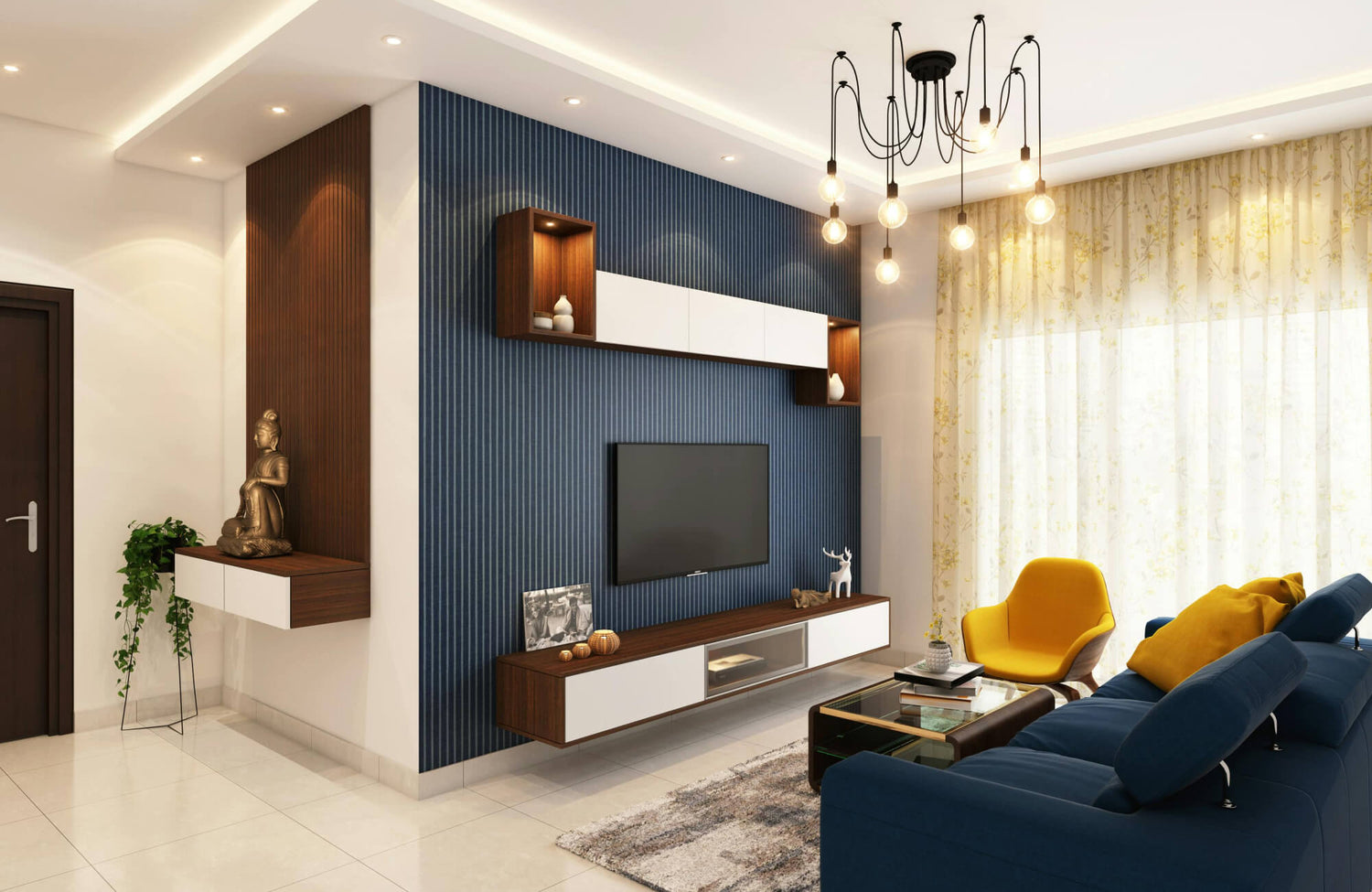
Vertical stripes are commonly used to create the impression of added height. As the eye moves upward along these lines, the ceiling appears more distant, even though the actual dimensions remain unchanged. This effect makes vertical stripes particularly useful in rooms with lower ceilings, where emphasizing height can improve the overall sense of openness.
This is well demonstrated by Edward Martin’s Suffolk Wallpaper in Black II, 52" x 132", as shown in the photo featured above, where the fine vertical lines draw the gaze upward while maintaining a refined, structured look. The consistent pattern works with the clean, minimal setting, reinforcing the sense of height without overwhelming the space.
By directing attention upward, the space feels more balanced and less confined. However, in tall and narrow rooms, an excess of vertical lines can further emphasize height and make the space feel slightly unbalanced.
Horizontal Lines
Horizontal stripes can create the opposite effect by expanding the perceived width of a room. As the eye moves across the wall, the space feels more extended, which can help narrow areas feel more comfortable and less restricted. This approach works especially well in hallways or small living spaces where width is limited. By drawing attention to the horizontal dimension, the room appears more open and balanced. However, in wide rooms, horizontal stripes can make the space feel slightly flatter if not used with careful consideration.
Direction Matching
To achieve the most effective result, the stripe wallpaper should align with the room’s proportions. When a space feels too low, vertical stripes can help visually extend the height, while horizontal stripes can ease the sense of narrowness by widening the room. The key is to identify which dimension feels restricted and use the stripe direction to balance it. This approach allows stripes to enhance spatial proportion in a more intentional and controlled way.

Striped Wallpaper Scale and Pattern Density
While direction establishes the overall visual effect, the size and spacing of stripes influence how prominent the pattern appears. When scale alone is considered, these elements play a key role in shaping whether a room feels more open or more confined.
Narrow Stripes Wallpaper
Narrow stripes tend to recede into the background, especially when viewed from a distance. Because they create minimal visual interruption across the wall, the surface appears more continuous, allowing the space to feel more open. This effect is well illustrated by Edward Martin’s Windsor Wallpaper in Olive I, 52" x 132", as shown in the photo above, where the fine, closely spaced stripes blend seamlessly into the dining area. The pattern supports the overall design without overpowering it, helping the wall read as a unified surface rather than a series of separate elements.
This understated approach works especially well in smaller rooms, where maintaining visual flow is important. Rather than drawing attention to the walls, the pattern integrates into the setting, creating a cohesive and balanced look. As a result, narrow stripes generally help a room feel bigger, as they preserve continuity without making the walls feel more defined or enclosed.
Wide Stripes Wallpaper
Wider stripes create more noticeable divisions across the wall, making each band more defined. This stronger separation can interrupt the visual flow, drawing more attention to the surface itself. Because of this, the wall may appear closer and more structured, reducing the sense of openness, especially in smaller spaces. In larger rooms, however, this added definition can help create a more balanced and grounded feel. In general, wide stripes tend to make a room feel smaller, though they can be useful for bringing a sense of proportion to more expansive areas.
Pattern Density
The spacing between stripes also plays an important role in how a room is perceived. When stripes are closely spaced, they can create a steady visual rhythm that supports continuity across the wall, helping the space feel more expansive. In contrast, widely spaced stripes introduce visible gaps that act as pauses along the surface. These interruptions can make the wall feel more segmented, reducing the overall sense of openness. By adjusting stripe density, you can influence whether the space feels more seamless and open or more defined and contained.

Wall Paper Color Contrast and Visual Weight
Color contrast plays a key role in how heavy or light striped wallpaper appears. It influences how much visual attention the walls draw and how open or enclosed the room feels.
High-Contrast Wallpaper
When stripes feature strongly contrasting colors, the pattern becomes more visually prominent. The eye naturally pauses at each transition, creating a stronger sense of structure and definition across the wall. This added emphasis can make the walls feel more pronounced, which may reduce the perception of space, particularly in smaller rooms. Without balance, the effect can feel visually heavy. For this reason, high-contrast stripes tend to make a room feel smaller, as they emphasize the walls rather than opening up the space.
Low-Contrast Wallpaper
Low-contrast stripes blend more seamlessly, creating a softer and more unified appearance. Because the transitions between colors are subtle, the eye moves smoothly across the surface without frequent pauses. This continuous visual flow helps the room feel more open and less confined.
A similar effect can be seen with Edward Martin’s Windsor Wallpaper in Terracotta I, 52" x 132", as displayed in the photo above, where the warm, closely related tones create a gentle shift between stripes. The pattern remains visually present without becoming dominant, allowing the wall to feel cohesive rather than segmented. It is one of the most effective approaches when the goal is to create a greater sense of space. With minimal contrast, the pattern enhances the overall setting without drawing too much attention to itself, helping the room feel larger and more open.
Tonal Layering
Using different shades of the same color adds depth without making the pattern feel heavy. This approach keeps the overall look cohesive while still introducing subtle visual interest. Because the variation is gentle, the walls appear less defined, which helps the space feel more open. Tonal layering often makes a room feel larger, especially in smaller spaces where maintaining both texture and openness is important.

Light Interaction and Surface Finish
Lighting influences how striped wallpaper appears throughout the day, which can affect how spacious a room feels over time. Changes in light and surface finish alter how visible the stripes are, shaping how the pattern is perceived within the space.
Natural Light
Natural light softens the appearance of stripes and reduces contrast, especially during brighter parts of the day. When light spreads evenly across the surface, the pattern appears less pronounced and more integrated into the space. This softer effect helps the room feel more open and relaxed. In lower light conditions, however, the same stripes can appear more defined, which may make the space feel slightly more enclosed. This means striped wallpaper can make a room feel more spacious in daylight and a bit more compact as lighting conditions change.
Artificial Light
Artificial lighting can either highlight or soften the appearance of stripes, depending on its placement. Focused lighting tends to emphasize the pattern, while diffused lighting creates a more subtle effect. This interaction is clearly demonstrated by Edward Martin’s Windsor Wallpaper in Black II, 52" x 132", paired with the Eleanor 26" 3 Lights Vanity Light in Aged Gold with Opal Matte Glass, featured in the photo above. The warm, focused glow from the vanity light enhances the vertical lines, adding depth and clarity, while the opal glass shade gently diffuses the light, keeping the pattern from appearing too sharp or overpowering.
When the pattern is more pronounced, the walls can feel more structured and defined. When the lighting softens the stripes, the space appears more fluid and open. By adjusting the type and placement of lighting, you can influence how striped wallpaper shapes the room without altering the design itself.
Surface Finish
The wallpaper finish also influences how light interacts with the surface. Matte finishes tend to absorb light, keeping the pattern more subtle and visually controlled. In contrast, slightly reflective finishes bounce light back into the room, enhancing brightness and creating a subtle sense of openness. Choosing the right finish helps control how visible the stripes appear under everyday lighting, which can subtly influence how spacious the room feels.

Placement Strategies That Affect Spatial Illusion
Where striped wallpaper is applied plays a key role in how its effects are experienced within a room. Placement goes beyond aesthetics, as it directly influences how the space is perceived and how its dimensions are visually interpreted.
Full Room Application
When stripes are applied across all walls, they create a continuous visual field that can enhance the overall flow of the space. This works especially well when the pattern is subtle and consistent, allowing the room to feel more cohesive. However, if the stripes are too bold or highly defined, the effect can feel enclosing, as the pattern fully surrounds the room. For a more spacious feel, full coverage is most effective with softer stripe designs that maintain visual continuity rather than interrupt it.
Single Wall Use
Applying stripes to a single wall creates a focal point that can influence how depth is perceived. When used thoughtfully, it can make that wall appear to recede or stand out more prominently within the space. This approach allows you to adjust the room’s visual balance without overwhelming it. It also offers a controlled way to introduce stripes while maintaining a sense of proportion and openness.
Zoned Application
Applying stripes to specific sections of a wall helps guide how the eye moves through the space. This approach can subtly extend or widen certain areas without influencing the entire room. By limiting the pattern to targeted zones, you retain greater control over its impact, allowing you to adjust spatial perception without overwhelming the overall design.
Choosing Stripes That Enhance Space
Striped wallpaper can make a room look either bigger or smaller, depending on how it is applied. When stripes are used to guide the eye smoothly, soften boundaries, and support the room’s proportions, they can make the space feel larger and more open. In contrast, bold patterns, strong contrasts, or poorly matched directions can make walls feel closer, causing the room to appear smaller.
By carefully aligning direction, scale, contrast, lighting, and placement with the room’s needs, you can control how spacious or compact it feels. Understanding how these elements work together allows you to use striped wallpaper in a way that enhances the overall sense of space rather than limiting it. If you’re unsure which stripe style works best for your space, reaching out for professional guidance can help you make more confident decisions. You can contact us to discuss your project or explore our design services for tailored recommendations that align with your layout, lighting, and overall vision.