In thoughtfully designed bathrooms, mirrors are more than functional necessities—they become sculptural elements that shape light, balance, and atmosphere. A round bathroom mirror, in particular, introduces softness and visual rhythm, subtly transforming the vanity wall into a curated focal point. When paired with double vanities, the interaction between symmetry, proportion, and illumination determines whether the result feels intentional or merely decorative. From the quiet elegance of a large round mirror to the character-rich presence of a round antique mirror, circular forms offer both versatility and refinement. Understanding how round wall mirrors behave within shared vanity layouts reveals why they continue to define modern, transitional, and luxury bathroom design.

Proportion and Scale Control in Double Vanity Installations
Achieving balance in a double vanity bathroom depends on how accurately the mirror scale responds to the surrounding architecture. When proportion is handled with precision, a round mirror integrates naturally rather than competing for attention.
Diameter-to-Vanity Module Alignment
Rather than spanning the entire vanity, a round mirror performs best when scaled to each sink module, allowing visual balance to remain intact. Designers commonly specify mirror diameters between 70 and 85 percent of the sink cabinet width, a ratio that supports both facial visibility and aesthetic harmony. Within this range, a large round mirror provides generous reflective coverage without overpowering the vanity wall. Exceeding this proportion can cause the mirror to dominate the composition, while undersized options feel visually disconnected. Scale, therefore, becomes a quiet but decisive factor in successful double vanity design. When properly aligned, the mirror reinforces architectural order rather than disrupting it.
Wall Clearance and Fixture Coordination
Once the scale is established, maintaining adequate wall clearance helps the mirror sit comfortably among surrounding fixtures. Allowing a minimum of two to four inches between paired round wall mirrors preserves visual distinction while leaving room for lighting or trim details. This spacing also becomes even more critical when working with a large round mirror, as increased diameter naturally heightens visual presence. Without sufficient clearance, the vanity wall can feel crowded and unresolved. Thoughtful coordination between mirrors, faucets, and lighting gives each element space to breathe, resulting in a composition that feels intentional and refined.
Visual Weight and Balance Distribution
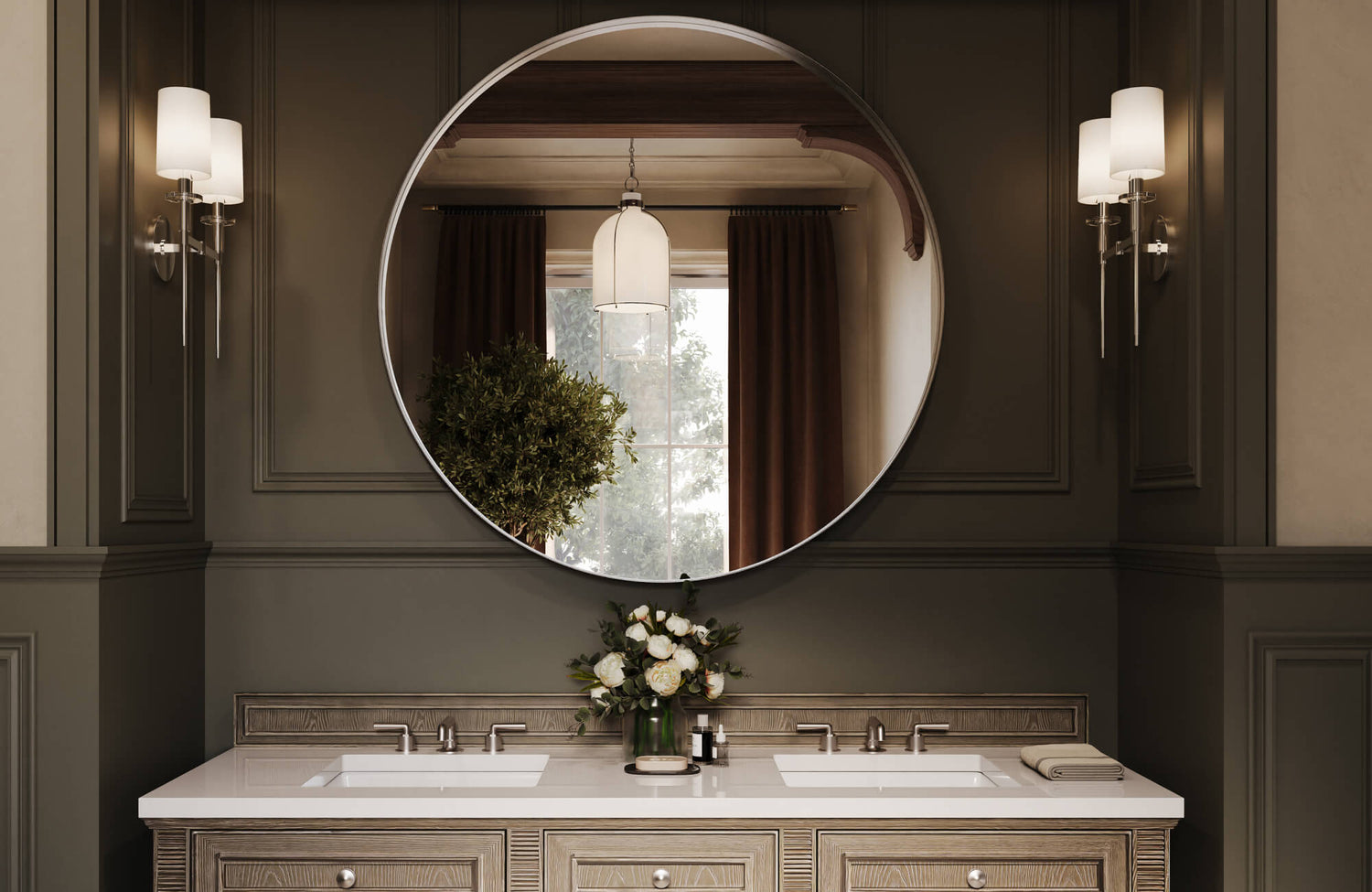
The continuous silhouette of a round mirror naturally carries more visual weight than angular forms, making material and finish selection especially important in double vanity compositions. To maintain balance, darker finishes benefit from grounding elements such as substantial cabinetry, stone countertops, or warm wood textures below. Edward Martin’s Esmeralda Round Mirror in Iron Matte Black exemplifies this balance, as its slim iron frame introduces contrast without overwhelming the vanity wall. As shown in the image above, the matte black finish anchors the mirror visually while echoing surrounding lighting fixtures, creating cohesion across the vertical plane. This controlled contrast also allows the mirror to feel intentional rather than dominant, even at a generous scale. When visual weight is distributed thoughtfully in this way, the overall composition remains stable, refined, and architecturally grounded.

Symmetry, Geometry, and Design Cohesion
Symmetry is foundational to double vanity layouts, and circular mirrors can either reinforce or weaken that structure depending on execution. When geometry is applied with consistency, a round mirror enhances cohesion rather than disrupts it.
Contrast Between Curves and Linear Architecture
A round mirror introduces a softened counterpoint to the strong linear geometry commonly found in vanities, countertops, and tile layouts. Set against rectilinear surfaces, a large round mirror gently interrupts repetition without undermining the overall structure. This interplay between curves and straight lines also encourages the eye to move fluidly across the wall, rather than stopping abruptly at hard edges. Over time, the balance creates a layered, visually engaging composition that feels both intentional and calm. Such contrast is a defining characteristic of modern and transitional bathroom design, where circular geometry—when handled deliberately—adds depth and refinement.
Frame Style and Architectural Compatibility
The frame surrounding a round wall mirror plays a pivotal role in determining how seamlessly it integrates into the bathroom’s architectural language. Slim metal frames, for instance, support contemporary aesthetics, while wood or softly patinated finishes introduce warmth suitable for transitional spaces. A round antique mirror also adds character and historical depth, yet it requires restrained surrounding materials to prevent visual competition. In addition, frame thickness affects perceived scale, influencing how prominently the mirror projects from the wall. When the frame style echoes other finishes in the room, visual continuity is strengthened. This alignment allows the mirror to feel purposefully designed rather than stylistically isolated.
Bilateral Symmetry Through Paired Mirrors
Using two identical round bathroom mirrors creates a strong sense of visual order along a double vanity wall, reinforcing a feeling of intentional symmetry. When mirror diameter, frame finish, and mounting height are matched, each mirror anchors its corresponding sink with equal visual weight. Aligning the mirrors precisely along the faucet and drain axis further clarifies this relationship, strengthening the balance between fixtures and reflection. Because circular forms naturally draw the eye, even minor misalignments tend to stand out more than they would with rectangular mirrors. Careful placement, therefore, elevates both the craftsmanship and the perceived quality of the installation. When symmetry is executed with precision, the shared bathroom feels calm, organized, and thoughtfully composed.

Lighting Integration and Reflective Performance
Lighting determines whether a mirror serves as a functional tool or a purely decorative element. With round mirrors, illumination must be carefully planned to support daily use while preserving form.
Backlit LED Round Mirror
A backlit round mirror offers a refined lighting solution, delivering uniform illumination around the perimeter to help reduce facial shadows. This even distribution of light improves visibility for grooming while maintaining a clean, architectural presence. When specified correctly, integrated LED systems can also provide approximately 300 to 500 lux at face level, supporting accurate and comfortable task lighting. Warm color temperatures between 2700K and 3000K further enhance visual comfort by preserving natural skin tones. In addition, a large round mirror with backlighting introduces subtle depth by visually separating the mirror from the wall plane. Together, these qualities make backlit mirrors particularly effective in modern double vanity installations.
Supplemental Overhead and Accent Lighting
While backlighting provides a strong foundation for illumination, incorporating additional lighting layers often enhances both visual comfort and functional performance. Ceiling-mounted fixtures or thoughtfully placed pendants can complement a round bathroom mirror by extending light coverage without disrupting its circular silhouette. This layered approach also helps maintain balanced illumination across both sink zones, which is particularly important in shared double vanity bathrooms. Because a round mirror lacks vertical edges, traditional side-mounted sconces can feel visually awkward or may fail to deliver even facial lighting. Introducing multiple lighting layers adds flexibility, allowing the space to adapt to different tasks and times of day. The result is a bathroom that remains highly functional while preserving a cohesive, refined aesthetic.
Reflective Coverage and Light Distribution
The diameter of a round wall mirror directly influences how light is reflected and dispersed throughout the bathroom. Larger mirrors, for example, distribute light more evenly, softening contrast and enhancing ambient brightness. Smaller mirrors, on the other hand, concentrate reflection but limit peripheral visibility, which can feel restrictive in double vanity layouts. This is why choosing a larger round mirror can be especially effective in bathrooms with limited natural daylight, helping to spread light more broadly across the space. Surrounding finishes also play a role in amplifying or muting reflectance. Thoughtful mirror sizing, therefore, maximizes illumination while maintaining visual comfort.

Ergonomics, Sightlines, and User Experience
Beyond aesthetics, mirror geometry shapes how comfortably a space is used every day. A round mirror requires careful ergonomic planning to support multiple users effectively.
Mounting Height and Vertical Coverage
Mounting height is a key factor in maintaining comfortable and consistent sightlines for users of different heights. Positioning the center of a round bathroom mirror between 60 and 65 inches from the finished floor accommodates most adults while preserving visual balance. Because a round mirror naturally tapers at the top and bottom, choosing a larger diameter improves vertical facial coverage, reducing the need for users to adjust posture or tilt their heads during grooming. When vertical coverage is insufficient, usability also declines quickly, which can make daily routines feel awkward and inefficient.
Individual Zones Within Shared Vanities
Paired round mirrors help establish distinct personal grooming zones within a shared double vanity without introducing physical barriers. This visual separation allows each user to maintain a clear axis aligned with their sink and fixtures, making simultaneous use feel more comfortable and less congested. Larger round mirror designs further reinforce this zoning effect through scale and presence, keeping the separation subtle yet effective. The result is a bathroom that feels open and cohesive while improving functionality and daily efficiency.
Long-Term Comfort and Practical Use
The absence of sharp corners in a round wall mirror creates a softer, more relaxed visual environment that feels inviting over time, especially in primary bathrooms that are used daily. This effect becomes even more pronounced when the mirror’s finish complements the surrounding materials. Take the Tristan Round Mirror in Polished Brass, for example: its warm tone harmonizes beautifully with brass fixtures and natural wood elements.
In the photo featured above, the polished brass frame subtly reflects light, enhancing brightness without creating glare or visual fatigue. That balance also supports long-term comfort by maintaining visual warmth and reducing harsh contrast. Sustained usability still depends on precise alignment and consistent mounting height to preserve comfortable sightlines. When thoughtfully specified, mirrors like Tristan deliver both enduring functionality and timeless aesthetic appeal.

Appropriate Applications and Design Limitations
While a round mirror offers distinct advantages, its success depends on contextual suitability. Understanding where they perform best ensures design intent aligns with function.
Ideal Scenarios for a Round Mirror
A round mirror performs exceptionally well in modern, transitional, and Scandinavian-inspired bathrooms, where clean geometry and visual balance are key. Its light, sculptural presence naturally complements floating vanities and wall-mounted faucets, helping to reinforce a sense of openness. In medium-sized double vanity layouts, a large round mirror is particularly effective, enhancing light diffusion without overwhelming the wall plane. Minimalist storage solutions also support this aesthetic by reducing visual interruptions around the mirror. In these environments, circular forms feel intentional rather than decorative, allowing the mirror to integrate seamlessly into designs that prioritize clarity and restraint.
Situations Favoring Alternative Mirror Forms
Bathrooms that prioritize storage, architectural structure, or expansive vanity widths often benefit from mirrors with stronger linear definition. In these settings, rectangular or square mirrors provide greater reflective coverage and align more naturally with cabinetry, wall paneling, and integrated storage solutions. Our Tristan Square Mirror in Polished Brass clearly illustrates this advantage, as its crisp geometry complements the paneled wall treatment and structured double vanity.
As displayed in the picture above, the square form reinforces symmetry across the sinks while maintaining visual clarity and functional reach. At the same time, the polished brass frame introduces warmth and continuity with the fixtures without softening the composition. In these scenarios, angular mirrors provide a refined and practical alternative when round mirrors may feel visually insufficient or stylistically misaligned.
Styling With Decorative and Antique Options
A round antique mirror brings texture, patina, and a sense of narrative that sets the bathroom apart from purely contemporary spaces. These mirrors work best when treated as focal points rather than simply functional elements. Pairing them with restrained finishes and simplified cabinetry also helps prevent visual competition and keeps the overall look balanced. Symmetry becomes especially important when decorative frames are used in double vanity configurations, ensuring the design feels deliberate rather than cluttered. When used with intention, antique mirrors elevate the space without overwhelming it, allowing historical character to coexist harmoniously with modern performance through controlled contrast.
Refined Balance in Double Vanity Design
A round mirror succeeds in double vanity bathrooms when proportion, symmetry, lighting, and ergonomics are carefully aligned. A well-scaled round bathroom mirror enhances both spatial clarity and daily usability without overwhelming the vanity wall. From a large round mirror that expands light distribution to a round antique mirror that adds character, circular forms offer remarkable versatility. When integrated thoughtfully, a round wall mirror supports long-term comfort while elevating architectural cohesion. Ultimately, their success hinges on precision, restraint, and an understanding of how form influences experience.
Achieving this level of balance often benefits from expert guidance, and Edward Martin’s design services provide tailored solutions that align mirror selection, lighting strategy, and spatial planning with your overall vision. To explore how round mirrors can be seamlessly integrated into your double vanity bathroom, contact us and let our design team help refine every detail with precision and care!