Pool tiles are constantly exposed to water, chemicals, sunlight, and changing temperatures, all factors that can gradually impact their appearance and durability. While pool tiles are designed to withstand wet environments, not every type requires the same level of protection. Some materials are naturally water-resistant, while others benefit from an added layer of sealing to prevent discoloration, staining, or surface damage. Knowing when sealing is necessary and when it isn’t helps you maintain your pool’s beauty and performance over time. In this article, we’ll walk you through how different tile materials respond to sealing, why it matters in a pool environment, and how to select the right approach to keep your pool looking its best season after season.

How Pool Tiles Are Made and What It Means for Sealing
Before deciding whether your pool tiles need sealing, it’s important to understand how they’re made. Each tile material reacts differently to water exposure, and those differences determine how much, or how little, protection is required.
Porcelain and Ceramic Tiles
Porcelain and ceramic tiles are among the most popular choices for pools, prized for their durability and low maintenance requirements. Fired at extremely high temperatures, they develop a dense, compact structure that naturally resists moisture absorption. Porcelain, in particular, is nearly impermeable, preventing water from seeping into the surface. Many varieties also feature a glazed coating that adds a smooth, nonporous finish, making additional sealing unnecessary.
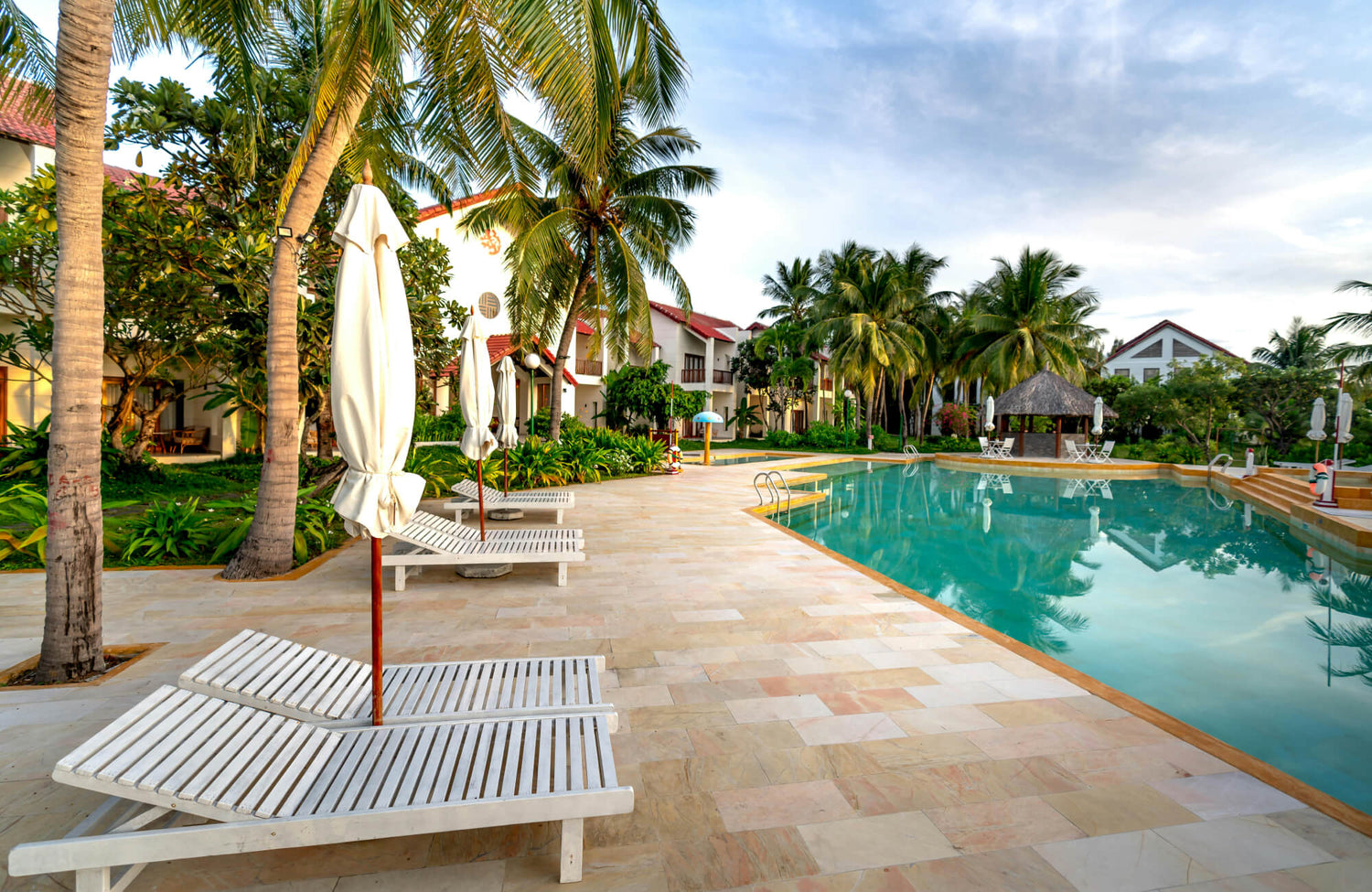
In the photo displayed above, the pool deck features Edward Martin’s Bowden 24x24 Grip Porcelain 2cm Paver Tile in Oat, which showcases how porcelain performs beautifully in outdoor settings. Its dense composition and textured surface provide both slip resistance and long-term durability, even under constant exposure to water and sunlight. While the tiles themselves require little protection, the grout lines between them are more porous and can absorb moisture, minerals, and pool chemicals. Applying a high-quality penetrating grout sealer also helps safeguard these joints, preventing discoloration, mildew, and algae buildup while keeping the entire surface easier to clean and maintain.
Glass Tiles
Glass tiles can add a sleek, reflective quality to pools and are completely nonporous, meaning they naturally repel water and resist staining. Because of this, sealing the glass surface itself isn’t necessary. The grout, however, tells a different story; it’s porous and prone to absorbing moisture, especially in areas that stay underwater. Applying a grout sealer creates a protective barrier that prevents mineral buildup and discoloration, keeping the joints clean and bright. While the tiles require minimal upkeep, maintaining sealed grout helps preserve the crisp, polished look of your glass mosaic for years to come.
Natural Stone Tiles
Natural stone, such as travertine, limestone, or slate, brings a timeless and organic beauty to pool areas. However, unlike porcelain or glass, these materials are naturally porous and can easily absorb water, minerals, and pool chemicals. Without proper protection, this absorption can lead to staining, fading, or surface etching over time. Sealing is essential to maintain the stone’s appearance and structural integrity.
For those who love the look of stone but prefer a more durable, low-maintenance option, stone-look porcelain tiles, like Edward Martin’s Carter 24x48 Grip Porcelain 2cm Paver Tile in Stone, offer a smart alternative. They capture the natural texture and depth of stone while providing the dense, water-resistant qualities of porcelain, making them ideal for pool decks and outdoor spaces.
A quality penetrating sealer works by soaking into the pores of natural stone, creating a breathable barrier that repels moisture while preserving the material’s natural finish. With regular reapplication, sealed stone tiles maintain their rich color and resist wear caused by continuous exposure to sunlight, chlorine, and water.

Why Sealing Matters in Pool Environments
Pools create some of the most demanding conditions for tile surfaces. Constant exposure to water, pool chemicals, and sunlight can gradually affect both appearance and performance. Having the right sealing approach helps protect tiles and grout from these elements, ensuring lasting durability and a consistently polished look.
Moisture and Chemical Exposure
In a pool environment, tiles are constantly exposed to chlorinated water, cleaning products, and other maintenance chemicals. Over time, these substances can gradually wear down porous materials and grout, leading to dullness, erosion, or weakened surfaces. A high-quality sealer acts as a protective barrier, preventing water and chemicals from penetrating while still allowing the material to breathe. For natural stone or unglazed tiles, this layer helps prevent internal damage and reduces the risk of efflorescence, a white, powdery buildup caused by mineral deposits. Applying a dependable sealer also keeps your tiles looking their best and structurally sound, even in conditions where moisture is always present.
UV and Heat Damage
Sunlight and changing temperatures can be just as harsh on pool tiles as constant moisture. Prolonged UV exposure can cause colors to fade and finishes to deteriorate, while sudden temperature changes may lead to surface stress or hairline cracks. In the photo featured above, Edward Martin’s Bowden 24x24 Grip Porcelain 2cm Paver Tile in Canvas demonstrates how a high-quality porcelain tile maintains its color and surface integrity even under bright sunlight.
Choosing a sealer with UV-resistant properties further helps preserve the tile’s original tone and finish, especially in pools located in hot or sunny regions. This added protection not only reduces fading but also keeps the surface looking consistently smooth and well-maintained season after season. A carefully selected sealer protects your tiles from both sun and chemical exposure, helping them retain their strength and visual appeal over time.
Preventing Algae and Staining
Algae growth often occurs in unsealed grout or porous stone, where moisture and organic matter can settle deep within the material. Over time, these areas darken and develop stubborn stains that are difficult to remove. Applying a quality sealer prevents water and debris from penetrating the surface, making it much harder for algae or mold to grow. It also helps prevent stains from minerals and rust, keeping the tiles and grout looking clean and vibrant for longer. With consistent sealing, maintenance becomes easier, and your pool area retains a clean, fresh, and well-kept appearance.

When and How Often Pool Tiles Should Be Sealed
Timing is key to maximizing the effectiveness of a sealer. Understanding when and how often to apply it helps keep your pool tiles properly protected while avoiding unnecessary work or over-application.
Before or After Installation
Natural stone tiles often benefit from being sealed before grouting, as this helps prevent grout pigments and residues from seeping into the surface and causing discoloration. After installation, applying another coat once the grout has fully cured provides lasting protection. Porcelain and glass tiles typically don’t require pre-sealing; sealing the grout after installation can help keep joints clean and easier to maintain. The key is to allow adequate curing time, usually about two to three weeks, before applying any sealer to ensure proper bonding and long-term effectiveness.
Seasonal and Maintenance Cycles
Most sealers remain effective for one to three years, depending on pool usage and environmental conditions. Pools exposed to intense sunlight, humidity, or frequent chemical treatments may require resealing more often. You can easily test your sealer’s effectiveness by sprinkling a few drops of water on the surface. If the water beads, the seal is still intact; if it soaks in or darkens the material, it’s time to reapply. Following a consistent seasonal maintenance routine ensures your pool tiles stay well-protected and maintain their polished appearance year after year.
Signs That Re-Sealing Is Needed
As the protective layer starts to wear down, certain changes become noticeable. Tiles may lose their natural sheen, and stains can appear more quickly than before. On stone surfaces, the color may seem flatter, and water might stop beading on contact. In grout lines, darker spots or lingering moisture often indicate that the sealer has deteriorated. Noticing and addressing these signs early helps prevent deeper damage and makes future cleaning and maintenance much easier.

Choosing the Right Sealer for Pool Tiles and Grout
The right sealer not only protects your pool tiles but also preserves their appearance, texture, and longevity. Understanding the different types available helps you choose a product that best suits your tile material, grout, and surrounding environment.
Penetrating vs. Surface Sealers
Penetrating sealers absorb into the pores of stone or grout, forming an invisible barrier that repels water and minerals from within. They can preserve the natural look and feel of the tile, making them ideal for materials with matte or textured finishes. Surface, or film-forming, sealers sit on top of the tile, adding a light sheen and an extra layer of visible protection. While they can enhance color and pattern, they tend to wear more quickly in busy areas and may need reapplication sooner. The choice ultimately depends on your preferred look: natural and subtle or slightly polished with added surface defense.
Water-Based vs. Solvent-Based Options
Water-based sealers are easy to apply, have minimal odor, and dry quickly, making them an excellent choice for indoor or residential settings where convenience and environmental safety are important. Solvent-based sealers, on the other hand, penetrate deeper into the material, providing stronger protection against heavy moisture and harsh chemicals. They’re better suited for outdoor or high-exposure pools where maximum durability is needed. Choosing between the two depends on your pool’s conditions and whether you value convenience or long-term resistance more.
Specialty Sealers for Natural Stone and Grout
Some sealers are specially formulated for natural stone, offering protection against salt, chlorine, and etching caused by acidic substances. These products help preserve the stone’s natural character while keeping its surface safe and slip-resistant. Grout sealers, on the other hand, are designed to penetrate the fine pores within grout lines, preventing moisture and dirt from settling deep inside. Choosing a sealer tailored to your specific material ensures thorough, long-lasting protection for both tiles and grout.

Common Mistakes and Maintenance Tips After Sealing
Even the best sealer won’t perform as expected if it’s applied incorrectly or not maintained over time. Using the right technique and following a consistent maintenance routine helps extend the sealer’s protection and keeps your pool tiles looking clean and well-maintained.
Over-Applying or Using the Wrong Product
Applying more sealer doesn’t always lead to better protection. In fact, using too much can trap moisture beneath the surface, resulting in hazy or uneven patches. The key is to apply a thin, even coat that fully absorbs and dries clear. Choosing the wrong type of sealer, for instance, using a surface sealer on glass, can also leave streaks or a cloudy film. Always check the manufacturer’s instructions and test a small section first. Careful, precise application ensures lasting protection and a smooth, flawless finish.
Neglecting Grout Sealing
It’s easy to focus on sealing the tiles and overlook the grout lines, but grout is often the most vulnerable part of the surface. Because it absorbs water quickly, unsealed grout can become discolored, weakened, or even start to crumble over time. Applying a specialized grout sealer creates a consistent protective barrier across the entire area, keeping moisture out and helping the surface stay clean. Regularly sealed grout not only simplifies maintenance but also prevents hidden water damage that could affect the bond beneath your tiles.
Cleaning and Care for Sealed Tiles
Even after sealing, your tiles require gentle, consistent care to preserve the protective layer. Use pH-neutral, non-abrasive cleaners that won’t degrade the sealer, and avoid harsh or acidic products that can dull the finish. Rinse surfaces with clean water regularly, especially after pool use or maintenance work, to remove chemical residue. Periodic visual checks every few months help you catch early signs of wear, ensuring both your tiles and grout remain in excellent condition year-round. For best results, always follow the manufacturer’s care and maintenance recommendations for both the tiles and grout, as product formulations and surface finishes can vary.

Professional vs. DIY Sealing
Deciding whether to seal your pool tiles yourself or hire a professional often depends on the tile material, pool size, and your comfort with the process. Both approaches offer distinct advantages, and understanding them helps you choose the option that best fits your needs and ensures lasting results.
When DIY Works Best
If your pool features porcelain or glass tiles, sealing is usually a simple, manageable task. Most homeowners can apply a penetrating grout sealer using basic tools such as a sponge, brush, or applicator bottle. These projects are well-suited for DIY since they require minimal equipment and deliver effective results with proper care. Smaller pool areas or routine touch-ups between maintenance cycles can also be handled confidently without needing professional assistance.
When to Call a Professional
For natural stone surfaces or larger, more intricate installations, hiring a professional is often the best option. Professionals use specialized products and equipment to achieve even coverage and proper absorption, especially on textured or uneven surfaces. They can also assess the condition of your tiles, identify potential problem areas, and recommend the most effective long-term maintenance plan. While it comes with an added cost, professional sealing provides more consistent results and lasting protection, helping your pool maintain its appearance and durability over time.
Cost and Long-Term Value
DIY sealing can help you save on labor costs, but it may require more frequent touch-ups if the application isn’t done correctly. Professional sealing, while more expensive upfront, typically provides longer-lasting protection, especially for natural stone or complex surfaces. Over time, this investment can reduce maintenance needs, prevent costly repairs, and extend the life of your tiles. Choosing between the two options ultimately depends on your confidence, available time, and the level of precision required for your pool surface.
Keeping Your Pool Tiles Looking Their Best
Sealing pool tiles isn’t always required, but knowing when and how to do it can make a lasting difference in both appearance and performance. Porcelain and glass tiles naturally resist moisture, while natural stone greatly benefits from the added protection that sealing provides. The right sealer guards against water, UV exposure, and chemical damage, while consistent maintenance ensures it continues to perform effectively. By sealing only where necessary, cleaning with care, and reapplying as needed, you can preserve the beauty and integrity of your pool tiles, keeping them vibrant and well-protected year after year.
If you’re unsure which sealer or tile type is best for your pool, contact us today for expert guidance. You can also use our Augmented Reality (AR) tool to visualize different tile styles and finishes in your own space, allowing you to make an informed decision.